Pingyao Ancient City is one of the best-preserved and most interesting historic cities that can be found in the central part of the Shanxi Province, within the northern part of the People’s Republic of China. Being one of the most remarkable examples of traditional Chinese urban planning, this ancient walled city preserves its original streets, buildings, temples, courtyards, and defensive structures, thus offering visitors a rare opportunity to experience the appearance and atmosphere of a traditional Chinese city from centuries ago.
Founded more than 2,700 years ago, Pingyao became especially prosperous during the Ming and Qing dynasties when it developed into an important center of trade, finance, and banking. The city played a significant role in the development of China’s early financial system and was home to some of the country’s first private banks. Contrary to numerous other historic cities that have undergone radical changes under the influence of contemporary progress, Pingyao has managed to preserve much of its original structure and design. The old city walls, homes, governmental and religious structures create a fascinating image of the Chinese cities in the times of the imperial era.
Being part of the important UNESCO World Heritage List, a feat that was completed in 1997, Pingyao Ancient City is considered to be one of the most precious cultural landmarks in China. Pingyao Ancient City is located in the county that bears the same name, Pingyao County, and it is in the very center of Shanxi Province. It lies comfortably on the extensive fertile plains of the Fen River basin, surrounded by the scenic agricultural and mountainous scenery of the central parts of Shanxi Province. The geographical location of the region used to play a key role in linking northern China with its central plains.
From a geographical perspective, Pingyao is located about 90 kilometers (56 miles) south of the provincial capital of Shanxi, Taiyuan, and additionally, Pingyao is located about 570 kilometers (354 miles) southwest of Beijing and 500 kilometers (311 miles) east of the ancient capital of Xi’an. It is precisely this position that made Pingyao part of vital trade routes that traversed northern China throughout history. Merchant caravans transporting goods ranging from silk and tea to grain and finished products traversed the area throughout time. Due to its strategic location at such a vital crossroads, Pingyao was well positioned to become a significant commercial center in its imperial period.
The origins of Pingyao have deep historical significance in China, dating back more than 2,700 years to the Western Zhou Dynasty (1046–771 BC). In this early period, the city had been established as an important fortification point that protected the inner core from attacks by the nomads from the north. As the city developed slowly under successive dynasties such as the Han, Tang, and Song dynasties, its true heyday came much later during the Ming (1368-1644) and Qing (1644-1912) dynasties.
In the Ming Dynasty, Pingyao experienced major urban fortification work. With the realization that the region required better defenses, the leaders of the city replaced the existing rammed-earth walls with huge, high-quality brick-and-stone walls. This major building project resulted in the defensive walls of Pingyao that still exist today. During the Qing dynasty, when there was a peaceful period in China, the main concern of Pingyao became commerce rather than defense. Rich merchant families constructed large courtyard complexes, created business links across the whole country, and made Pingyao one of the most affluent centers of administration and business in East Asia.
The single most monumental contribution Pingyao made to Chinese history was its central role in founding the country’s modern financial architecture. During the early 19th century, trade was booming across China, yet merchants faced a dangerous logistical problem: transporting huge sums of physical silver ingots across long, bandit-plagued roads to settle trade transactions was extremely risky and inefficient.
In 1823, a group of forward-thinking local merchants solved this problem by establishing the Rishengchang Exchange House in Pingyao. Rishengchang became China’s very first draft bank (piaohao). The exchange house introduced a secure, standardized system of paper financial drafts that allowed merchants to deposit cash in one city and cash the draft in another hundreds of miles away. To prevent fraud, Rishengchang used complex internal cipher keys, watermark codes, and handwritten signatures.
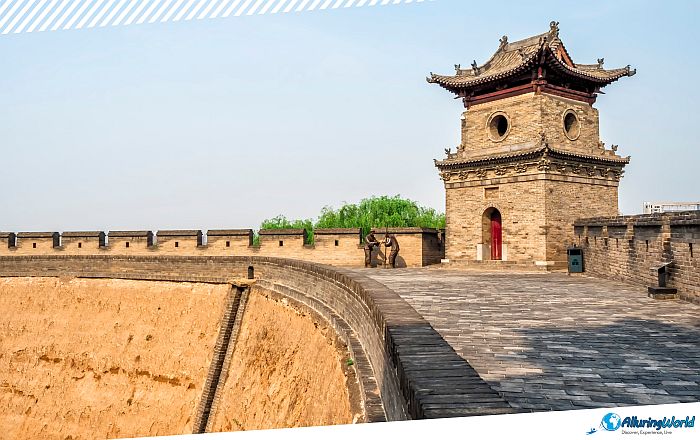
It was this one innovation that transformed trade across the empire, making transport safer and speeding up cross-region trading significantly. After the success of Rishengchang, many more banking houses sprang up in Pingyao. In the height of the late Qing dynasty era, the town of Pingyao accounted for more than half of all the country’s money transactions, thus earning its reputation as the “Wall Street of 19th Century China.” Nevertheless, the city walls remain the visually defining feature of Pingyao. Originally constructed out of packed earth during the Western Zhou period, the walls were entirely rebuilt, expanded, and clad in thick gray bricks starting in 1370 under the reign of the Ming Emperor Hongwu.
ADVERTISEMENT
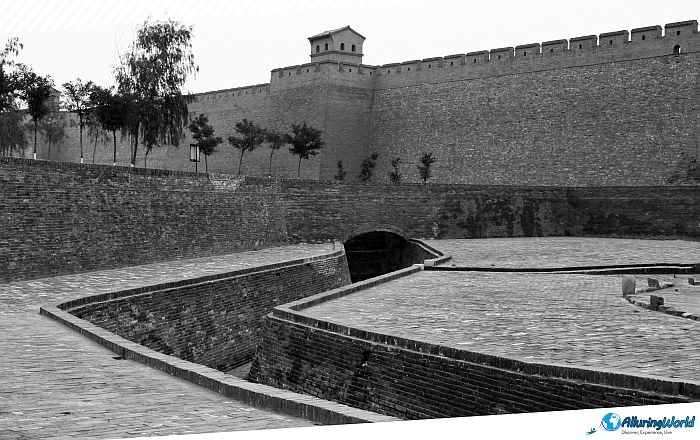
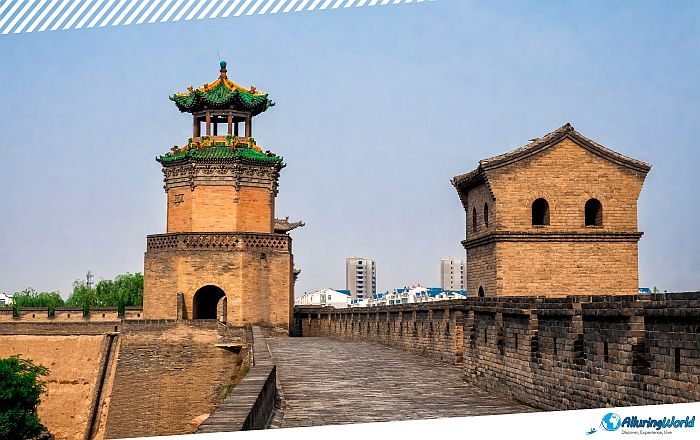
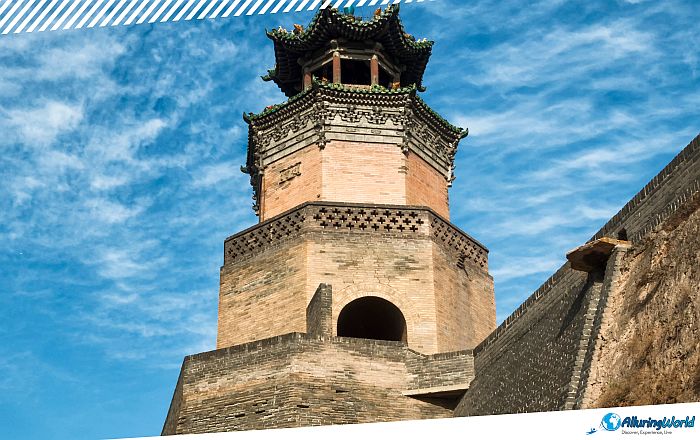
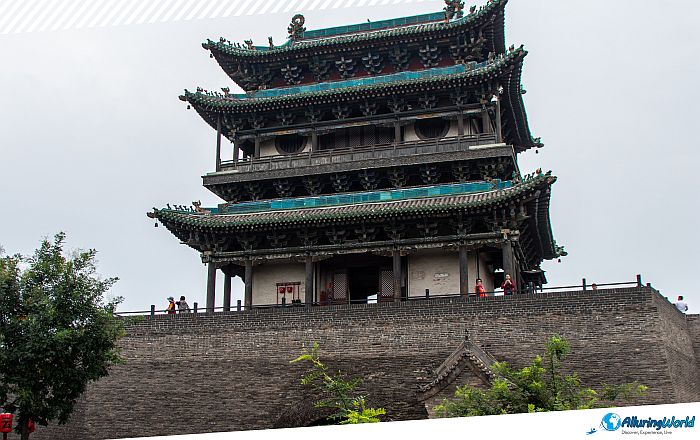
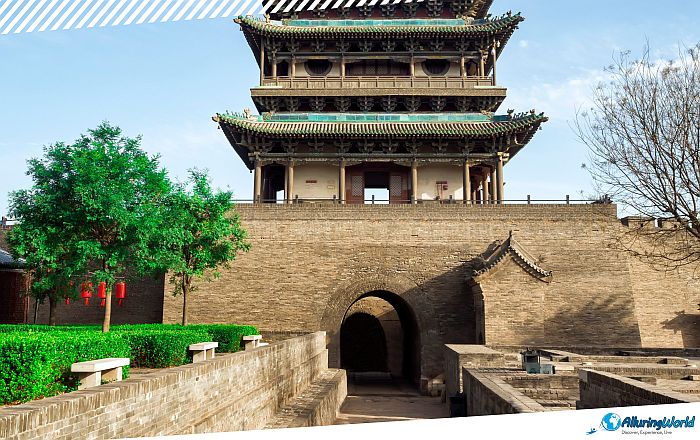
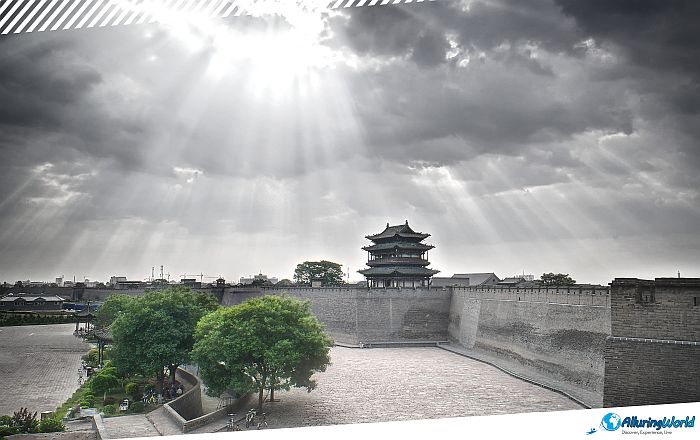
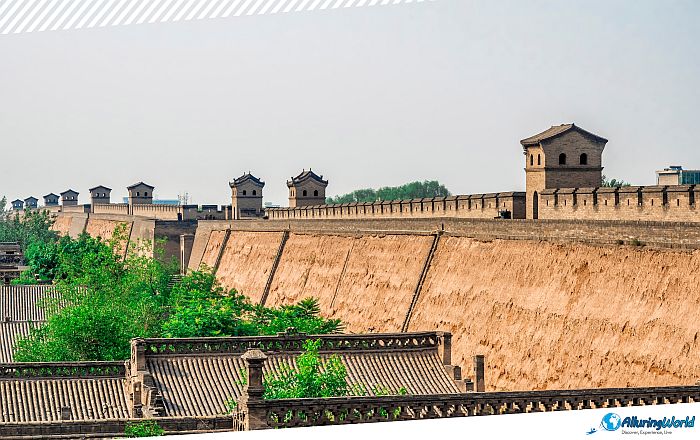
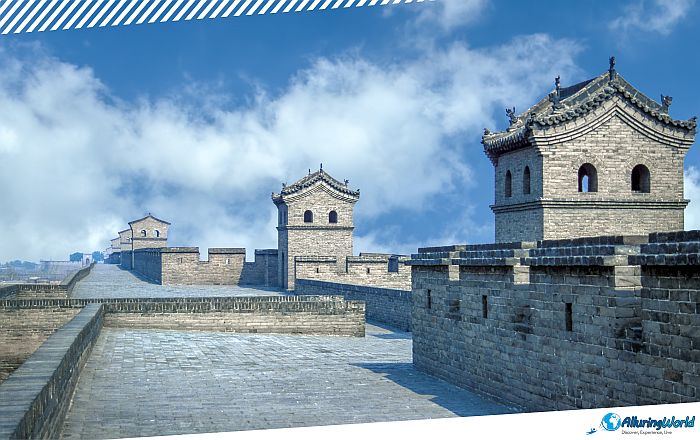
The walls stand today in an unbroken circuit of about 6.1 kilometers (3.8 miles) enclosing the historic city. With a height of about 10 meters (33 feet) and a base width of 3 to 6 meters (10 to 20 feet), the walls constitute a masterwork of military engineering of the imperial age. The tops of the walls have:
- Watchtowers: 72 watchtowers found along the circumference, known for representing the 72 followers of Confucius.
- Embrasures and Parapets: 3,000 battlements found along the upper edge, which are said to denote 3,000 followers of Confucius.
- Barbican Gates: Six grand entrance gates designed as double-walled defensive enclosures. When viewed from above, the outer shape created by these six gates resembles a giant turtle, with the head at the south gate, tail at the north, and four legs at the east and west. Because of this, Pingyao is affectionately known as the “Turtle City,” symbolizing longevity and endurance.
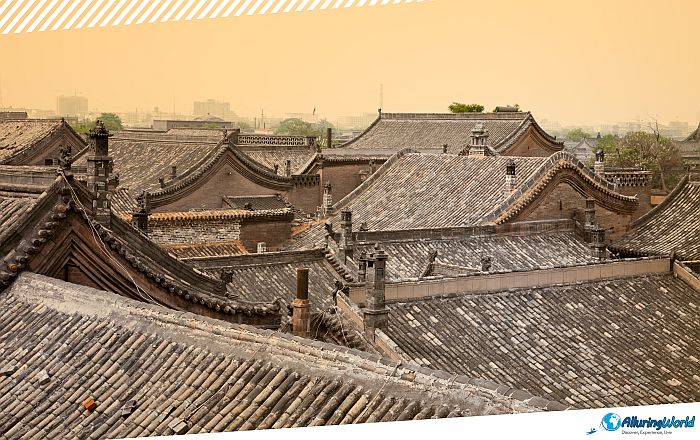
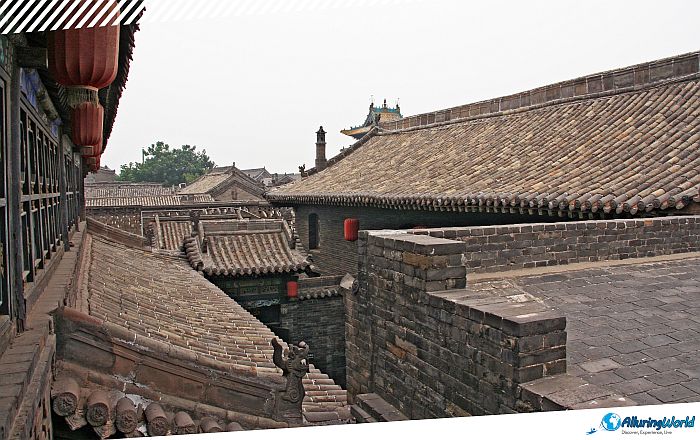
Visitors today can climb onto these broad ramparts to walk along long stretches of the wall, taking in panoramic views of the dense grey-tiled rooftops inside the city alongside the modern skyline expanding far beyond the gates. Pingyao is a real-life embodiment of traditional Chinese urban design. Pingyao follows all the rules of feng shui and ancient urban design in terms of symmetry and harmony with nature.
The city is arranged around a central north-south axis anchored by South Street (Nandajie), often called the traditional commercial spine of Pingyao. Off this primary axis branch four main streets, eight major avenues, and seventy-two intricate alleys (hutongs), creating an organized, grid-like network. Major public, administrative, and religious buildings were carefully situated in accordance with cosmological rules:
- Official Buildings: Located in authoritative positions at important axial intersections.
- Commercial Establishments: Located on busy central streets to promote business.
- Residential Courtyards: Located securely off the busy streets on private side streets.
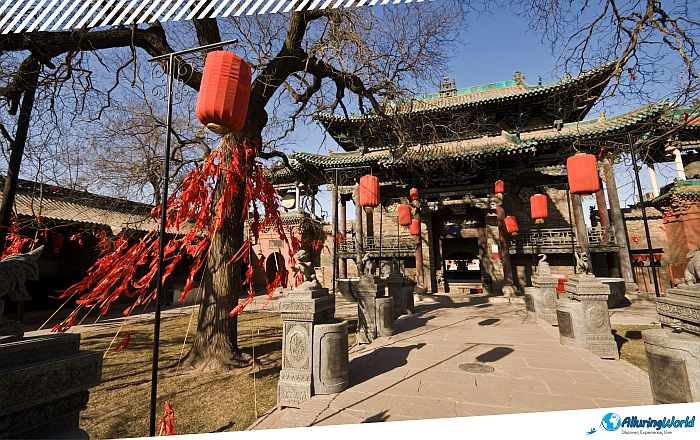
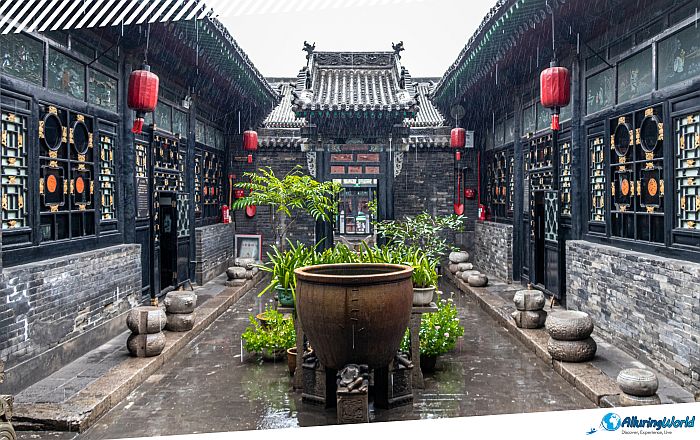
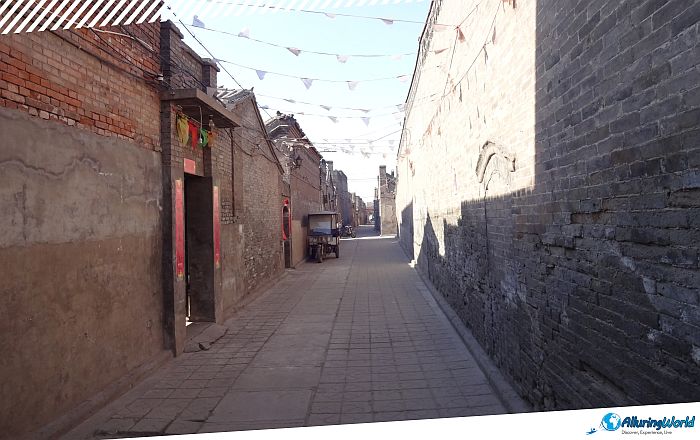
Unlike many other old towns throughout East Asia, which have demolished their historic streets to make way for cars, the historic town center of Pingyao has been kept free from all motor vehicles. The small streets, high walls of courtyards, and the red paper lanterns hung on the storefronts all contribute to the perfect historic ambiance. The physical architecture of Pingyao offers a detailed window into the daily life, domestic structures, and social hierarchy of the Ming and Qing eras. The city contains thousands of traditional brick-and-timber buildings, most of which were built in the classic northern Chinese Siheyuan (courtyard house) style.
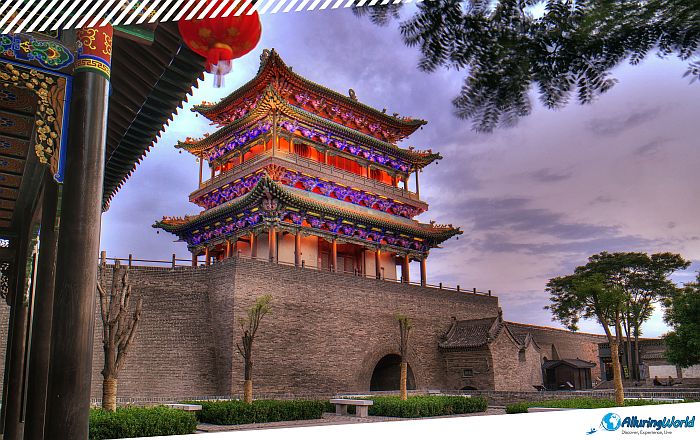
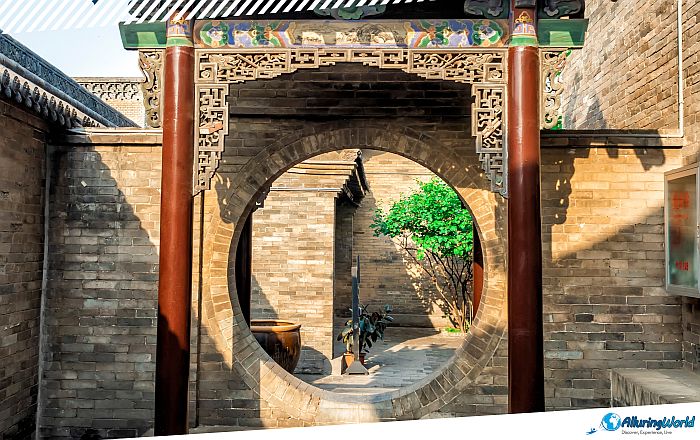
These private compounds had high, unadorned walls without windows that faced the public road for privacy and safety. Passing through the large wooden entrance gate opened up into a sequence of inner courtyards joined by ornately carved doors. The private family activities took place in these inner sanctuaries:
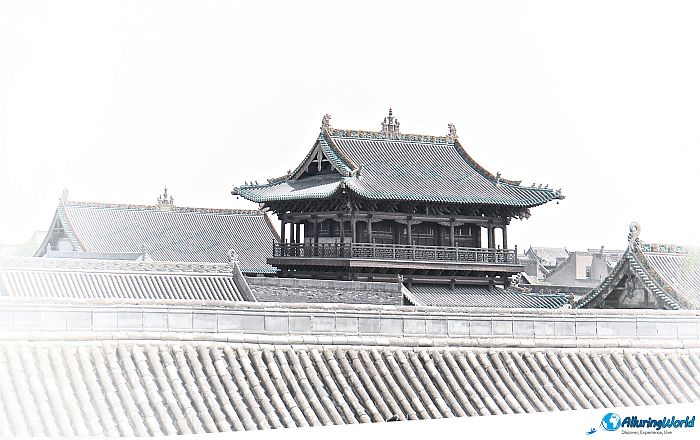
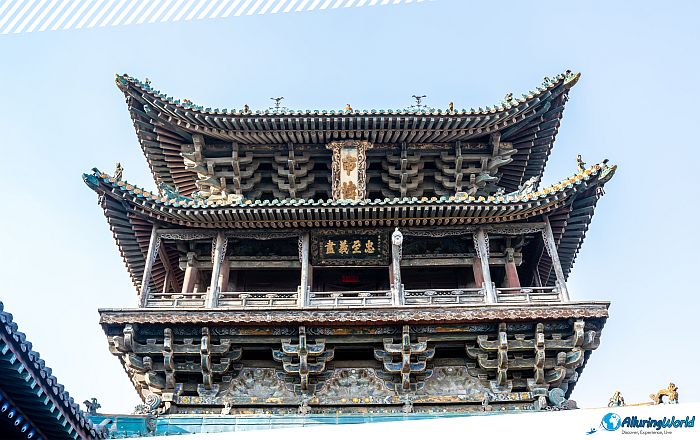
- Architectural Details: Structures have gray clay tiles on their roofs with swept eaves, decorative brick lintels, carved wooden window screens, and fancy decorative stonework at the gates.
- Symbolic Elements: Carvings on the wooden beams and stonework show the traditional symbols of good fortune, long life, prosperity, and high status, indicative of the aspirations of the families that erected them.
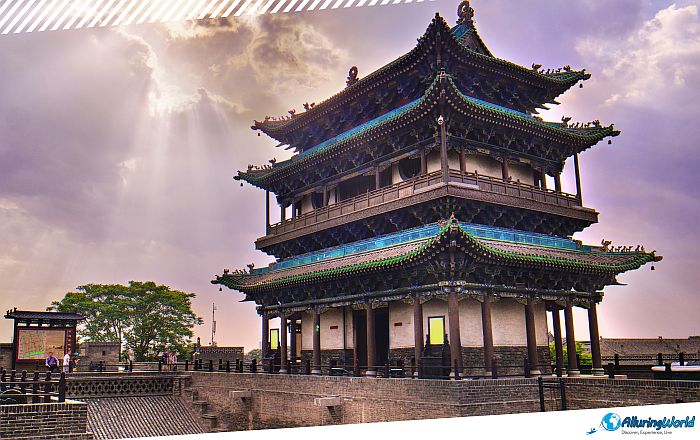
Apart from residences, some historic administrative and business complexes in Pingyao are preserved with care:
- Rishengchang Exchange House
The original Rishengchang bank site is located on West Street, and it has now been restored into a full museum complex. It features an extensive design, including the counter fronts for businesses, meeting rooms for rich customers, underground safes for keeping silver, residential rooms for employees, and administrative offices at the back. Looking around the rooms enables the visitor to see how the financial records and security network were maintained two hundred years ago. - Pingyao County Government Office (Yamen)
Covering an area of 20,000 sq m (215,278 sq ft), the Pingyao Yamen functioned as the central court, office, and home for the county magistrate during the Ming and Qing dynasties. It is the largest extant complex of an imperial county government in China. The complex comprises magnificent official courtrooms where legal proceedings took place, archival rooms, tax offices, prisons, yards for executions, and personal gardens belonging to the magistrate’s family. - Temples and Religious Heritage
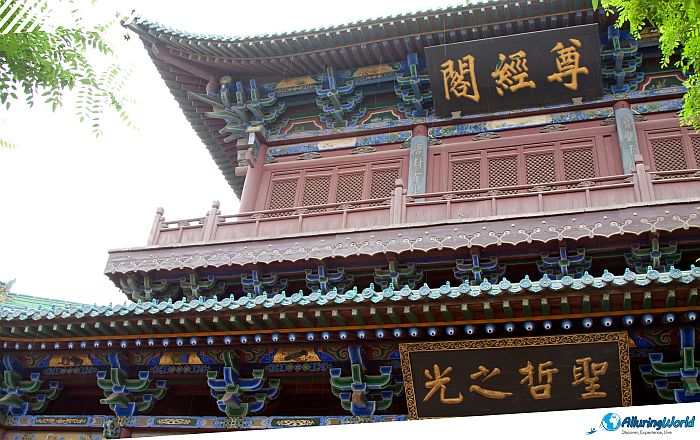
Spirituality was key to ensuring cohesion within the imperial Pingyao society. The town is characterized by many religious buildings that have evolved from the combination of Confucianism, Taoism, and Buddhism within Chinese culture. - Temple of the City God (Chenghuangmiao)
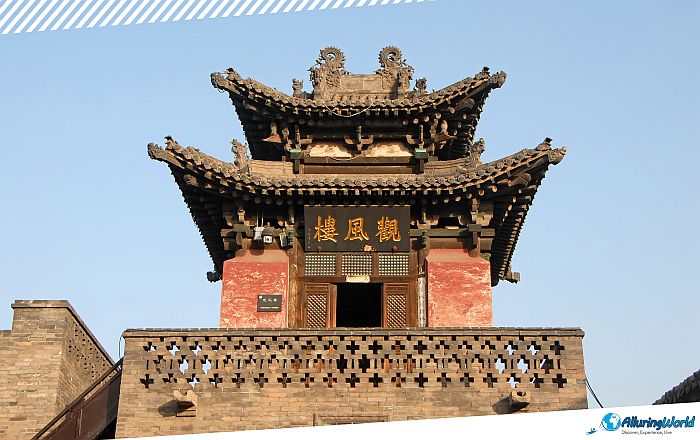
Devoted to the protective spirit that was responsible for overseeing the people of Pingyao, the Temple of the City God is one of the best-preserved such complexes in all of China. According to ancient Chinese tradition, the City God oversaw the spiritual well-being of all citizens of the town and kept records of their good and evil actions. The temple itself is built with magnificent halls, intricately carved wooden theatres, and brightly glazed roof tiles. - Shuanglin Temple
This temple lies around 6 kilometers (3.7 miles) southwest of the walled city area and has existed for over 1,500 years from the Northern Wei era. The temple grounds are renowned all over the world for their artistic masterpiece in the form of over 2,000 painted clay sculptures that have been made in the Song, Yuan, Ming, and Qing eras. These sculptures include lifelike representations of Buddhas, bodhisattvas, gods, and scenes of life that display incredible emotion. - Zhenguo Temple
Zhenguo Temple is yet another gem that can be found about 12 kilometers (7.5 miles) to the northeast of Pingyao, and is part of Pingyao’s World Heritage Site status as recognized by UNESCO. The main hall in the temple, known as the Hall of Ten Thousand Buddhas, was erected way back in 963 CE in the Northern Han Dynasty. The structure is said to be one of the oldest timber structures still standing today in China. It has intricate wooden brackets (dougong), which are not nailed but rather joined together.
The city of Pingyao was included on the World Heritage List in 1997, and the inclusion of Pingyao on this list took place together with Shuanglin Temple and Zhenguo Temple. This inclusion by UNESCO came in recognition of the city of Pingyao as a model of a traditional Han Chinese city that is very well-preserved. More than just its material buildings of stone, brick, and wood, Pingyao has immense cultural importance as well. Pingyao is one such living symbol of the famous Jinshang spirit.
The Jin merchants were famed for their honesty, strong code of honor, financial expertise, and dedication to learning in all of China. The actual city itself is a symbol of how business, duty, and culture converged in Imperial China. Visiting Pingyao Ancient City provides an immersive travel experience unlike almost anywhere else in modern China. Because the inner historic city is closed to outside motor traffic, visitors can explore the stone-paved lanes and historical sites safely on foot.
The best time to visit this majestic place is during springtime, which runs between April and May, and this option is highly recommended because of the pleasant temperatures averaging 10°C to 22°C (50°F to 72°F) and low rainfall. Other options to visit can be during autumn, between September and October, when the weather is a bit crisp but you still have clear weather, comfortable walking temperatures, and vibrant seasonal foliage across Shanxi Province. What some people might consider that summer time is the best time to visit, from June to August, on the contrary, this time of the year can be warm and humid, with temperatures frequently exceeding 30°C (86°F) alongside occasional heavy downpours. If you are adventurous, then you can definitely come in the wintertime, between November and February, when the weather is really cold, dry, and windy, with temperatures often dipping below freezing (0°C / 32°F). If you do not mind the cold, this period sees far fewer tourists, thus offering a quiet atmosphere, lower lodging rates, and occasional snowfalls over the traditional rooftops.
If you plan to visit Pingyao Ancient City, then a thorough tour of Pingyao requires at least 1 to 2 full days. This allows ample time to walk the city walls, visit key internal attractions like Rishengchang and the Yamen, and take short side trips to Shuanglin and Zhenguo temples. Consider booking a night inside a historic courtyard guesthouse within the ancient walls, as this is highly recommended. Many of these traditional homes have been modernized with high-end amenities while keeping their traditional carved wooden bed frames (kang), interior yards, and red paper lantern lighting.
One interesting fact that deserves to be mentioned is that the city undergoes a complete visual transformation at dusk. As day-trip tour groups depart, red lanterns light up along the grey brick avenues, street vendors serve regional Shanxi hand-pulled noodles (daoxuamian), and the quiet historic charm of imperial China comes fully alive. This is why Pingyao Ancient City is one of China’s most fascinating historical destinations, because it preserves an authentic image of traditional urban life. Its ancient walls, merchant houses, financial institutions, temples, and streets reveal a chapter of Chinese history that has largely disappeared elsewhere.
Unlike most other well-known sites in China, which speak about empires or nature, Pingyao speaks of the common people, traders, craftsmen, and localities that have contributed towards the growth of China. For tourists who love historical events, architecture, and cultural traditions, there can be no better destination than Pingyao. To conclude, Pingyao Ancient City stands as one of the biggest cultural heritages of China, with its highly preserved roads, architecture, banking tradition, and history that goes back centuries in China; it still holds great significance.