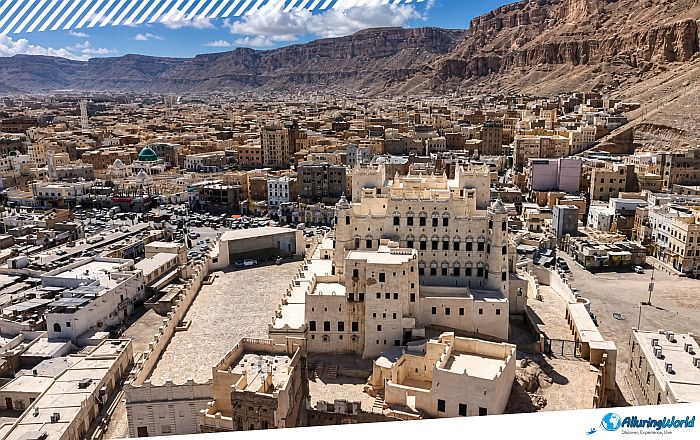
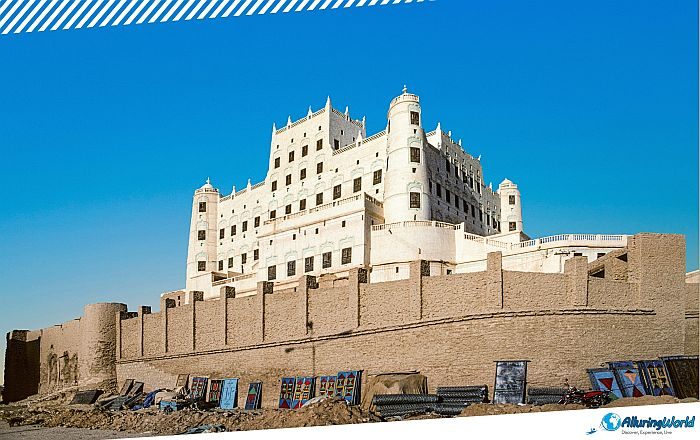
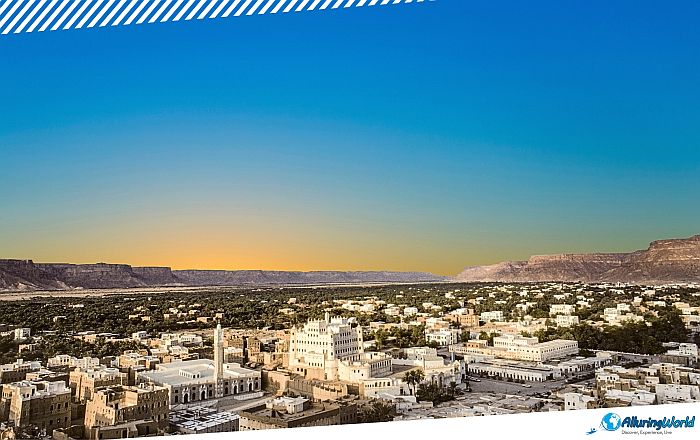
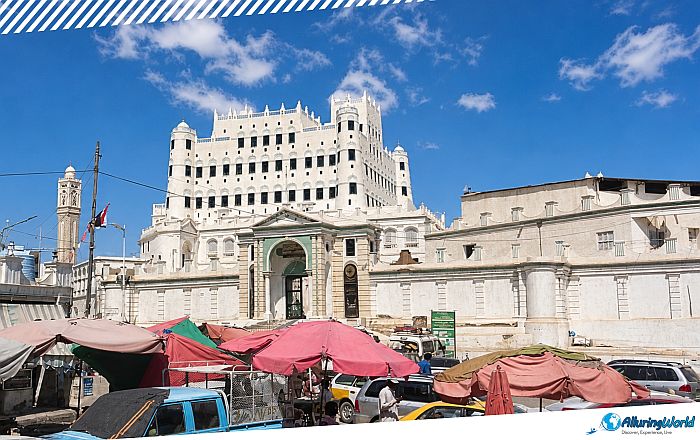
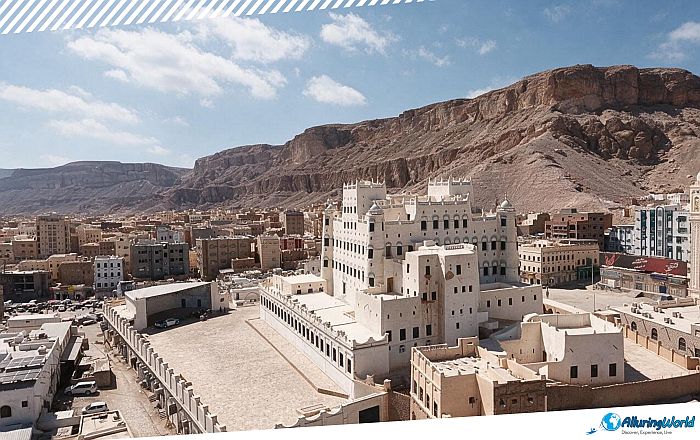
Seiyun Palace, also known as Kathiri Palace and sometimes as Sultan Al Kathiri Palace, is a historic and recognizable building located in the town of Seiyun, which is part of the Governorate of Hadhramaut, within the central part of the eastern section of the Republic of Yemen. Rising dramatically above the palm groves and sprawling urban sprawl of the Hadhramaut Valley, Seiyun Palace stands as one of the most astonishing architectural achievements in the Arabian Peninsula that deserves greater recognition than it has. This huge construction is considered one of the largest structures made of mud bricks in the whole world, something for which Yemen is well known. It is called the white jewel of the valley, and it makes the skyline of the city of Seiyun look magnificent, thus providing a substantial connection to the period when competing sultanates governed the inland trade routes of South Arabia.
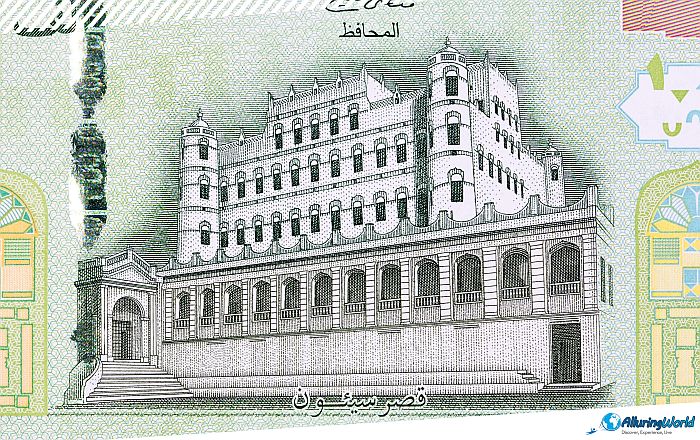
For centuries, the Hadhramaut area acted as an important junction point between the trade networks of the Indian Ocean and the deserts of the interior region of the Arabian Peninsula. Within this fertile region, Seiyun developed into a pivotal center for political administration, agricultural business, and Islamic studies, and central to this historic process was the magnificent Seiyun Palace. This fortified structure was converted into a royal residence, as it combined the traditional aesthetics of Hadhrami architecture and the political aspirations of the ruling class. Even today, despite the never-ending significant historical changes that occur in the region, the palace stands tall as a symbol of the rich Yemeni heritage and culture.
The significance of Seiyun Palace can only be understood once you understand its dynastic background. Whereas regional history in southern Yemen has been characterized by a prolonged struggle for dominance between the two leading forces in the region, the Qu’aiti Sultanate from the coastal city of Mukalla and the Kathiri Sultanate from the interior, Seiyun Palace has been designated by the Kathiri dynasty to serve as their palace and administrative hub.
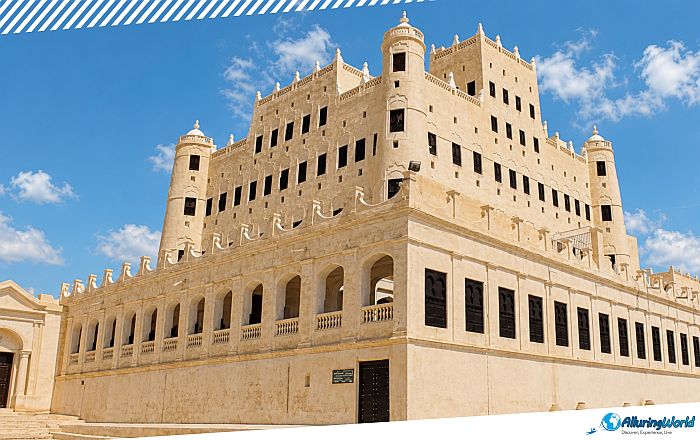
Dating to the late 19th century, it was around 1884 when the first defensive fort was built where the palace stands today, and it was by the order of Sultan Badr ibn Atek. During this period, the Seiyun Palace had mainly a military purpose, as it protected the oasis from attacks of local tribes and secured important trade routes in the interior. Furthermore, as the ruling Kathiri state strengthened its power in the upper valley of Hadhramaut, the necessity to build a royal palace grew even more. During the 1920s, Sultan Mansur ibn Ghalib Al-Kathiri embarked on an expansive building project, which ultimately led to the transformation of the original fort into a beautiful multi-storied royal palace. Sultan Mansur had envisioned a palace that could play many roles at once, as well as the place where the royal family would live, entertain diplomats and officials, conduct the affairs of government, and display the supremacy of the Kathiri state.
Throughout the decades, the palace was the center of inland administration for decades to come. From behind its thick mud brick walls, council deliberations were conducted, justice dispensed, and agreements made between the neighboring countries and foreign diplomats. This palace remained the official headquarters of the Kathiri rulers until 1967, when the monarchies of the south were abolished with the end of the British protectorate period and the rise of the People’s Democratic Republic of Yemen.
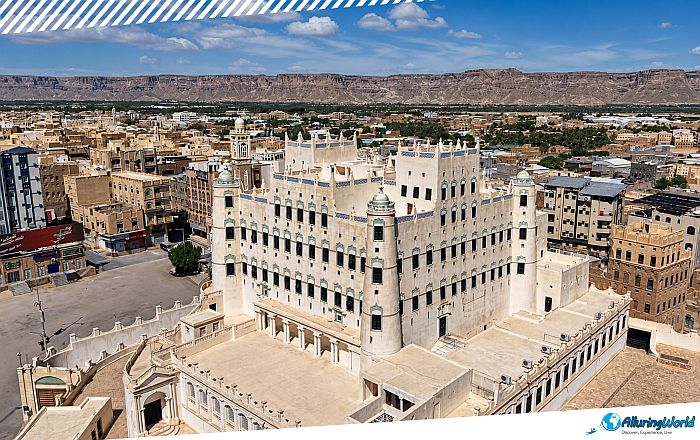
The strength and beauty of the Seiyun Palace are the pinnacle of Hadhrami architectural engineering. Constructed from all-natural local materials, the palace serves as an example of how old-fashioned construction techniques can result in large and sturdy buildings designed for harsh desert conditions. The key building material of the palace is mudbrick, produced by an age-old recipe honed through thousands of years of practice in the valleys of Southern Arabia. Some interesting facts that you’ll find fascinating are the following:
- Sun-Dried Mudbrick: The soil, which naturally contains clay, is combined with sand, water, and chopped straw. Straw binds the mixture together and thus helps avoid any possibility of cracking due to drying under the hot Arabian sun.
- Structural Timbering: The ceiling system, the structural beams, and the heavy lintels are built from the dense wood of date palms as well as hardwoods that have been imported.
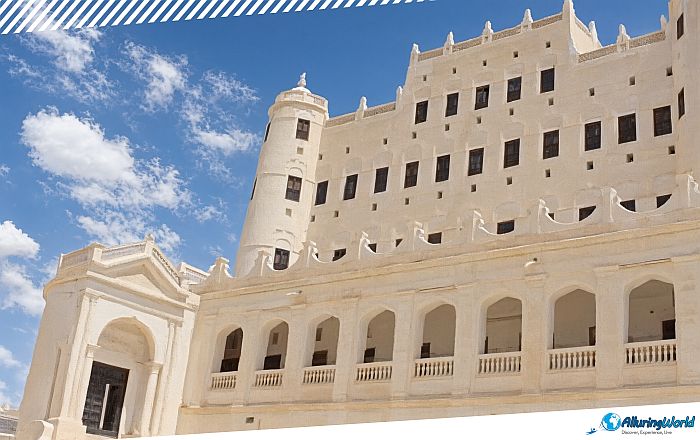
- Lime Plastering (Nura): Exterior surfaces and decorative elements are coated in a fine white lime plaster known locally as nura, which reflects harsh solar radiation and protects the underlying earthen walls from wind erosion.
ADVERTISEMENT
Overall, the thermal characteristics of this earthen structure are quite amazing. The walls that are made up of very thick layers of mud brick are highly thermal in nature, and they absorb all the heat from the sun but do not allow it to enter the interior parts. This way, when the outside temperature falls at night, the stored heat is emitted inside the hallways. As an aesthetic feature of Seiyun Palace, you can immediately notice the massive rectangular form of the palace, the stepped structure of the building, as well as the watchtowers located at the corners of the building, which reflect its military nature. The stark white lime plaster used in the upper levels of the palace creates an impressive contrast with the colors of the valley around the palace. The carved wooden windows and the mashrabiya screens are used to admit light into the inner rooms.
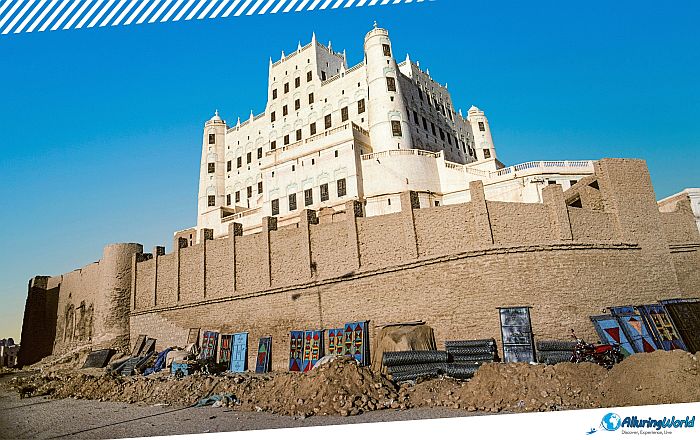
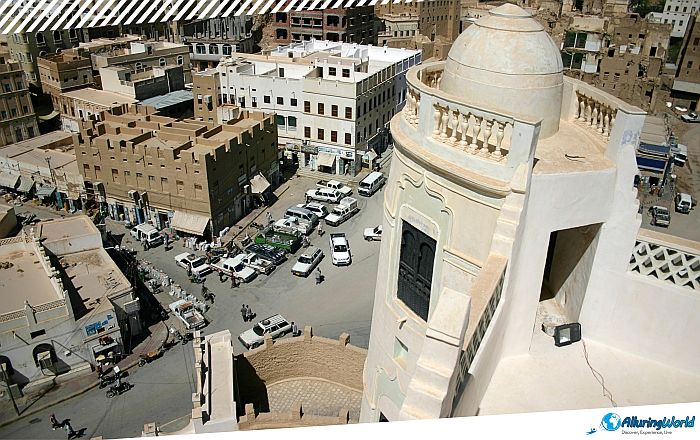
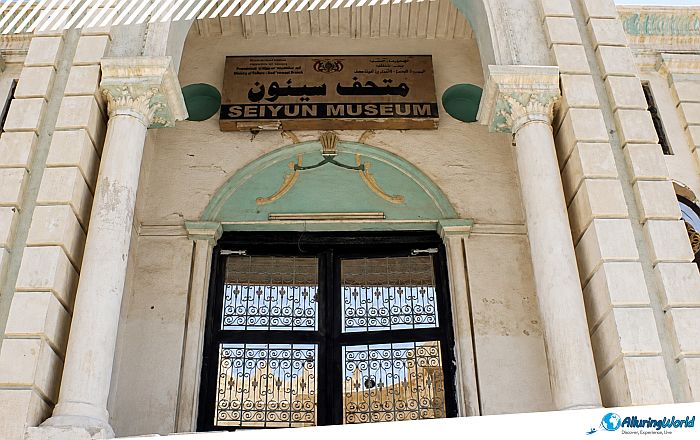
The interior of the palace spans several floors connected by large, gently graded staircases that have traditionally accommodated dignitaries and staff alike. In the middle is a reception hall with high ceilings, created by carved wooden pillars and decorated with intricate geometrical designs, and this creates an amazing Yemeni atmosphere that is great to see in person. The roof and upper-level courtyards, on the other hand, offer breathtaking views of the extensive date plantations, vibrant market scenes, and cliffs surrounding Seiyun. After the downfall of the Kathiri monarchy in the late 1960s, the significance of the palace complex was acknowledged by the state officials, who turned it into a cultural monument and museum of the area. Now, the palace serves as the Seiyun Palace Museum, and it is among the key cultural centers of eastern Yemen, as it exhibits thousands of years of history from the Hadhramaut Valley.
The exhibits held in the museum are a combination of different eras, starting from pre-Islamic antiquities up to the contemporary ethnographic history of the region. Exhibits displayed in the royal halls include:
- Ancient South Arabian archaeological finds, including inscribed stone tablets, pottery fragments, and bronze artifacts recovered from nearby historical sites such as Raybun and Shabwa.
- An extensive ethnographic collection displaying traditional Hadhrami attire, silver jewelry, weaponry, ceremonial daggers (janbiya), and hand-woven textiles.
- Historic manuscripts, royal decrees, and administrative documents detailing the governance, trade relations, and legal affairs of the Kathiri Sultanate.
Beyond its role as a museum, Seiyun Palace stands as an enduring symbol of community identity and cultural preservation. In recent years, international heritage organizations, including UNESCO, have recognized the critical importance of maintaining Yemen’s earthen architectural landmarks. Because mudbrick structures require periodic re-plastering and continuous maintenance to prevent structural decay, local master builders and restoration crews periodically apply fresh layers of nura plaster to the exterior walls, keeping the ancient techniques of Hadhrami craftsmanship alive for future generations.
To visit Seiyun and experience this renowned palace, it is necessary to plan and have an appreciation of the area’s conditions and culture. Most importantly, as the country is in constant conflict and geopolitical struggles between major players, you should always coordinate and cross-reference the travel situation and the travel advisory issued by the governments of the respective countries. Still, as the palace is situated inside the Hadhramaut Valley, Seiyun can be reached through Seiyun International Airport (GXF), which plays a vital role in the region. Some very essential considerations you should keep in mind are the following:
- Best Time to Visit: The best time to visit the Hadhramaut Valley is during the winter season, which runs from October to March, because the days will be cooler, allowing for outdoor activities.
- Cultural Etiquette: Hadhramaut is a deeply conservative region. Visitors should dress modestly, covering shoulders and knees, and seek permission before photographing residents or administrative sites.
- Safety & Logistics: As a result of the continuous geopolitical changes in Yemen, travelers are not advised to travel independently. It is imperative that you work with approved local tour operators and obtain all the necessary travel authorizations.
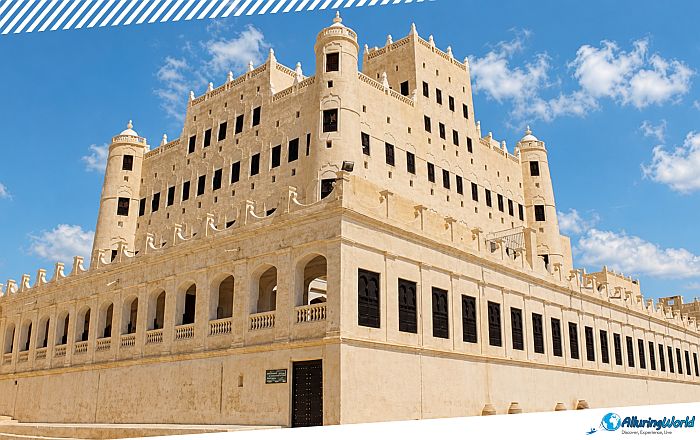
Visiting the top terraces of Seiyun Palace towards the latter half of the day provides a remarkable experience indeed. When you have the setting sun as it casts its golden hues on the whitewashed structure and the muezzin’s call reverberating through the valley, this is the time when you will notice how the entire architecture comes alive.
In summary, the Seiyun Palace is one of the best architectural masterpieces that have been preserved on the Arabian Peninsula. It combines the characteristics of strength as well as those of beauty, and, fortunately, this piece of architecture has been preserved for the enjoyment of people in the coming generations. As the rulers of Kathiri were successful in establishing a monument that not only had a political purpose but was also a symbol of pride for the people of the Hadhramaut region, the Seiyun Palace should continue to be maintained so that it will inspire other architecture enthusiasts to create other marvels like this one, perhaps.