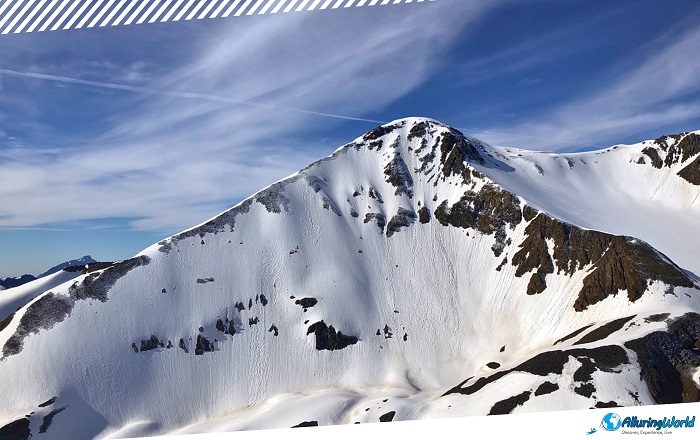
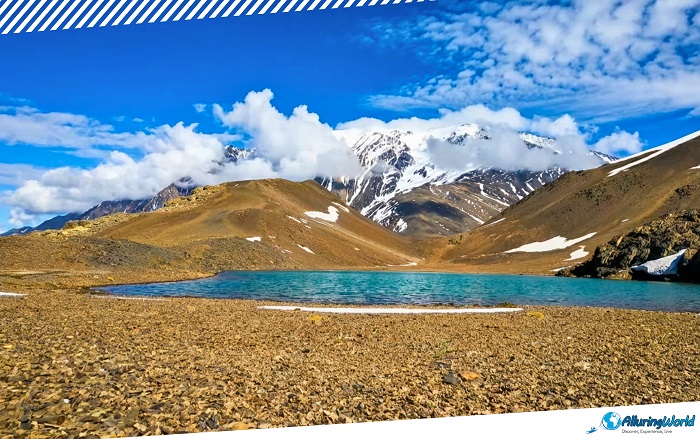
Mount Bazardüzü is a mountain and mountain peak towering over the Greater Caucasus, which is known as the highest peak of the Republic of Azerbaijan. Straddling the international border between Azerbaijan and the Russian Federation, this mountain peak is a centerpiece of the Caucasus mountain range, though its geographical significance extends beyond mere elevation.
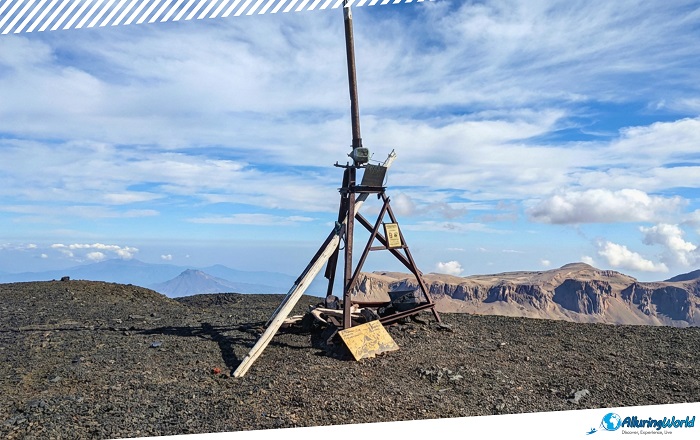
Notably, while the summit itself is shared, the southernmost point of Russia is located approximately 7 km (4 mi) to the southwest of the peak, placing Mount Bazardüzü in a highly sensitive and strategically important frontier zone.
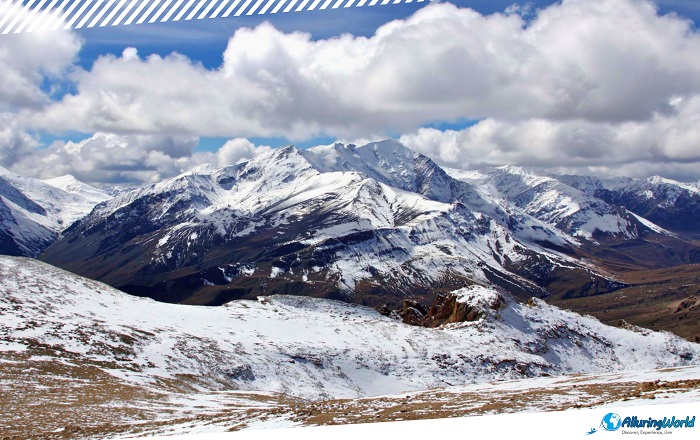
Standing at an impressive height of 4,467 m (14,656 ft) above sea level, the mountain’s southern slopes are integrated into the Şahdağ National Park (Şahdağ Milli Parkı), the largest protected area in Azerbaijan. The mountain’s extreme altitude creates a harsh alpine environment where vegetation ceases to exist well below the summit, as it can be seen from the photos in this article showcasing the surroundings when ascending. This “barren” peak is consequently dominated by a permanent cryosphere, characterized by perennial snowfields and glacial ice that persist even through the warmest summer months.
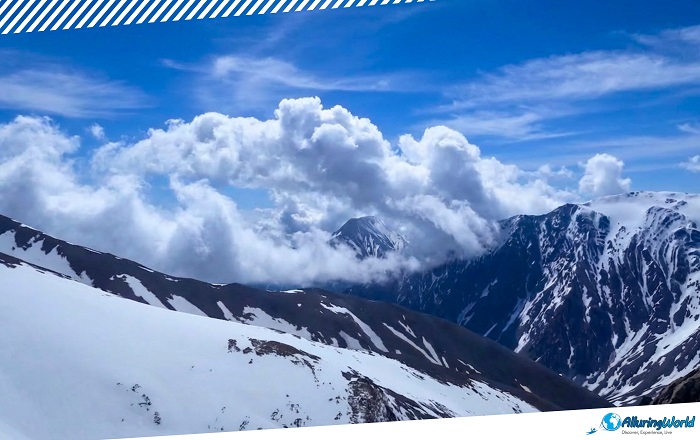
The mountaineering history of Mount Bazardüzü began in 1847, when Aleksey Aleksandrov, a Russian explorer, recorded the first known ascent via the northeast ridge. Today, the peak remains a popular objective for high-altitude trekkers and alpinists.
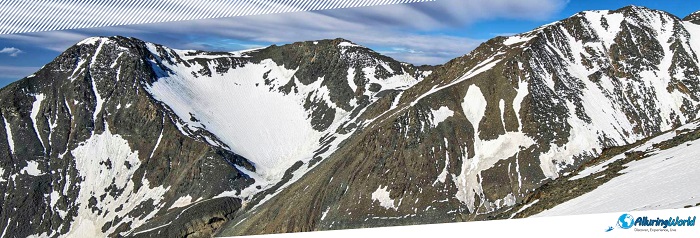
The standard route from the Azerbaijani side approaches from the south, traversing a demanding gravel path that eventually links to the uppermost northeast ridge. While not technically extreme for professional climbers, it is classified as an intermediate ascent that requires physical endurance and acclimatization to the thin, oxygen-poor air.
ADVERTISEMENT
Because the mountain is situated directly on a sensitive international border, the logistics of an expedition are complex. Climbers approaching from Azerbaijan must secure a valid visa, obtain a specific entry permit for Şahdağ National Park, and undergo mandatory registration with the State Border Service.
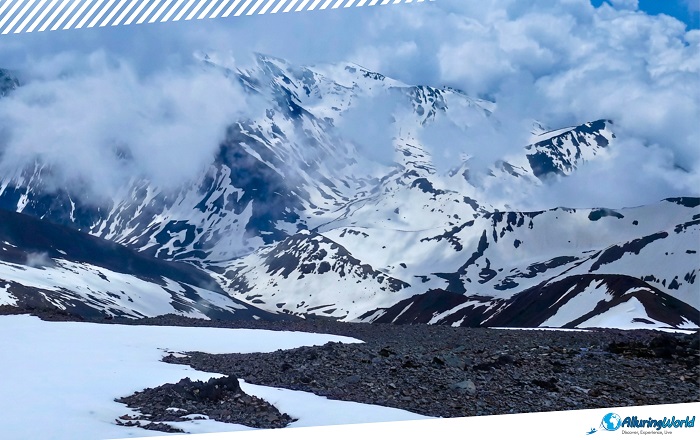
Conversely, the Russian approach is subject to strict border zone regulations, often requiring specialized permits from the Federal Security Service (FSB). Despite these bureaucratic hurdles, the reward for reaching the summit is unparalleled: a panoramic view of the rugged valleys and jagged peaks of the Caucasus, offering an extraordinary glimpse into one of the most remote corners of Eurasia.