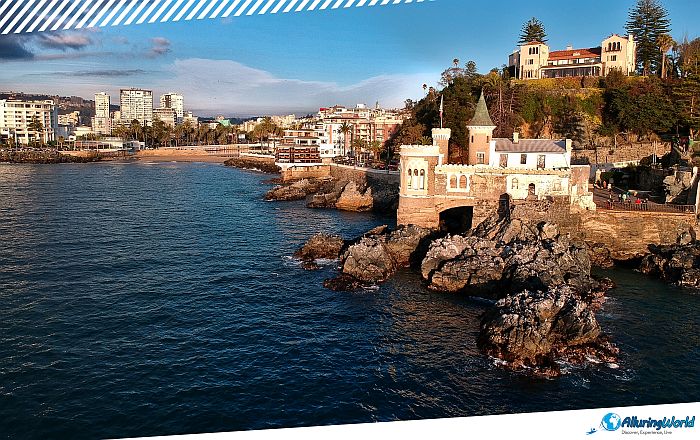
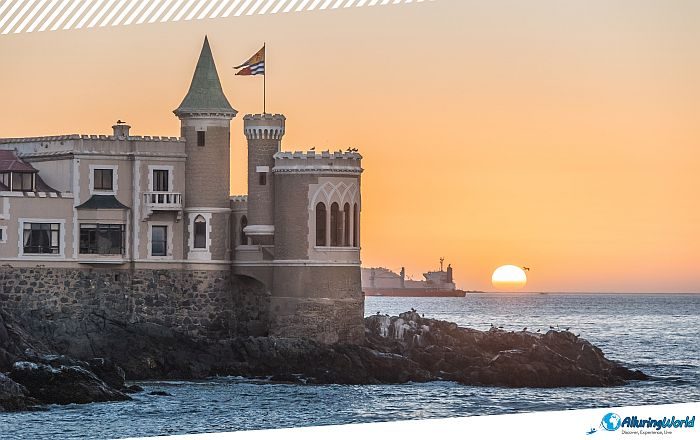
Wulff Castle, locally referred to as Castillo Wulff, is a historic castle that is a pretty popular spot for tourists located in the southeastern part of the city of Viña del Mar, in the Valparaíso Province and Region, within the central part of the Republic of Chile. Being one of the most emblematic landmarks of the city, Wulff Castle stands boldly on the rocky edge of the Pacific Ocean as if it were carved from the drama of the coastline itself. What captures your attention is the stone walls and pointed turret, which majestically rise above the waves, further blending the elegance of European architecture with the raw beauty of Chile’s central shore. The castle is more precisely located beside the well-known Muelle Vergara, and it has been an architectural symbol of the city ever since it was constructed. The whole structure serves as a monument that tells a story of ambition, heritage, and transformation.
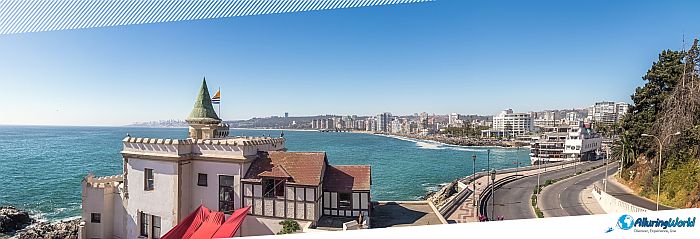
The start of the castle’s story begins with Gustavo Wulff Mowle, who was a prominent Chilean businessman of German descent, and he played a very important and central role in the economic development of Viña del Mar during the late nineteenth and early twentieth centuries. His work was mainly influential from maritime commerce to public works, and as he was quite wealthy, his wealth gave him the means to envision a residence that reflected both his European roots and the rising prestige of the city where he lived. The construction started between 1905 and 1906, and it was under the guidance of the architect Alfredo Azancot, who initially designed a modest wooden house perched upon the rocks. Despite the fact that the house was far simpler than the castle-like structure we know today, the first version already demonstrated Wulff’s fascination with symbolic architecture and his desire to build something unlike any other home on the coast. The initial castle-like structure was officially completed between 1906 and 1908.
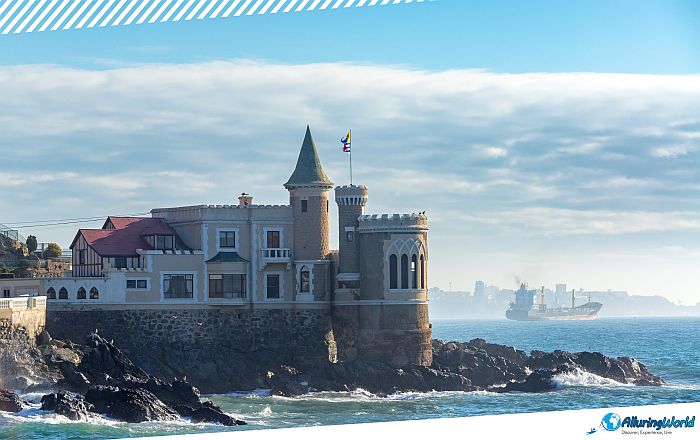
The extreme transformation, starting from a wooden seaside house that was slowly degrading from the elements and then moving into a fortified stone castle, occurred gradually. Since Wulff had an evolving taste at the time, his desire for a residence was evolving as well, and he wanted something that could truly withstand the elements. This is why in 1918, he financed a significant remodeling project that dramatically changed the building’s appearance, so that it would receive the iconic visual appearance we see today. It was, in fact, during this renovation that the iconic cylindrical turret was added on a separate rock formation, connected to the main building by a short, narrow bridge.
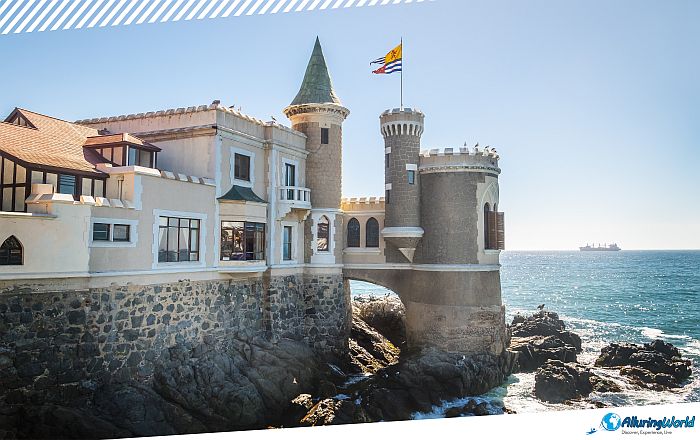
Even though this was not initially envisioned by Wulff, this romantic and theatrical feature became the castle’s visual signature immediately, echoing Norman and Anglo-Saxon architectural influences while simultaneously reflecting elements of French style popular among European-inspired constructions of the era. This last remodeling replaced previous structures that were built out of wood, and as stone and reinforced concrete are not susceptible to the natural elements, it was certain that Wulffs Castle would have a long-lasting history.
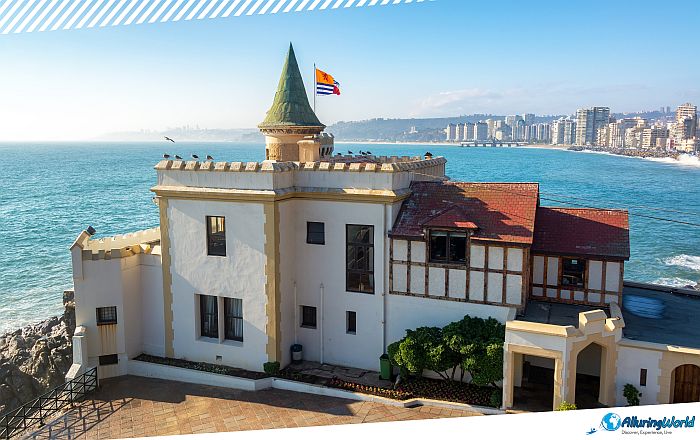
Perhaps one of the most impressive features is the castle’s foundation. They are built directly into the rocky coastline, and they are further fortified with reinforced concrete. This was a structural design that was remarkably advanced for the early 1900s, and it was something not very common in the area at the time. The harsh waves of the Pacific as they crash relentlessly against the rocks below give a unique visual as the castle is flowing as a ship over the water, and yet the castle seems to rise effortlessly from the chaos.
ADVERTISEMENT
Throughout time, there have been further additions to the castle, which have enhanced the visitor experience, and these include a striking glass-panel floor that allows guests to peer straight down into the swirling ocean below, consequently turning the movement of the sea into a living, ever-changing part of the building’s interior. The overall combination of the castle showcase, starting from the rough stone walls, slate roofing, arched windows, wooden details, and elegant decorative elements, creates an architectural blend that feels eclectic and purposeful. This is mainly attributed to an embodiment of its founder’s European heritage and his connection to the Chilean coast.
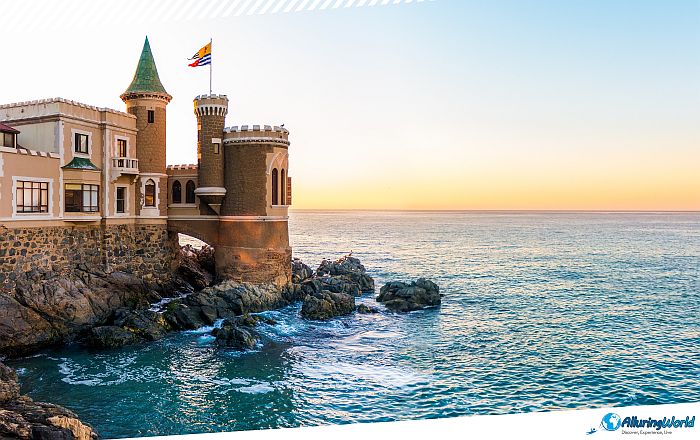
Unfortunately, Wulff died in 1946, and since then, the Wulff Castle has changed ownership several times. At first, the castle was passed to Wulff’s heirs, who also added some additions to the castle; however, in the end, they decided to sell it to the city in 1960. Since then, the castle served as a museum, but as the years passed, the harsh marine environment took its toll. The decades of salt corrosion, humidity, and the constant pounding of waves made conservation increasingly challenging. To be able to preserve this architectural marvel, the Chilean government recognized Wulff Castle in 1995 as a National Historical Monument, further accenting the castle’s architectural and historical value. What this decision did was to make sure that the castle would be protected from further additions and changes, and it would continue to have the same appearance. In addition, it made sure that its protection would be held with high standards, and further, it would give the city of Viña del Mar the legal framework to begin intensive conservation work.
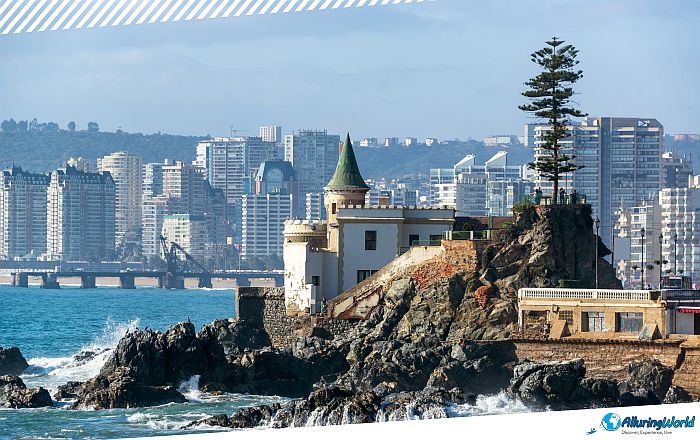
As the ownership was officially passed to the Municipality of Viña del Mar, the municipality initiated extensive restoration projects that modernized the structure while respecting its original character. Even though it seemed that these would be easy, sadly, these efforts were not simple. Due to its location, which demanded specialized engineering to secure the foundation against erosion and reinforce materials that were constantly weakened by the marine environment, in the end, there was a successful and transformative resolution. Following restoration, Wulff Castle was reopened as a cultural and historical space dedicated to the city’s heritage. Today, it houses the Heritage Unit and Museum of Viña del Mar, further functioning as an exhibition center where rotating art displays, historical collections, and cultural events from the region animate the rooms that once belonged to a single wealthy family.
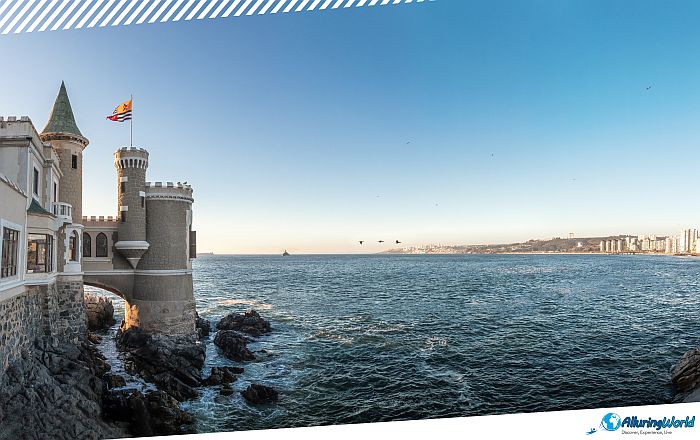
If you would like to visit Wulff Castle, then you should prepare yourself for more than architectural uniqueness. When you stand on the bridge that leads to the turret or if you are watching the waves that crash beneath the glass floor, these features will offer you something rare between human craftsmanship and the power of nature. The never-ending panoramic views of the coastline, the sound of the ocean, and the elegant interior design will turn your walk through the castle into an immersive experience. Travelers often stop to explore its small museum, photograph the dramatic façade framed by sea spray, or stroll along the coastal promenade that links the building to other landmarks of Viña del Mar.
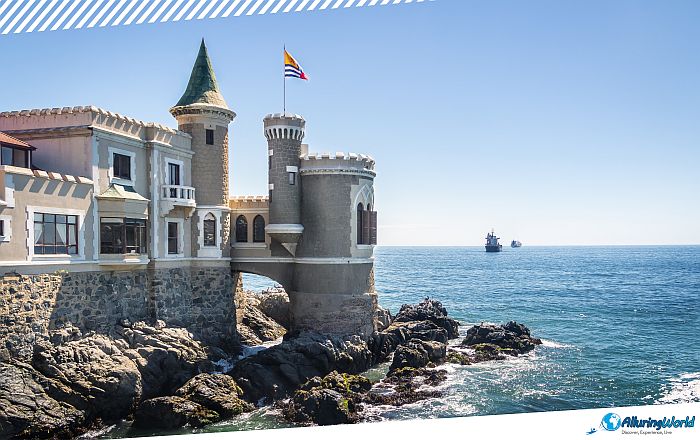
Despite the structure appearing in good standing, it still requires continuous maintenance, especially the sections that are exposed to the crushing Pacific waves. The constant battle against erosion, salt, and humidity still requires some periodic restoration efforts, which are technically complex and costly. Constant conservationists must carefully preserve the castle’s historic materials while reinforcing the structure to withstand future decades of environmental stress.
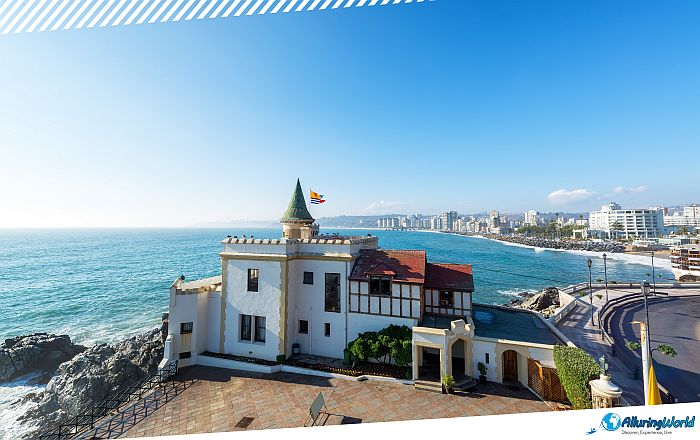
In conclusion, Wulff Castle stands as a historic monument that is deeply linked to the past and currently serves as a vibrant symbol of Viña del Mar’s cultural identity. Deeply connected with the local Chilean history and European influence, this architectural masterpiece is something that should be experienced in person. Its stone walls hold the memories of a city in transformation, a coastline that continues to change, and a founder whose dreams still echo through every window overlooking the sea. If you are seeking beauty, history, and a connection to the perpetual rhythm of the Pacific, then look no further because Wulff Castle will offer you a rare and unforgettable experience. Simply put, Wulff Castle is something that captures the spirit of Chile’s coast with elegance, character, and an enduring sense of wonder.