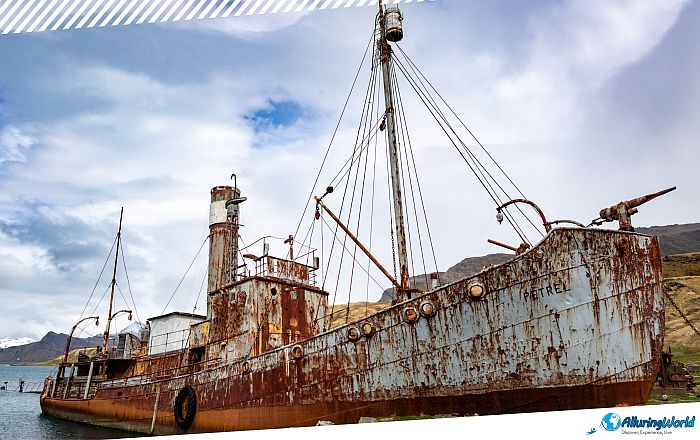
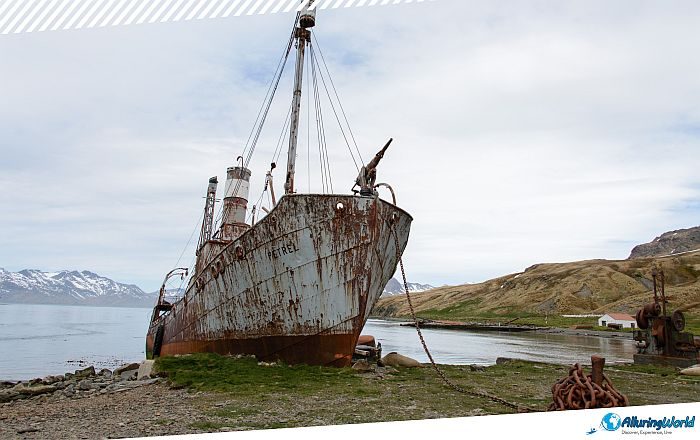
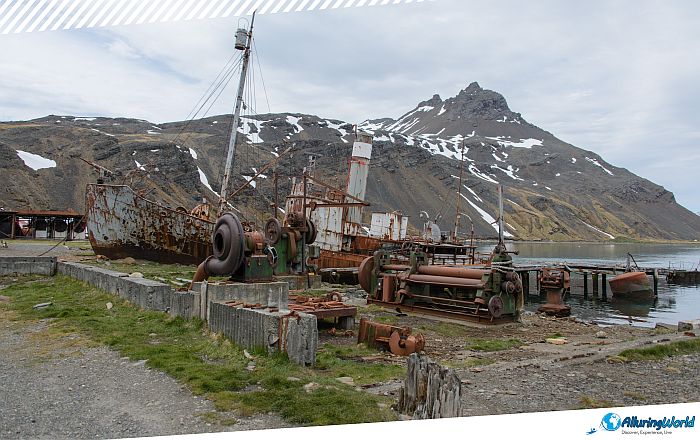
Petrel, or as officially referred to as the ship Petrel, is a former whaler ship that was in service around the waters of Antarctica, and today is beached in the hamlet of Grytviken, in the central part of the island of South Georgia, which forms the remote British Overseas Territory in the southern Atlantic Ocean, South Georgia and the South Sandwich Islands. As the ship is resting today in the quiet bay of Grytviken, it is considered one of the most evocative relics of the industrial whaling era in the South Atlantic. The very visible rusting hull, which is beached in a shallow “mud berth,” stands as a powerful reminder of a period that profoundly shaped the history, economy, and ecology of the region.
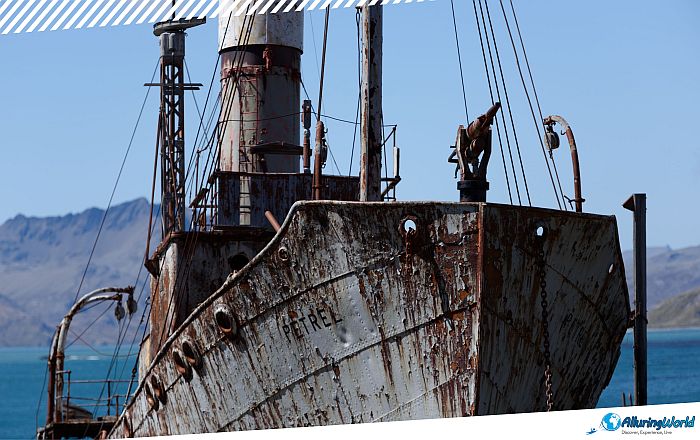
Even though it stands as frozen in time, the vessel remains a vital historical artifact to remind people about the story of technological ambition, human endurance, exploitation of natural resources, and eventual transformation toward conservation. When we discover the history behind this abandoned ship, we can learn how this once-fast and efficient whale catcher became one of the most iconic remnants in the South Georgia and South Sandwich Islands.
The Petrel was built in 1928 in Oslo, Norway, during the golden age of industrial whaling. Because the whale oil demand was very high at that time, many specialized vessels were constructed to chase down the world’s largest marine mammals with increasing speed and efficiency. The Petrel was part of this generation of purpose-built catcher boats. They were made to be sleek, compact, and engineered for agility in the often brutal seas surrounding South Georgia. The primary purpose was to pursue fast-moving whales, harpoon them using explosive-tipped projectiles, and then tow the carcasses back to processing stations on South Georgia. As the whales could only be captured in open seas, these ships formed the backbone of an industry that dominated the island for decades and supplied whale products to markets worldwide.
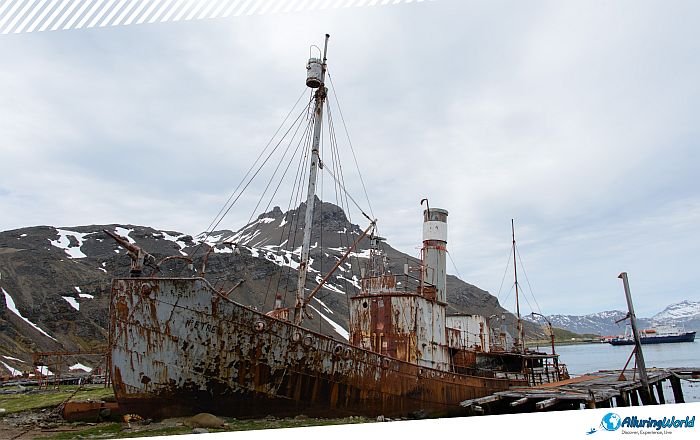
During its operational years, the Petrel was based mainly at Grytviken, because this was the oldest whaling station on South Georgia, which was established in 1904 by the Norwegian entrepreneur Carl Anton Larsen. It was from this location that the ship spent long seasons patrolling the icy waters of the Southern Ocean. The ship was steam-powered and equipped with a triple-expansion engine, which allowed the Petrel to have the speed to keep pace with fin whales, humpbacks, and blue whales. Unfortunately, its work was relentless and very successful. The hunters tracked whales from dawn until daylight faded, and the Petrel’s crew performed intense, physically demanding labor in freezing winds and rough seas. Once a whale was secured on the ship, the cargo was towed to the station so that it would be processed into oil, meatmeal, and other products.
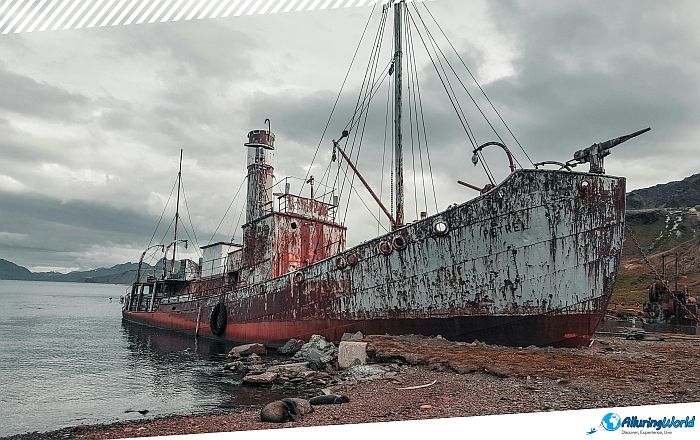
Perhaps one of the remarkable features of Petrel’s design was its catwalk, or “flying bridge.” This is considered to be one of the earliest examples of a whale catcher, as it was not very common in other previous whale catcher ships. What this did was to elevate the walkway, which linked the wheelhouse to the bow-mounted harpoon gun, thus allowing the captain to run forward quickly and get the harpoon gun ready to shoot when a whale was spotted. This innovation improved the safety and speed, consequently giving the captain clearer visibility and better control while preparing to fire the explosive harpoon. As the Petrel’s experience was shared with other manufacturers, the Petrel’s catwalk was a model for later catcher boats. Sadly, this symbolized the technological evolution that allowed whaling operations to intensify dramatically in the early twentieth century.
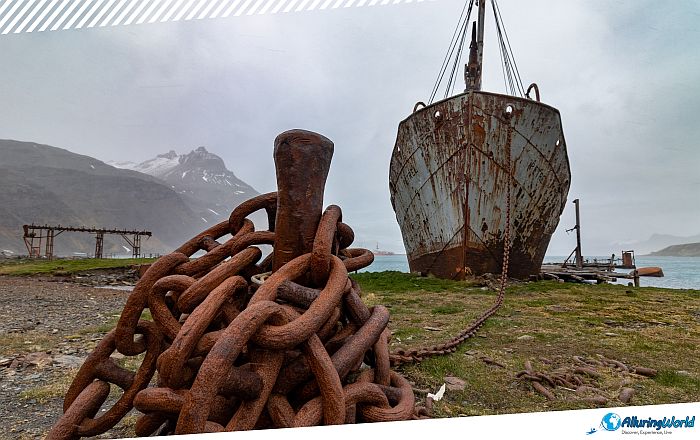
Even though whale oil became less in demand as the 20th century passed, the vessel remained in active service until around 1956. Around this time, it was noted that whale populations sharply declined, whale catching was not that profitable anymore, and henceforth, the industry approached collapse. As catches dropped, the whaling companies sought other uses for their ships. The Petrel was adapted briefly for seal hunting around 1957 because this was considered a desperate attempt by its owners to extract the remaining commercial value from the vessel. Fortunately, sealing also diminished rapidly, and within a short time, the Petrel, just like many other catcher boats, was deemed obsolete. As its use was no longer needed, the Petrel was then towed to a shallow area near Grytviken, pushed into the mud, and left to decay. As its engines cooled for the last time, the ship became a silent monument to a bygone era that future generations are trying to correct.
ADVERTISEMENT
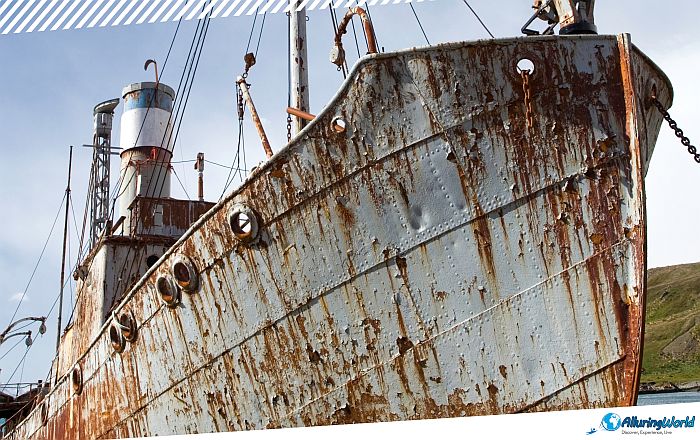
Physically, the Petrel measured about 35.1 m (115 ft) in length and had a gross tonnage of approximately 245 GRT. It was built with a stout steel hull and powered by a coal-fired steam engine capable of delivering the speed necessary for successful whale pursuit. Today, it is very noticeable that the same steel framework is heavily corroded, having endured more than six decades of harsh sub-Antarctic weather. As the whaler is located in a very harsh region where salt, wind, and freezing temperatures are accelerating its deterioration, there are large sections of the hull that are twisted, perforated, or collapsed. Its mast, gun platform, and interior compartments remain visible, but in a fragile and hazardous condition. Regrettably, visitors cannot board or touch the Petrel, as the structure is quite unstable and it is also protected as part of the Grytviken historical area.
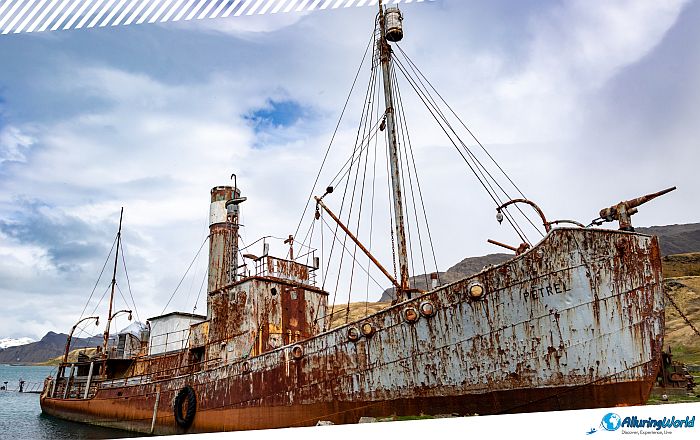
Despite its deterioration, the wreck remains under careful monitoring by the South Georgia and South Sandwich Islands government. Historical vessels were once sources of environmental concern because old fuel tanks and machinery contained oils that posed ecological risks. There have been some clean-up programs in recent years that have removed major contaminants from derelict ships around the island, thus reducing environmental hazards while preserving the vessels in situ to maintain their historical value. Today, the Petrel stands safe for the environment and secured as a cultural heritage of South Georgia, despite its continuing decay.
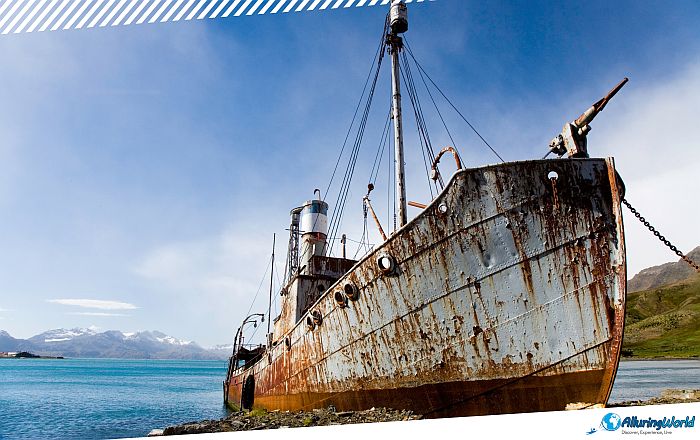
Seen from a cultural perspective, the Petrel is one of the most iconic and photographed features at Grytviken. The decision not to remove or salvage whatever is left from the once mighty ship reflects the region’s commitment to preserving its industrial heritage. Even though whaling is seen today as a destructive and very unsustainable option for animal oil, it shaped the economy and society of this overseas territory. This is why the Petrel and other ships should continue to be in the bays around South Georgia so that they would serve as a stark reminder of how humans can affect whale and other sea animal populations If you get the chance to stand near the wreck, you can visualize the the once-bustling harbor that was filled with catcher boats, factory ships, and workers who processed once hundreds of whales each season.
As a bonus point, the wreck has also taken on a small ecological role because sub-Antarctic wildlife now uses the Petrel as a sheltering spot. There are many elephant seals and fur seals that often haul out around the hull, sleeping in its shade or curling against its rusting steel plates. Birds too perch on its remaining metal beams, and penguins wander nearby. Although the ship once contributed to the depletion of marine species, it now provides microhabitats for animals that have returned to the region in large numbers thanks to modern conservation efforts.
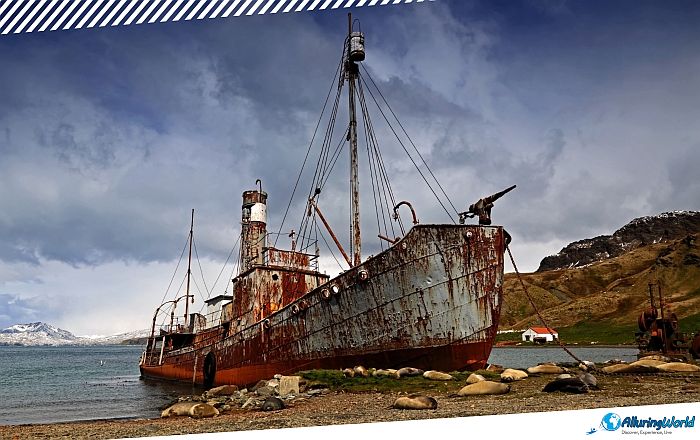
In conclusion, the ship Petrel is more than a rusting hull in the Bay of Grytviken. It is a rare and tangible piece of industrial history, a symbol of a bygone era that shaped global ecology, maritime traditions, and the identity of South Georgia itself. As the ship is left in place to weather slowly and naturally, it continues to educate, fascinate, and provoke reflection in the visitors who are lucky enough to visit this almost inaccessible part of our alluring world.