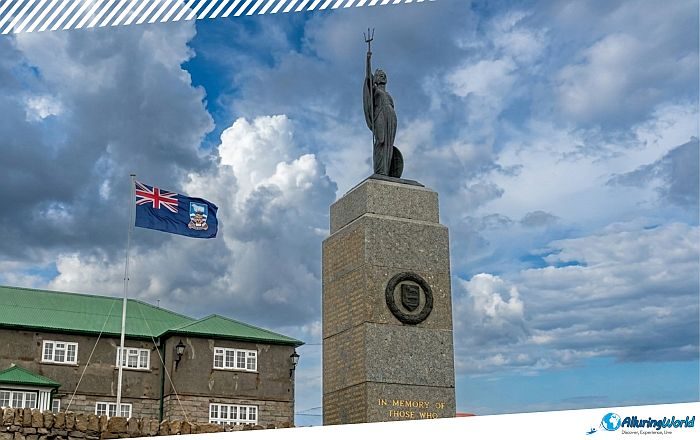
The 1982 Liberation Memorial is a very important monument that is one of the most meaningful symbols that can be found in the city of Stanley, serving as the capital city of the British Overseas Territory in the South Atlantic Ocean, the Falkland Islands. This monument might seem to be simple; however, it is a place where gratitude, remembrance, and national identity come together in a single, dignified structure, overlooking the sea along Ross Road, directly across from the Secretariat Building. The memorial greets residents and visitors with a quiet power. It is more than a monument; it is rather a deeply profound symbol of the deaths, the losses, and the strength it took for the islands to come out of what could be described as the most defining period in their history. As the life of the Falklanders was greatly changed, and their destiny was irrevocably reshaped during ten turbulent weeks in the autumn of 1982, it is very important that all visitors coming to this far-flung place pay their respect to this place as well.
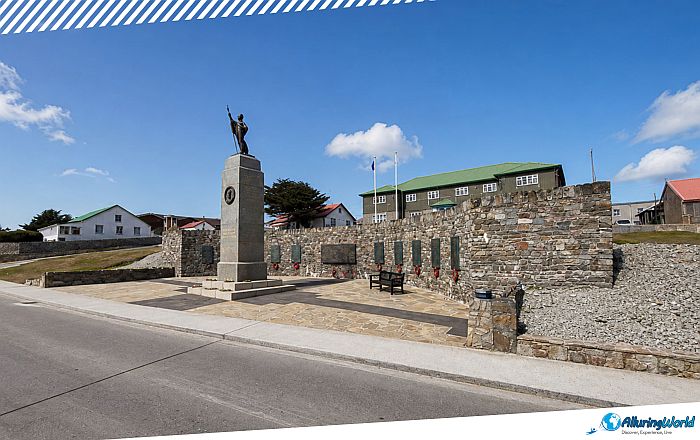
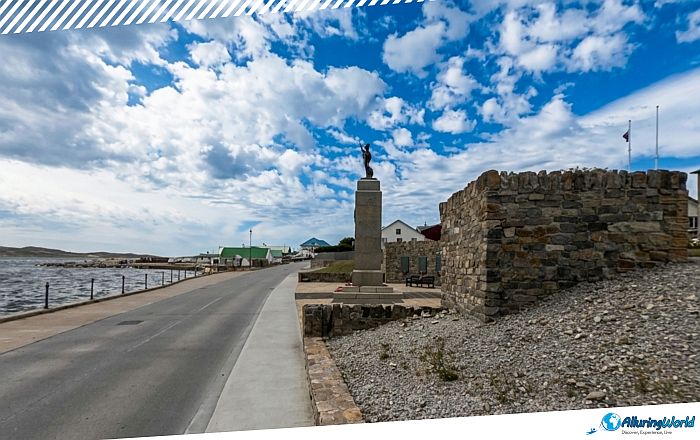
Looking over the cold, gray waters of Stanley Harbour from Ross Road, the 1982 Liberation Memorial, erected in 1984, is the defining image of the Falkland Islands’ recent past. Positioned in front of the Secretariat Building, the administrative center of the islands, the monument welcomes citizens, cruise ship visitors, and other tourists with its powerful presence. It is much more than just another civic monument; rather, it acts as the focal point of gratitude and reflection for a society that has experienced great hardship in the 1980s.
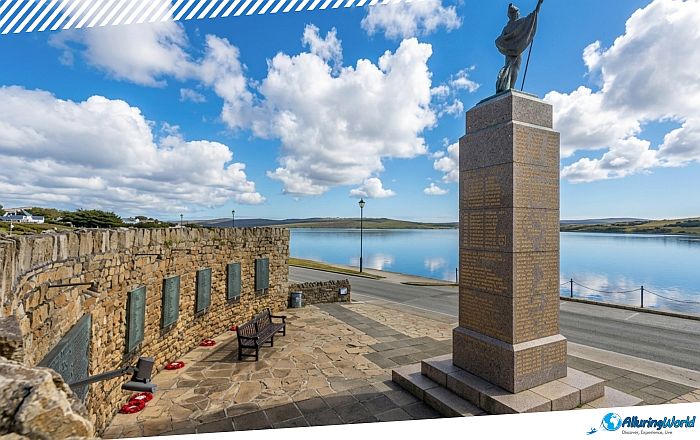
When planning your trip to Stanley, paying a visit to the memorial will be important in helping you understand why the residents have such cultural strength, political autonomy, and a sense of pride. It is necessary to know the architectural details about the memorial, when it was dedicated, and how to visit it in order to have an interesting visit to East Falkland. It is important to realize the gravity of the Liberation Memorial by examining the series of dramatic events leading up to its construction. On 2 April 1982, the Argentinian army invaded the Falkland Islands and occupied them for 74 days. The civilians living in Stanley found themselves caught up in a global conflict as the government of Britain sent a Task Force across the Atlantic Ocean, covering 13,000 km (8,000 mi), to reassert British rule in the area.
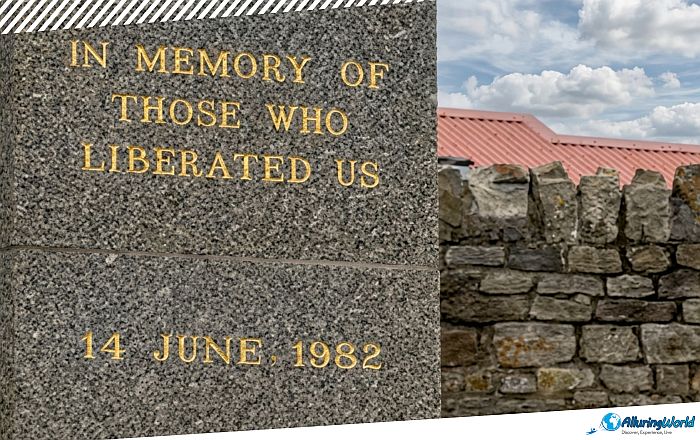
The peak of the battle came in mid-June 1982 when the British troops took control of important heights around the town of Stanley, such as Mount Harriet, Two Sisters, Mount Longdon, and Mount Tumbledown. The garrison of the Argentines gave up their posts on 14 June 1982. This event marked the end of the occupation of the Falkland Islands and freedom for the islanders. Two years later, on 14 June 1984, the Liberation Memorial was officially opened and blessed thanks to private funds collected by the inhabitants of the Falkland Islands.
The chosen waterfront site adjacent to Ross Road was not devoid of symbolism. For one thing, the site is adjacent to the same waters where the British Task Force ships sailed through to make the liberation possible. Also, by situating it in proximity to vital government facilities, the memorial serves as a reminder of the restored democracy in the Falkland Islands. Whereas short descriptions tend to confuse the 1982 Liberation Memorial as being a simple granite column, there is no denying that the monument is full of symbolic architecture and traditional British masonry techniques. The architect behind the Liberation Memorial was Gerald Dixon, who designed this structure using local stone along with classic figurative sculpture.
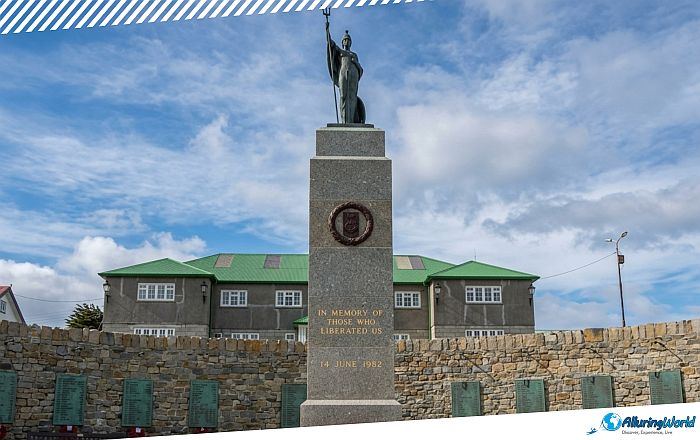
The obelisk, made out of local granite, rises high above the sub-Antarctic landscape, forming the focal point of the entire memorial structure. On top of this obelisk sits the bronze figure of Britannia, the classical symbolic representation of British national determination. The female figure holds a trident and looks outwards towards the harbor entrance. On the obelisk’s base, there is an engraving which shows a bronze relief plaque of its official dedication to the forces that liberated the islands, accompanied by the date 14 June 1982.
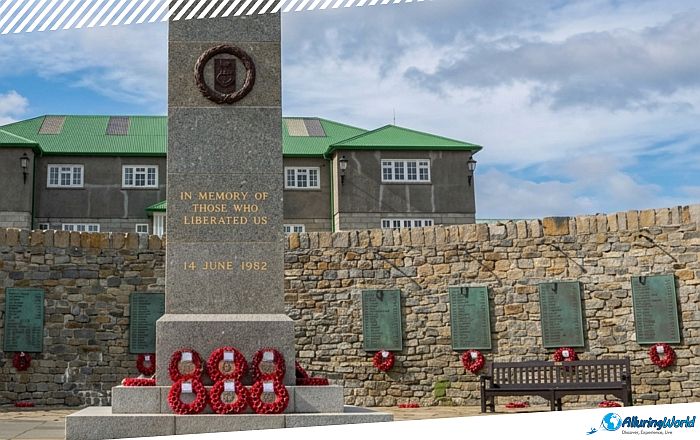
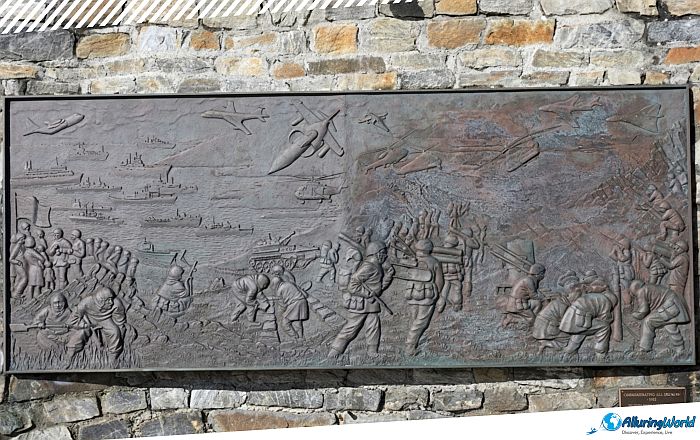
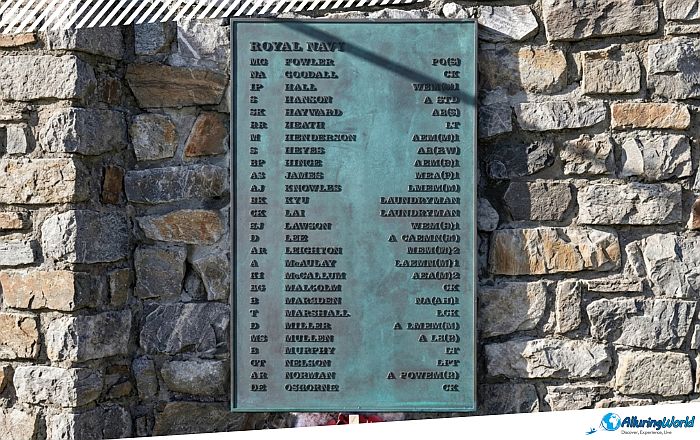
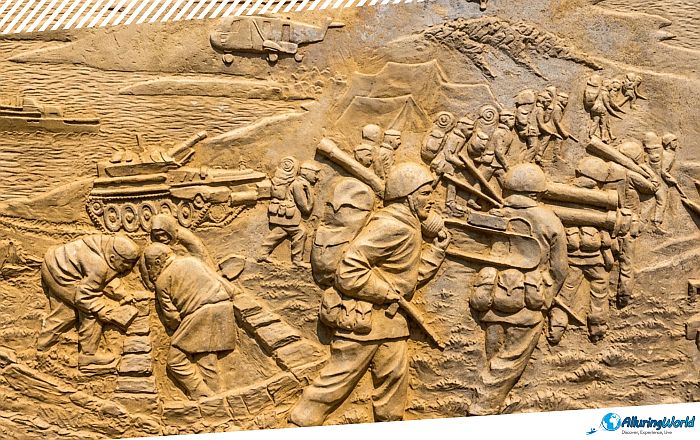
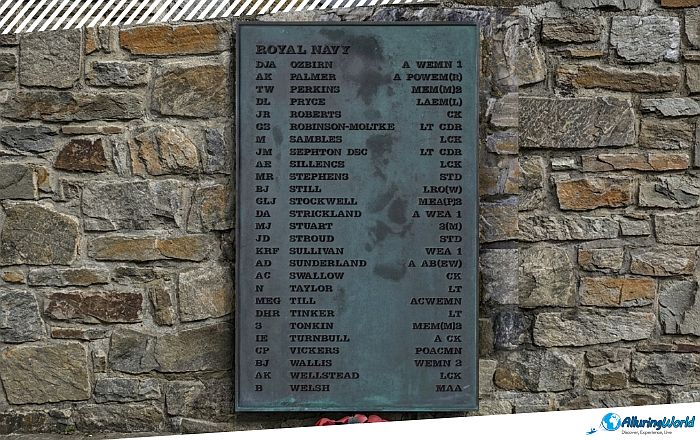
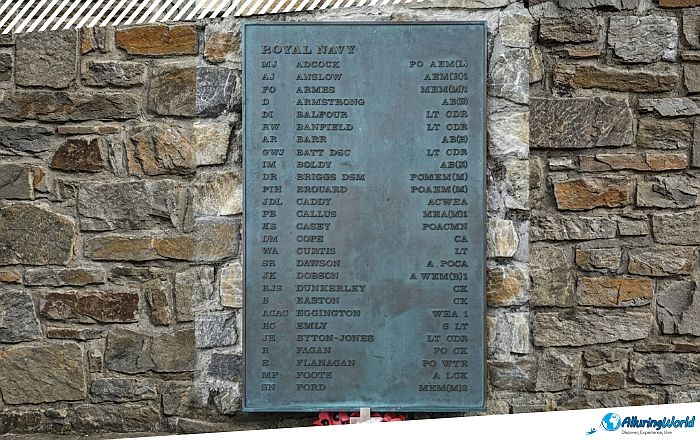
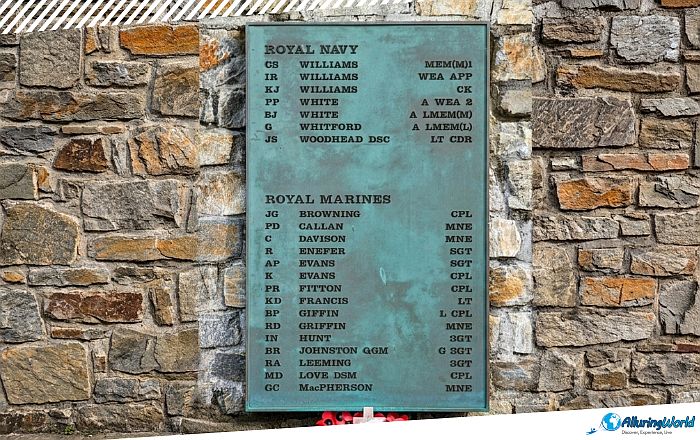
Surrounding the central obelisk is a semicircular, curved retaining wall built from local stone, designed to create a protected space of contemplation that separates visitors from the traffic along Ross Road. Embedded into the rear face of this curved wall are ten individual bronze relief plaques representing the various branches of the British Armed Forces, the Merchant Navy, and civilian units that took part in the campaign. When you see the memorial, you will wonder what the meaning is behind all of these parts, so to explain them better, here is a list of each section:
- Central Obelisk and Britannia Statue: Represents national sovereignty, victory, and the safety of the islanders.
- Semicircular Stone Wall: Indicates the security provided to the community, and is designed to create an alcove for introspection.
- Regimental and Unit Plaques: Detail the specific military units, ships, and auxiliary services involved in the 1982 Task Force operations.
ADVERTISEMENT
The reflective bronze details and polished stone accents reflect the ever-changing light off the South Atlantic, creating a dynamic visual experience that shifts dramatically with the weather, from bright, sharp sunlight to atmospheric ocean mist. The 1982 Liberation Memorial is a solemn tribute to those who died as a direct consequence of the Falklands War. Overall, 907 people lost their lives in the war, both military personnel and civilians. These names have been inscribed in the stone and bronze and include 255 British soldiers who lost their lives, along with the names of the units that had losses in sea, air, and land fights.
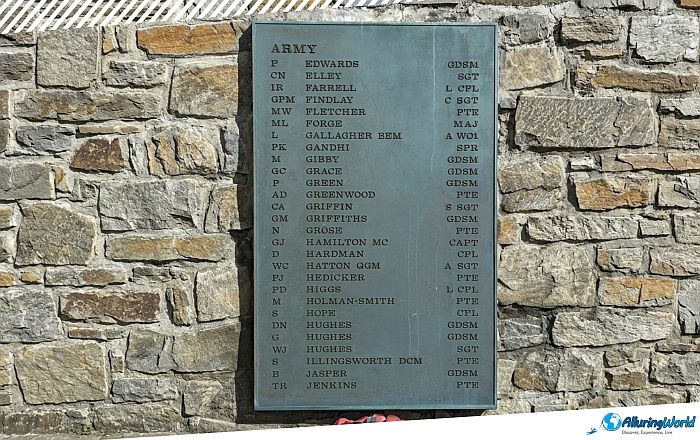
More importantly, the monument serves to preserve the memory of the three civilians who died because of the artillery bombardment and shelling of Stanley. Contrary to what is commonly thought in history, the three civilians who died were actually Falkland Islands women:
- Susan Whitley: A long-time Stanley resident killed during a shell impact on John Street.
- Doreen Bonner: Local civilian who succumbed to injuries sustained during the shelling of the town.
- Mary Goodwin: Local resident who tragically lost her life during the final push to liberate the capital.
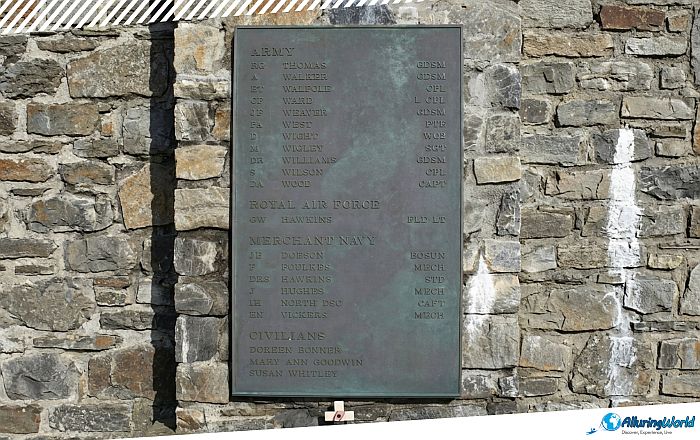
The inclusion of these names among the soldiers serves to remind visitors that this war was not an abstract conflict waged upon desolate peat bog landscapes; rather, it was very real and had a direct bearing upon civilians’ lives. As much as the memorial serves as an area of reflection on a typical day, it turns into the heart of emotions for the islands during critical national events. One such event that takes place annually in the islands is known as Liberation Day and falls on 14 June. This national event marks the liberation from the occupation by holding a parade involving the Falkland Islands Defence Force, British military troops, and youths.
The parade marches down Ross Road, culminating at the Liberation Monument for the church service, the reading of the honor roll, and an extensive wreath-laying ceremony led by the Governor, members of the Legislative Assembly, and visiting dignitaries. The same somber occasion is also observed in November during Remembrance Sunday, where both the World War veterans and the 1982 veterans are remembered.
The site is an important pilgrimage destination for veterans coming back from military service, and a number of British veterans who fought in the war in 1982 visit Stanley many years later. They usually make their way quietly to the monument to place badges of their units, poppies, or their own messages at the foot of the obelisk, as they are greatly linked to this significant monument. The 1982 Liberation memorial is located centrally in Stanley, so it is easily accessible on foot from almost any point in the capital. Considering that the city is small, you can walk to it from any point in the city, since it is situated on the south side of Ross Road, directly across from the harbor sea wall and just east of Government House and the Malvina House Hotel.
If you are planning a visit to the memorial as part of a historical tour of East Falkland, then you should keep a few practical tips in mind to make sure that you will have a smooth and respectful experience:
- Respectful Behavior: The memorial is an active place of national mourning and pride. Keep talking quietly, don’t climb the stone walls, and see that your children don’t climb the obelisk’s base.
- Photography Guidance: Photography is allowed and encouraged, but in case there is an event happening, please do not obstruct those who lay their wreaths or spend some personal time reflecting.
- Weather Preparedness: Situated right next to the harbor side, it is an open area with harsh coastal winds. It is best to be dressed in protective clothing throughout all seasons.
Visiting early in the morning will give you the best lighting conditions for photographing the bronze details against the backdrop of Stanley Harbour, before daytime tour buses and shore excursion groups arrive. The Liberation Memorial forms the focal point of an array of military and maritime history that is spread around Stanley. Just walking in any direction along the waterfront for a short distance will reveal other historical landmarks that offer an enhanced insight into the area’s history.
Located just several hundred meters down the coast from the Liberation Memorial along Ross Road is the Falkland Islands Volunteer Force (FIVF) Memorial, commemorating the local defense units who have guarded the land since the latter half of the 19th century. Continuing further down the coastline, there are also several other maritime monuments one can see, including the hulls of ships such as the Jhelum and Charles Cooper, which highlight the maritime history of the islands even before the 20th century. If you are curious about the extensive geographical scope of the 1982 war, battlefield tours always begin in Stanley and take people to places like Mount Tumbledown, Mount Longdon, and Goose Green. Furthermore, on the other side of East Falkland, there is the Argentine Military Cemetery in Darwin, which serves as a memorial dedicated to the memory of 649 Argentine soldiers who lost their lives during the war.
In summary, by visiting the 1982 Liberation Memorial, standing amidst the South Atlantic wind that blows through the flags on top of Ross Road, you will receive a definite impression of the way in which history defines the local identity. The immaculate stone and bronze statues not only tell of dates and numbers of casualties during this unfortunate war, but they also preserve the memory of the historic moment in which a remote island population regained its liberty, and continue to declare their determination to remain a self-governing British Overseas Territory of the United Kingdom.