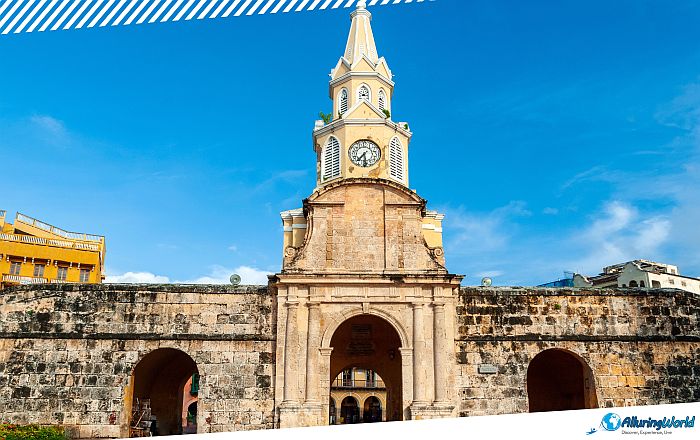
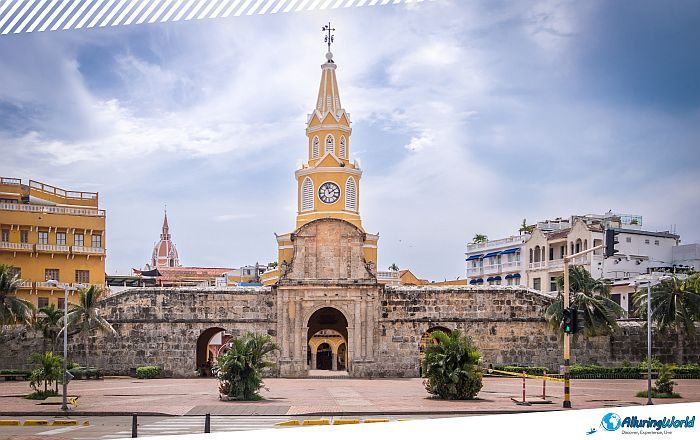
Puerta del Reloj, sometimes referred to as Torre del Reloj and Boca del Puente, is the historic main and original entrance to the walled old city of Cartagena de Indias, in the northern part of the Bolívar Department, on the northern Caribbean coast of the Republic of Colombia. Standing proudly at the main threshold of the city, the English name for this historic structure is Clock Gate, and nowadays it serves as the iconic gateway into Colombia’s most famous fortified city. Framed by turquoise Caribbean skies and framed internally by cobblestone streets, this historic stone entrance acts as a living portal between the energetic rhythm of modern urban Cartagena and the romantic colonial charm of the Ciudad Amurallada (Walled City). The monument is much more than just a beautiful landmark for tourists; it is considered an architectural marvel, a mute testimony to centuries of Caribbean trade, and the main orientation point of the port, fortresses, and group of monuments listed as a single UNESCO World Heritage Site. No matter whether you are exploring it for the first time or coming back to take a picture of its yellow glow at dusk, knowing the history behind this architectural gem adds value to each step under its arched stone roof.
The history of Puerta del Reloj is intrinsically linked with the strategic ascendancy of Cartagena as one of the most important ports of the Spanish Empire. Established in 1533 by conquistador Pedro de Heredia, Cartagena grew over the following decades into a vital maritime hub, and it soon became a high-risk destination for ships. The galleons loaded with gold, emeralds, and silver would converge in its harbor before making their voyage to Spain across the Atlantic Ocean. It is obvious that such huge treasures would make the city a tempting prize for Caribbean buccaneers, French privateers, and the English navy, so extra measures were required to protect it and the dominance of the Spanish Empire in this part of the world.
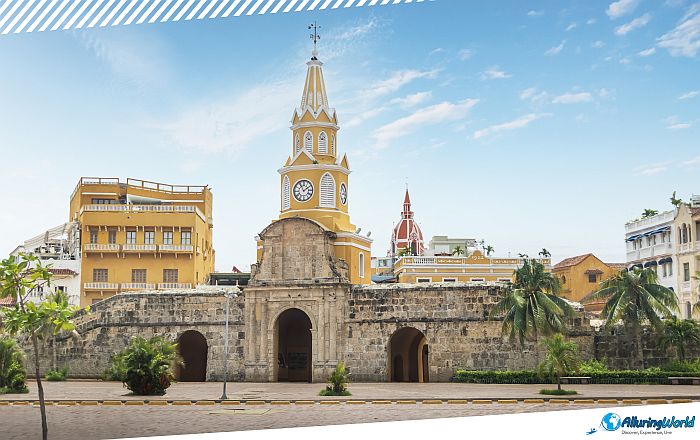
In order to protect the riches of the colony, Spanish military engineers constructed one of the most impressive defensive systems in all of the Americas. The construction of the city walls started in the late 16th century, while the gate that would later be known as Puerta del Reloj was built to serve as the main entrance to the city’s historic colonial core. Originally known as the Boca del Puente (Mouth of the Bridge) or Puerta del Puente, the structure was initially built alongside a heavy wooden drawbridge spanning a wide sea moat. This waterway separated the main peninsula from the mainland and the vibrant outer neighborhood of Getsemaní. During times of military siege, guards raised the drawbridge, turning the inner core of Cartagena into an impenetrable island fortress. Armed sentries stationed within the thick masonry walls inspected every merchant, sailor, and traveler seeking passage into the protected enclave.
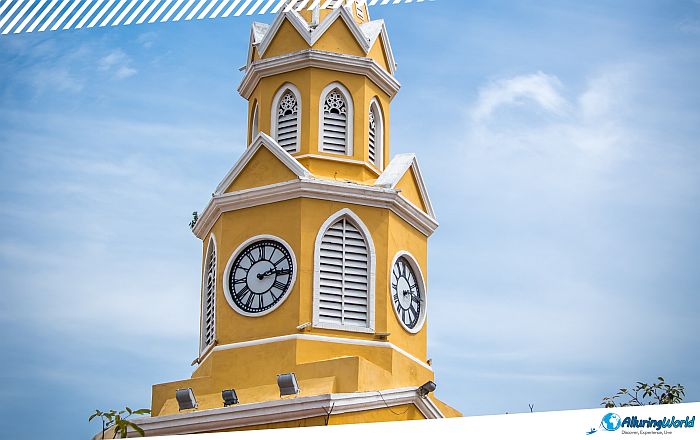
Today’s structure is the result of many years of construction, repair, and renovation. The foundation of the gate, built using huge stones of limestone and coral rock, symbolizes the typical 17th-century Spanish military architecture that was able to withstand the direct impact of large naval artillery shells. In 1704, the Spanish military architect Juan de Herrera y Sordo carried out extensive work on the restoration of the gate following years of natural damage and warfare. He added the elegant Baroque façade and carved the prominent central vault that people now walk through to get into the gate. Side arches were also added by Herrera, which allowed traffic to be handled better, and he also built the wooden spire that once housed the mechanism for a clock for public use.
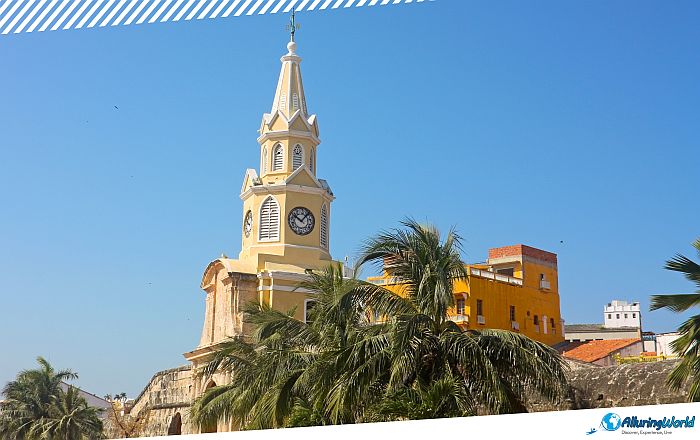
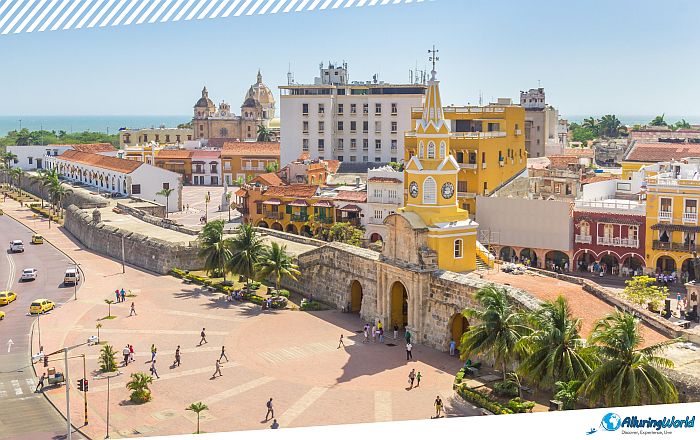
The iconic central spire that we can see today was completely transformed in 1888 by the local architect Luis Felipe Jaspe. The architect constructed a multi-tiered octagonal spire in the unusual color combination of mustard yellow and white plaster, which complemented the base made of coral stone. The mechanism of the clock was also modernized into a four-faced pendulum clock imported from Switzerland; it could be seen even from a distance of 100 meters (328 feet). Walking straight into the main portal of the Puerta del Reloj from the city, you will come across Plaza de los Coches. This lively plaza forms an important part of the urban foyer of the Walled City. Its past is rather complicated and diverse, since in the colonial period it was called Plaza del Esclavo (Slave Square). In this place, as the name would suggest, enslaved people were transported from the harbor and sold there to the plantation owners.
ADVERTISEMENT
Today, the plaza shows its dynamic modern life yet keeps its historical roots alive. It is surrounded by colonial arcades called the Portal de los Dulces, and under these shaded arches, local sellers sell homemade Colombian sweets in glass jars, all made from coconuts, tamarinds, guavas, and dulce de leche. Overall, around this square you can see:
- Portal de los Dulces: A historic gallery of sweet shops operating under Spanish-style stone arcades.
- Statue of Pedro de Heredia: A bronze monument dedicated to the city’s founder, positioned centrally within the plaza.
- Plaza de la Paz: The expansive open square situated just outside the gate, offering sweeping views of the city walls and the nearby bay.
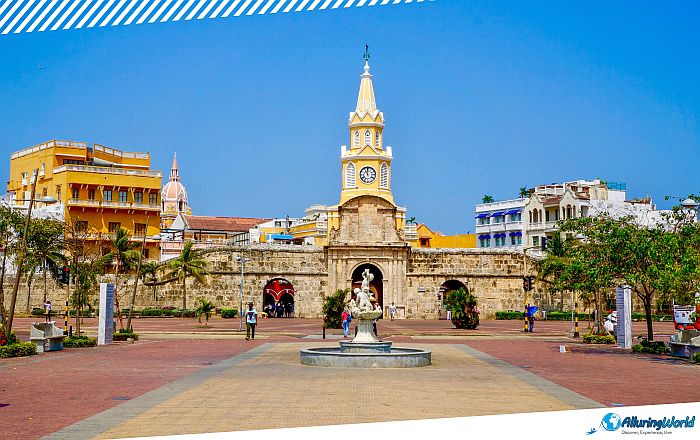
If you want to explore the historic center that surrounds the Puerta del Reloj, then you need to do some preparation beforehand due to the hot and humid tropical climate of Cartagena. The equatorial sun is very harsh during the afternoon hours, and thus prior planning is crucial. The gate is situated right in the middle between Plaza de la Paz and Plaza de los Coches in the old part of the city of Cartagena. This being a public pathway, access to it is absolutely free and available around the clock. Those who have made their accommodation near the area will find the landmark situated about 400 meters (1,312 ft) north of the Cartagena Convention Center (Centro de Convenciones), making it an easy 5-minute walk from the edge of Getsemaní.
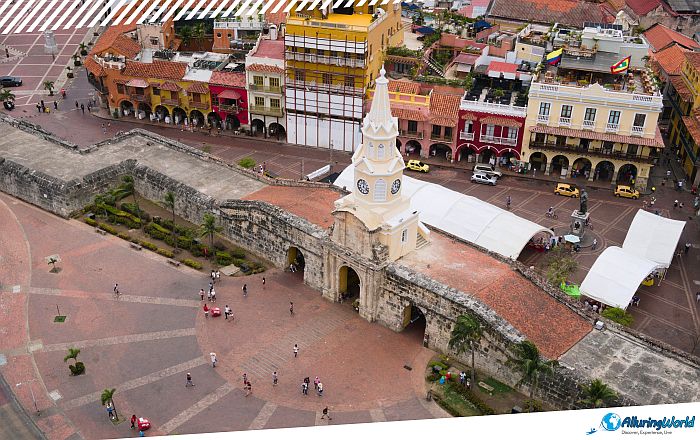
The gate serves as the main access point for pedestrians into the Walled City; therefore, it is natural that street artists, local tour guides, and artisans flock here. Although the area is heavily patrolled by the tourist police, making it very safe for tourists, it is always good to keep some important tips in mind:
- Keep valuables secure: If you have a backpack with you and you carry your valuables, consider carrying it in front of you or use zipped interior pockets when moving through dense crowds under the arches.
- Politely decline unrequested services: You will be approached by sellers, street rappers, costume performers, and informal guides, as this is the standard practice of the area; a clear, polite “No, gracias” is all that is needed if you are not interested.
- Stay hydrated: Relative humidity in Cartagena often exceeds 80%; carry at least 1.5 liters (0.4 gallons) of water or buy fresh coconut water from verified vendors during your walking tour.
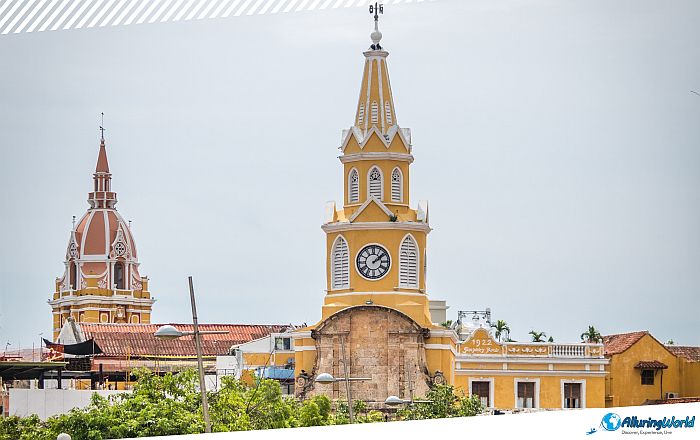
The atmosphere surrounding the Puerta del Reloj shifts dramatically depending on the hour of the day. Visiting at different times reveals different sides of the landmark’s character. At 07:00 o’clock, the square is quite peaceful and beautiful. During this time, the morning sunlight touches the spire of the yellow tower, thus creating perfect opportunities for taking pictures without many tourists in your shots. It is possible to see the local storekeepers cleaning their arcades, while street traders start putting their fruit stalls on display. By 12:30, the area comes alive with activity. The tropical sun shines directly overhead, highlighting the bright yellow paint against the blue sky. This is an excellent time to duck under the shaded cover of the Portal de los Dulces to sample local coconut treats or enjoy a cold beverage at a shaded cafe nearby.
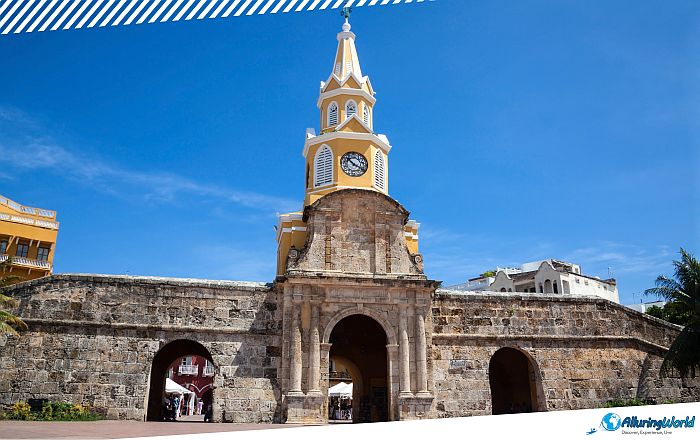
When the evening comes at around 18:30, the whole building is transformed dramatically. The warm lights shine on the stone arches and dome of the building, illuminating the plazas around with a golden light. Street musicians usually play typical cumbia or vallenato music near the arches, while horse-drawn carriages make soft noises on the stone pavement. The Puerta del Reloj, which is an essential part of Cartagena’s National Monument status, along with other structures like the Cathedral of Cartagena de Indias, is under continuous conservation. The humid and salty coastal environment of the Caribbean is an endless threat to old masonry throughout the entire city. Regular conservation activities focus on the deterioration of the lime mortar, salt crystallization of the coral stone, and maintenance of the inner clockwork mechanisms to guarantee the durability of the tower.
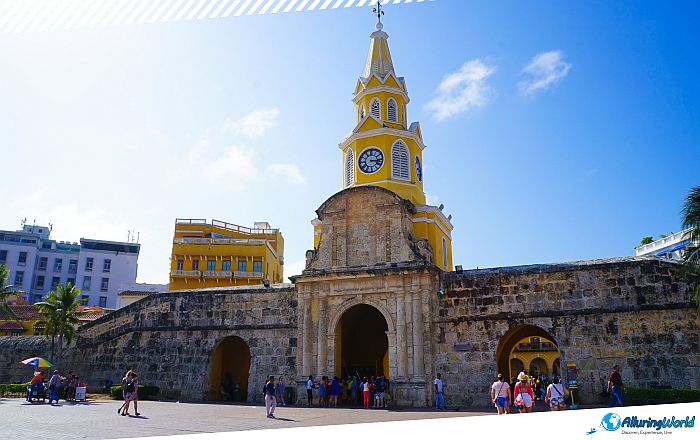
To conclude, when you walk through the central arch of the Puerta del Reloj, you walk through many years of real colonial history of Colombia. Having been started as an extremely fortified military drawbridge and turned into a recognizable clock tower today, Puerta del Reloj is now considered to be a symbol of architectural charm and the Caribbean style of Cartagena’s urban culture, and one of the main reasons why you should visit Colombia on your next South American travel itinerary.