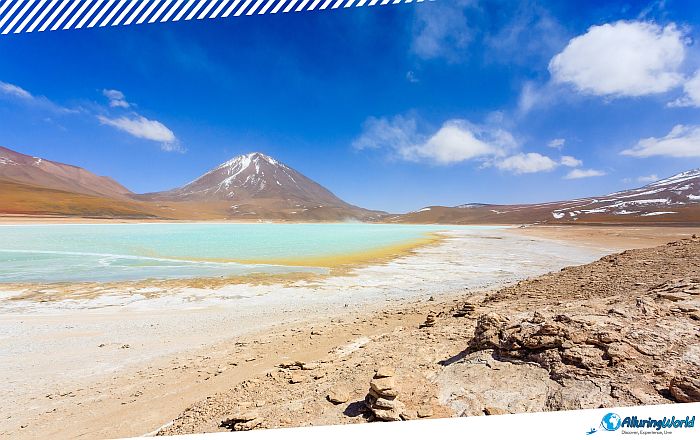
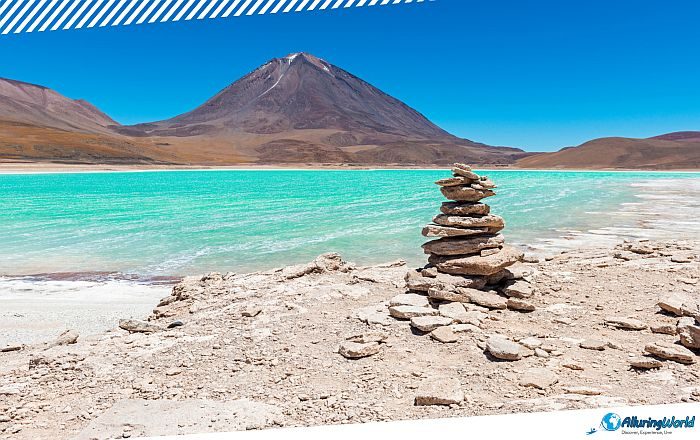
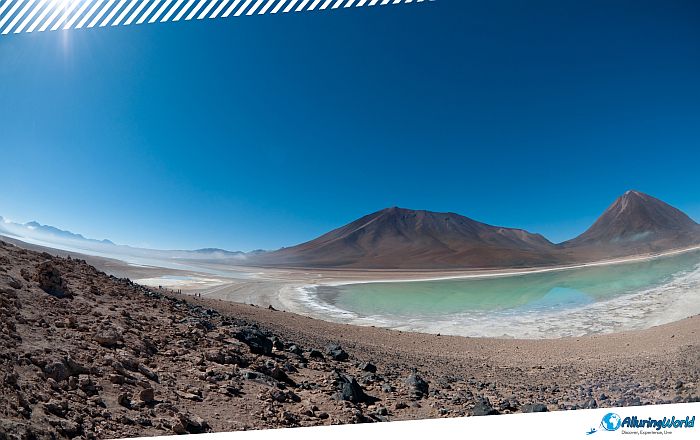
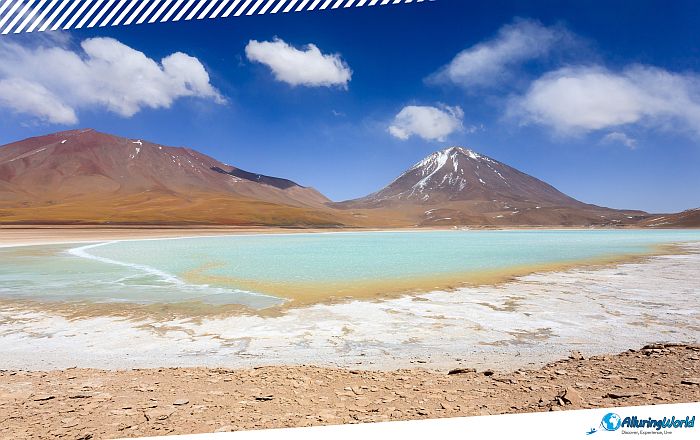
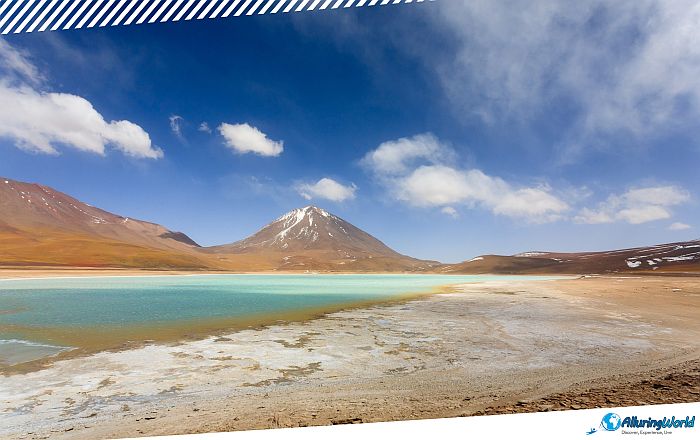
Laguna Verde, known in English as Green Lagoon, is a high-altitude salt lake that is part of an endorheic basin, located in the southwestern Altiplano plateau, or more precisely in the Sur Lípez Province of the Potosí Department, within the southwestern part of the Plurinational State of Bolivia. Nestled in the vicinity of the high mountain border where Bolivia meets Chile and Argentina, this very unique lake is framed by the towering, almost perfectly symmetrical cone of the Licancabur volcano. This lively mineral lake creates an extraordinary natural phenomenon that is a combination of geological activity, color changes, and wilderness, and for those who are bold adventurers journeying on the difficult Altiplano, being there makes you feel less as if you are exploring Planet Earth than if you were on some alien planet with its own unique set of physical laws.
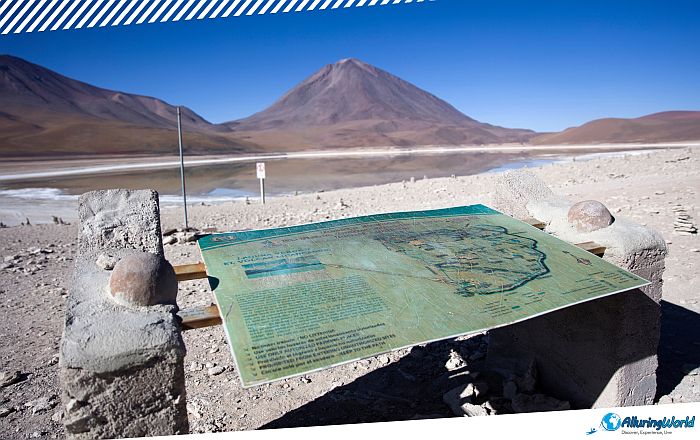
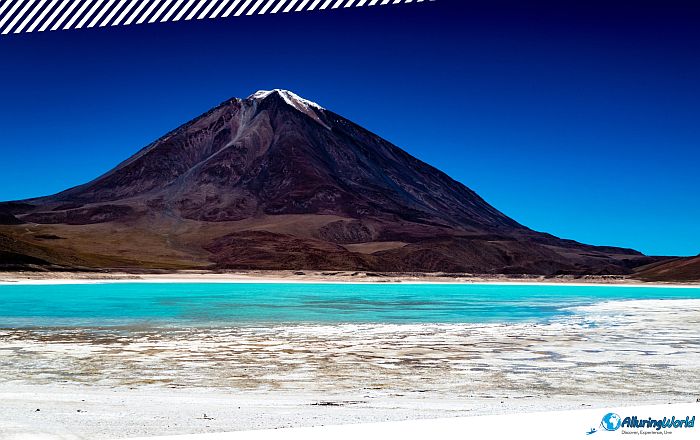
Within the confines of the Eduardo Avaroa Andean Fauna National Reserve, Laguna Verde is located at an amazing height of 4,300 meters (14,108 feet) above sea level. Directly rising behind its green and hypersaline waters is the massive Licancabur volcano, which stands at a height of 5,920 meters (19,423 feet). The combination of the green waters, the black volcanic slopes, and the clear skies of the high Andes creates a truly amazing sight.
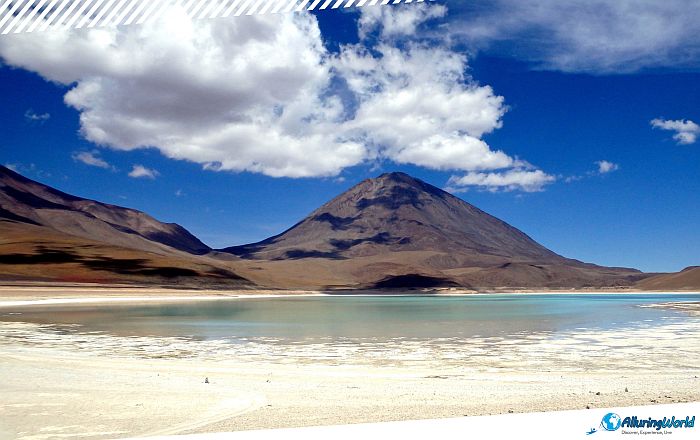
The distinctive feature of Laguna Verde is its unique green color. While low-lying lakes have their color due to the presence of photosynthetic algae, plants, and organic materials, Laguna Verde is a sterile lake with a high content of minerals and is formed only by volcanic and physical phenomena. The lake’s vivid color arises due to extremely high amounts of mineral deposits that are present in suspension in the lake’s shallow water. These waters, located at a high altitude, are extremely rich in copper, magnesium, lead, arsenic, and sulfur, all of which have been deposited in the lake over thousands of years through the volcano’s slopes. But the actual color of the green changes dynamically depending on various conditions.
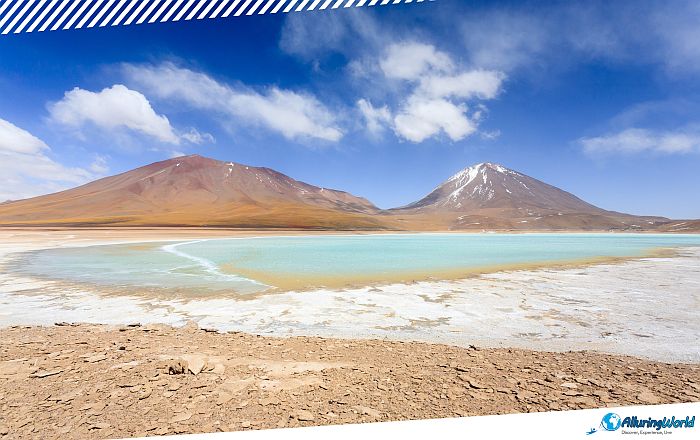
In the early morning hours, you will see the water appear as a light turquoise or dark slate reflection due to the calmness of the air and cold temperatures; however, as the day progresses from morning to afternoon, strong high desert winds will blow across the open plains of the Altiplano. With the strong winds blowing across, the sediment that has settled at the bottom of the lake gets stirred by the agitated water body. Due to the sun’s rays hitting the mineral particles within the water column at certain angles, an amazing optical effect occurs, making the whole basin look like a jewel-toned emerald or jade green color. This is why the lake’s water will not freeze despite the low temperatures reaching -20°C (-4°F).
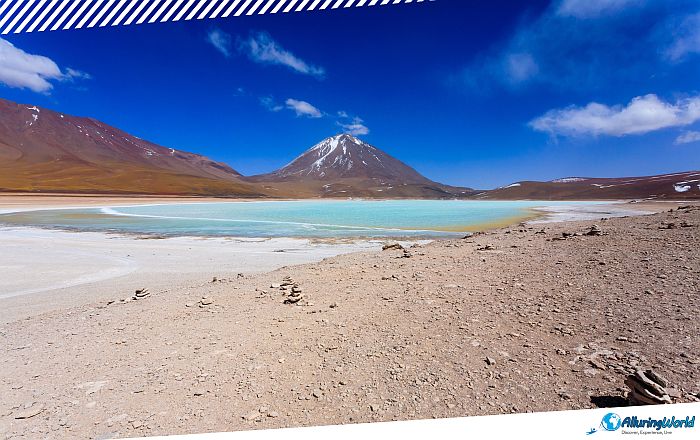
Directly adjacent to Laguna Verde lies its sibling body of water, Laguna Blanca, or the White Lagoon. Separated only by a narrow, elevated land corridor, these two high-altitude lakes present one of the most extraordinary geographical contrasts in all of South America. While Laguna Verde has a vivid green color because of the high content of copper and arsenic, Laguna Blanca gets its name from the milky white color of the water. The high content of borax and certain sodium compounds dissolved in Laguna Blanca makes the water look pearlescent when reflecting sunlight. Standing on the narrow ridge between the two lakes allows visitors like you to witness a striking side-by-side natural palette: a milky white sheet of water on one side and a deep emerald basin on the other, both shadowed by the giant form of Licancabur. However, despite all these unfavorable environments in terms of the thin air, intense ultraviolet rays from the sun, cold nights, and poisonous minerals, the Laguna Verde environment harbors a wide range of special high-altitude animals.
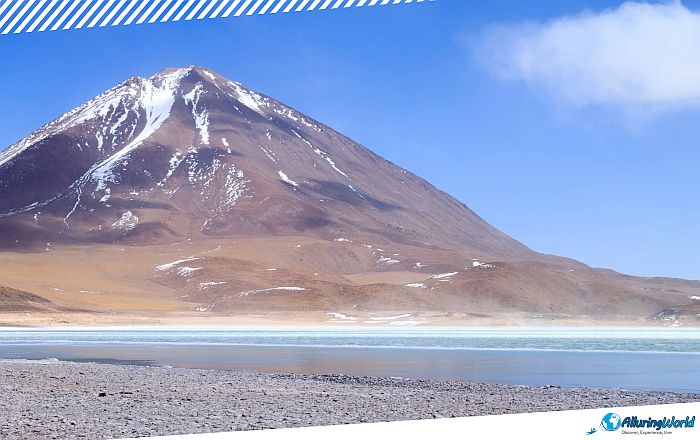
While the waters of Laguna Verde are far too mineral-dense to support fish, microscopic extremophiles and specialized micro-crustaceans thrive in less concentrated pockets of the nearby high-altitude wetlands, known locally as bofedales. These tiny organisms serve as the primary food source for three species of South American flamingos that inhabit the region seasonally:
- James’s Flamingo: Easily recognized by its bright red legs and yellow bill with a black tip.
- Andean Flamingo: The largest of the three species, distinguished by its yellow legs and extensive black wing feathers.
- Chilean Flamingo: Identified by its pinkish-grey legs accented with bright pink knee joints.
ADVERTISEMENT
Seeing flocks of vibrant pink flamingos wading through hypersaline waters against a background of white salt crusts, green mineral pools, and dark volcanic peaks provides an unbelievable visual contrast. Beyond birdlife, sharp-eyed travelers frequently spot small herds of vicuñas, wild relatives of the alpaca, grazing on sparse bunchgrass (ichu), along with the occasional Andean fox (culpeo) patrolling the rocky volcanic terrain.
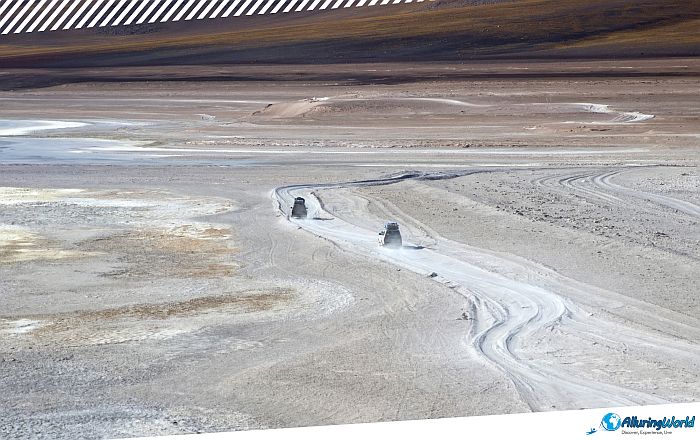
If you want to visit Laguna Verde, then have in mind that this is rarely done as an isolated day trip. Instead, it forms an integral segment of the famous multi-day 4×4 expedition across the Bolivian Altiplano, commonly referred to as the Ruta de las Lagunas (Route of the Lagoons). This travel circuit connects the world-famous Salar de Uyuni with the remote geothermal reserves of southern Bolivia, often crossing over into San Pedro de Atacama in northern Chile.
Most expeditions will start either from the Bolivian town of Uyuni, Tupiza to the east, or San Pedro de Atacama, on the Chilean side of the border. An average expedition usually takes three to four days, taking you through unpaved mountain roads, salt plains, and geothermal sites. If you are starting out from Uyuni, then you would have to go south into the salt flats, passing through Laguna Colorada and ending up in Laguna Verde, located close to the southern edge of the route. On the other hand, if you begin from San Pedro de Atacama, you will need to cross the border at Hito Cajón, straight into the Eduardo Avaroa Reserve close to Laguna Verde within a short distance. Throughout this tour, there are more geological marvels that you get to see, such as the Sol de Mañana geyser field, which is an active geothermal area, at 4,850 meters (15,912 feet) above sea level.
When you are venturing into the highest elevations of the southern Bolivian Altiplano, this calls for proper planning and great reverence for the environmental conditions. It is due to the nature of altitude gain, strong high-altitude winds, and the geographical remoteness of the place that proper preparation is essential. Soroche, or altitude sickness, should be taken into consideration, especially since the tour takes you above 4,000 meters (13,123 feet). As a result, it is highly recommended that at least two days be spent acclimatizing to the medium altitude at places like Sucre, San Pedro de Atacama, or Calama. This is why you must adhere to the following:
- You must drink a minimum of 3 liters (0.8 gallons) of water daily to combat high-altitude dehydration and dry mountain air.
- You must carry layers of thermal clothing, because ambient temperatures drop rapidly after 17:00 and often reach -15°C (5°F) overnight.
- Since you are high in the mountains, you must apply broad-spectrum high-SPF sunscreen every two hours, as extreme altitude and reflective water surfaces accelerate solar UV exposure.
The area is accessible throughout the year, but the climate varies depending on the season. When you visit during the dry winter season, which runs from May through October, you will experience clear skies with cool weather and strong afternoon winds, which kick up the lake’s copper sediment, thus providing an excellent opportunity for observing the colors. The rainy summer season that runs from November to April features mild weather and numerous migratory flamingos. If you are a photographer aiming to capture the maximum intensity of Laguna Verde’s emerald tones, then you should consider visiting during the afternoon hours between 12:00 and 15:00, since this is the ideal time as thermal winds consistently agitate the mineral sediment while the overhead sun illuminates the basin.
As Laguna Verde is a precious gem in the Eduardo Avaroa Andean Wildlife National Reserve, a protected zone for high Andean wetlands, endemic flora and fauna, and geothermal valleys, due to the sensitivity of the terrain, strict conservation regulations are observed in the park. A fee for entry into the reserve needs to be paid upon arrival, but this will help cover the costs of environmental monitoring, patrolling by park rangers, and trail maintenance. Walks should be conducted along specific shorelines only in order not to disrupt nesting sites for birds and fragile mineral crust formations along the lake edge. In addition, any swimming or wading in Laguna Verde is strictly forbidden because of the high concentration of heavy metals such as arsenic in its water.
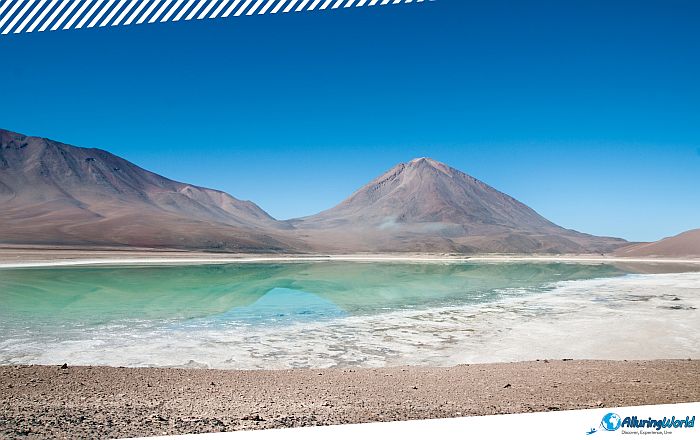
To conclude, the experience of standing at the cold shores of Laguna Verde in the afternoon when the gales of the high deserts are howling across the basin can only be described as an encounter with nature’s harshness. As the sun strikes the waters of the lagoon and the basin becomes a glorious sheet of sparkling green amidst the gigantic silent mountain that is the Licancabur Volcano, you will never forget the magnitude of the Altiplano. Indeed, Laguna Verde becomes a unique point where geology, harsh atmospheric conditions, and wild nature come together perfectly in order to create a landscape that seems almost surreal. Laguna Verde does not simply end an unforgettable journey through the Bolivian highlands. It marks an eternal memory of that journey.