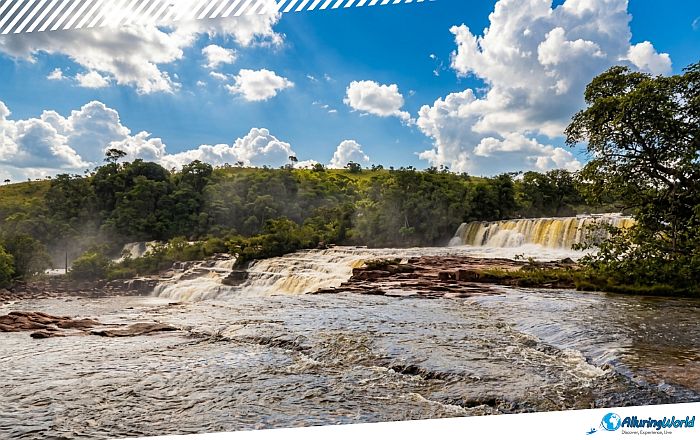
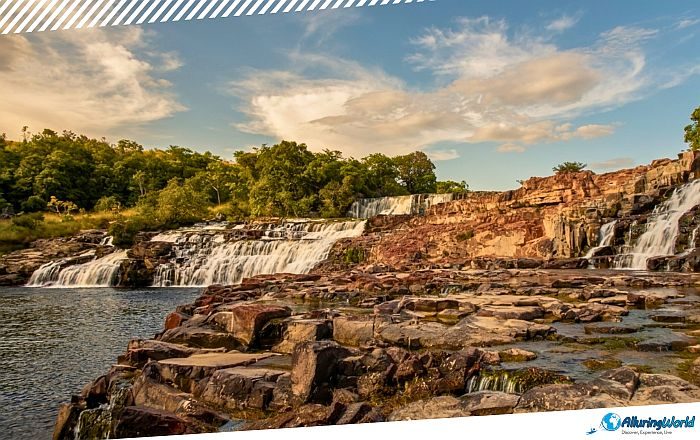
Orinduik Falls is a multi-tiered series of wide and cascading waterfalls located on the Ireng River in the Pacaraima Mountains, which together with the waterfall are shared between the two South American countries of the Federative Republic of Brazil and the Co-operative Republic of Guyana. Since the Orinduik Falls are set deep within the remote highlands of western Guyana and northwestern Brazil, the falls are considered to be one of Guyana’s most inviting natural wonders.
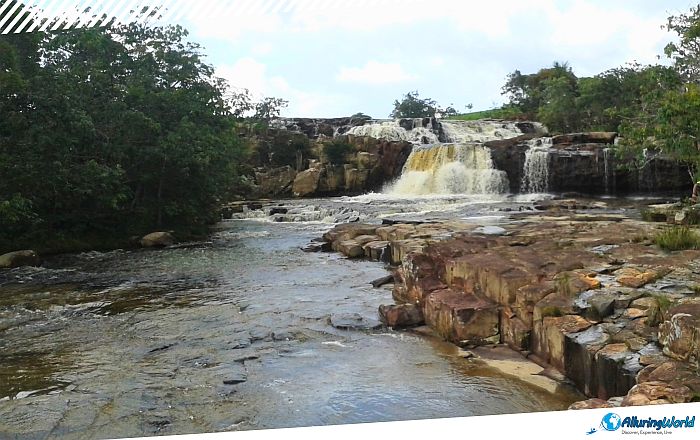
This is a place where rugged geology, sweeping savannah, and shimmering water come together to create an oasis of calm and beauty. Unlike the overwhelming vertical plunge of Guyana’s iconic Kaieteur Falls, which is also part of the Pacaraima Mountains, Orinduik offers something entirely different: broad terraces of jasper rock, gentle but wide-flowing cascades, and natural pools perfect for swimming, soaking, and simply unwinding in one of the most pristine regions of the Guiana Highlands.
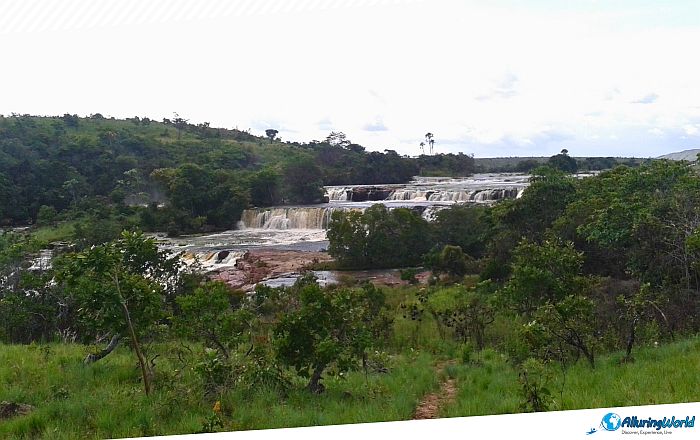
Perhaps the geographic setting of Orinduik Falls is what makes it so remarkable. It lies within the Potaro-Siparuni Region (Region 8) of Guayana, which is a vast expanse of savannahs and mountain ridges that is sparsely populated and visually dramatic. The falls sit directly on the Ireng River, which is called Rio Maú in Brazil, and it flows northward as a major tributary of the Takutu River, which then contributes to the massive Amazon basin. This river has carved its way through the highlands for thousands of years, shaping the terraces that now define the falls.
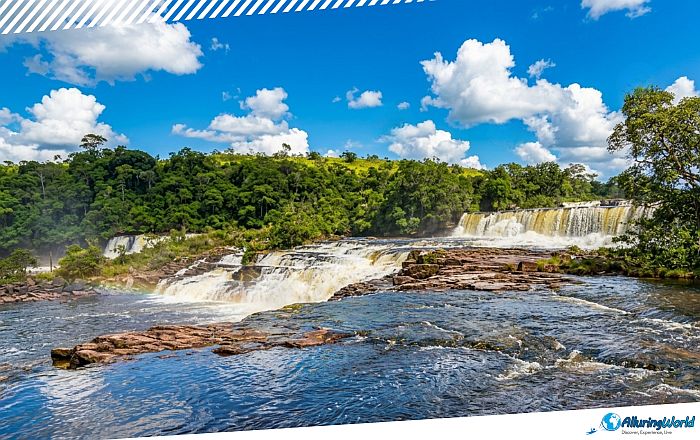
The Pakaraima Mountains dominate the environment surrounding the cascades, and those adventurous enough to visit this majestic place can witness a series of ancient uplifts that are part of the same geological system as the famous tepuis of Venezuela. The rolling highlands create a landscape that feels timeless and untouched, as travelers can see wide horizons, lush pockets of vegetation, and strong seasonal shifts driven by the equatorial climate.
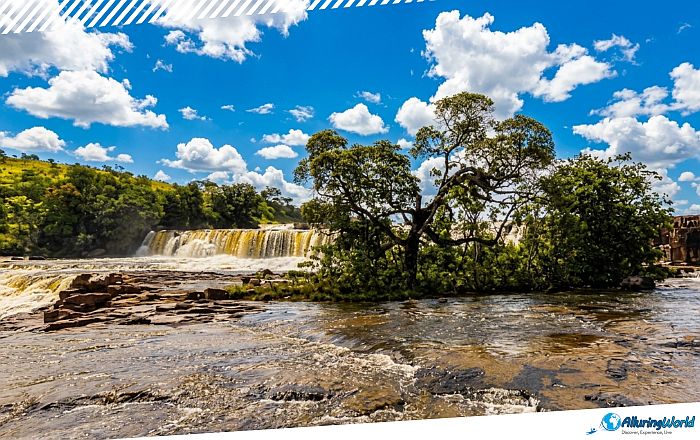
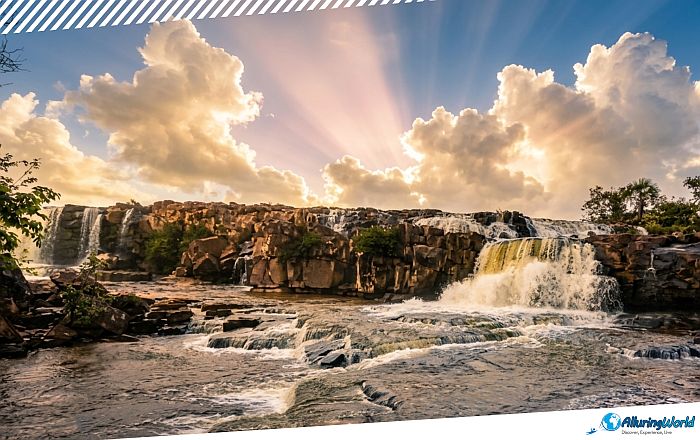
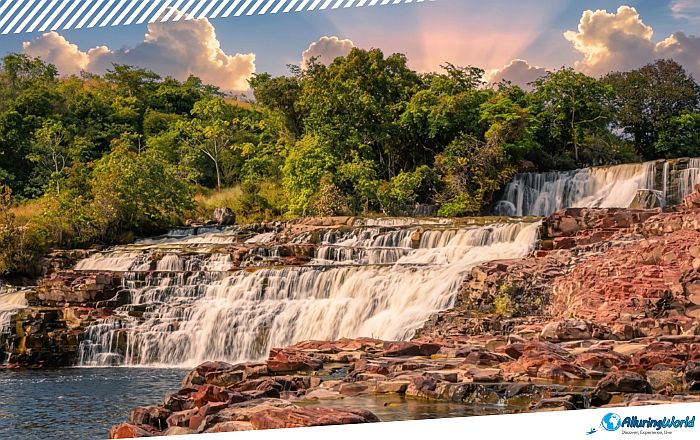
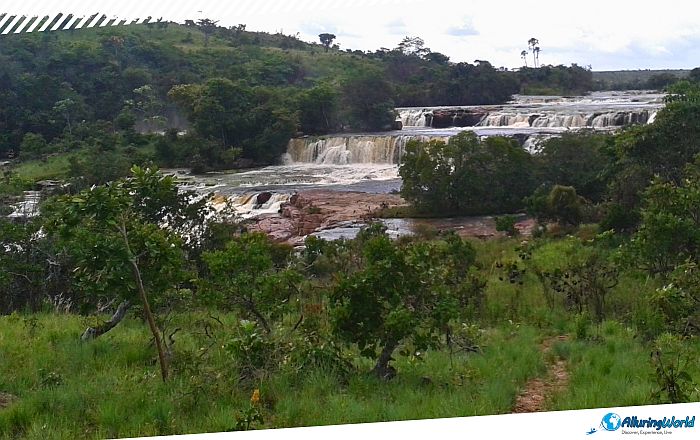
Still, something that makes Orinduik Falls different from the other ones that can be seen in the region is its geological composition. The cascades spill over layers of jasper, as this is an exceptionally hard, volcanic-origin rock with a distinctive reddish-brown color, but since the jasper has fractured and settled in stair-like formations over millennia, it formed the series of natural terraces that we see today.
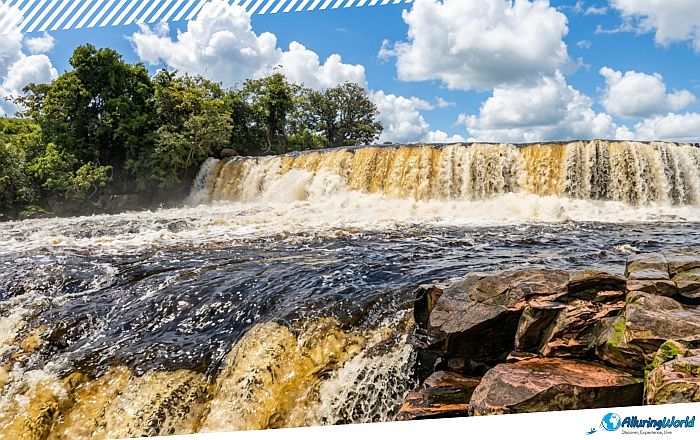
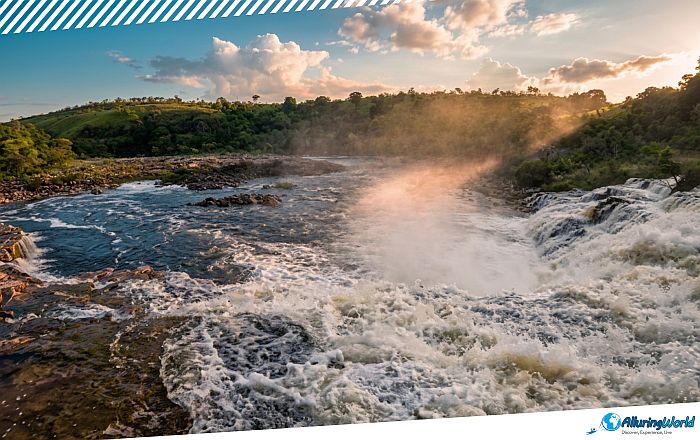
The final effect that Mother Nature provided for us is quite captivating because instead of a single thundering curtain of water, Orinduik displays dozens of small cascades, each tumbling down polished rock shelves into clear, cool pools. The main drop is modest at roughly 25 m (82 ft), but the width of the falls is astounding, as it is approximately 150 m (490 ft) wide. Due to its sheer size, it creates an expansive, panoramic spectacle that cannot be seen in other places in South America. Nevertheless, when the river levels are calm, visitors can walk on certain exposed terraces, explore the shallow edges of the cascades, and even find some secluded pools that are perfect for relaxation.
ADVERTISEMENT
It is precisely these pools that are attractive to travelers, as they are considered to be the falls’ most beloved features. They are most of the time filled with refreshing mountain water, which is somehow comfortably pleasant, making the Orinduik Falls ideal for bathing after the short walk from the nearby airstrip.
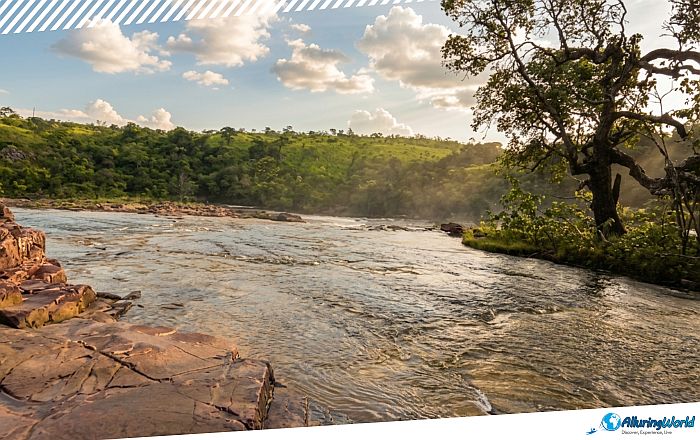
Complemented with the local environment, visitors can see a unique ecological blend that is comprised of different birds, small mammals, and hardy plant life that adapted to the dry grasslands, in addition to the riverbank vegetation that thrives in wetter conditions. The local population is sparse, as there are some Amerindian communities located nearby that are maintaining traditional lifestyles in harmony with the land. Sometimes visitors can encounter them and get to know some local stories, and enjoy local crafts.
Unfortunately, if you would like to reach Orinduik Falls, it would be an adventure in itself. Due to its remoteness, you would likely have to travel by air, as this is the preferred method for the majority of travelers. This is typically on small eight- to twelve-seater aircraft departing from Ogle Airport in Georgetown or Cheddi Jagan International Airport. With a flight time of about one hour, depending on the conditions, you will be offered the amazing, vast landscape of Guayana with sweeping views of dense rainforest giving way to undulating highlands.
The Orinduik Airstrip sits just a short walk from the falls, making the journey surprisingly easy once you land. Because of this logistical setup, most trips to the falls are organized as full-day tours, which generally include airfare, guiding services, and lunch. Many of these tours combine a visit to the more majestic Kaieteur Falls, further giving travelers the unforgettable opportunity to see two of Guyana’s most iconic natural sites in a single day.
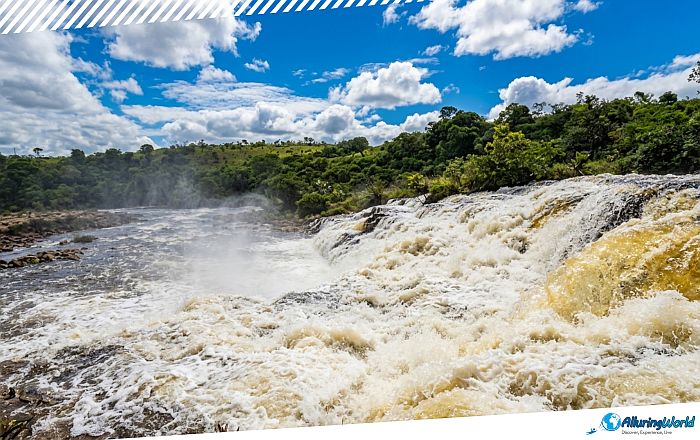
While Orinduik Falls can be visited year-round, the experience changes with the seasons. The rainy season that usually runs from May to August transforms the falls into a powerful, wide flow that spreads dramatically across the terraces. It is during this period that the falls are at their most photogenic and energetic. Sadly, the dry season that runs roughly from September to April, reduces water levels but enhances accessibility. During this time, more terraces become exposed, and it is easier for you to walk across the jasper steps and find some secluded natural pools for bathing. Nevertheless, depending on the time you travel to Guyana, both seasons will offer you the unique advantages, so the best time to visit depends on your preference.
Consequently, with its remoteness, accommodation in the area is minimal, as Orinduik Falls is primarily a day-trip destination. There can be some overnight stays arranged for you through tour operators, and this can be in simple nearby lodges or with Amerindian communities, but advance planning is essential. Most travelers choose to return to Georgetown after their visit, making the falls a refreshing and memorable component of a broader Guyanese itinerary.
In conclusion, a visit to Orinduik Falls feels like stepping into a hidden corner of the world. This is the place where nature’s artistry is subtle but incredibly powerful. They offer a fantastic adventure that you cannot experience in other places, so if you ever get the chance to visit Guayana and have an adventure in an untouched place, then plan your trip to Orinduik Falls, since this will be an option for you to see something different from this great nation in South America.