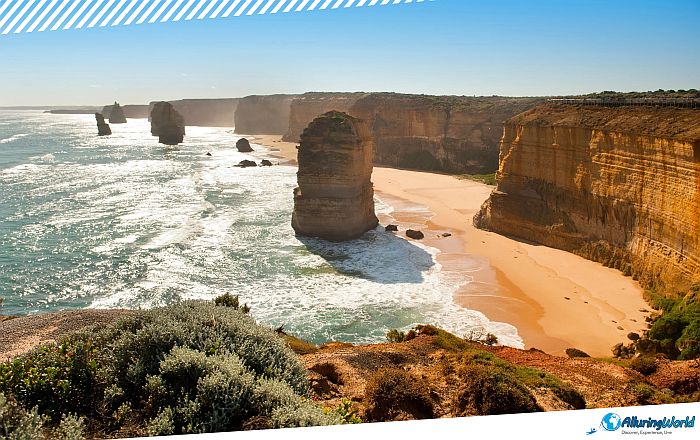
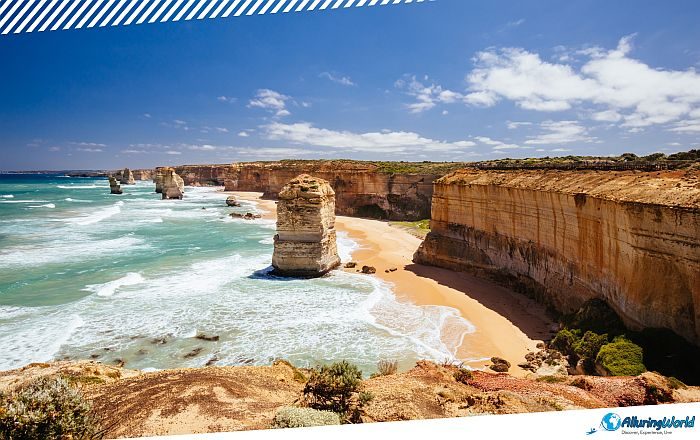
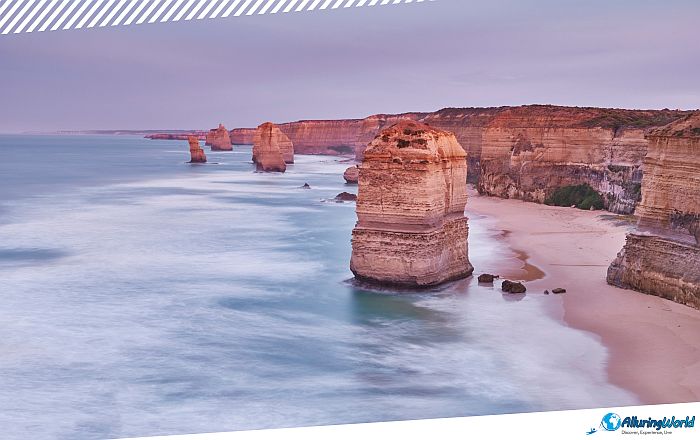
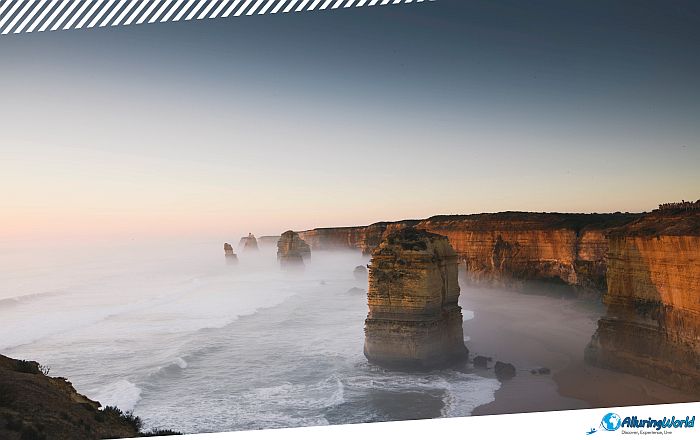
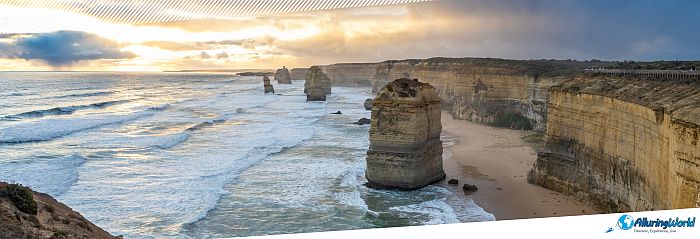
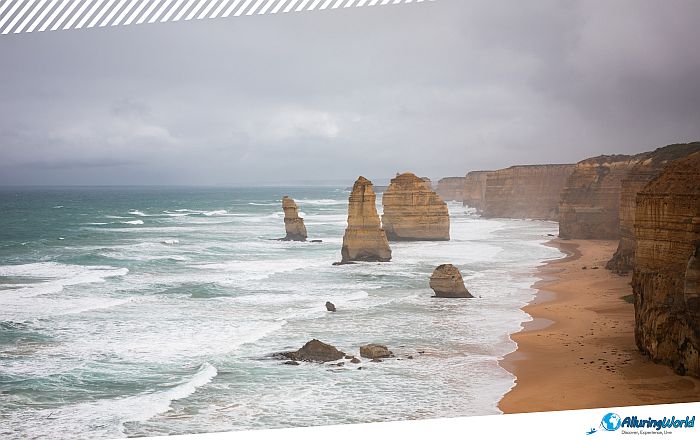
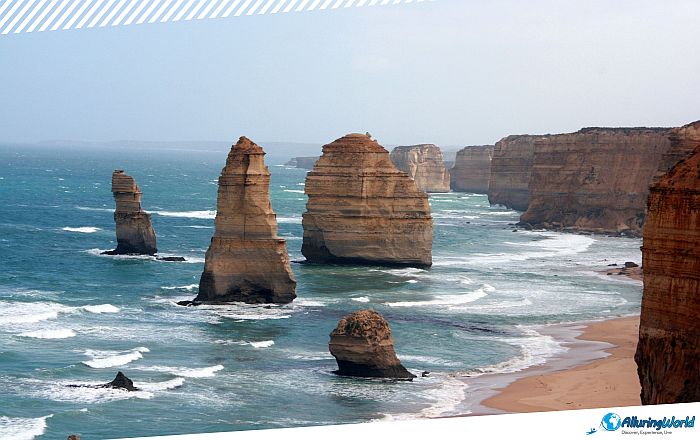
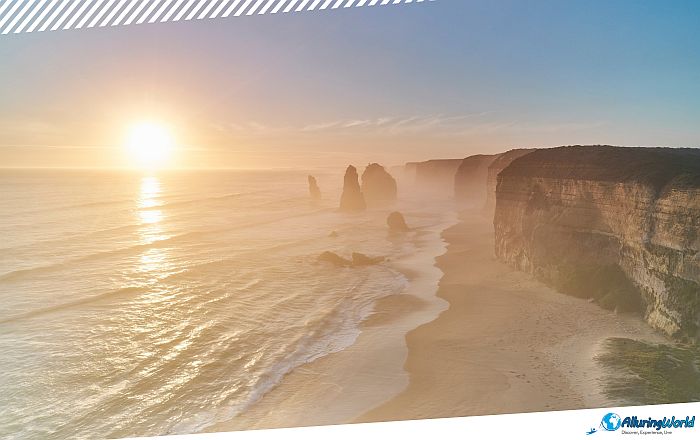
The Twelve Apostles are a collection of impressive, towering limestone stacks that rise from the Southern Ocean in Port Campbell National Park along the Great Ocean Road, within the southwestern part of the State of Victoria, in the southeastern part of the Commonwealth of Australia. As one of the most famous coastal landscapes of Australia, the huge limestone stacks are emerging from the waters of the Victorian coast and attract millions of tourists from all around the world who want to witness them personally. These stacks have been shaped by atmospheric conditions for ages, and they offer an opportunity to view the geological development process happening before our eyes. Besides the beauty of this place, visiting the region will allow you to dive into the maritime history and the natural beauty of the place.
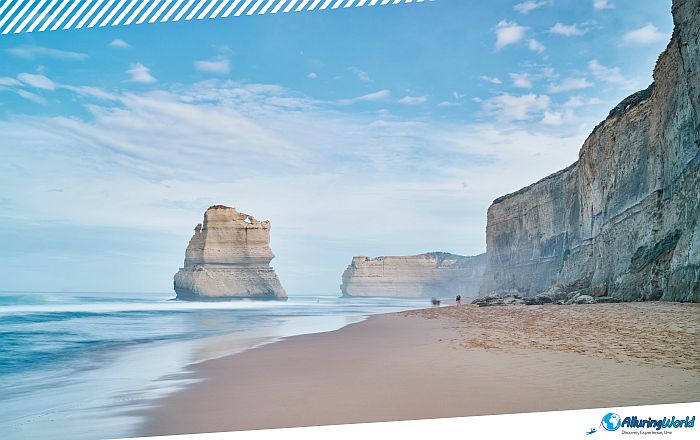
The creation of the Twelve Apostles can be traced back millions of years ago, when billions of minute marine creatures contributed calcium carbonate to the bottom of the sea to create limestone and soft sandstone in layers along today’s state’s coast. With the rise of sea level and tectonic forces that pushed up the land, these seabed deposits were subjected to harsh, relentless weather patterns originating in the Southern Ocean. Ocean water, together with its load of sand and sediment, started relentless hydraulic action against the base of the mainland cliffs, thus exploiting microscopic cracks and natural fault lines in the rock structure.
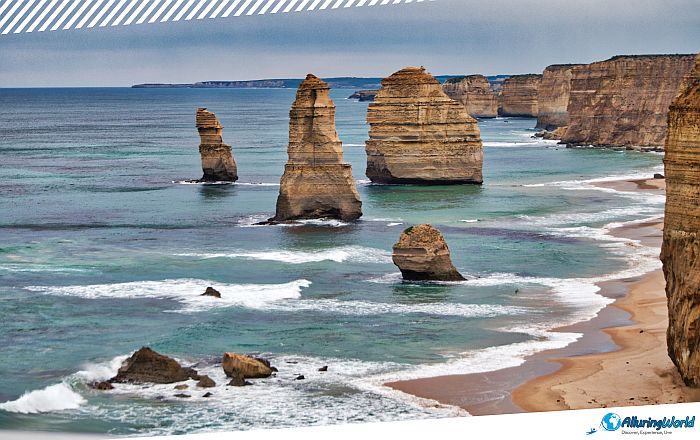
In the course of many thousands of years, this constant battering managed to wear away the weaker layers of rock, and it created vast caves in the rock formations. Eventually, the continual erosion of the caves by the waves managed to break through the other side to create natural arches, which continued to be smashed by additional waves. With further erosion, these arches could not support themselves anymore and crumbled into the sea. The remaining isolated pillars are the limestone stacks that you can see today.
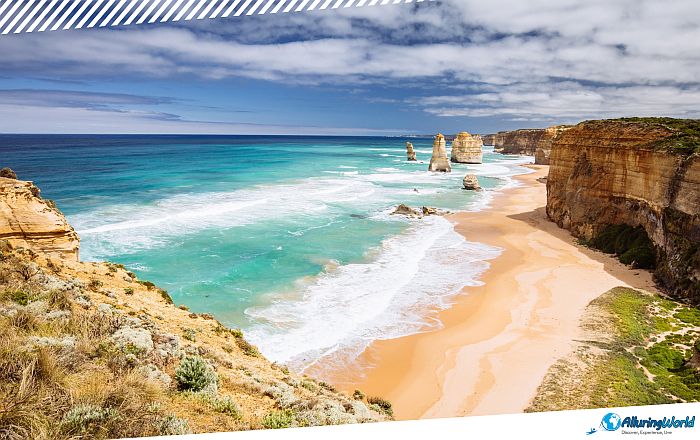
The tallest of these remaining formations reaches approximately 45 meters (148 feet) above the water level, standing as isolated sentinels against the powerful offshore swells. Because coastal erosion is an ongoing natural process that you can witness as you see it, the landscape remains in a constant state of transformation. What you see as a landscape today will not be the same landscape that your children will see. As an example, in July 2005, a prominent 50-meter (164-foot) stack collapsed completely into the ocean in a matter of seconds, followed by the collapse of a smaller stack near Gibson Steps in September 2009. Today, seven to eight primary stacks remain visible from the main viewing precinct, depending on your vantage point. Soft limestone caves continuously form along the mainland cliffs, ensuring that while existing stacks gradually wear away and fall, new arches and stacks will eventually emerge in the distant future.
The naming of the Twelve Apostles shows Australia’s changing travel culture and early maritime naming practices. Before colonizing Australia, the coastal region belonged to the Eastern Maar tribe, whose spiritual and cultural connection was the sea as well as adjacent headlands. In the 19th century, the challenging coastlines were charted by Europeans, and the rock formation acquired the initial informal name “Sow and Piglets.” As per the first informal name, Muttonbird Island at Loch Ard Gorge was called “Sow,” and the smaller offshoots stretching to the eastern coast were named “Piglets.”
As this name was not very catchy at that time, the local tourist board had been searching for a majestic and impressive name to promote the regional network of roads and lure tourists from around the world in the 1960s. The area was eventually renamed the Twelve Apostles, even though historical records prove that there have been only nine major stacks in the primary group in modern times. It is not the exact number that is important or how the name was given; it is the symbolic name used because of the impressive size and majesty of the place.
ADVERTISEMENT
The Twelve Apostles can be found near the Great Ocean Road, in southwestern Victoria, around 275 kilometers (171 miles) southwest of Melbourne. Traveling by car through the coastal highway from the center of Melbourne will take around 4 hours and 30 minutes, passing by coastal cities like Torquay, Lorne, and Apollo Bay. Another option is traveling on an inland route via the Princes Highway through Colac and reaching there within three hours (225 km/ 140 miles). You have the possibility to use public transportation as well through the train services of V/Line that run from Southern Cross Station in Melbourne to Geelong or Warrnambool, and then you need to connect with the regional buses to Port Campbell and the Twelve Apostles region.
Once you are at the Twelve Apostles, planning the duration of your visit depends on whether the Twelve Apostles represent a single stop or the focal point of a broader coastal itinerary, so you can decide based on this:
- Quick Stop (1 to 2 Hours): Ideal if you are driving through and want to walk the timber boardwalks, view the main stack cluster from the primary overlooks, and take photographs.
- Half-Day Exploration (3 to 4 Hours): Allows you sufficient time to visit both the main Apostles lookout and nearby highlights such as the Gibson Steps and Loch Ard Gorge.
- Full Day or Overnight Stay: This is your best alternative for exploring the wider Port Campbell National Park, as you can capture both sunrise and sunset lighting, and enjoy local dining in Port Campbell village.
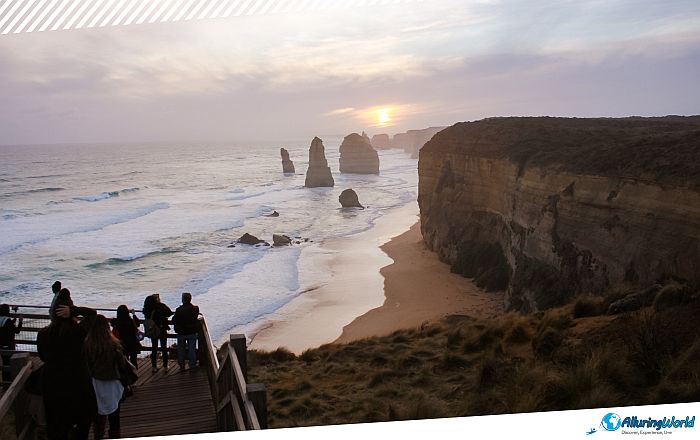
From the observation decks, you get to see the vast expanses of the Southern Ocean and the impressive limestone towers that surround the mainland headlands. As waves crash against the shores at all times below the cliffs, you are witnessing in real time the erosive nature of the oceans, and you bear witness to one of the greatest natural creations on Earth. Beyond taking in the scenery from the main timber boardwalks, you can descend the 86 cliffside steps at Gibson Steps to stand at sea level directly beside the massive Gog and Magog rock stacks. You have the option of taking scenic helicopter tours which depart regularly from a nearby helipad, therefore offering you an elevated aerial perspective of the jagged coastline, hidden coves, and marine arches. Walking trails connect the primary precinct to surrounding coastal lookouts, making it easy to admire the coastal geology from various angles.
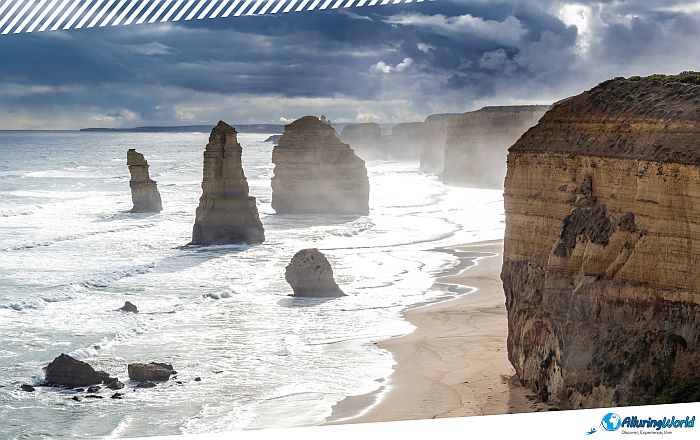
The purpose of the visitor zone is to guarantee secure and easy entry for all visitors. The park infrastructure facilities available at the site include:
- Keerray Woorroong Visitor Centre: A modern facility providing detailed geological exhibits, cultural information, rest areas, and a gift shop.
- Fully Accessible Paths: Wide, sealed concrete walkways and timber boardwalks lead from the main car park through an underground pedestrian tunnel directly to the cliff-top viewing platforms, offering step-free access for wheelchairs and strollers.
- Visitor Services: On-site amenities include public restrooms, accessible parking bays, drinking water stations, and sheltered seating areas.
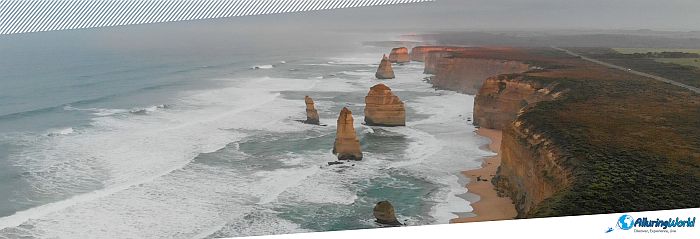
Whereas the Twelve Apostles have continued to be the main attraction for tourists who visit the Great Ocean Road, the nearby coastline in the vicinity of Port Campbell National Park is another place with many attractions worth visiting. Since you are already in the area, you should consider combining the Twelve Apostles with some, if not all, of these attractions:
- Gibson Steps: Located just 1.2 kilometers (0.75 miles) east of the main Twelve Apostles Visitor Centre, the Gibson Steps allow visitors to descend down the face of a 70-meter (230-foot) sheer cliff to reach the sandy beach below. Carved manually into the limestone rock face by local settler Hugh Gibson in the late 19th century, following routes originally established by Kirrae Whurrong elders, these 86 steps lead directly to the waterline. Standing at sea level provides a striking perspective on the immense scale of the mainland cliffs and two distinct offshore stacks known locally as Gog and Magog.
- Loch Ard Gorge: Situated 4.5 kilometers (2.8 miles) west of the Apostles, Loch Ard Gorge is a scenic coastal gorge and tourist attraction. You can take a walk through the short and paved trails around the gorge, explore the sandy inlet, and observe the Blowhole and Thunder Cave, but you need to confirm the low-tide times before descending the coastal stairs. You are supposed to remain behind the timber barriers on the cliffs, since the soft limestone cliffs may fall at any time.
- London Bridge and the Arch: Moving further to the west, on the coastal park track, you can find London Bridge, which is a geological formation characterized by the existence of a double arch bridge linking the formation to the mainland. Tourists used to cross the natural bridge to venture out on the outer arch, but the inner arch towards the mainland collapsed unexpectedly on 15 January 1990, causing two tourists to be stranded on the newly created island until they were picked up by a rescue helicopter a few hours later. The remaining structure is now called London Arch.
- The Great Ocean Walk: For outdoor lovers, the Twelve Apostles signify the stunning endpoint of the well-known Great Ocean Walk. This trek extends for 104 kilometers (65 miles) from Apollo Bay, taking visitors on a multi-day hike past tall eucalypt forests, beaches, coastal heath, and cliff-top trails. The total time required for this hike is 6-8 days, although shorter trails along the hike can be taken on a day basis. The last 16-kilometer (10-mile) segment of the trail that takes visitors from Princetown to the Twelve Apostles provides some of the most spectacular day hikes in Victoria.
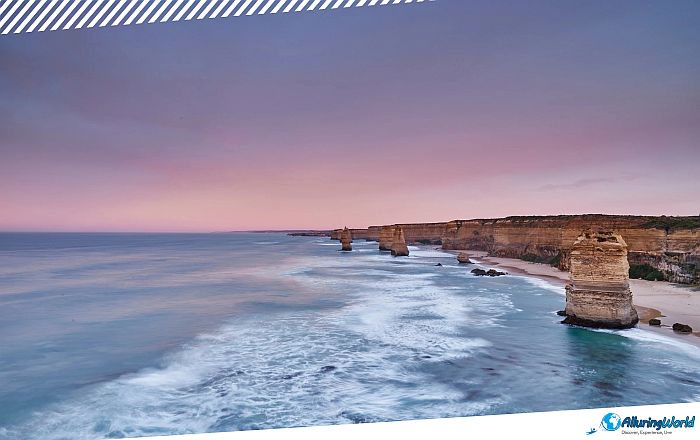
Nevertheless, the terrestrial and marine ecosystems of Port Campbell National Park and the adjacent Twelve Apostles Marine National Park are diverse. The coastal heathlands on top of the cliffs offer essential habitat for mammals such as echidnas, wallabies, and southern brown bandicoots. It is also possible to find peregrine falcons flying above the cliffs, and short-tailed shearwaters nesting in coastal burrows. Underwater, the Twelve Apostles Marine National Park preserves subtidal limestone reefs, kelp forests, and arches under the sea. The marine environment provides a home for sea tulips, brightly colored sponges, sea stars, and various fish species. Out at sea, it is common to see Australian fur seals resting on rocky outcrops, as well as southern right and humpback whales migrating along the coast between June and October. In the evening, small groups of little penguins (fairy penguins) may occasionally be seen coming ashore to their nests on the beaches at the foot of the cliffs.
To protect the coastal environment and manage traffic congestion along the Great Ocean Road, Parks Victoria and the Great Ocean Road Coast and Parks Authority (GORCAPA) manage visitor access through dedicated parking infrastructure. Visiting the site is free of charge, with no entry fees or advance parking reservations required. The main parking facility is located on the inland side of the Great Ocean Road, where a dedicated pedestrian underpass safely leads visitors beneath the highway directly to the visitor center and coastal lookout boardwalks.
Visiting the Twelve Apostles will require you to plan properly in order to optimize lighting, avoid peak tour crowds, and safely navigate local weather shifts. The ideal times for different visual characteristics throughout the day, as sunlight shifts across the limestone faces, can be grouped as:
- Sunrise (06:00 to 07:30): You will get cool tones, low winds, and minimal crowd volume. Soft light illuminates the eastern sides of the stacks, ideal for landscape photography.
- Midday (11:00 to 15:00): This option gives you bright blue sea background tones, though harsh light can flatten textures. During this window, you will see the peak tourist numbers arriving from Melbourne, so expect to be in big crowds.
- Sunset (18:30 to 20:00): Golden-hour sunlight casts rich warm orange and pink hues across the rock faces. As dusk settles, visitors standing on viewing platforms may observe small fairy penguins returning ashore to nest at the base of the cliffs.
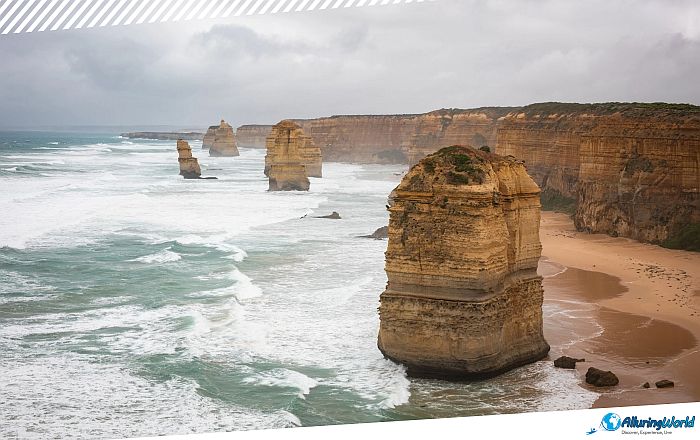
Victoria’s southern coastline weather pattern is unpredictable in terms of rapid changes in temperature and wind speed within a day. The hot and dry climate of summer brings a temperature of 24°C (75°F) with clear skies, which are prevalent during this season, thus making the area suitable for scenic helicopter flights. During winter, Victoria gets cold polar air currents with rain showers, a low temperature of 13°C (55°F), and violent sea swells due to strong ocean currents hitting the coast. Prior to coming to the Twelve Apostles, consider:
- Packing windproof and waterproof outer layers regardless of season, as cliff-top platforms experience sustained ocean gales.
- Wear sturdy, non-slip footwear suitable for walking over damp timber boardwalks and uneven stone surfaces.
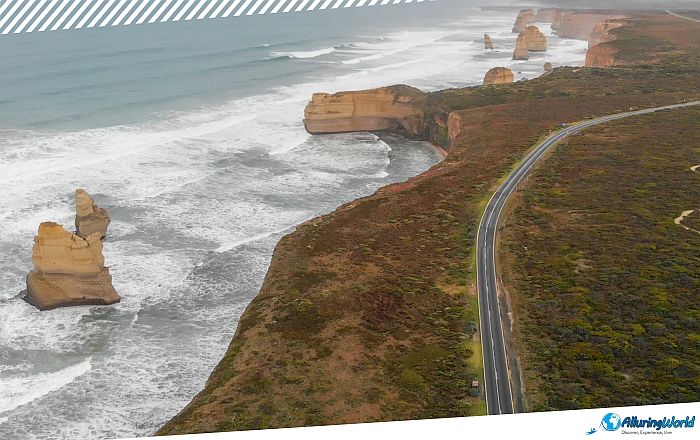
Managing this world-renowned natural resource in an ever-changing coastal environment calls for responsible management of the environment. The management of the reserve is done through specially constructed boardwalks, walkways, and viewing platforms by Parks Victoria so that minimal damage occurs to the sensitive vegetation at the top of the cliffs. The coastal vegetation provides the habitat for native animal species, such as the short-tailed shearwaters, the southern brown bandicoots, and coastal reptiles. Travelers are expected to walk only within designated boardwalks in order to avoid soil compaction and any possible collapse of cliffs. There is an educational center at the Twelve Apostles called the Twelve Apostles Visitor Centre that has underground tunnels from the car parks to viewing areas.
To summarize, visitors can take advantage of this amazing geological formation while at the same time ensuring that it maintains its pristine nature for future generations. Just a short distance away from the coastal village of Port Campbell, which offers boutique accommodations and dining services, the Twelve Apostles continue to be an attraction not to be missed on your visit to the southern coast of Australia.