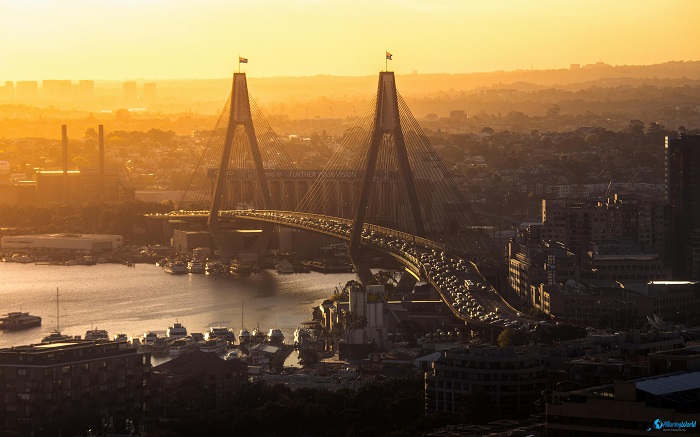
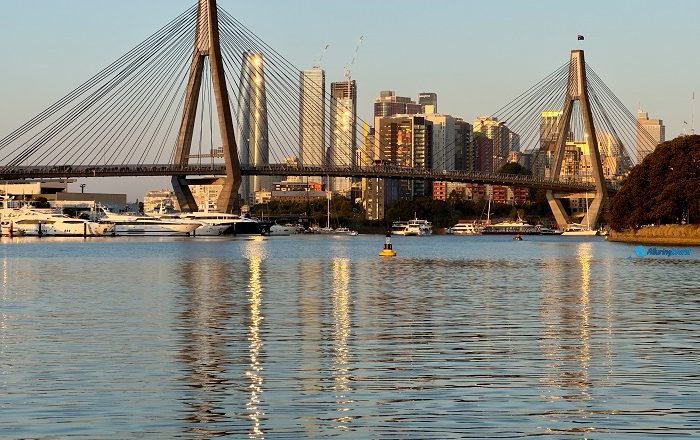
Anzac Bridge is a modern and vital bridge that is located across Johnstons Bay in the city of Sydney, the capital city of the state of New South Wales, within the southeastern part of the Commonwealth of Australia. As the bridge stretches over the bay and links the suburb of Pyrmont and Glebe Island, the Anzac Bridge is perhaps one of Australia’s most remarkable modern engineering feats; a graceful yet powerful symbol of progress, remembrance, and unity. This magnificent cable-stayed bridge is an essential piece of Sydney’s transport infrastructure because it carries the traffic of the Western Distributor, which is a motorway that is primarily elevated for the majority of its route on the western fringe of the Sydney central business district; nonetheless, it is an architectural landmark admired for its sleek, contemporary design. Generally speaking, Anzac Bridge is more than that because it is a living tribute that commends the courage and sacrifice of the soldiers from the Australian and New Zealand regiments that gave their lives during WWI, and nowadays are commonly referred to as the ANZACs. As their legacy will continue to inspire generations, this will not be the last piece of architecture or object that will be named after these brave people.
Completed in 1995 and officially opened on 3 December 1995, the Anzac Bridge was built to address the increased traffic demand for a more efficient transport route between Sydney’s central business district and its expanding western suburbs. The city’s earlier Glebe Island Bridge, which was constructed in the early 1900s, could no longer meet the needs of the ever-growing modern traffic, so as Sydney experienced an exponential rise in vehicle numbers, a new link needed to be built. By the late 1980s, congestion and limited capacity had made a new solution imperative. The New South Wales government, under the Department of Main Roads (now renamed to Transport for NSW), commissioned the project to replace the aging structure with a modern design that could handle high-volume traffic while enhancing Sydney’s skyline.
Anzac’s construction and sleek design were entrusted to the engineering firm Thiess Contractors Pty Ltd, as they were working alongside architects from Transfield Construction and several leading Australian engineering consultants. The bridge was a vision that was designed by the architect John Whitton, who envisioned a cable-stayed bridge that would serve the general public as a functional link, in addition to being a recognizable symbol of contemporary Australia. This was very innovative, bold, and forward-looking of him, so the Anzac Bridge was something that was not previously seen like this in the country, and this cable-stayed bridge was the perfect statement of the modern steps New South Wales was taking. The project officially began in 1989, and after six years of complex engineering and construction, the bridge was opened to the public by the then Premier of New South Wales, Bob Carr.
ADVERTISEMENT
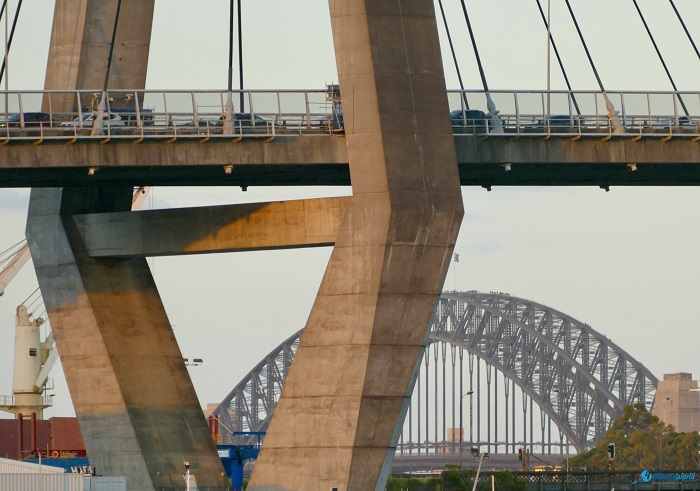
From an architectural and engineering perspective, the Anzac Bridge is an impressive work of design and precision. The bridge’s deck is supported by cables radiating from the two tall pylons rather than traditional suspension towers, and the official span is approximately 805 m (2,641 ft) in total length, with its central span measuring 345 m (1,132 ft). This is what is making the Anzac Bridge one of the longest cable-stayed bridges in Australia. In addition to this, the bridge stands 120 m (394 ft) tall at its highest point, with the two towering concrete pylons rising like sentinels above the bay, each bearing a symbolic bronze statue representing the Australian and New Zealand Army Corps.
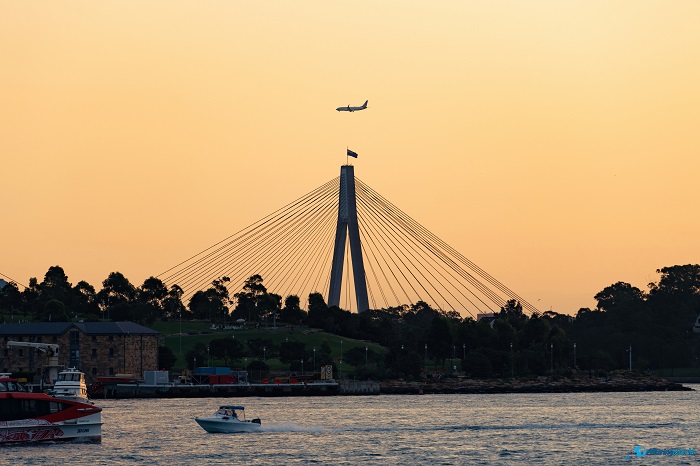
The materials used for the bridge were chosen with both strength and longevity in mind. Reinforced and pre-stressed concrete forms the core structural material of the deck and pylons, while high-tensile steel cables, each capable of supporting several hundred tonnes, were installed in a carefully balanced array to distribute the load evenly. The deck, which is where the main traffic occurs and carries eight lanes of traffic, was constructed segment by segment using advanced precast concrete technology, allowing engineers to assemble the bridge efficiently without interrupting the busy harbor below. The concrete was mixed with special additives to resist corrosion and withstand the humid maritime climate of Sydney, ensuring a long service life.
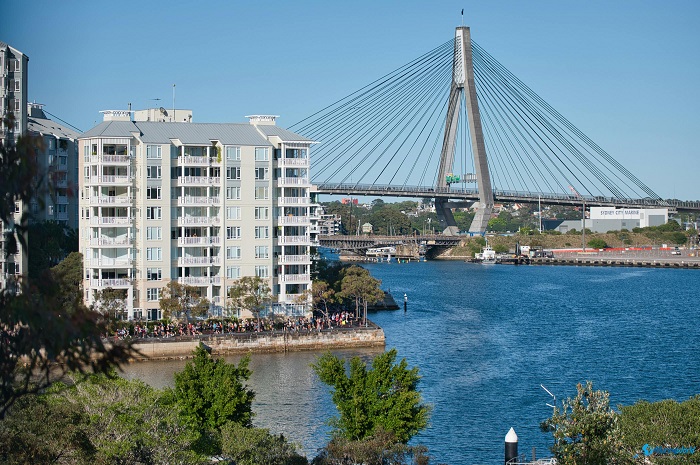
Each of the bridge’s twin pylons supports 21 pairs of cables arranged in a harp-like pattern, giving the Anzac Bridge its distinctive silhouette. As the design’s geometry enhances the visual appeal, it also provides exceptional structural efficiency, because it gives the support that the bridge requires to support the daily traffic of about 180,000 vehicles while it maintains its flexibility under heavy loads and strong winds. Due to the structure’s aerodynamic shape and refined proportions, the bridge perfectly blends with Sydney’s modern urban landscape that changed in the last couple of decades of the 20th century, thus offering a striking contrast to the city’s historic icons that are instantly recognizable, the Sydney Harbour Bridge and the other architectural marvel, the Opera House.
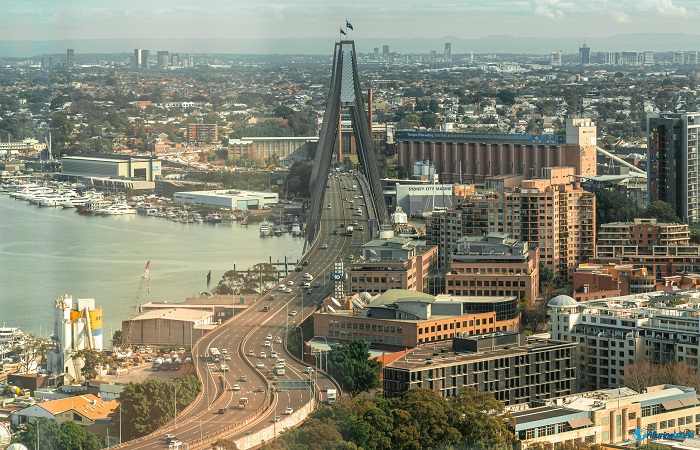
Beyond its engineering prowess, the Anzac Bridge holds deep symbolic meaning. Even though the bridge, when opened, did not have an official name, this changed in 1998, when it was officially named so that it would honor the Anzac soldiers, particularly the brave soldiers who fought during the Gallipoli campaign. Even though the naming was more than a gesture, it represented a shared heritage of resilience and camaraderie between the two nations, bringing them closer together. To further emphasize this connection, two bronze statues now stand guard at each end of the bridge. On the western end, a statue of an Australian soldier was unveiled in 2000, sculpted by Australian artist Alan Somerville. Facing him across the span, on the eastern end, stands the statue of a New Zealand soldier, added in 2008. The two figures, gazing towards each other across the bridge, symbolize unity, remembrance, and mutual respect.
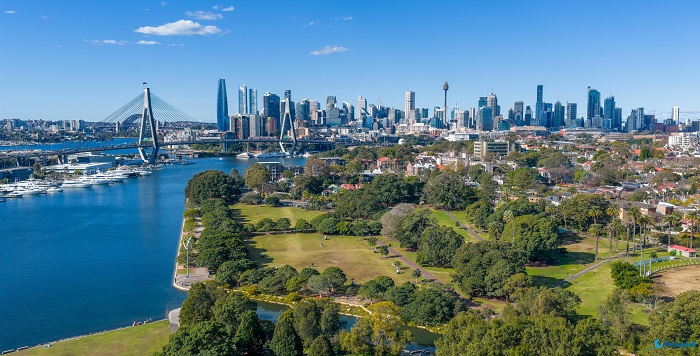
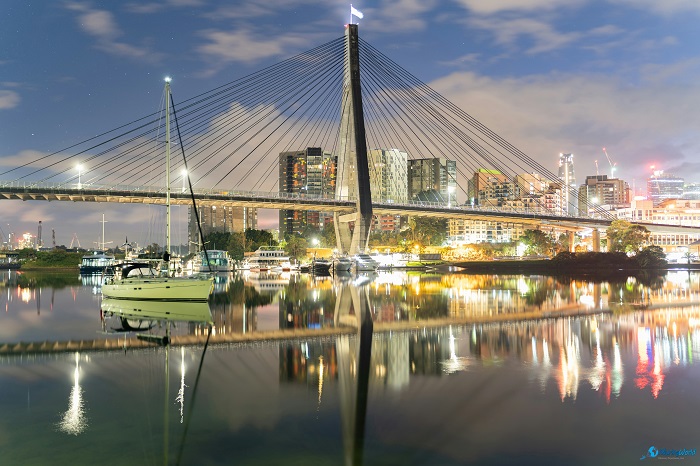
As the bridge is very impressive during the day, lighting has a very important role in the bridge’s aesthetic appeal during the evenings. At night, the Anzac Bridge transforms into a luminous ribbon of light that stretches across the water, while its pylons and cables are illuminated to create a shimmering reflection on the bay’s surface. This was very carefully planned because it needed to highlight the bridge’s architectural lines while minimizing glare and energy consumption. The end result of this creative way of showcasing this majestic architectural masterpiece is a visual icon that feels modern and timeless; in short, it is a work of art that celebrates Sydney’s vibrant spirit.
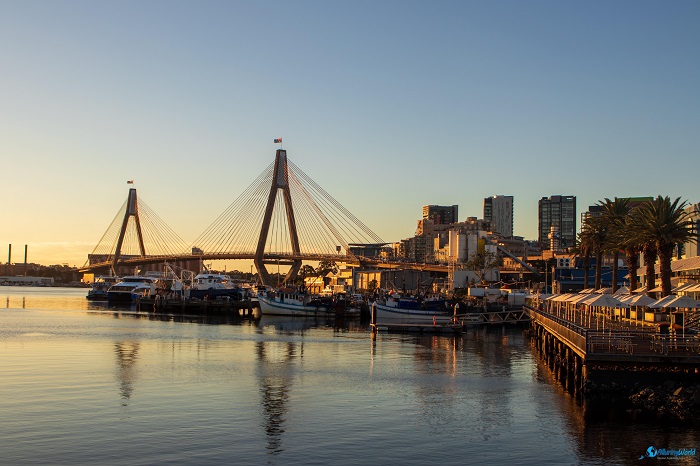
For visitors to Sydney who wish to experience the Anzac Bridge up close, there are several excellent vantage points and walking routes. While the bridge itself is primarily intended for vehicles, there is a pedestrian and cycle path which runs along its northern side, consequently offering spectacular views of the great Sydney skyline, Darling Harbour, and the western districts. Access points for the walkway can be found near Pyrmont on the eastern end and Rozelle on the western side. The walk is particularly rewarding at sunrise or sunset when the sky’s colors cast dramatic reflections over the bay.
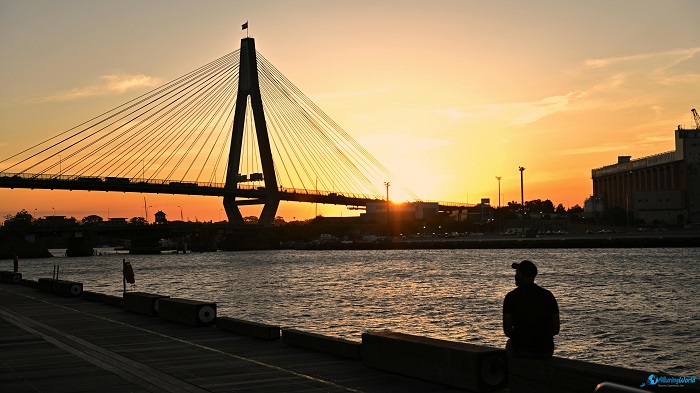
It must be noted that photographers will find multiple ideal spots to capture the bridge’s grandeur, but one of the most popular viewpoints is from Wentworth Park or Pyrmont Waterfront Park, where the entire span can be seen against the backdrop of Sydney’s modern skyline. Another excellent location is from Rozelle Bay Marina, where the towering pylons and their mirrored reflections on the calm waters create a stunning composition.
Visiting the Anzac Bridge is easy from the Sydney CBD. It’s just a few minutes’ drive west via the Western Distributor, or for those preferring public transport, several bus routes cross the bridge daily. Cyclists can access the shared path from either side, making it part of a scenic route that links the Inner West suburbs to the city center.
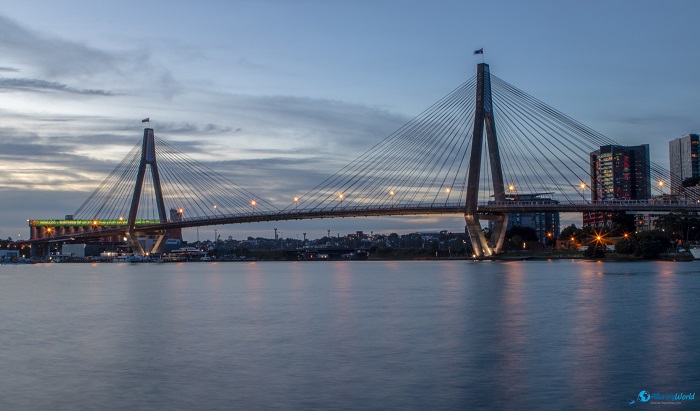
The best time to visit the bridge depends on what you want to experience. For photography and scenic walks, early morning and late afternoon provide the best light; however, if you would like to have a more atmospheric experience, then visiting the bridge after dark reveals its spectacular lighting and the glittering city skyline beyond. As it happens annually on Anzac Day (25 April), the bridge becomes a poignant focal point for remembrance of the soldiers who gave their lives during WWI, and this is usually with wreaths laid and ceremonies held to honor these fallen heroes.
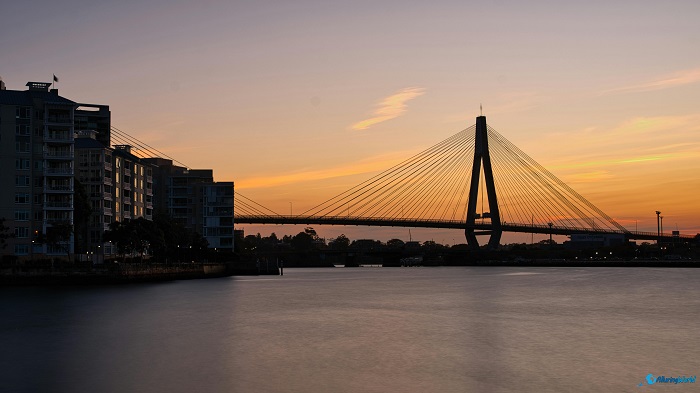
In conclusion, today the Anzac Bridge stands as a vital transport artery that links major parts of the great Australian city, but at the same time serves as a powerful symbol of Australian ingenuity and identity. It’s a fusion of advanced engineering and heartfelt tribute; Anzac Bridge is more than just that; it is an important link that connects two shores while at the same time reflecting the historic connection between two nations and their shared history. If you will admire the bridge for its technical brilliance, its architectural beauty, or simply for its emotional resonance that is deeply linked with Anzac Day, the Anzac Bridge will remain one of Sydney’s most captivating landmarks, and it will continue to represent a testament to human creativity, resilience, and the enduring power of remembrance. So, all you need to do is decide in what kind of glory you would like to see this majestic artwork of architecture, and if you decide to do a day and night sight, rest assured that you will not be disappointed by it.