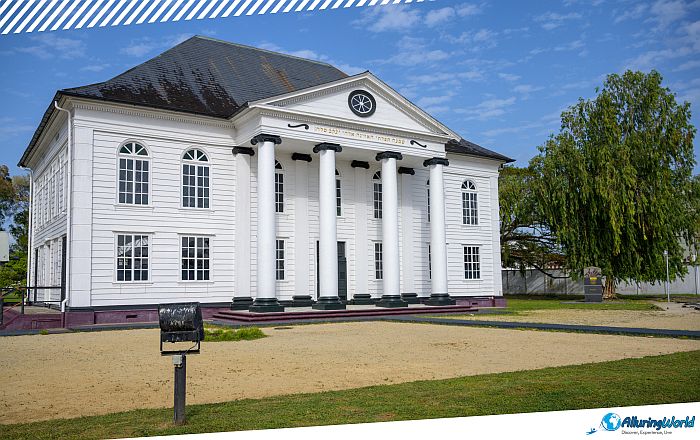
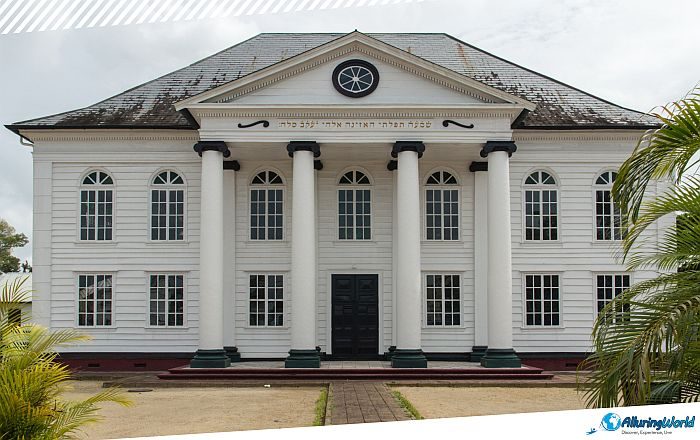
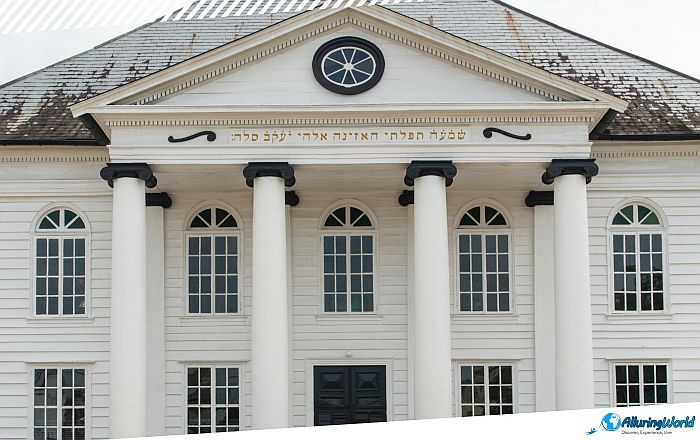
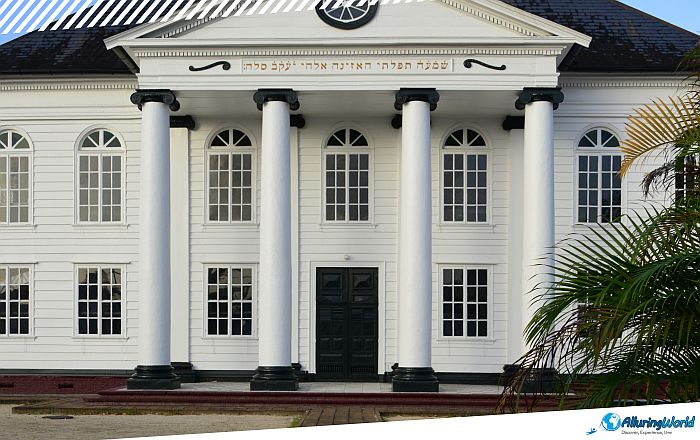
The Neveh Shalom Synagogue is a historic synagogue and important landmark located along Keizerstraat, in the historic center of the city of Paramaribo, the capital and largest city of the Republic of Suriname. Originally founded by a community worshipping in the Ashkenazi rite, the Neveh Shalom Synagogue is considered one of South America’s most remarkable architectural and cultural landmarks. Rising behind a wrought-iron fence in crisp white-painted timber, the Neveh Shalom Synagogue stands as an enduring monument to Jewish heritage in the Americas and a living testament to Suriname’s centuries-old tradition of religious pluralism. Translating from Hebrew as “Abode of Peace” or “Oasis of Peace,” Neveh Shalom is more than a historic house of worship; it is the beating heart of Suriname’s surviving Jewish community and an essential stop on any cultural itinerary through the UNESCO-listed Historic Inner City of Paramaribo.
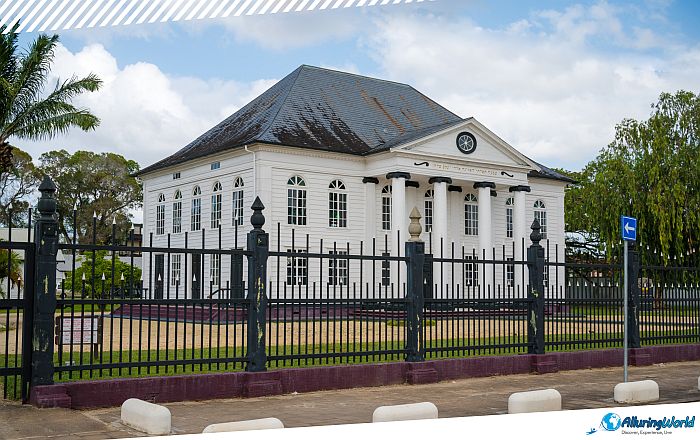
To understand the significance of Neveh Shalom, you must explore the arrival of the Jewish settlers in Suriname during the mid-17th century. In an effort to find asylum from the persecution of the Spanish and Portuguese Inquisitions, as well as Dutch withdrawal from northeastern Brazil, the Sephardic Jews formed one of the first and wealthiest Jewish settlements in the Western Hemisphere. Under British and subsequently Dutch colonial charters that granted unprecedented religious autonomy, the settlers formed this community of Jodensavanne (Jewish Savannah) in the 1660s, and this provided them with the complete freedom of religion as they founded themselves as a self-sufficient agricultural settlement. This settlement was a semi-autonomous agricultural one that was located roughly 50 kilometers (31 miles) south of Paramaribo along the Suriname River.
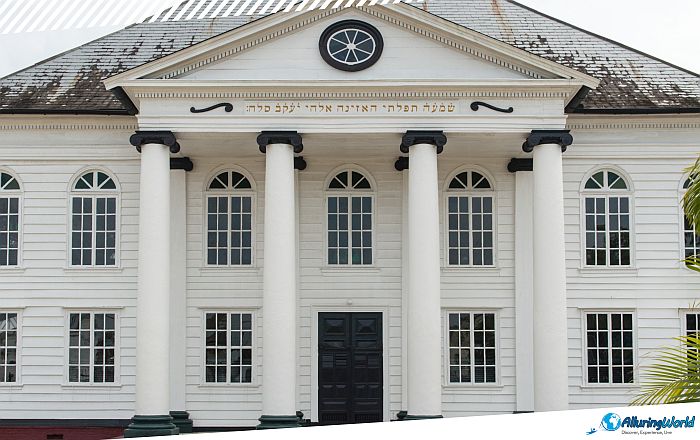
The Sephardic planters who lived at Jodensavanne cultivated sugar cane and founded Berache ve Shalom, which was the first brick synagogue in the Americas. Inaugurated in 1685, the Sephardic Jews slowly started putting down roots in Suriname and started building their society. With the decline of the plantation system in the late 18th century, a shift sealed by the disastrous fire at Jodensavanne in 1832, the remaining Jewish population relocated permanently to Paramaribo. Earlier in the 18th century, the growing urban community had already organized along cultural and religious lines into Sephardic and Ashkenazi congregations. The Sephardic Jews built their synagogue on Herenstraat in 1736, while the Ashkenazim settled on Keizerstraat and established their community in this section of Paramaribo.
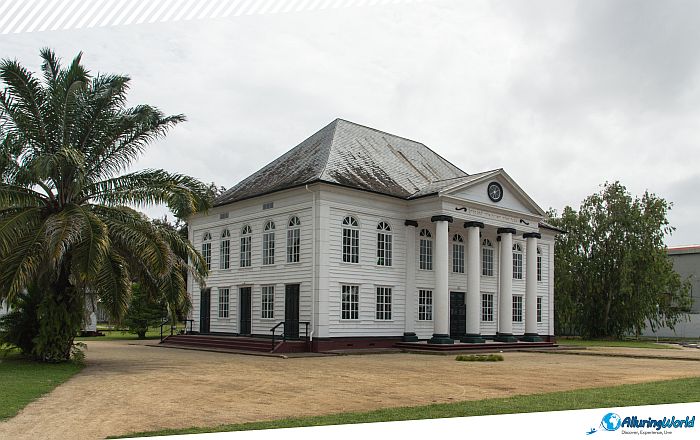
The original wooden synagogue on the Keizerstraat site became the property of the Ashkenazi community in 1716 and was consecrated in 1723. More than a hundred years later, the community needed a larger synagogue that would allow them to hold better religious services, so the members engaged the architect J.F. Halfhide to create the neoclassical building that you see today. Completed and consecrated in 1836, although some final touches were added in 1837, the present-day Neveh Shalom Synagogue is a true architectural gem of colonial South America. Paramaribo’s UNESCO World Heritage status rests largely on its unique fusion of European neoclassical design with South American craftsmanship and materials, and Neveh Shalom exemplifies this vernacular style. Constructed almost entirely from local tropical hardwoods, prized for their resistance to humidity and termites, the building features a symmetrical façade. These tall louvered sash windows invite the Atlantic trade winds, and a stately portico is supported by tall classical columns. Within the synagogue, soaring ceilings are illuminated by gleaming brass chandeliers, while a wrap-around mezzanine gallery supported by slender wooden pillars accommodates seating above the main sanctuary.
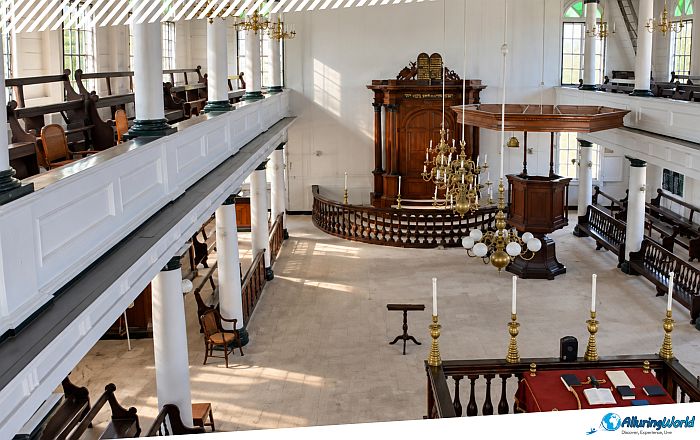
Yet, the detail that draws the eye of all who enter is not above them, but rather below their feet. This important detail is the floor of the entire sanctuary, which is covered with a spotlessly clean white river sand. The synagogue of Neveh Shalom is among the few sand-floored synagogues in the world, along with historic synagogues in Curaçao, Jamaica, and St. Thomas. While this is not the traditional way of constructing a synagogue, this distinctive tradition carries multiple layers of historical and spiritual symbolism which can be interpreted as:
- Echoes of the Exodus: For congregations descended from Iberian exiles, the sand serves as a tactile reminder of the forty years the Israelites spent wandering through the Sinai Desert before reaching the Promised Land.
- Memory of the Inquisition: Oral tradition holds that during the dark years of the Inquisition, conversos (crypto-Jews) spread sand across the floors of clandestine prayer rooms to muffle the sound of footsteps and keep their worship hidden from authorities.
- Biblical Promise: The fine grains symbolize God’s covenant with the patriarch Abraham, promising that his descendants would become as numerous as the stars in the sky and the sands upon the seashore.
ADVERTISEMENT
In preparation for services and holidays, the caretakers take great care to rake the sand into perfect, uniform patterns so that the Neveh Shalom Synagogue is prepared properly for the coming rituals. When worshippers are walking and hear the crunch on the sand, they are induced into a reverent pace that naturally quiets the mind and transitions them from the busy outside world into a state of prayer. Just beyond the eastern courtyard wall of Neveh Shalom lies the feature that has made Keizerstraat famous around the globe. Separated by mere meters, and sharing an adjoining parking lot and street frontage, stand the towering white minaret and Moorish-inspired façade of the Mosque Keizerstraat, headquarters of the Ahmadiyya Anjuman Isha’at Islam in Suriname.
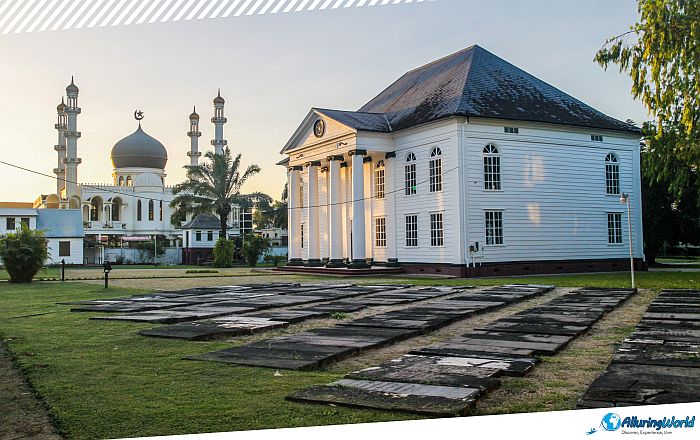
In a world marked by sectarian division, it is remarkable for a synagogue and a mosque to be found side-by-side, functioning actively within the same block in the same city. This is no artificially arranged tourist gimmick; it represents the social reality of Suriname. For many centuries, colonization, enslavement, and indentured labor brought together Indigenous groups, Afro-Surinamese Creoles and Maroons, Hindustani (Indo-Surinamese), Javanese, Chinese, Lebanese, and Europeans. From such a rich history, there arose a strong tradition of respect within the small nation in South America. During religious festivals, people from the synagogue and the mosque exchange greetings, park together when services are full, and work together on civic projects. To tourists visiting Paramaribo, walking on the sidewalk in front of Keizerstraat 82 and 88 can teach an important lesson about peaceful coexistence, and it can be used as an example of how people should strive to live in this modern world, especially in nations from the Middle East.
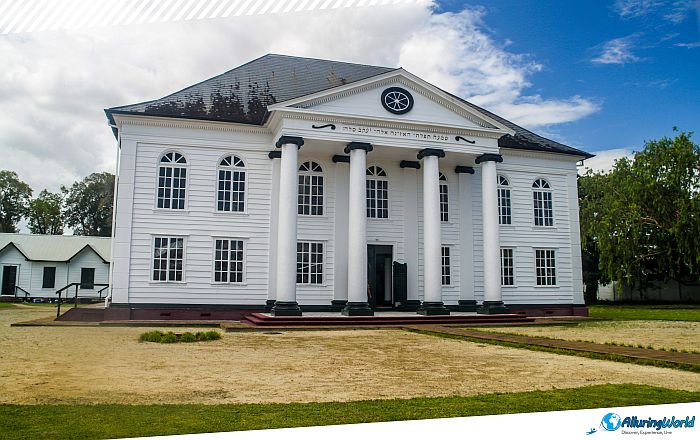
While Suriname’s Jewish population once numbered in the thousands, emigration during the 20th century reduced the community to fewer than two hundred active members today. Recognizing the practical realities of maintaining two historic buildings with a smaller congregation, in the late 1990s, it was decided for the Sephardic and Ashkenazi communities to merge into a single unified body, the Israelitische Gemeente Suriname, worshipping together at Neveh Shalom. Neveh Shalom’s interior is home to invaluable silver, antique Torah scrolls, and historic furnishings saved from the former Zedek ve Shalom synagogue, whose interior woodwork was placed on long-term loan to the Israel Museum in Jerusalem. Beyond the main prayer hall, the grounds also feature a preserved historic mikveh (ritual bath) as well as a small on-site museum and community center displaying centuries-old marriage contracts, archival documents, and artifacts chronicling Suriname’s unique Eurafrican Jewish heritage. The upkeep of the 19th-century hardwood building in the tropical climate of Suriname, where temperatures average about 30°C (86°F) and humidity usually exceeds 80 percent, is an ongoing task. Various local heritage trusts and international Jewish heritage societies cooperate with volunteers from the community in safeguarding the building from tropical rains, especially with the timber framing, and restoring antique brassware.
If you plan on visiting this majestic religious structure in Suriname’s capital, then this can be really straightforward, as the synagogue sits within easy walking distance of Paramaribo’s major riverfront landmarks, roughly 600 meters (1,970 feet) west of the Suriname River waterfront, as well as Fort Zeelandia and a 7-minute walk from Independence Square. Because it remains an active house of worship rather than a static museum, you should plan your visit thoughtfully:
- Opening Hours and Tours: The hours during which the synagogue is normally open are Monday through Friday from 09:00 to 13:00, though these hours may vary depending on the availability of volunteers and community events. The synagogue is not open on Saturdays due to Shabbat and major Jewish holidays. Tourists are advised to contact the synagogue’s office several days prior to their visit to confirm the schedule and book a guided tour with one of the community volunteers, who can share rich insights into its history.
- Dress Code and Etiquette: Appropriate dressing is expected because of the reverence for the holy place; shoulders and knees need to be covered, and a kippah (skullcap) will be provided for the men at the entrance. Photographs should not be taken without prior permission in the chapel, and you should not walk on recently raked sand designs.
- Security Concerns: Like many active synagogues worldwide, Neveh Shalom enforces strict security protocols. You must bring a valid physical passport (or government-issued photo ID) to be admitted at the gate, and bags are typically checked. If you wish to attend Friday evening Shabbat services, you can do so if you contact the community office in advance with your passport (photo ID) details.
- Best Time to Visit: Suriname experiences two dry seasons: from February to April and from August to November. They provide the best walking weather in Paramaribo, so if you arrive at around 09:30, you will be able to visit the synagogue and the nearby Mosque Keizerstraat before the tropical sun peaks at around 13:00.
A small entrance fee (donation-based) is charged at the entrance, and all of the money is used to help maintain the wooden building and preserve the Jewish heritage of Suriname. If you have time to do so, combine your visit to Neveh Shalom in the morning with a day trip down south to the ruins of Jodensavanne and its cemeteries from the 17th century, as this will allow you to connect the coastal sanctuary to its jungle origins. All in all, the transition from the bright bustle of Keizerstraat to the shady, sandy interior of Neveh Shalom represents one of the most striking cultural experiences you can have in South America. Thanks to its durable tropical architecture, lively Sephardic and Ashkenazi culture, and remarkable connection with the Muslims living next door, the synagogue provides an opportunity for every visitor to relax and see how diversity can be celebrated on a daily basis.