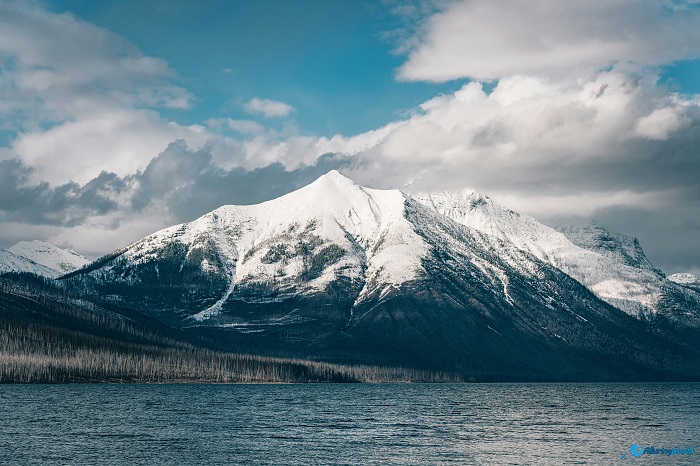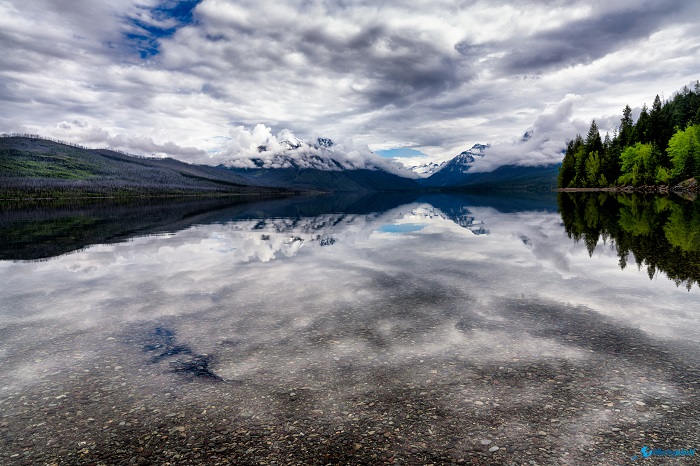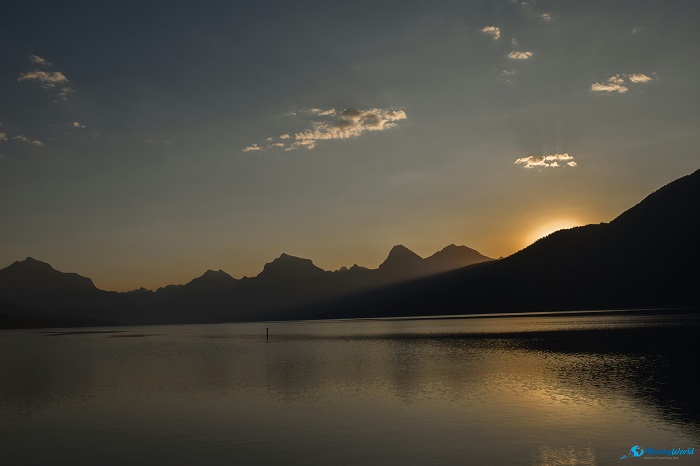
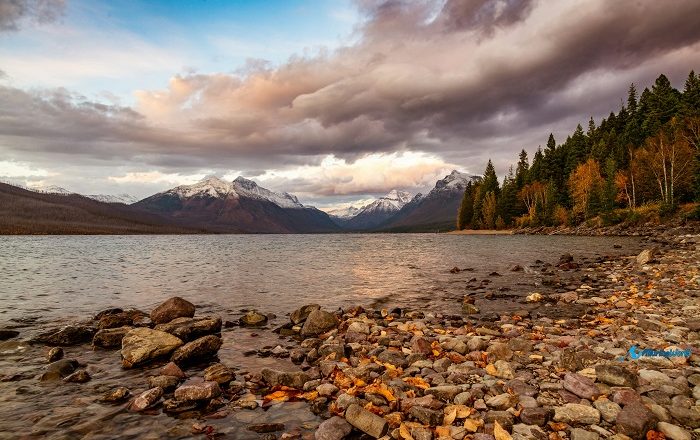
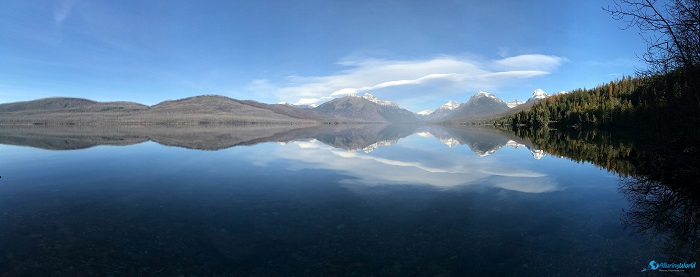
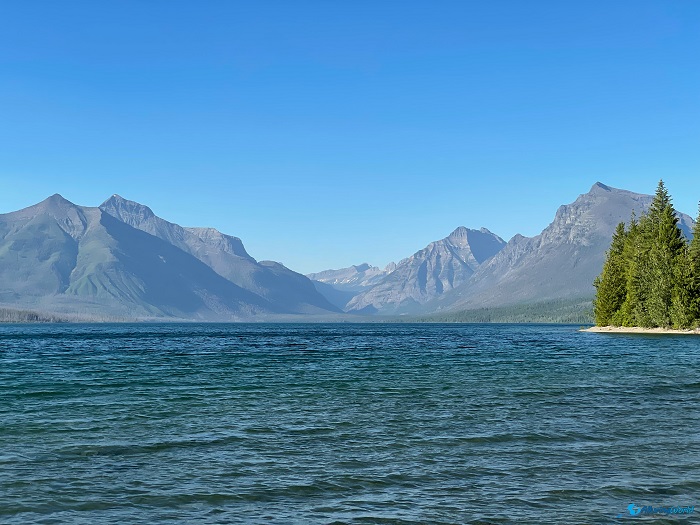
Lake McDonald is a stunning natural glacial lake located in the very famous Glacier National Park in the northwestern part of the State of Montana, within the northwest part of the United States of America. Being the crown jewel of Montana’s Glacier National Park, as it captivates visitors with its pristine beauty and serene ambiance, this majestic lake is the largest one that can be found in Glacier National Park, stretching approximately 15 km (9.4 mi) in length and over 1.6 km (1 mi) in width. The lake’s clear waters, which can reach depths of up to 141 m (464 ft), reflect the towering peaks and dense forests that surround it, creating a picture-perfect landscape that has become synonymous with the park’s natural allure.
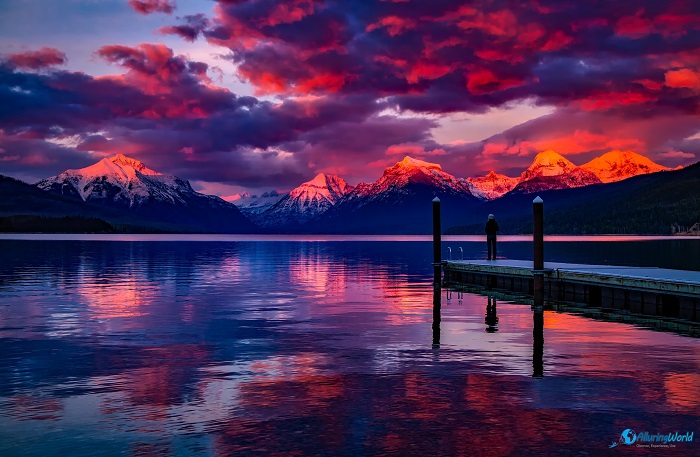
Lake McDonald was formed over 10,000 years ago during the last Ice Age as massive glaciers carved out the U-shaped valley in which the lake lies today, grinding down the earth and creating deep basins that filled with water as the glaciers melted. The result is a lake of remarkable clarity, fed by mountain streams and snowmelt, which showcases the geological history of the region, and the colorful rocks lining the lakebed, ranging from vibrant reds and purples to deep blues and greens, are a testament to the diverse mineral composition of the surrounding terrain, adding to the lake’s ethereal beauty.
The history of the Lake McDonald area is rich and intertwined with the cultural heritage of the native Blackfeet and Kootenai tribes, who have lived in the region for thousands of years. These indigenous peoples revered the land for its natural abundance and spiritual significance, considering it a sacred place, where the area around the lake provided further essential resources such as fish, game, and plants, which supported their way of life. The Blackfeet referred to the area as “Mistakis,” meaning “backbone of the world,” a name that reflects the awe-inspiring nature of the surrounding mountains.
In the late 19th century, as European-American settlers began to explore the western United States, the beauty of Lake McDonald and its surroundings became widely recognized, but with the construction of the Great Northern Railway in the 1890s, access to the area increased significantly, as it consequently led to the establishment of Glacier National Park in 1910. The park was created to preserve the stunning landscapes and diverse ecosystems of the region, with Lake McDonald quickly becoming one of its most popular attractions.
Nevertheless, the importance of Lake McDonald extends beyond its natural beauty as the lake has served as a gateway to the park for generations of visitors, offering a starting point for numerous adventures and activities. The historic Lake McDonald Lodge, built in 1913, is a testament to the early days of tourism in the park, and as it was constructed in the Swiss Chalet style, the lodge has welcomed visitors for over a century and remains a beloved landmark. The lodge’s rustic charm, combined with its location on the eastern shore of the lake, provides guests with unparalleled views and a connection to the park’s history.
ADVERTISEMENT
In more recent history, Lake McDonald has continued to be a focal point of Glacier National Park because the lake and its surrounding area offer a wide range of recreational activities, including boating, fishing, and hiking. The lake’s calm waters are perfect for kayaking and canoeing, allowing visitors to explore its length and take in the majestic scenery from the water. Fishing enthusiasts can try their luck at catching native trout, while hikers can enjoy trails that wind through lush forests and lead to stunning viewpoints. One of the most popular trails, the Trail of the Cedars, offers an easy walk through an ancient forest of towering cedar trees, eventually connecting to the more challenging Avalanche Lake trail.
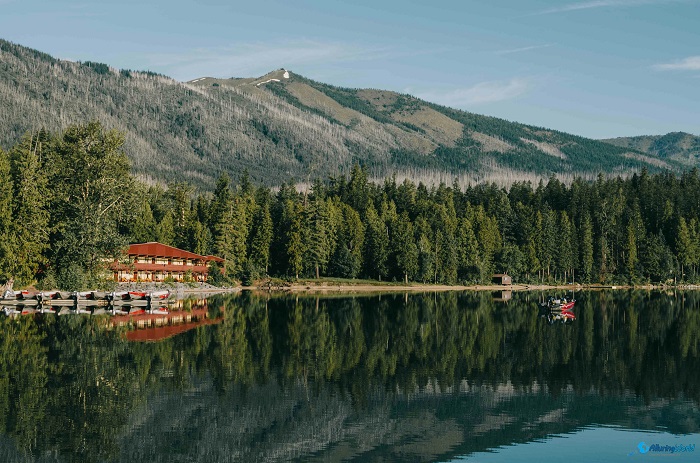
To reach Lake McDonald, visitors typically enter Glacier National Park through the west entrance, located near the town of West Glacier, from where the lake is just a short drive from the entrance along the Going-to-the-Sun Road, a scenic route that is renowned for its breathtaking vistas and engineering marvels, but also the very important Going-to-theSun Mountain. The road, which traverses the park from west to east, offers numerous pullouts where visitors can stop to admire the views and take photographs, and the best time to visit Lake McDonald is during the summer months, from June to September, when the weather is mild, the road is fully open, and all park facilities are operational. During this time, the lake’s waters are at their warmest, and the surrounding trails are clear of snow, making it ideal for outdoor activities.
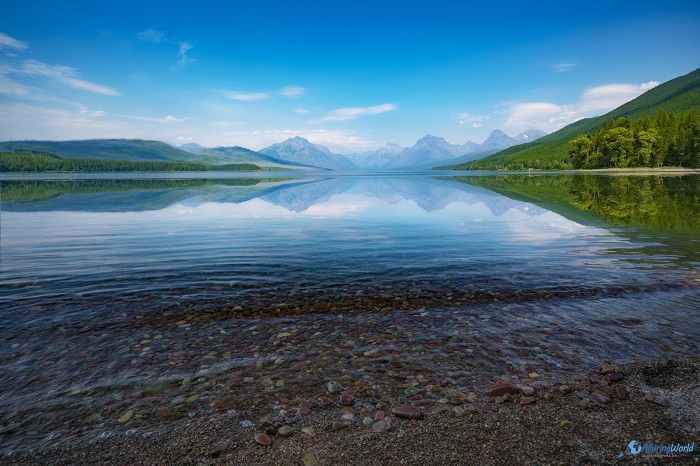
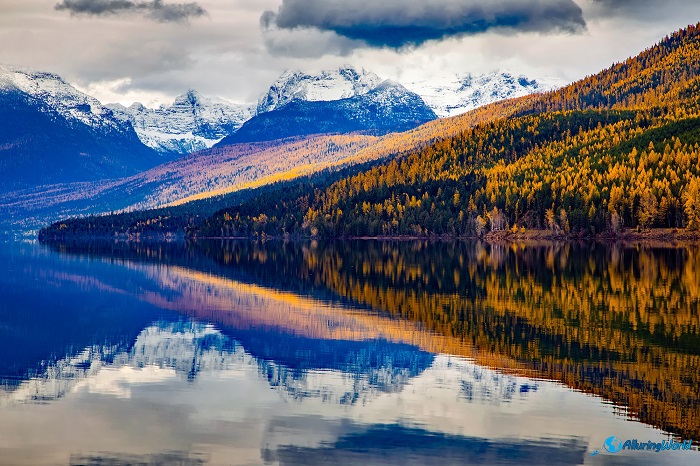
Still, Lake McDonald’s appeal extends beyond the summer season because in the fall, the area is transformed by vibrant displays of autumn foliage, with golden aspens and red maples contrasting against the deep green of the evergreens. Winter brings a different kind of beauty, as the lake and its surroundings are blanketed in snow, offering opportunities for cross-country skiing and snowshoeing, and while access to certain areas may be limited in winter due to snow, the peacefulness and solitude of the season provide a unique way to experience the park’s wilderness.
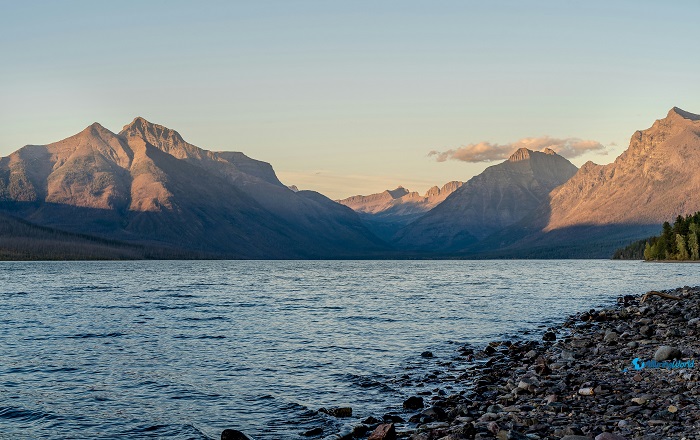
Overall, visiting Lake McDonald offers a chance to connect with the natural world in one of the most beautiful settings in North America, where the lake’s pristine waters, framed by rugged mountains, create a sense of tranquility that is hard to find elsewhere. Whether you are interested in outdoor recreation, photography, or simply enjoying the scenery, Lake McDonald has something to offer and with the lake’s accessibility, combined with its stunning beauty, makes it a must-see destination for anyone visiting Glacier National Park.
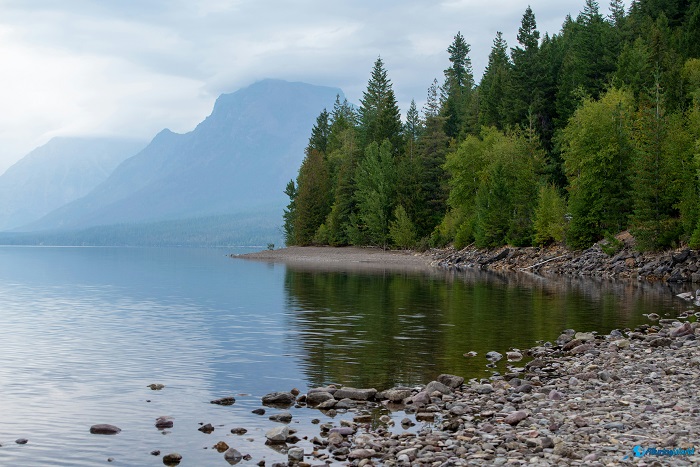
In conclusion, Lake McDonald is not just a lake; it is a living piece of history and a natural wonder that has drawn people to its shores for centuries; starting from its formation, shaped by the powerful forces of nature, and its rich cultural history make it an essential part of the Glacier National Park experience. Today, Lake McDonald continues to inspire awe and wonder in all who visit, offering a timeless connection to the rugged beauty of the Rocky Mountains, and whether you are planning a summer adventure or a quiet winter retreat, Lake McDonald promises an unforgettable experience that will leave you with memories to cherish for a lifetime.