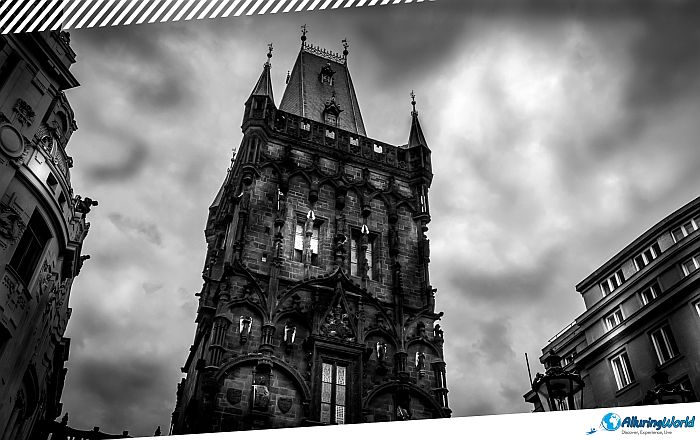
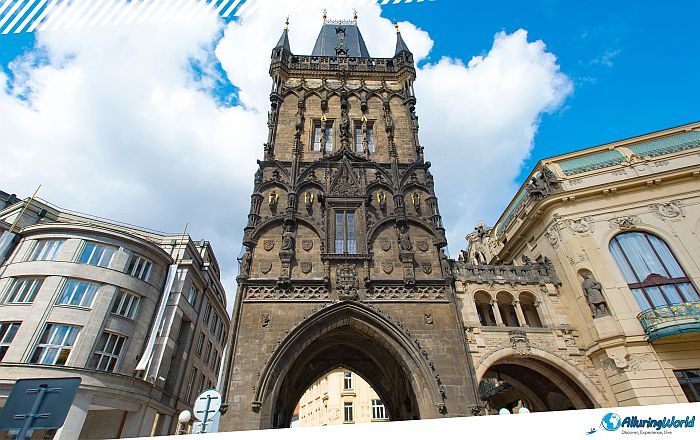
The Powder Tower, known locally as Prašná brána, is a historic Late Gothic and Neo-Gothic city gate located in the central core of the city of Prague, the capital of the Czech Republic. This amazing 65-meter (213 feet) high structure stands as one of Prague’s most iconic medieval landmarks, connecting the rich history of the Old Town with the vibrant New Town. As one of the original thirteen city gates, it marks the entrance to the Royal Route, the ceremonial path that Bohemian kings once followed en route to their coronation at St. Vitus Cathedral in Prague Castle. Situated at the end of Na Příkopě Street right next to the magnificent Art Nouveau Municipal House building, the Powder Tower stands out with its Gothic appearance and elaborate carvings, thus attracting historians and tourists alike from all over the globe.
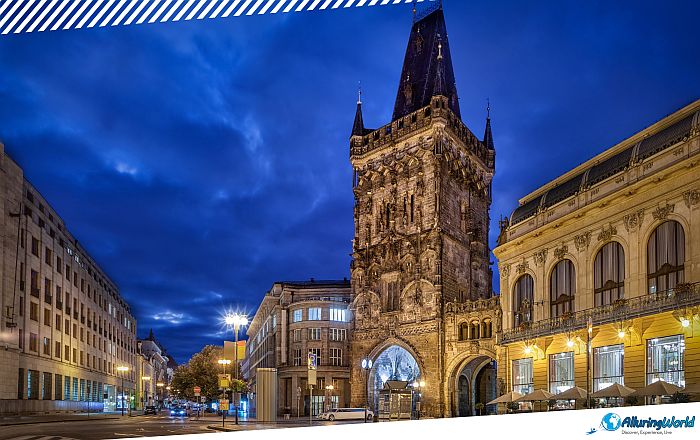
The construction of the Powder Tower started in 1475 during the rule of King Vladislaus II of Bohemia and Hungary. The structure replaced another gate that previously stood in its place, known as Horská brána, and it served as a defensive fortress, in addition to playing a symbolic role as a triumphal arch for the glory of the royal family of Bohemia. Right from the start, the construction of the tower aimed at impressing people who were arriving in the central part of Prague, and it marked the starting point of the Royal Route with its imposing appearance and beautiful façade.
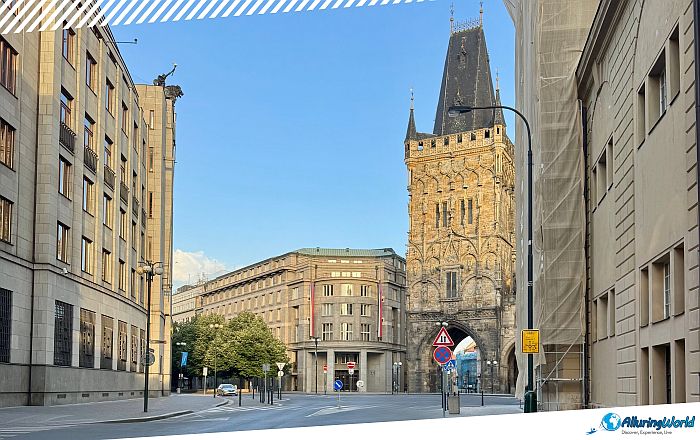
In terms of architecture, the Powder Tower is an excellent example of Late Gothic, somewhat Neo-Gothic architectural style, influenced by the Old Town Bridge Tower and built in the same style. The structure was constructed by Matthias Rejsek under the influence of the workshop of Petr Parléř, who created the architectural style of Prague in previous constructions like the St. Vitus Cathedral. The building’s façade has many carvings with figures of the kings of Bohemia, patron saints, coats of arms, and many other things, although, due to hundreds of years of weather and history, some details have faded a little bit.
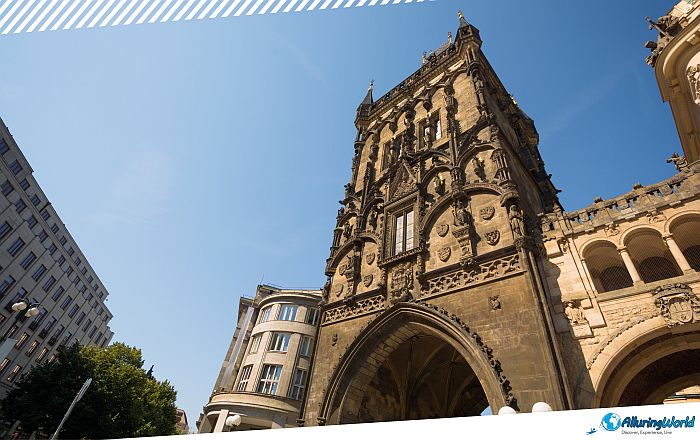
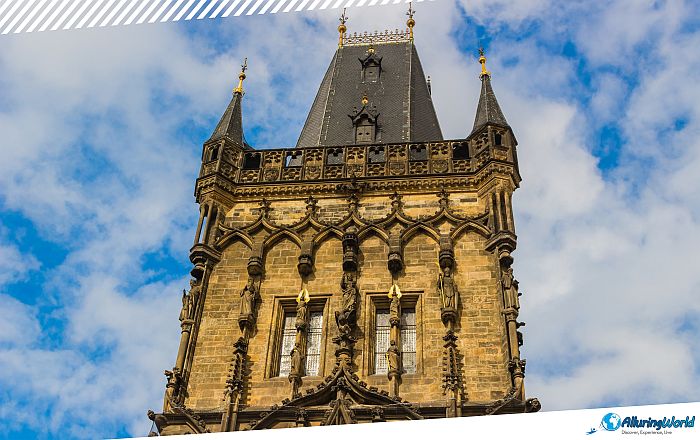
The Powder Tower is a multi-story stone gateway, constructed primarily from dark-weathered, local Bohemian sandstone blocks that give the structure its characteristic aged, blackish appearance. Its lower section features a wide Gothic archway spanning the passageway, oriented along an east-west axis that connects Celetná Street to the west with the New Town district to the east. Above the archway, the tower rises across several interior levels, punctuated by intricate relief carvings, coats of arms, and high-set arched windows. A narrow stone gallery wraps around the upper level, while the corners of the upper perimeter are crowned with four sharp, decorative corner turrets surrounding a steep, slate-tiled Gothic roof.
ADVERTISEMENT
The title “Powder Tower” is connected with the changes that happened in the tower over many years. First, it was known as “New Tower,” as this was in the initial years of its existence. Later, in the 17th century, it was repurposed into a gunpowder storehouse for the city’s defensive purposes, thus earning its modern name. This practical function as a gunpowder tower continued until the 1830s; however, during these years, the Powder Tower did not lose its symbolic meaning. As heretofore, it was the ceremonial entrance for kings, connecting the busy Old Town with the majestic Prague Castle. The Royal Route, starting at the base of the tower, continues to echo the city’s medieval traditions, guiding visitors through a historic journey across centuries.
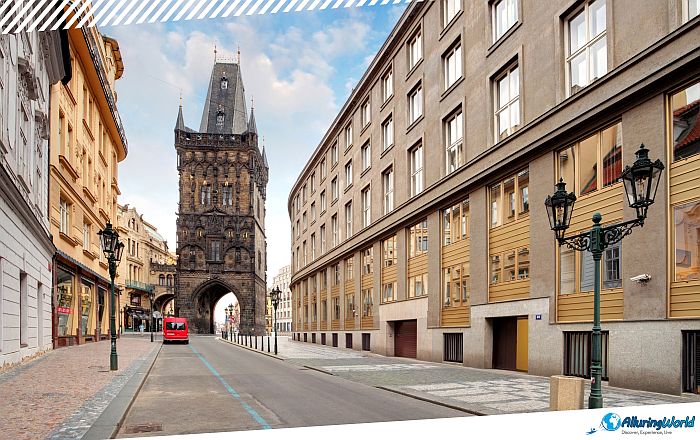
In addition to being a place of beauty, the tower has also been through strife and renewal. The Powder Tower was damaged during the Prussian attack on Prague in 1757, with most of its sculptural ornamentation lost. The tower underwent restoration in the late 19th century under the guidance of the world-renowned architect Josef Mocker, adding back many missing details and polishing the neo-Gothic architecture of the structure. Restoration of the tower took place as part of an overall historicist movement in Prague, aiming at the preservation of the medieval architectural legacy of the city, and preserving it for future generations to be able to gaze at and learn the country’s history from its architecture. The restored tower serves today as a historical and quite important object, contrasting beautifully with the adjacent Municipal House built in the style of Art Nouveau.
The Powder Tower provides visitors with historical knowledge and breathtaking scenery of the capital. If you are visiting this amazing city in Central Europe, then for a symbolic fee you can ascend to the top of the tower via the stairs and reach the viewing gallery, from which you can see the spires of the Old Town and busy squares and commercial areas of the New Town. In this way, you will get a sense of the harmony of the skyline of Prague and understand better the original purpose of the building. Nevertheless, the Powder Tower not only represents a place for sightseeing but is also a cultural landmark that shows the spirit of Prague, which has been standing in its place for centuries and has witnessed important events of the country and continent.
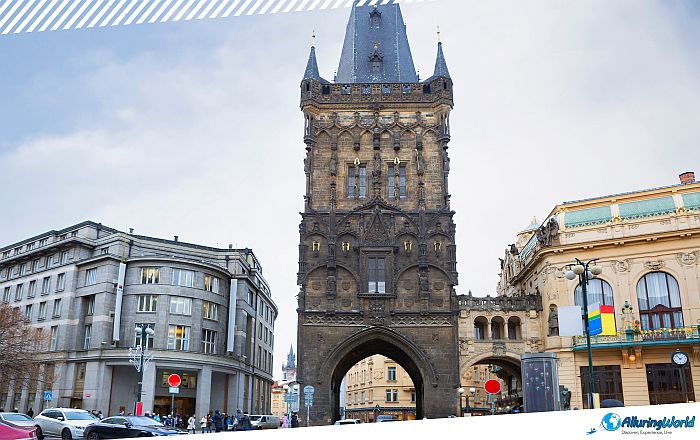
In conclusion, Prague’s Powder Tower is listed as a National Cultural Monument of the Czech Republic and is thus safeguarded for posterity. The monument continues to be a key attraction for tourists visiting Prague’s inner city area, allowing visitors to learn about Prague’s history firsthand as they take in one of Prague’s magnificent monuments. From its busy surroundings in the New Town quarter to the views from its observation tower, the Powder Tower symbolizes the grandeur of medieval Prague and provides an exciting portal into the city’s history.