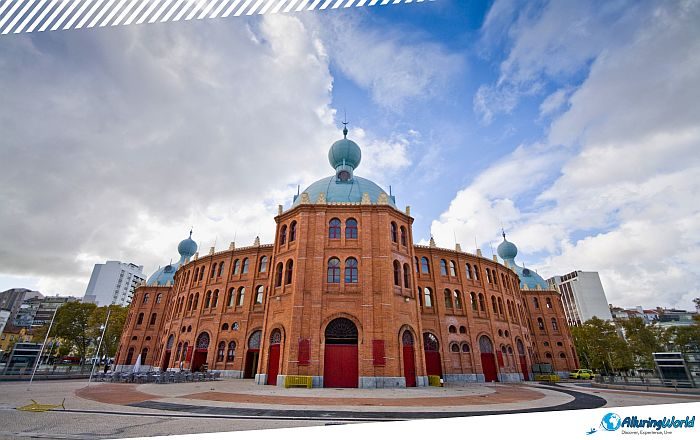
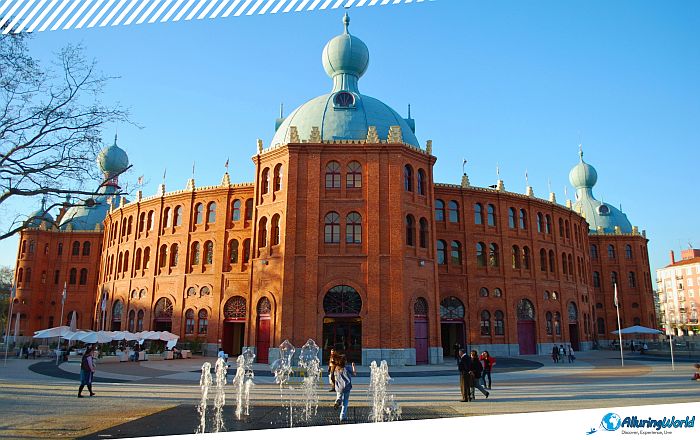
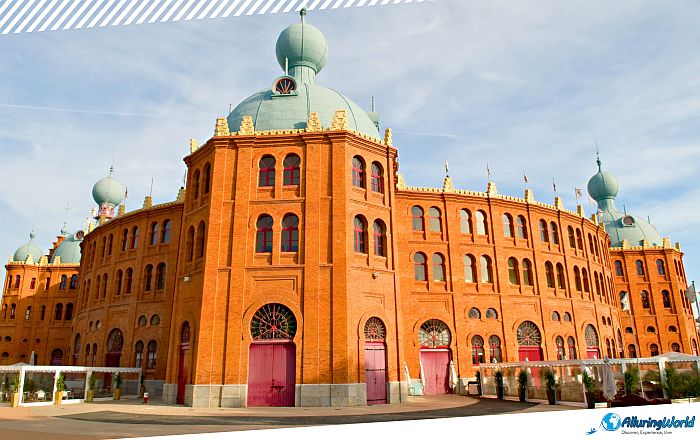
The Campo Pequeno Bullring, locally known as the Praça de Touros do Campo Pequeno, is a historic bullring as well as a multi-purpose cultural venue located on Avenida da República, in the northern part of the city of Lisbon, the capital of the Portuguese Republic. Though the city of Lisbon is characterized by pastel façades, baroque churches, and intricate calçada portuguesa limestone pavements, this round red brick building stands out due to its clear North African architecture. Inaugurated in 1892, the venue was originally conceived as the premier arena for Portuguese bullfighting, yet an ambitious 21st-century engineering overhaul reimagined the entire site. Today, behind its historic red walls and onion-shaped towers, there is a very active underground area that features many shops, restaurants, and even movie theaters, thereby becoming a bridge between the 19th-century glory of Lisbon and its modern life.
At the end of the 19th century, the urban planner Frederico Ressano Garcia designed a planned neighborhood of wide, tree-lined boulevards, nowadays referred to as the Avenidas Novas district, and this was a period when Lisbon was rapidly expanding towards the north. With the rapid development in this part of the country, Lisbon’s outdated bullring located in Campo de Santana was thought to be unsuitable for a capital of Europe, both structurally and aesthetically. The work on a permanent replacement, in this case the construction of Campo Pequeno, started in 1890, culminating in the official inauguration of Campo Pequeno on 18 August 1892, with a grand gala which was attended by King Carlos I and Queen Amélia.
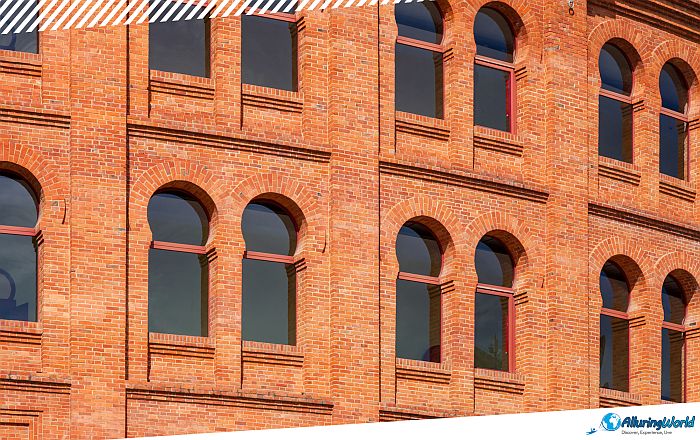
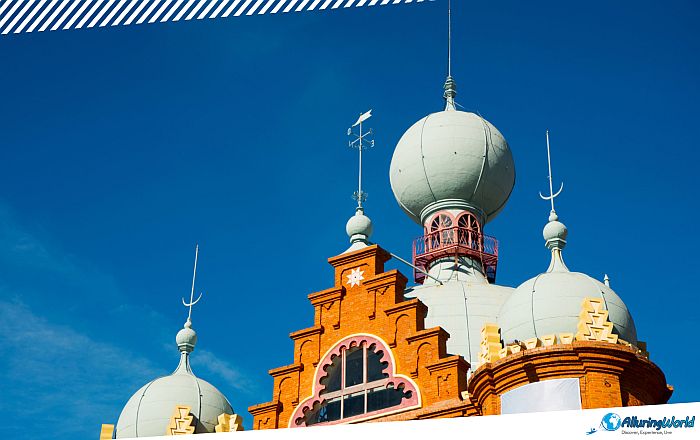
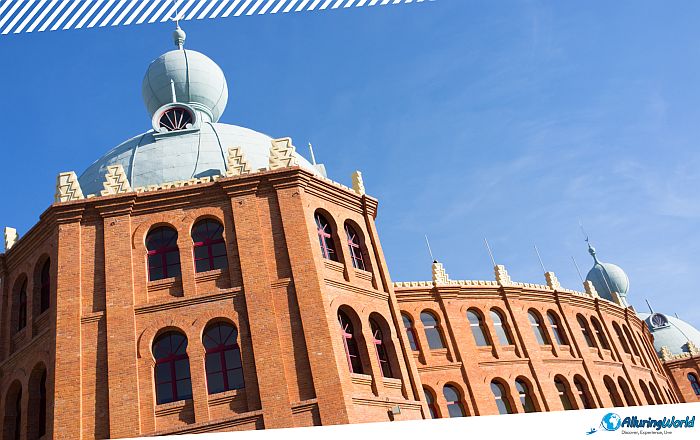
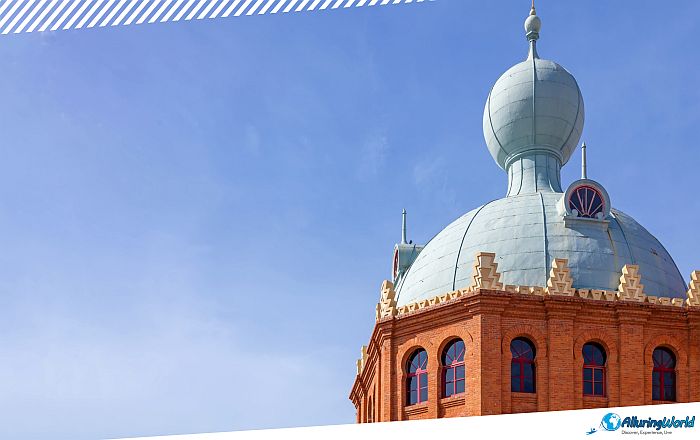
The building was created by the Portuguese architect António José Dias da Silva in the Neo-Mudéjar style. The architectural movement was based on the Moorish Iberian architectural tradition as well as on the magnificent 19th-century bullrings that could be found in Madrid and Seville, Spain. Built primarily of exposed red brick and stonework, the circular building has a diameter of about 80 meters (262 feet) and was built with the intention of housing 10,000 spectators across tiered seating galleries. Its overall architectural appeal lies in the form of perfect geometric shapes and Moorish decorations. You will be able to notice rows of horseshoe arches, also known as keyhole arches, which wrap rhythmically around the exterior façade, thus creating dramatic plays of light and shadow throughout the day. The perimeter is adorned with four octagonal corner towers crowned with ribbed, onion-shaped cupolas standing about 30 meters (98 feet) above the surrounding plaza and lending the arena the fortified elegance of a North African palace.
Campo Pequeno has for more than a century been the ceremonial hub for the Portuguese style of bullfighting called tourada. You may find it similar to the corrida in Spain; however, the Portuguese tourada is totally different in nature. In Portugal, there has been a ban on bull killing inside the arena since the 19th century, and it was a reform introduced by the government of Queen Maria II in 1836. This champion leadership shifted the focus entirely toward horsemanship, choreography, and collective physical nerve, instead of the grim spectacle of slaughtering the animal.
When you embark on a traditional evening at Campo Pequeno, you will be following two highly ritualized acts:
- The Cavaleiros: Rather than fighting on foot with capes, Portuguese bullfighters perform on horseback. Dressed in elaborate 18th-century aristocratic attire, complete with silk-embroidered coats, leather riding boots, and black tricorn hats, the cavaleiros guide meticulously trained Lusitano horses through intricate dressage maneuvers, evading the charging bull while placing decorative darts (bandarilhas) into its padded shoulders.
- The Forcados: Following the mounted display, a team of eight unarmed men known as forcados enters the sand ring in single file. Wearing traditional green and red wool caps (barretes), the front man (cara) taunts the bull into a direct charge, absorbing the full impact against his chest and locking his arms around the animal’s neck. At the same time, his seven teammates pile in behind to wrestle the bull to a standstill using sheer collective weight and coordination. Once the forcados bring the animal under control, a herd of tame oxen (cabrestos) guides the bull out of the arena; the animal is later slaughtered privately out of public view, and bulls that display exceptional bravery are occasionally spared and returned to their ranches for breeding.
ADVERTISEMENT
In addition to being used for bullfights, the size and strategic positioning of Campo Pequeno meant that it was an indispensable civic stage in the 20th century. During the dictatorship of the Estado Novo regime, the stadium staged events and sports competitions for the state, but in the aftermath of the 25 April 1974 Carnation Revolution, it was packed with people attending historic democratic political rallies and international rock concerts. By the late 1990s, the Campo Pequeno Bullring had suffered more than a century’s worth of wear and tear, thus leaving the arena in a state of extreme disrepair. Structural weaknesses and outdated safety features made it impossible for the arena to remain open after 2000, and a heated discussion ensued about the future of the historic structure, which became a recognizable symbol of Lisbon. Instead of letting the historic site remain unused, Lisbon undertook a six-year restoration and adaptive reuse project spearheaded by Portuguese architect João Antunes.
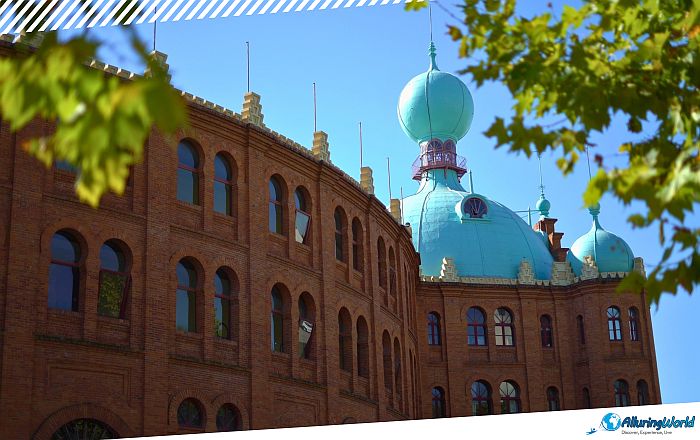
Since its reopening in 2006, the restoration project has demonstrated exceptional success from a modern engineering perspective. Every single ornamental brick, horseshoe arch, and turret on the façade built by the architect Dias da Silva in 1892 was meticulously restored, and the engineers dug very deeply under the central arena floor in order to build an extensive underground structure. The construction is supported by a massive concrete underpinning, and today the historic shell sits directly above a contemporary underground shopping gallery, an eight-screen cinema complex, dozens of restaurants and cafes, and a multi-story underground parking garage.
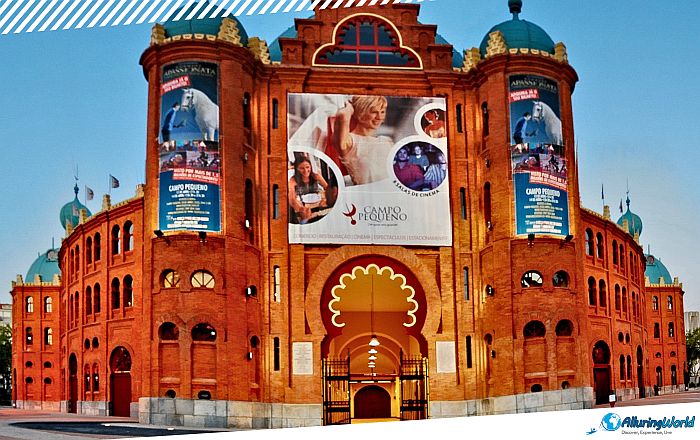
At ground level, the arena was equipped with enhanced acoustics, air conditioning, and a retractable roof. With this addition, Campo Pequeno became an all-year-round indoor arena instead of being a seasonal one, and with the 2006 reconstruction, Campo Pequeno Bullring could now host world-class music tours, symphonies, design fairs, and business expos irrespective of winter rains. Today, the venue officially operates under the commercial name Sagres Campo Pequeno, reflecting its status as one of Lisbon’s premier multi-purpose entertainment arenas.
The reason Campo Pequeno is such an authentic experience of everyday Lisbon is that it is situated in the Avenidas Novas business and residential district instead of the hilly areas of Alfama and Bairro Alto. If you want to add this neighborhood landmark to your itinerary, here is what to know before you go:
- Getting There: Sitting directly above the Campo Pequeno station on the Yellow Line of Lisbon Metro (Linha Amarela), the bullring is about 10 minutes away from Baixa-Chiado towards the north. Even the metro station itself is worth a glance as you exit, featuring decorative ceramic tile panels and marble sculptures created by Portuguese artist Francisco Simões. There are a number of city buses by Carris that stop right next to it on Avenida da República. Its flat surrounding avenues make walking from nearby Parque Eduardo VII or the Calouste Gulbenkian Museum effortless.
- Museu do Campo Pequeno: This compact museum, found within the arena complex, has exhibits in the form of historical architectural models, old photographs of 19th-century Lisbon, and elaborate cavaleiro costumes. Admission typically costs around €5, making it an easy and affordable addition to a daytime visit.
- Timing Your Visit: The traditional tourada events take place from April to September and generally begin at 22:00 on select Thursday nights. When taking pictures of the structure, aim to arrive between 17:30 and 19:00 during late afternoon golden hour when the sun is setting to the west, as this is when low western sunlight illuminates the terracotta brickwork and accentuates the depth of the horseshoe arches.
- Tickets, Hours & Accessibility: Admiring the exterior plaza and strolling through the underground shopping gallery and restaurants, open daily from 10:00 to 23:00, is completely free, though stepping inside the arena bowl requires an event or museum ticket. Traditional tourada tickets usually range from €15 to €50 depending on whether you sit in the sunny (Sol) or shaded (Sombra) sections, and can be purchased online or at the on-site box office (open Monday to Friday from 10:00 to 14:00 and 15:00 to 22:00, and until 19:00 on weekends). Thanks to the modern renovation, the entire complex also features elevator access from the underground levels and dedicated seating areas for visitors with reduced mobility.
No matter why you choose to visit this place, whether it be to see an international concert under its retractable roof, explore its underground boutiques and pastelarias, or appreciate its Neo-Mudéjar façade from the plaza around it, the Campo Pequeno Bullring can be seen as a good example of urban conservation. This can serve as a great example for other European cities on how to preserve and refurbish a historic structure and make it functional for modern times. With the combination of modern commercial and cultural activities below a well-preserved 19th-century building, Campo Pequeno has become a living part of Lisbon’s life, and something you shouldn’t miss whenever you are traveling around Lisbon and Portugal.