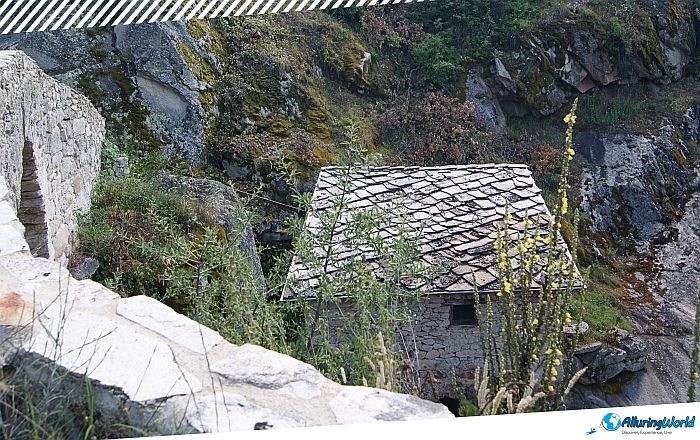
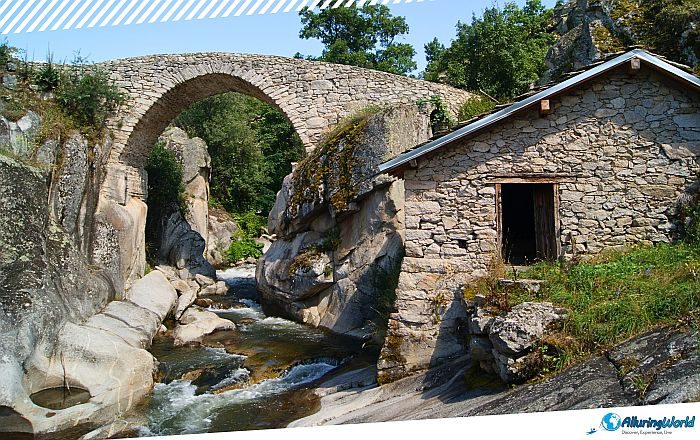
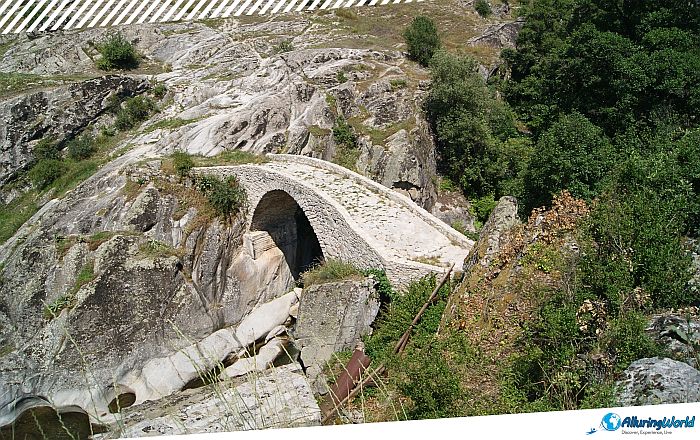
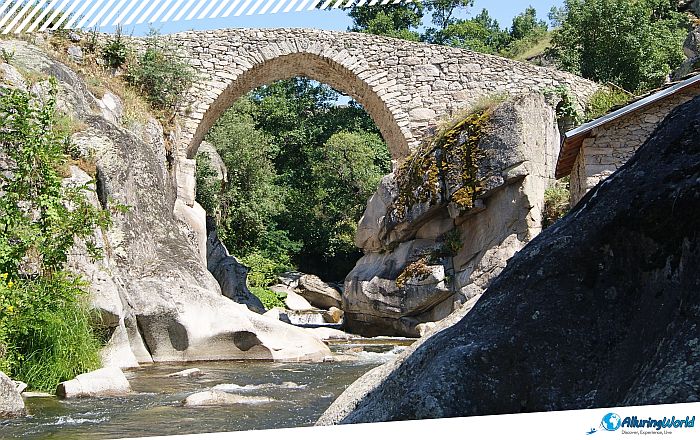
The Movie Bridge, locally referred to as the Stone Bridge of Zovik, is a historical stone arched bridge that is perched dramatically above the Gradeška River in the northeastern part of the village of Zovik (sometimes written as Zovich), in the northern part of the Municipality of Novaci, within the southern part of the Republic of Macedonia. Part of the remote sun-baked valleys of Mariovo, the Movie Bridge serves as an impressive link between untamed nature, exceptional artistry, and the recent cinematographic culture that made the bridge famous in Macedonia and worldwide. The bridge’s stone arch is much more than an aesthetically pleasing setting; it is a tangible manifestation of rural endurance from the mid-20th century, a showcase of the masonry techniques of the Balkans, and a geographical landmark for one of the most picturesque areas in southern Macedonia.
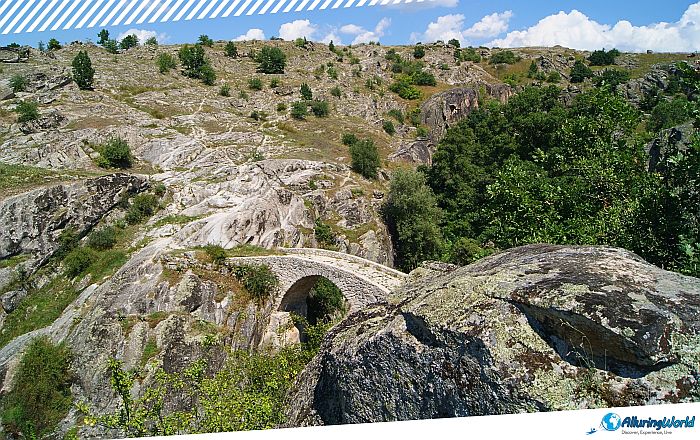
To understand the architectural design of the Movie Bridge, it is necessary to move beyond the popular belief that it was built during the Ottoman era. Though the design of the structure easily misleads the untrained eye, the current Movie Bridge is a mid-20th-century structure that came into being out of necessity.
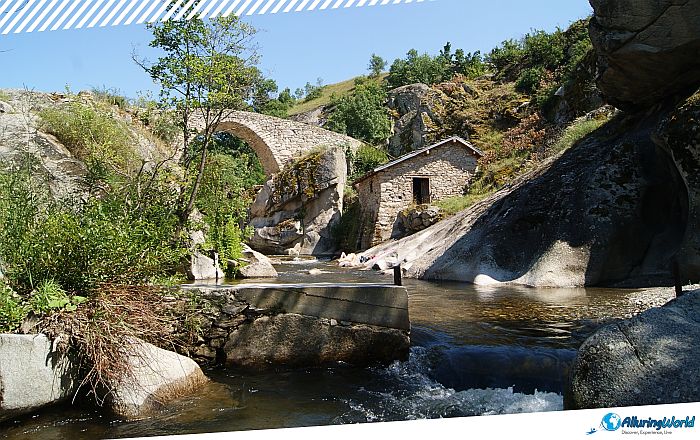
Historically, the people of Zovik were forced to use a rudimentary wooden bridge to transport their livestock, agricultural produce, and other goods through the deep gorge created by the Gradeška River. Such a wooden bridge played an important role in helping the community remain economically linked to other settlements in the region of Mariovo and bigger market centers, such as the one in the city of Bitola. The bridge, however, suffered from severe wear and tear due to heavy loads and floods, so it was in a desperate need of restoration or full replacement.
However, it was not until 1952 that the decisive moment came, as a villager tried to cross the river using an ox cart that was loaded heavily beyond its capacity. The deteriorated wooden structure could not hold this enormous weight, so it succumbed under the weight and plunged the wagon into the riverbed. Realizing the vulnerability of their vital passage, it became evident to the villagers that a temporary wooden bridge would not do anymore, and it needed to be replaced with a more permanent one.
To build a structure that could stand for generations to come, the villagers raised money collectively and hired the Master Builder Džuladin (Juladin). He was a renowned stone cutter from the village of Labuništa near Struga, and the villagers also managed to employ other talented craftsmen from the surrounding area. The construction started not long after the unfortunate event, and it lasted several years, so that it would be completed either in 1955 or 1956, as there are no clear sources that would confirm this.
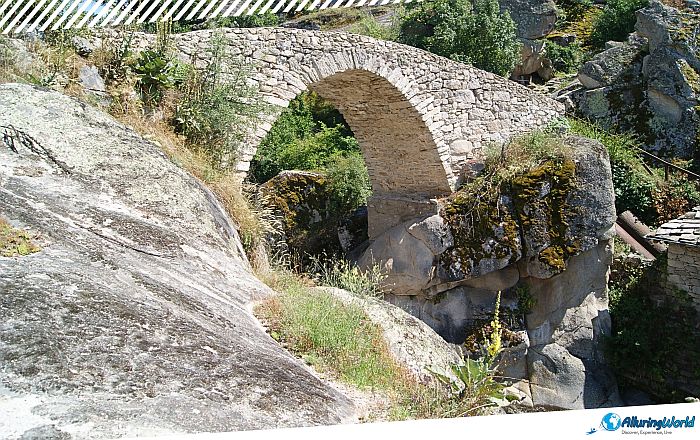
The Movie Bridge is one of the best examples of traditional vernacular masonry structures from the Balkans when it comes to architecture. Vernacular architecture is based completely on locally available resources, traditional techniques, and environmental harmony rather than formal industrial plans. The arch was created by the Master Builder Džuladin according to the natural topography rather than being something placed there.
The bridge is something that is not seen in other places in Macedonia, so these are some of the more interesting facts that you should know:
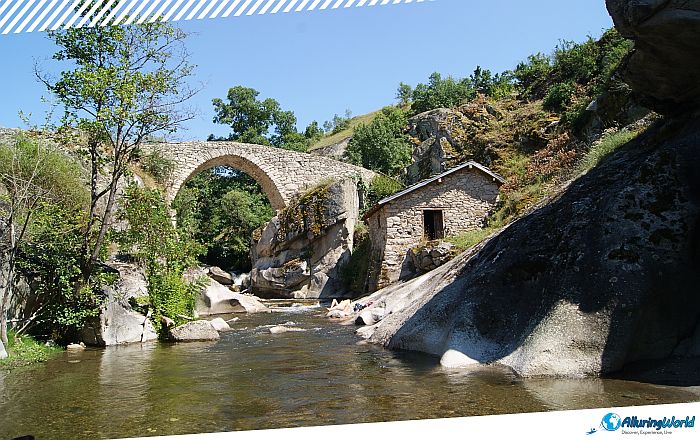
- Natural Anchor Points: The single semicircular arch is anchored directly into the exposed granite cliffs on either side of the ravine. By utilizing the natural bedrock as abutments, the structure gains massive lateral stability, capable of resisting the intense hydrologic pressure of seasonal flash floods along the Gradeška River.
- Material Composition: The entire bridge was constructed using unpolished, hand-chiseled fieldstones harvested directly from the surrounding hillsides. The entire Mariovo region is rocky, so getting a locally sourced stone was not an issue. These stones were then bound using a durable lime-and-sand mortar mixture. Overall, because the masonry utilizes native stone, the structure blends effortlessly into the surrounding rock face, making it appear as though it carved itself out of the mountain.
- Functional Scale: The bridge spans roughly 20 meters (66 feet) across the ravine, rising gracefully to a height of nearly 6 meters (20 feet) above the water level. The bridge was not intended to be used for modern vehicles, but rather has a narrow deck which was intentionally proportioned for pedestrians, pack animals, and small carts, thus preserving the intimate scale of rural mountain infrastructure.
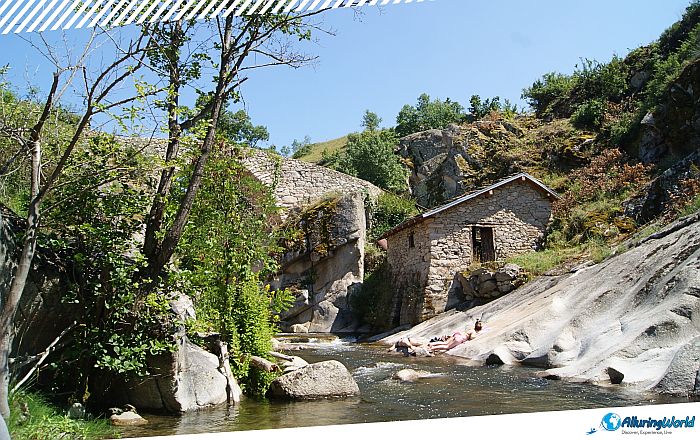
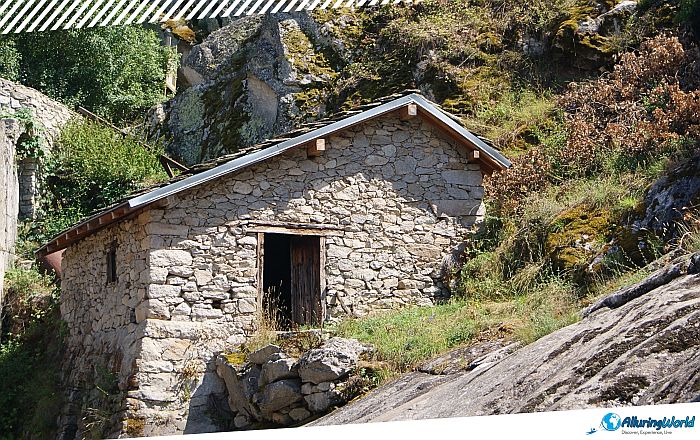
- The Companion Watermill: Adjacent is a watermill, which in Macedonian is known as vodenica, and it is an authentic stone structure from this part of the country. This mill has been renovated in order to serve its original purpose by using the rapid flow of the river to grind flour from the fields around the village.
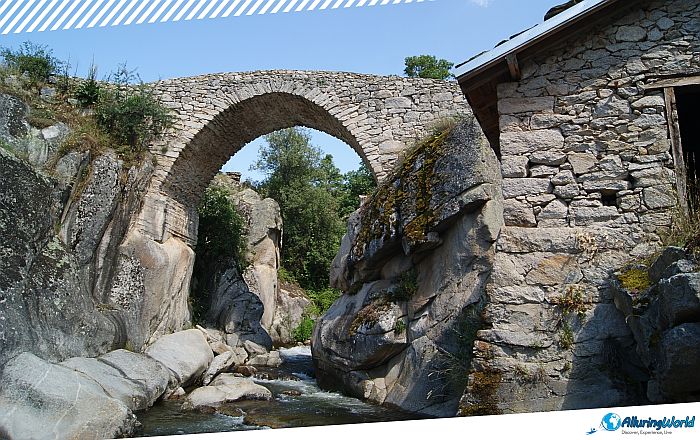
Whereas the bridge silently performed its functions for years on end, it gained international fame as the “Movie Bridge” on the verge of a new millennium. The name was coined owing to the fact that the construction became famous after appearing in the movie entitled Dust, produced by the renowned Macedonian director Milčo Mančevski in 2001. It was the movie Dust, a bold, genre-bending narrative blending the American Wild West with early 20th-century Ottoman Macedonia, that cemented Zovik in international film history, and as soon as the movie hit the silver screen, it became a topic of discussion about its location.
ADVERTISEMENT
Through the film, Mančevski used the dramatic and stark landscape of Mariovo in order to depict timelessness, struggle, and isolation on mythical terms, and Zovik’s bridge is one such symbol that Mančevski used repeatedly throughout the film and which stood for a point of convergence between past and present, ideology and individuals. The camera angles showed the lone stone arch surrounded by desolate cliffs, transforming a regional crossing into a striking cinematic motif.
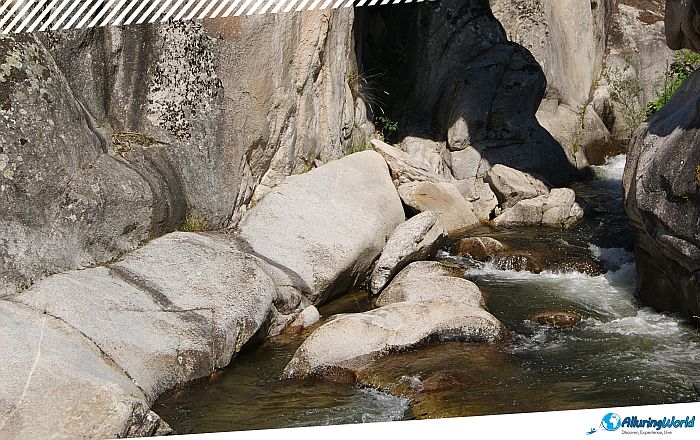
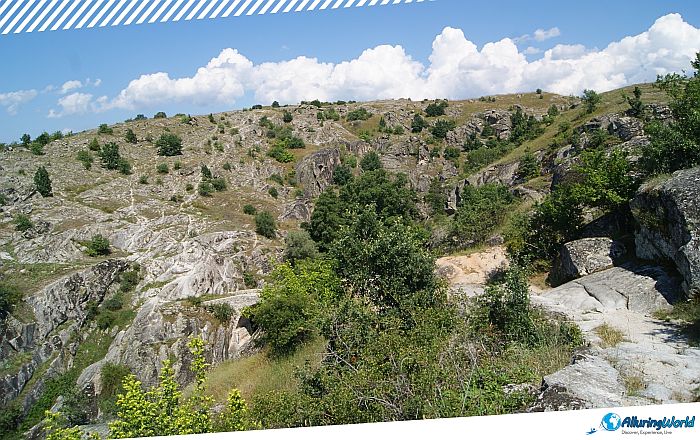
After the movie’s international debut at the Venice Film Festival and subsequent release throughout the world, many lovers of the big screen, photographers, and individual travelers started traveling to the remote parts of Macedonia searching for “the bridge from Dust.” To this day, it has become one of the most famous shooting locations in Balkan cinema, although the entire region of Mariovo is a somewhat common place that appears in Macedonian cinema. To understand the Movie Bridge, it is imperative to first have an understanding of the geographic and historic area that surrounds it, which is Mariovo. Mariovo is a very unique, sparsely populated geographical and historical area located in the south of Macedonia.
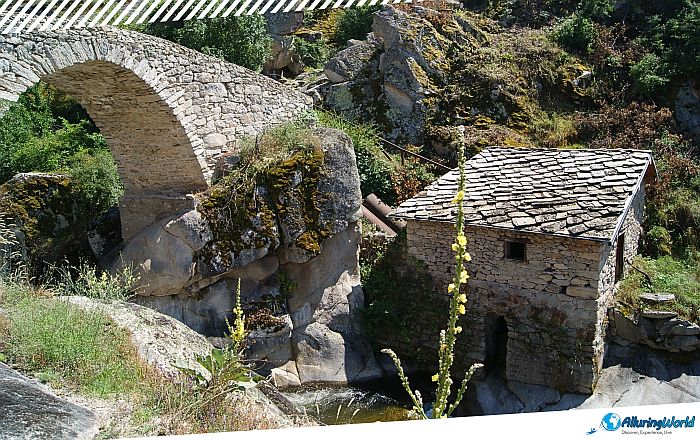
Stretching for over 800 square km (309 square mi), Mariovo is surrounded by different mountains, including Selečka, Nidže, and Kozjak, which have prevented any urban development from being set up in that location. This geographical feature has helped Mariovo to develop its own unique culture through folk costumes and farming practices. In the late 20th century, large numbers of people moved from rural to larger urban areas in Macedonia, causing serious depopulation in its villages such as Zovik, Staravina, and Gradešnica. Although this population movement caused a serious shortage of population in these settlements, this was actually beneficial to Mariovo because it did not undergo the rapid modernization and industrialization that happened in other villages. Thus, the region is now regarded as an outdoor museum showcasing the traditional stone constructions, so a walk through the streets of Zovik takes you back to the first decades of the 20th century with its stone constructions, wooden verandas, and village streets amidst beautiful gold-hued hills and magnificent limestone gorges.
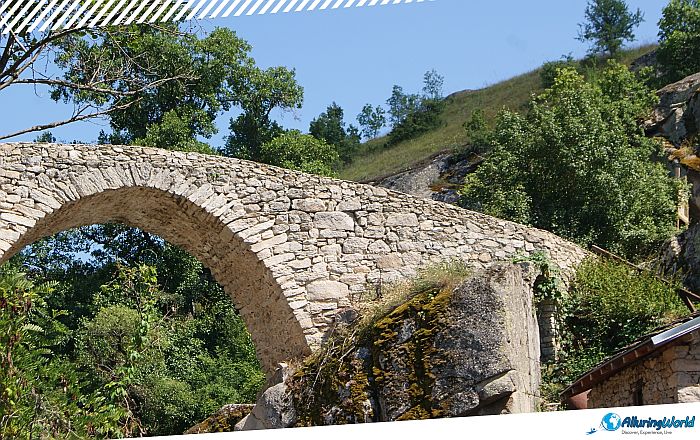
For modern heritage travelers and adventure seekers, visiting the Movie Bridge in Zovik offers an immersive escape off the beaten tourist path that should not be missed whenever in Macedonia. Located approximately 50 km (30 mi) from the city of Bitola, the journey into Mariovo involves navigating winding mountain roads that cross the scenic Rashtani Pass. There is no public transportation that will take you to this majestic place, so the alternatives would be: renting a car, organizing a taxi transport, or, if you feel more adventurous, renting a bicycle and cycling through the mesmerizing region. Keep in mind that the road that leads to Zovik is narrow with a lot of curves, so you should drive carefully, as sometimes it takes patience for two cars to cross each other.
Once you get to the peaceful village of Zovik, there is an easily recognizable and well-maintained path made out of stones that will take you straight from the heart of the village to the canyon of the Gradeška River. The stone arch will become more and more visible on your way down from the top of the cliff to the bottom of the canyon, and you will start seeing why people think this is a great place to visit.
If you are interested in more than photography, then this area will be perfect for you because it offers rich outdoor activities:
- Hiking and Trekking: Trails along the Gradeška River lead deeper into the gorge, thus offering access to untouched wilderness, natural swimming holes, and dramatic geological formations. Just be cautious of the wildlife, especially snakes that love to bask in the summer sun.
- Cultural Exploration: You can explore the village of Zovik itself, see the historic churches such as St. Athanasius, or, if you want to continue exploring, go to the neighboring villages like Staravina to see historical Ottoman-era administrative buildings and local folklore sites.
- Agritourism: Although limited, local initiative groups and small accommodation facilities in Mariovo provide a chance to taste regional cuisine based on traditional products like cheese, pies (pitulici), wild herbs, and honey.
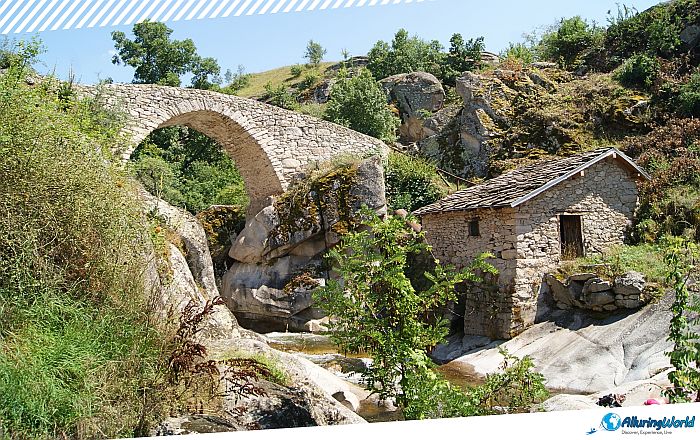
Overall, the Stone Bridge of Zovik represents a rare convergence where practical rural engineering, breathtaking natural topography, and modern film art come together. Though built only in the 1950s out of practical necessity after an ox cart crash, its master craftsmanship allows it to sit in absolute visual harmony with centuries of history.
To sum it all up, if you find yourself attracted to Milčo Mančevski’s movie Dust, love for vernacular architecture, or want to venture into the wilderness of Macedonia, then you can expect an experience through the bridge that you will never forget. The bridge is still an impressive piece of human labor, which will be remembered as a structure built by a little-known community that managed to connect not only two sides of the river, but also the past and the present.