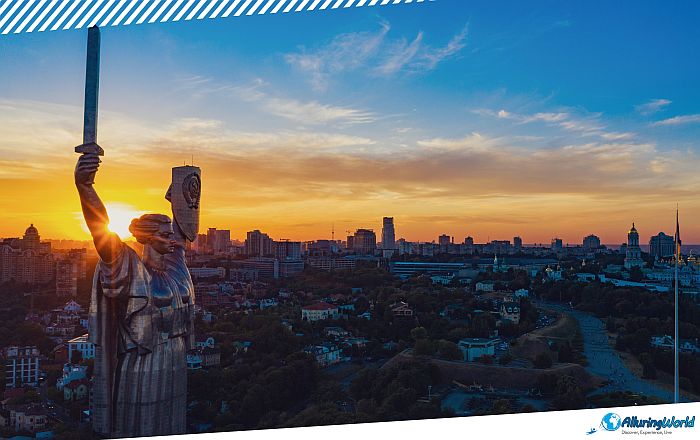
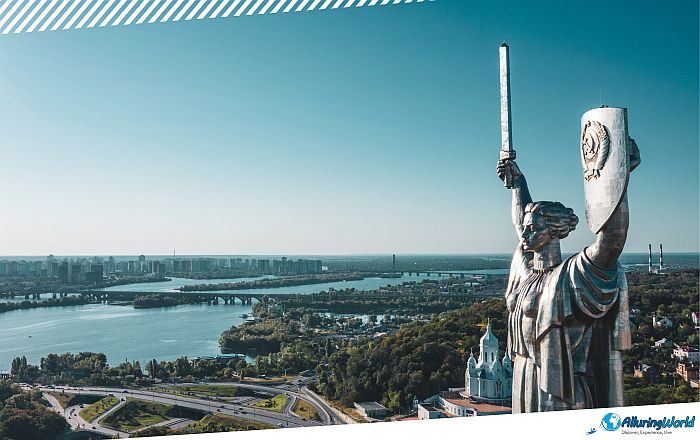
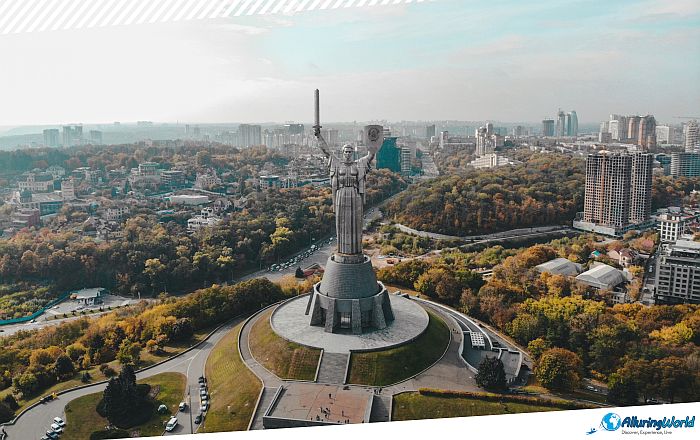
The Motherland Monument, or as it is locally known, Batkivshchyna-Maty, is an imposing and astounding structure that towers over the city of Kyiv, the capital of Ukraine. Serving as one of the major symbols that stand for the history of Ukraine and the endurance and development of its national identity, the Motherland Monument can be found on a particular hill located on the right bank of the Dnieper River. The monument acts as the central feature and the key attraction of the National Museum of the History of Ukraine in the Second World War complex. This structure has been of great importance for the nation both historically and architecturally ever since it was created until today.
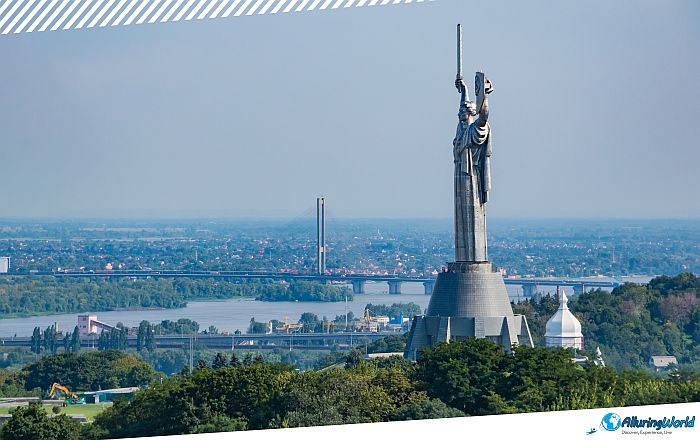
The monument was inaugurated on 9 May 1981 on the occasion of Victory Day, celebrating the conclusion of World War II in Europe. The first inauguration ceremony of this monument, in the presence of the Soviet General Secretary of the Communist Party, Leonid Brezhnev, clearly indicates the intended symbolic significance of this monument as a victorious sign for the Soviet Union. The original name of the monument at that time was the Motherland Monument, the Mother of the Soviet Union, capturing the rigid ideological spirit and political backdrop of that era. It is important to note that the first artistic concept of this massive statue was designed by none other than the prominent Soviet sculptor, Yevgeny Vuchetich; however, after his death, the difficult job of completing the architecture of this project was assigned to Vasyl Borodai, a well-known Ukrainian sculptor.
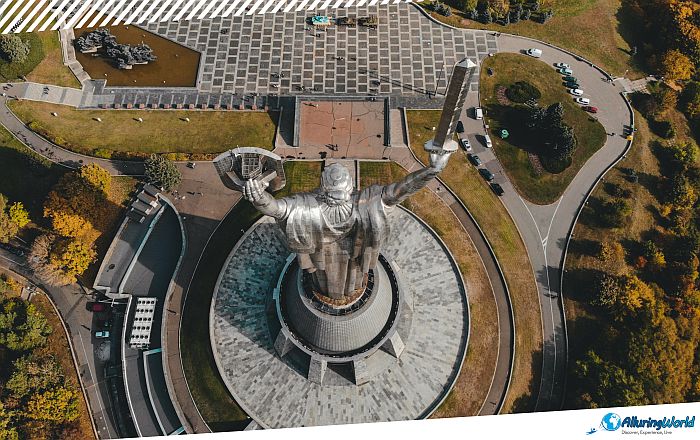
The monument stands at an astounding total height of 102 m (335 ft) measured from the bottom of its pedestal to the top of its straight sword, which makes it one of the tallest statues globally, towering above many others worldwide. The Motherland Monument is built entirely from specialized stainless steel sheets, which were mounted atop a massive concrete pedestal base, and the entire engineering structure weighs approximately 450 tons. The sword alone is 16 m (53 ft) long, and it weighs an astonishing 9 tons. The posture of the gigantic statue is carefully planned so that it appears to be an intimidating one, where the right hand holds the sword above the skyline of the city aloft, while the left hand wields the shield. Initially, the shield used to carry the heavily stylized hammer and sickle, which was the Coat of Arms of the Soviet Union, but this heraldry was removed and replaced with the Tryzub, the ancient coat of arms and currently official national symbol of Ukraine. This change was made after the decisive national process of decommunization, which was completed in August 2023.
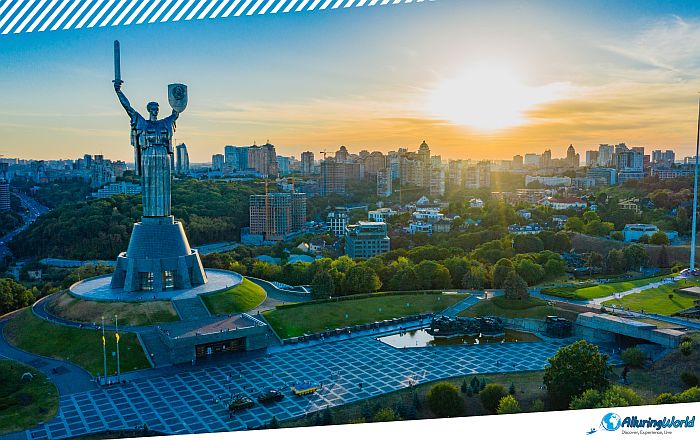
From an engineering and architectural perspective, there is exceptional technical precision evident throughout every section of the statue. Skilled artisans joined the individual stainless steel sheets that make up the outer skin of the colossal statue by meticulously welding them together with kilometers of specialized seams, ensuring the entire hollow shell was built to survive extremely strong wind gusts, seismic activity, earthquakes, and the continuous decay of time itself. There are highly sensitive sensors within the structure that constantly keep track of its stability and swaying; all of this highlights the technical precision required for such a large and tall free-standing statue. Interestingly, the statue was actually originally intended to be gilded so that it would appear as an ornate gold plating, but due to severe budgeting restraints during its late-stage construction, it remains in its striking, raw metallic grey finish.
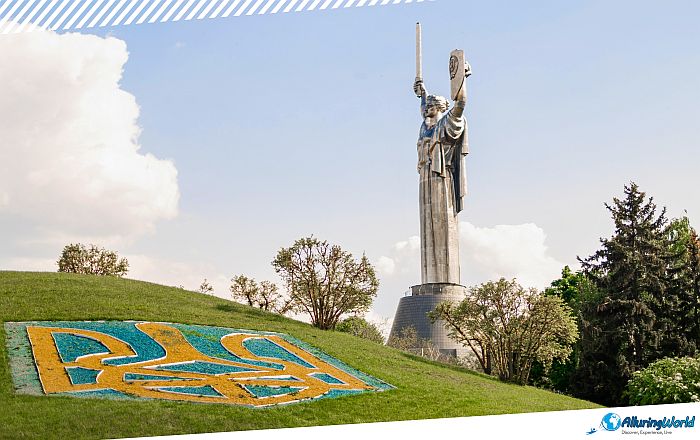
The Motherland Monument is not merely an aesthetic landmark or an engineering marvel, but rather an interactive historical site that no visitor should miss when exploring Ukraine’s capital. The massive concrete pedestal structure underneath serves as the primary exhibition hall of the National Museum of the History of Ukraine in the Second World War, which stands as the largest museum facility in Ukraine. Visitors are granted access to extensive multi-room exhibits explaining the detailed history of Ukraine’s defense, military contribution, and sacrifices during World War II through authentic historical artifacts, original photography, personal letters, oral histories, and archival video footage. The underground museum gives essential context for the statue above, further enabling the viewers to see the structural colossus as more than just an artistic piece, but rather as a serious monument, created through the intense experiences of Ukraine during the worldwide war.
ADVERTISEMENT
In case you would like to have a wonderful view of Kyiv from an elevated position, then the Motherland Monument has structured viewing spots located at different levels of its height. Initially, tourists were able to reach the two main viewing points via special elevators built into the structure: one point was located at the upper level of the concrete pedestal, and the other was placed much higher above the shield base. The amazing views that open up from such heights of the twisting Dnieper River, the city landscape, and the green hills of Kyiv will amaze visitors with their grandeur.
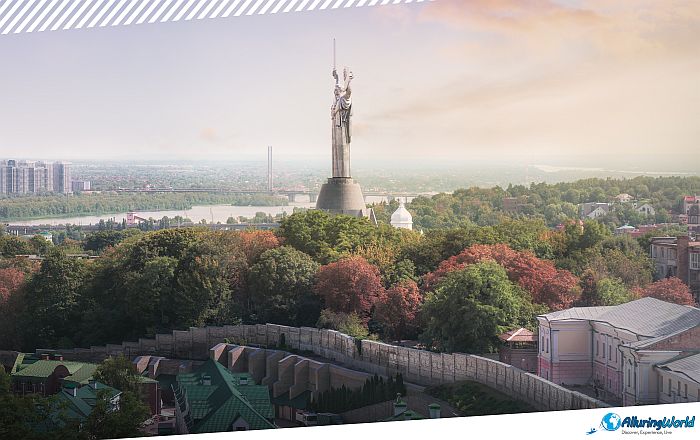
Indeed, there have been massive shifts in the cultural, political, and symbolic importance of the Motherland Monument throughout the passing decades. Though the monument was initially built to signify the power of the state as well as the military superiority of the Soviet Union, after the declaration of independence by Ukraine in 1991, the monument became a place that allowed Ukrainians to reconsider the history of their nation. Undoubtedly, the use of Tryzub of Ukraine in place of the Soviet symbol, hammer and sickle, on the shield of the monument in 2023 marks a historic day when the resolve of the country to reclaim its sovereign rights is evident through the symbol of its real identity. At present, the monument is called “Ukraine-Mother” (Ukraina-Maty) among Ukrainians, despite its other names being used by foreigners and other historical accounts.
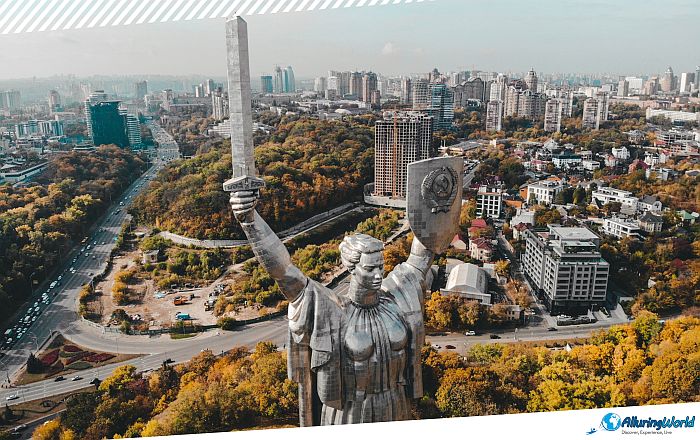
A visit to the monument complex offers an educational experience as well as an inspirational one. The reason for this is the subterranean museum, which was established in such a way as to give detailed historical background on military operations while also paying homage to the pain caused by war as well as the courage of the Ukrainian people. The seamless blend of high-scale monumental architecture, tragic history, and panoramic environmental views creates a powerful emotional resonance for anyone walking the grounds. Moreover, the large area of parkland and wider memorial complex encompassing the Motherland Monument, with outdoor exhibits of military hardware, avenues of heroes, and groups of sculptures, serves as a peaceful setting for contemplating the permanent significance of the monument amidst Kyiv’s culture.
As far as planning a trip to the site is concerned, the monument can be visited all around the year; however, the absolute best time to experience the grounds would be during spring, summer, and autumn when the weather in Kyiv is mild and favorable for walking around the elevated outdoor terrain. The public transportation options available throughout the capital include convenient city buses and the metro system, making it very straightforward to combine a visit to this memorial complex with adjacent historic locations such as the ancient Kyiv Pechersk Lavra. It is strongly recommended that you hire an experienced tour guide if you want to understand the architectural engineering, development of art forms, and history involved with the famous landmark, although it would also be an amazing experience even if you go by yourself without the guidance of a local guide.
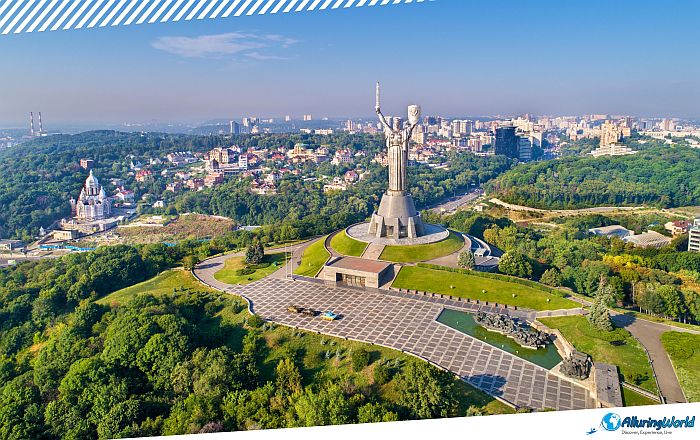
Aside from the very existence of the metal structure, the Motherland Monument is a symbolic container that holds the entire complicated history of modern Ukraine. This place is a symbolic fusion of the Soviet past, various memories, and the contemporary identity of modern Ukraine. Located at the elevated top of the hill, looking constantly over the flowing river and the cityscape of Kyiv, this huge statue becomes an indispensable part of the skyline, a symbol of the achievements, failures, and invincibility of this nation.
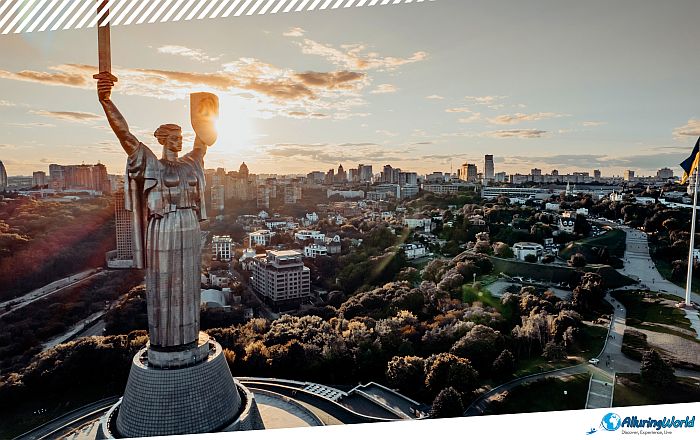
Conclusively, the Motherland Monument remains among the most prominent, impressive, and essential structures in Kyiv that every traveler should visit. The site seamlessly integrates high-level artistic design, industrial technology, and historical memory into a single monumental sculpture; from its massive stainless steel framing down to its physical transformation from a Soviet emblem into the Ukrainian Tryzub, the structure tells the story of a changing nation from the 1980s straight into the modern era. Whether experienced from the base of the mountain, explored through the expansive halls of its subterranean museum, or viewed from its high-altitude observation decks, the Motherland Monument is an unforgettable landmark that defines the heart and skyline of Kyiv.