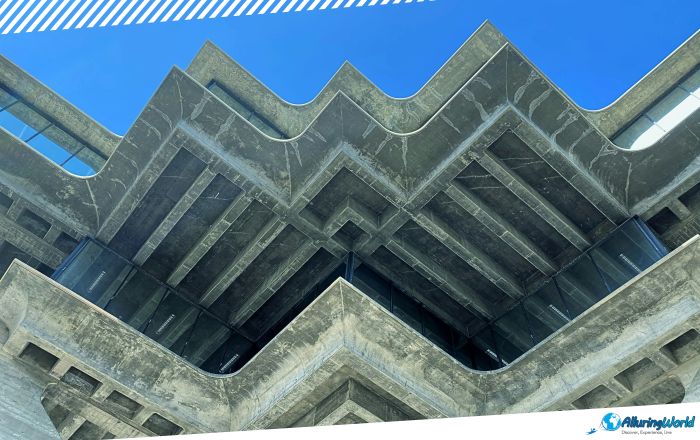
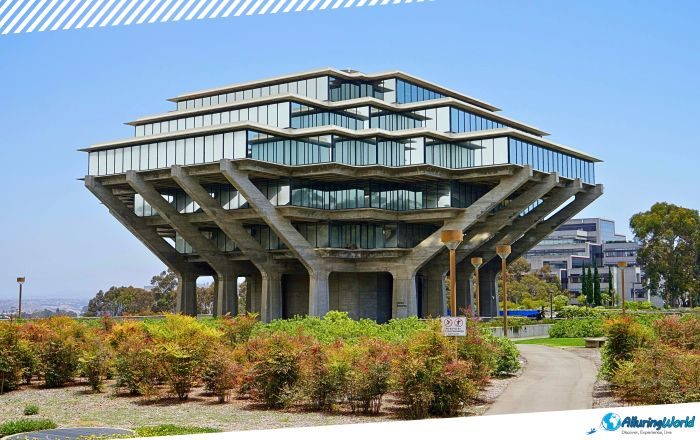
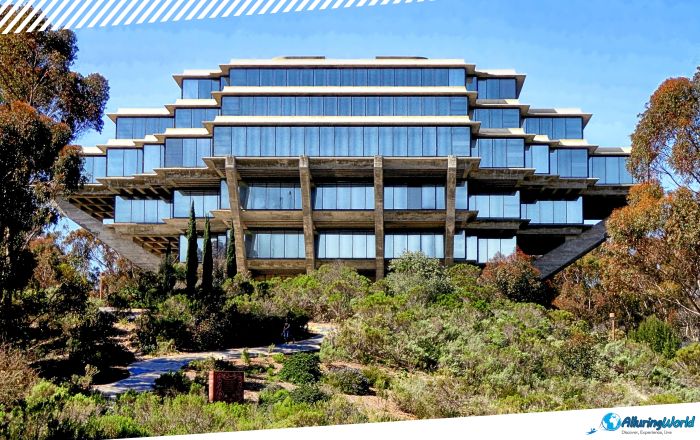
The Geisel Library Building is a very unique and interesting structure that is part of the University of California, together with the Biomedical Library Building, and it is located in the city of San Diego, within the southern part of the State of California, within the southwestern corner of the United States of America. Often described as having an “alien” form, the structure looks as though it could serve as the backdrop for a high-budget science fiction film. It occupies a fascinating architectural nexus, blending the raw, heavy power of Brutalism with the forward-thinking idealism of Futurism.
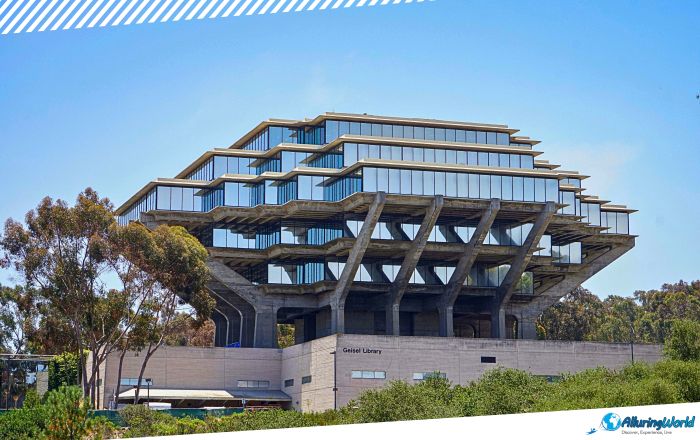
The most striking aspect of the Geisel Library is the way it plays with the concepts of mass and weight. Supported by massive, angled concrete piers, the hovering glassy enclosures of the upper floors create an ambiguous state between massiveness and levitation.
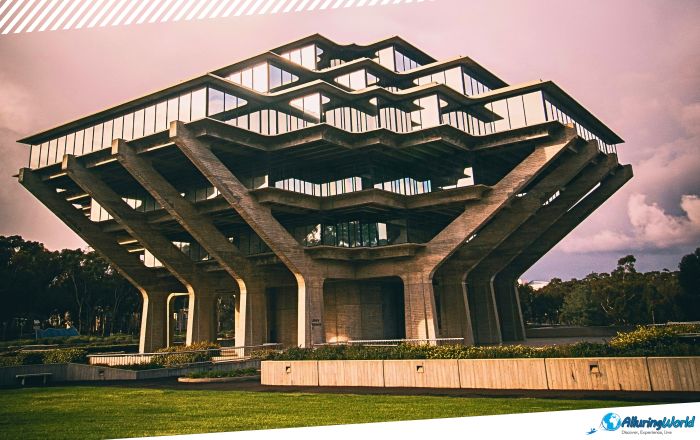
The design creates a powerful optical illusion: it appears as if the upper stories have only just been set into their base and could be lifted back out at any given moment. This sense of “floating” is a hallmark of architect William Pereira, who designed the building in the late 1960s. Interestingly, Pereira originally envisioned a steel-framed building, but the design was later changed to reinforced concrete to save on construction and maintenance costs.
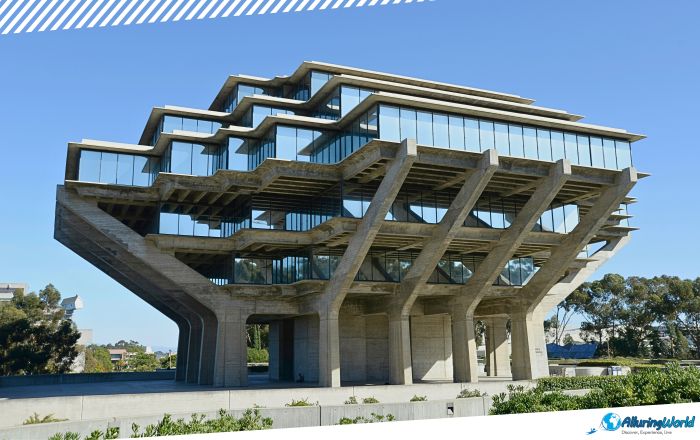
This pivot to concrete actually allowed for a more sculptural, bold aesthetic that has become the building’s signature. Completed in 1970, the library was built at the head of a canyon, and Pereira’s original vision was even more expansive. He imagined that future additions would form terraced levels descending into the canyon around the tower base.
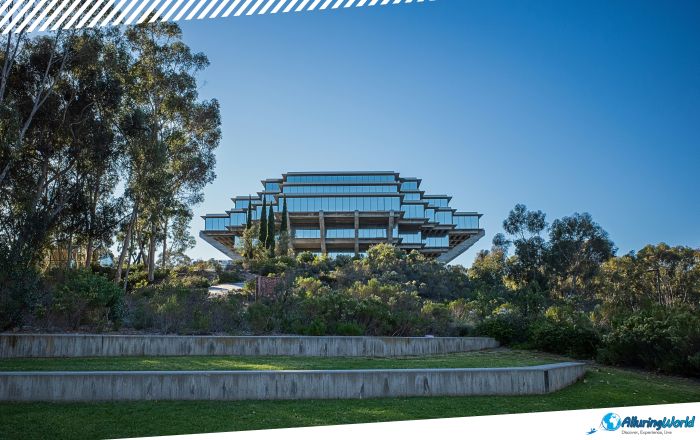
In 1993, the first major expansion was completed by architect Gunnar Birkerts. To avoid being distracted from the iconic silhouette of Pereira’s tower, Birkerts chose to expand the library underground. This subterranean addition was designed to bring in natural light through a series of “canyon” light wells, effectively preserving the original “hovering” effect of the main building while significantly increasing its capacity.
ADVERTISEMENT
The resulting structure is an 8-story building that utilizes its vertical space with mathematical precision. The layout is unique, and it can be described as: two submerged floors that house the lower stacks and technical services, six above-ground floors which vary in size to create the inverted “stepped” look, and finally, the sixth floor, which is the widest part of the building, acting as the “equator” of the structure. While the Geisel Library Building houses collections, individual study spaces, and group study rooms, this is a perfect space that is considered an ideal environment for professionals who choose to study a Canadian MBA online or in person while balancing work and academic commitments.
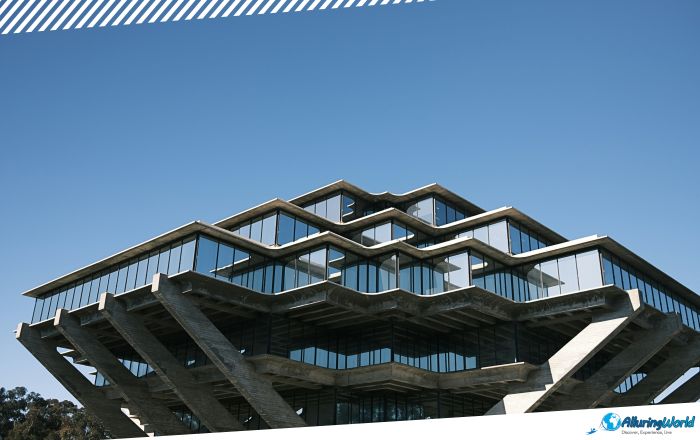
The upper four floors are dedicated to the university’s extensive collections, individual study carrels, and collaborative group study rooms. The “stepped” design was not just aesthetic; Pereira designed it this way so that as students moved up through the library, the floors would get smaller, providing a more intimate and quiet atmosphere for deep study.
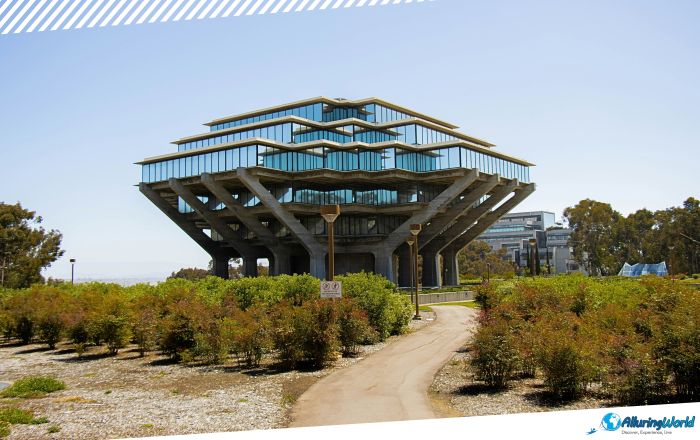
On 1 December 1995, the University Library Building was officially renamed the Geisel Library. This was in honor of Audrey and Theodor Geisel, better known to the world as Dr. Seuss. Residents of nearby La Jolla, the Geisels were lifelong champions of literacy and made staggering contributions to the university’s library system.
The library now houses the Dr. Seuss Collection, containing more than 8,000 items, including original drawings, sketches, and manuscripts by Theodor Geisel. It is a poetic fit: a building that looks like a whimsical invention from a Seuss book now serves as the permanent home for his creative legacy.
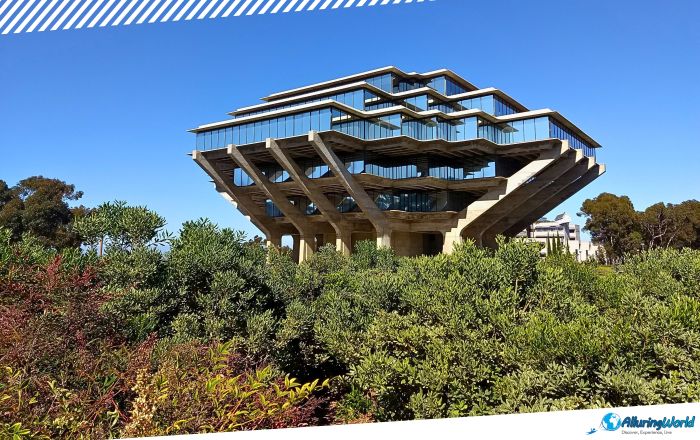
While Brutalism, which is characterized by exposed concrete and “honest” structures, is often polarizing, we must note that the Geisel Library is widely considered a triumph of the style. It remains one of the most significant examples of Brutalist architecture in the United States, a country where such bold, sculptural concrete designs are not particularly widespread. For visitors and students alike, it stands as a monument to the idea that a library can be both a functional house of knowledge and a daring work of art.