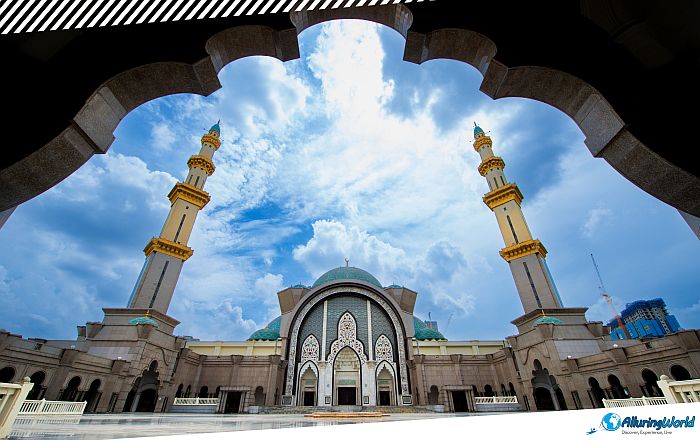
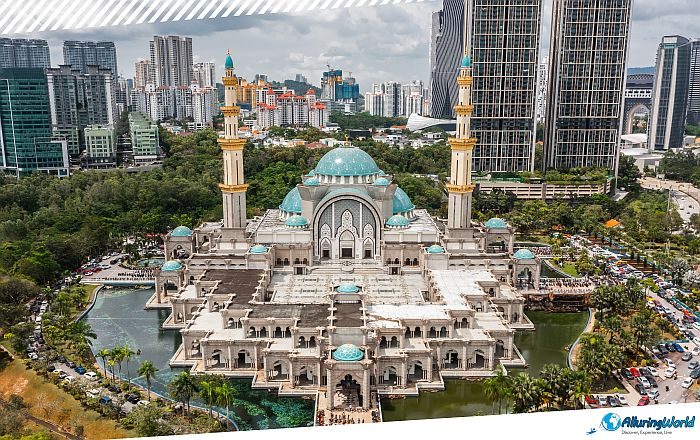
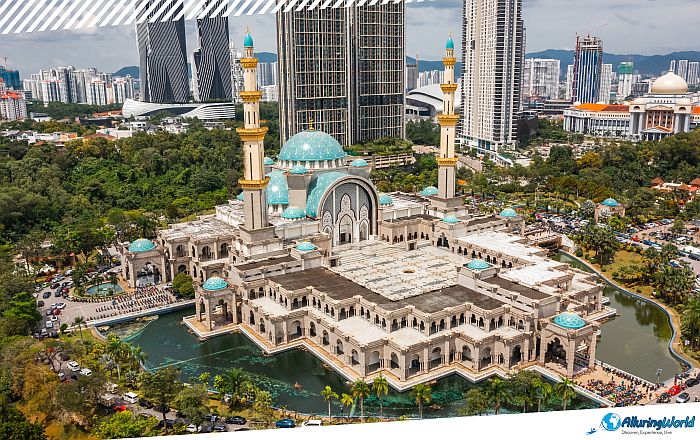
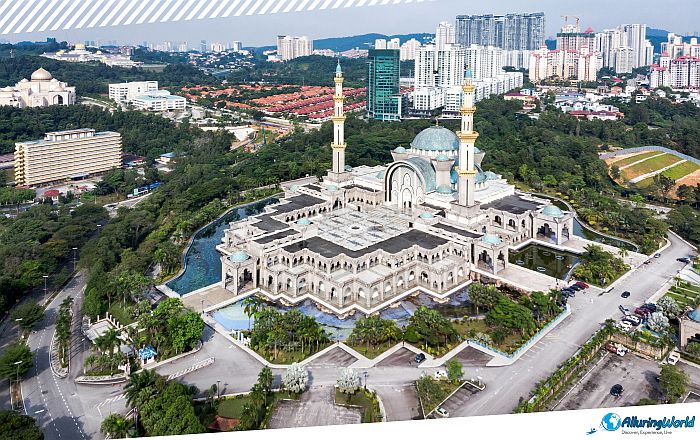
The Federal Territory Mosque, locally referred to as Masjid Wilayah Persekutuan, is a Sunni mosque that rises gracefully above the urban bustle of the city of Kuala Lumpur, the capital of Malaysia. The Federal Territory Mosque stands as one of the most breathtaking modern Islamic landmarks in Southeast Asia, and it is located more precisely in the civic enclave of Off Jalan Tuanku Abdul Halim (formerly Jalan Duta), which is part of the Segambut District. The most significant aspect of this majestic place of worship is the effortless connection between classical and modern artistry. Occupying 5 hectares (12 acres) of beautifully landscaped gardens, the Federal Territory Mosque provides a unique opportunity for visitors to explore the depths of Malaysian culture, Islamic artistry, and architectural excellence. International visitors and culture enthusiasts will find a stark difference between the ultra-modern steel and glass skyscrapers that characterize the skyline of Kuala Lumpur when they visit the Federal Territory Mosque.
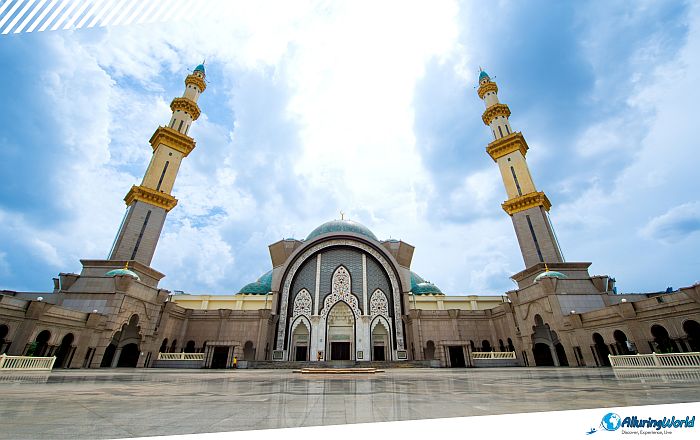
While the Petronas Twin Towers are a celebration of Malaysia’s fast economic growth, the Federal Territory Mosque is a reflection of Malaysia’s soulful and artistic side, which connects the local people to their faith. To appreciate the significance of Masjid Wilayah Persekutuan, you must look back at the evolution of Kuala Lumpur itself. Kuala Lumpur was made a separate entity from the State of Selangor in 1974 as the first Federal Territory of Malaysia. As Kuala Lumpur started being developed into a modern city during the years that followed, it was realized that there was a need for an impressive mosque which would be the religious center of the federal territory. The construction of the mosque started on 15 March 1996; however, it took off more extensively in 1997 when the country saw massive infrastructural projects that took place in Malaysia. The mosque was completed in October 2000 and was designed to hold up to 17,000 people.
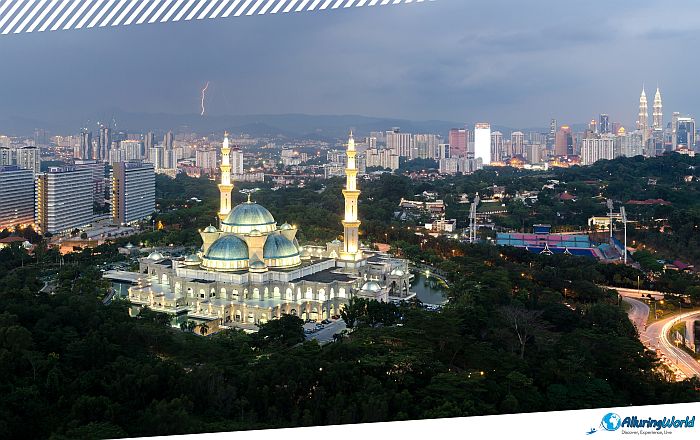
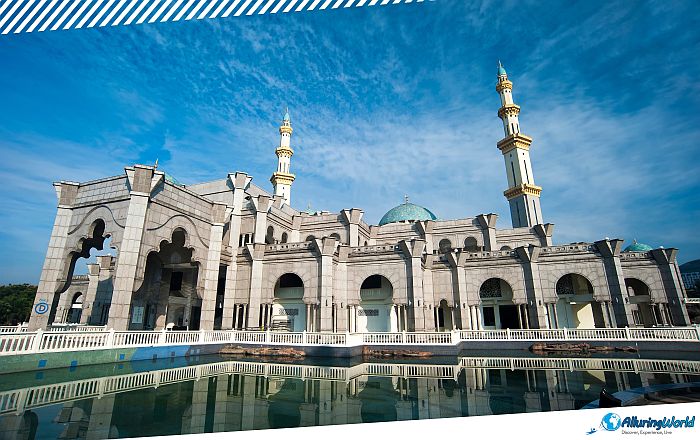
Apart from being a place for prayer, the project is also designed to function as a civic complex that will house educational institutions, administrative centers, libraries, and meeting halls, and the inspiration behind this structure came from the classic Islamic tradition where the mosque is the center of all activities. The architectural story of the Federal Territory Mosque is a great example of a blend between various international styles of Islamic architecture, but specifically adjusted to the tropical climate of Southeast Asia. The design is heavily influenced by Mimar Sinan, the master architect of the 16th-century Ottoman Empire who designed the Süleymaniye Mosque, as well as the work of his pupil Sedefkar Mehmed Agha, who created Istanbul’s famous Sultan Ahmed Mosque, known as the Blue Mosque.
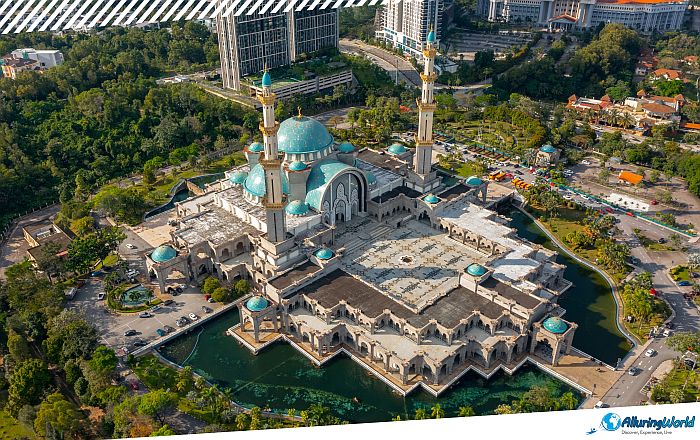
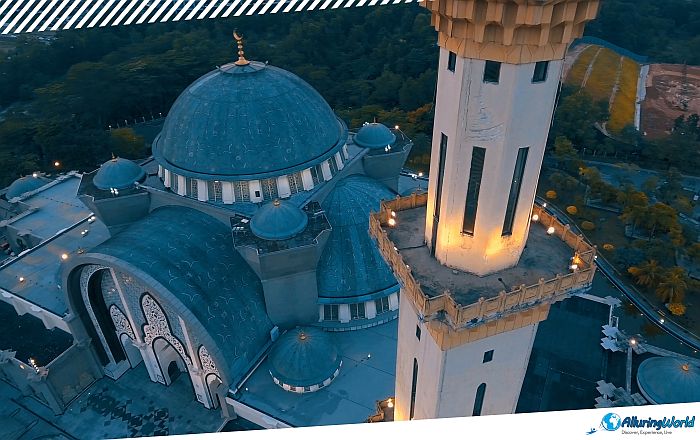
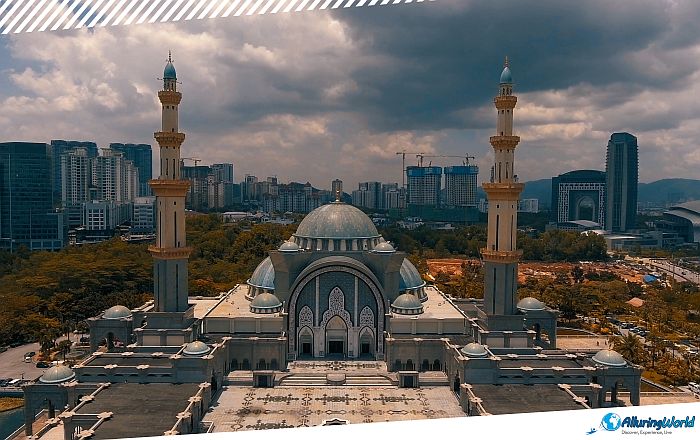
The most striking detail about the building’s exterior is the impressive cluster of domes with a bluish tint. The main dome is flanked by 22 semi-domes and forms a sort of hierarchy that leads the gaze upward. The massive structure of the dome complex is surrounded by two tall minarets pointing upward, which serve not only a practical function but also symbolize a link between the Earth and Heaven. Whereas the structure is designed to reflect the grandeur of the era of the Ottomans, the decorations have features that draw from the art of Persia and Malaysia, making it a very interesting building that captures the attention of all visitors.
The interior walls have some intricate designs such as geometrical patterns and also Quranic calligraphy done using carving, but there is teakwood which is intricately carved using the traditional Malay design used for the pulpits inside. When you try to summarize the architectural design and details from the Federal Territory Mosque, you are left with the following:
- Ottoman Design: Grand central dome network and soaring, pencil-thin minarets.
- Persian & Malay Elements: Hand-painted floral arabesques, delicate mosaic tilework, and carved local hardwoods.
This exterior and interior summary is the shortest description to be given for the mosque. However, given that the mosque has been constructed in northwestern Kuala Lumpur, it finds itself in an elevated position, which makes its environment calm. The mosque has been sited at this particular location owing to its closeness to major administrative offices. Despite the peaceful and remote atmosphere at the mosque, it is conveniently located near the main transportation routes of the city, and it is easily accessible from multiple points of the capital.
ADVERTISEMENT
This mosque is about 5 km (3.1 mi) away from the city center; hence, it is convenient for tourists to include it on their visit to Kuala Lumpur. Furthermore, its positioning means that guests have access to various prominent landmarks within a driving distance of less than 10 km (6 mi), including:
- Istana Negara (National Palace): Situated only 4 km (2.4 mi) away, it is the royal residence of the King of Malaysia.
- Petronas Twin Towers & KLCC: Positioned around 6 km (3.7 mi) away, allowing easy transition from classic architectural marvels to bustling city life.
- Perdana Botanical Gardens & Bird Park: Located at a distance of 5 km (3.1 mi) to the south.
A visit to the Federal Territory Mosque will leave you with a very welcome educational experience that you can bring home with you and share with others. While some religious establishments have a reputation for being off-limits to the general public, this mosque considers itself proud to maintain a vibrant visitor program with the goal of creating better understanding between different religions, so everyone is welcome in the House of Allah. Free tours of the mosque are regularly given by volunteers willing to explain things, and it is an experience not to be missed whenever you are in Kuala Lumpur. As Kuala Lumpur has a tropical rainforest climate characterized by stable warm temperature levels that range from 23°C to 33°C (73°F to 91°F) alongside high humidity, it is advised that you visit the place either in the early hours of the day or towards the end of the day to avoid the rough weather that can be harsh on you.
In order to have a respectful visit, some etiquette must be followed, so please be considerate of the following:
- Modest Attire: You are expected to dress modestly; hence, long pants/skirts and shoulder coverings are necessary. Free robes called abayas as well as head scarves are offered at the entrance point to those who require them.
- Footwear Etiquette: You should remove your shoes before stepping foot in the carpeted prayer area, as is most common with any mosque. You can keep your shoes in the allocated shoe racks.
- Timing Your Visit: It is recommended not to plan a tour at prayer time, specifically during the Friday midday prayer known as Jumu’ah. This is because the entire mosque is dedicated to worshippers.
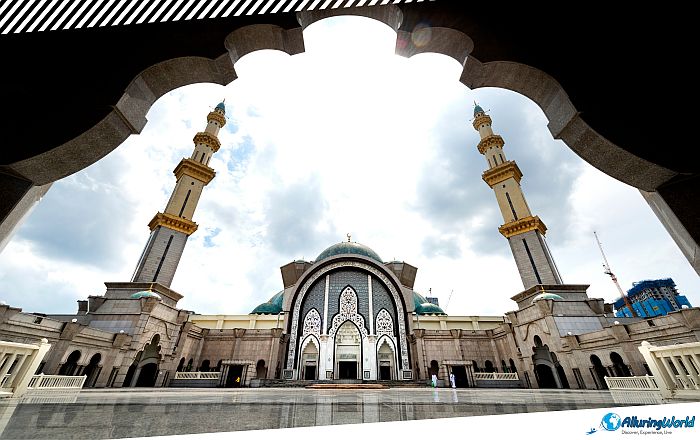
The Masjid Wilayah Persekutuan is a place that can serve as a source of great photographic interest for photography lovers, so you can often see it on different kinds of promotional material, and even locally trending online. The landscaped gardens give great framing options, where tropical lush greenery provides a beautiful contrast to the soothing colors of blue and white on the domes. Inside, light comes through stained glass arched windows, creating beautiful lighting effects on carpets and marble pillars. Photos are allowed to be taken here without disturbing others during prayer time. Combining a visit to the mosque with surrounding attractions creates a well-rounded cultural day trip, and as soon as you have completed exploring the peaceful grounds of the mosque, you can easily head south to the Islamic Arts Museum Malaysia.
This museum houses one of the finest collections of historical Islamic artifacts, textiles, and scale architectural models in Asia. From there, it is just a leisurely walk to the Perdana Botanical Gardens or the National Mosque of Malaysia (Masjid Negara), which presents an interesting contrast between mid-twentieth-century Malaysian architecture and classical-style architecture, exemplified by the Federal Territory Mosque.
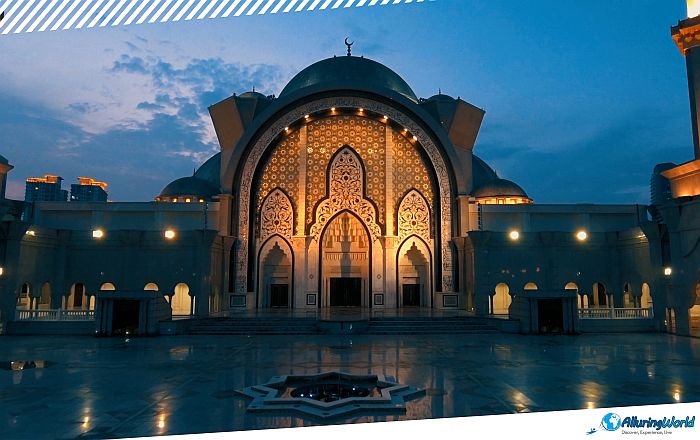
In conclusion, the Federal Territory Mosque (Masjid Wilayah Persekutuan) can truly be called a work of art when it comes to religious architecture in the contemporary world, as Malaysia is capable of appreciating its spiritual heritage in the context of modernization. If you are either captivated by the beauty of classical architecture, interested in learning more about Islamic traditions, or want to visit an oasis of tranquility amid the bustling Kuala Lumpur streets, this unique place is an absolute must, and you should make sure that it will be on your itinerary as a must-visit!