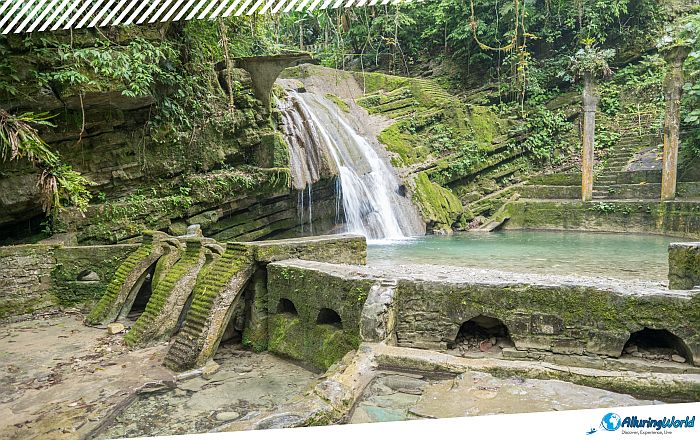
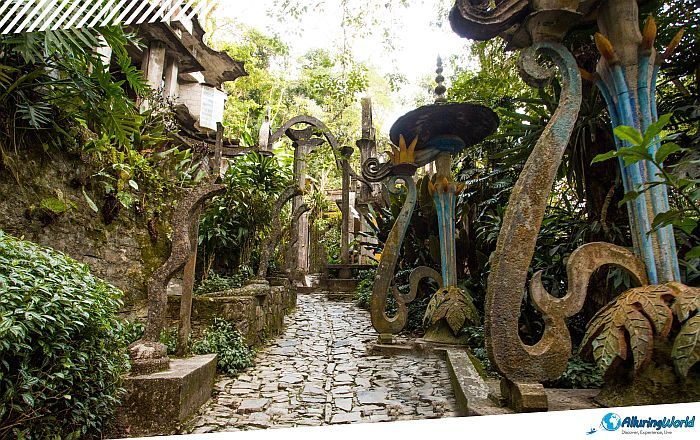
Las Pozas, officially known as the Edward James Surrealist Garden or as the local Spanish name Jardín Escultórico Edward James, is a very popular and impressive sculpture garden and architectural complex that is tucked deep within the subtropical rainforests of the Sierra Gorda Mountains, in the southern part of the Free and Sovereign State of San Luis Potosí, within the central part of the United Mexican States.
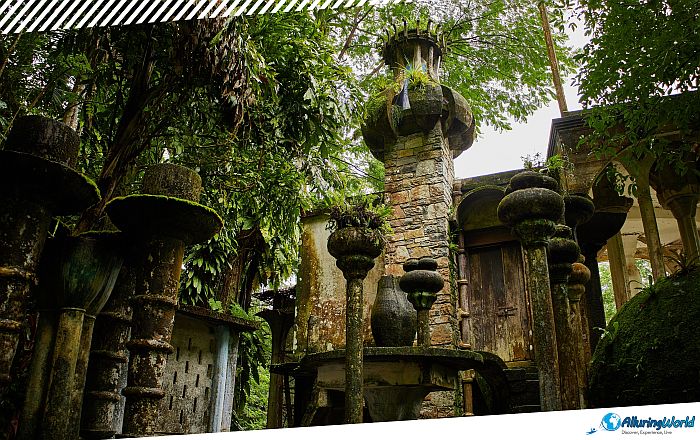
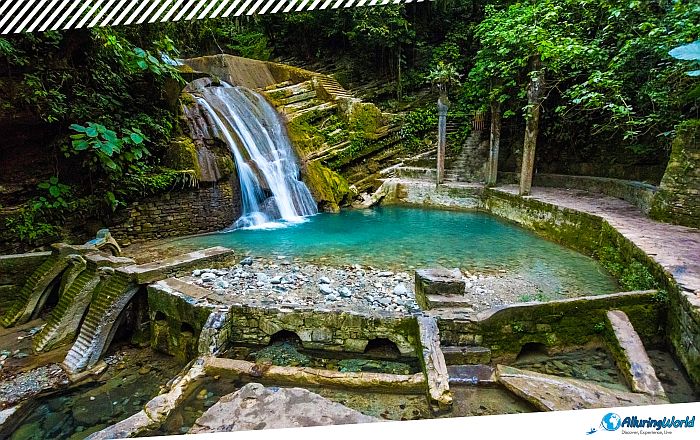
Sitting at the edge of the town of Xilitla, which lies in the lively Huasteca Alta area, this expansive 32 hectares (80 acres) park challenges conventional ideas of design, utility, and landscape architecture. Rather than any shelter or barrier, what greets the visitors are giant concrete structures, stairways leading to nowhere, gothic gates to lush jungle vegetation, and natural blue waterfalls. Whether you are an art historian, a photography enthusiast, or an adventurous traveler exploring off-the-beaten-path Mexico, this guide covers the history, architecture, conservation, and practical travel details you need to know before visiting Las Pozas.
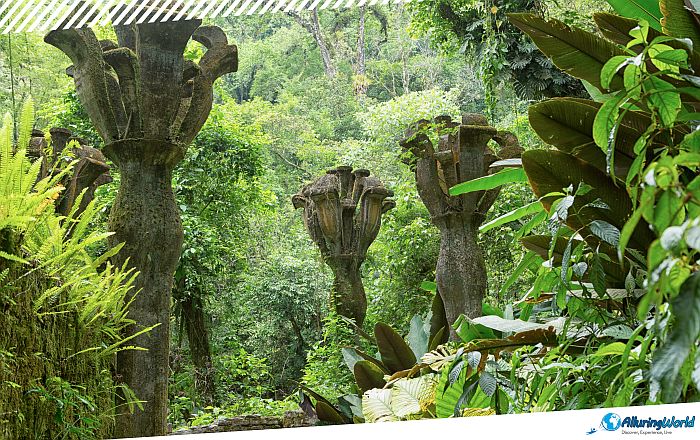
To understand the mystery of Las Pozas, you must first understand its eccentric creator, Edward James (1907–1984). A wealthy British poet, informal architect, and prominent patron of the European Surrealist movement, James famously supported legendary artists such as Salvador Dalí, René Magritte, and Leonora Carrington. Escaping a world that was much different from postwar Europe and the constraints of the Western art world, James came to Mexico in the 1940s. Following the lead of his friend and confidant, Plutarco Gastélum, James found himself in Xilitla, a fog-covered land full of abundance. Fascinated by its flowing streams, rugged terrain, and abundant plant life, he bought a coffee plantation by a set of natural river pools.
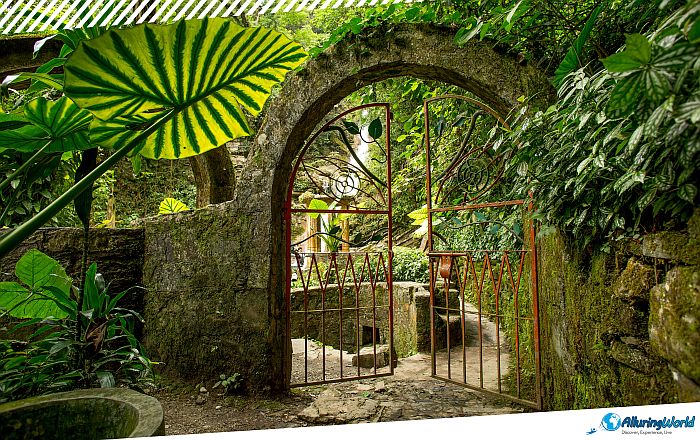
At first, James was utilizing the land to create an orchid garden and keep rare exotic animals, but after a freak frost ruined thousands of James’ plants in 1962, he decided to concentrate on something more tangible than flora. It was clear to him that he needed to construct an undying garden, a materialized dream that would survive even the harshest natural conditions.
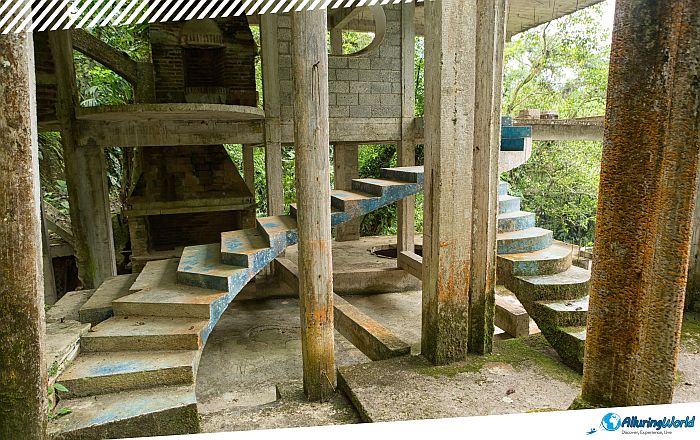
The construction of Las Pozas started in the late 1940s and went on for more than three decades until 1984, or until the day Edward James died. This involved hundreds of people in Xilitla, including craftsmen, carpenters, and artisans, but as there were no blueprints, Edward James made complex drawings from designs inspired by nature, the Gothic architecture of Europe, and surrealism. These were rendered into wooden forms for poured reinforced concrete, which would create the amazing structure you can marvel at today.
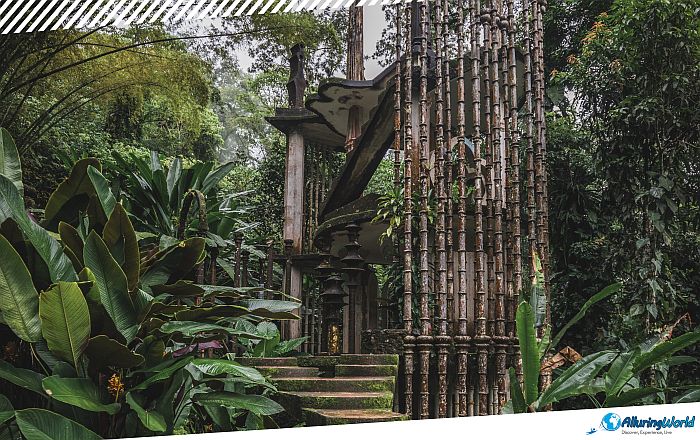
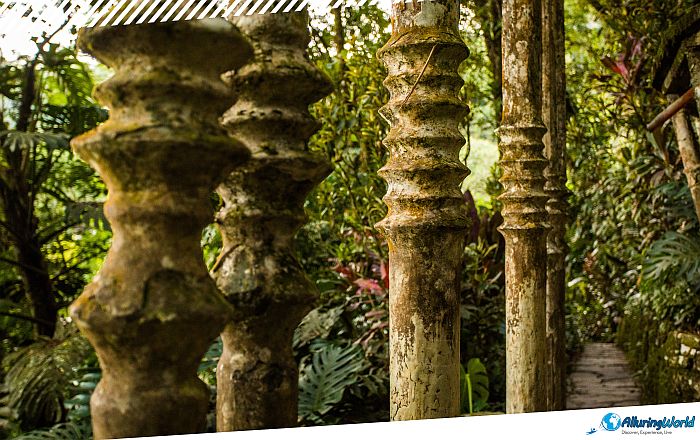
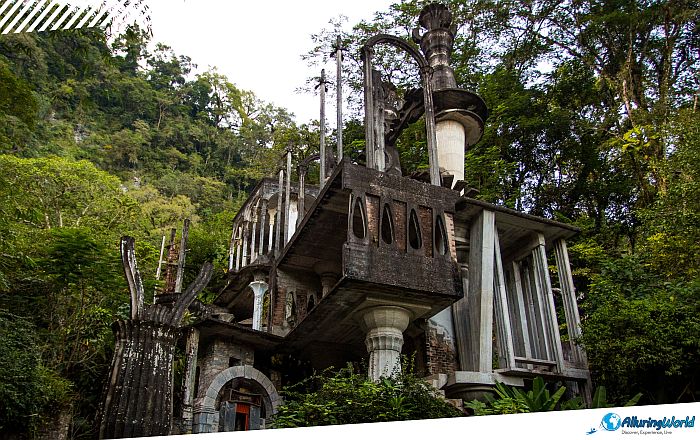
The choice of concrete came from its structural versatility and capability to resist the high humidity levels in the Huasteca jungle. Currently, over 30 buildings remain spread throughout the jungle, combining the industrial look with natural growth. Throughout the entire complex, you can notice different structures, and all of them have some story behind them. As the entire place is surrounded by nature, you are given an amazing feel that appears like you are on a different planet, especially when you visit during foggy times.
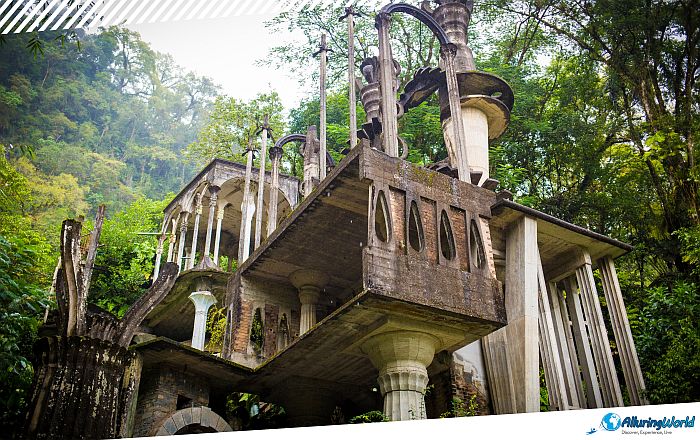
Among the most imposing and amazing structures, you will notice:
- The House on Three Floors That Will Really Have Five (La Casa de los Tres Pisos que Serán Cinco): One of the most famous structures on the site, this towering construction showcases James’s playfulness with scale, proportion, and structural logic.
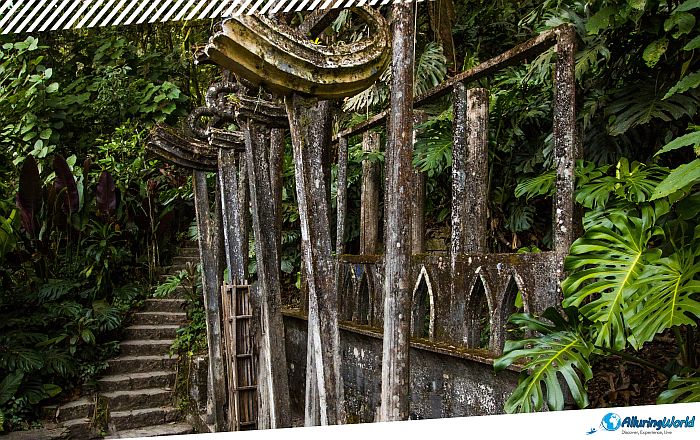
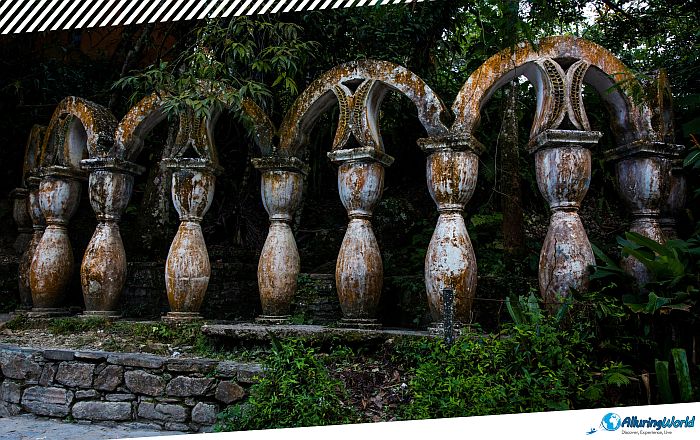
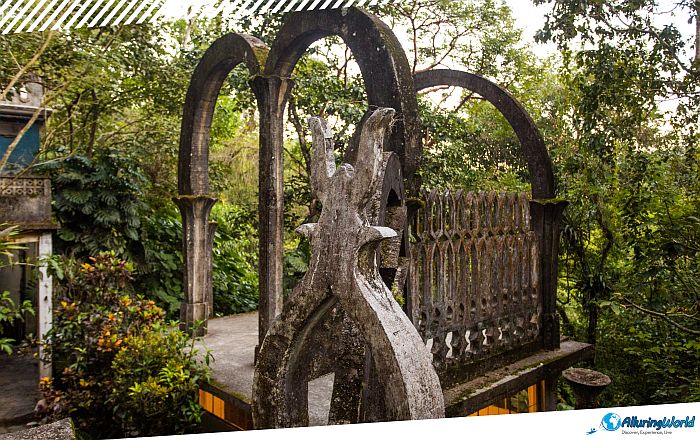
- The Covered Path with Gothic Arches (El Camino de los Arcos Góticos): This structure is an impressive concrete one that resembles the branches of trees and is used as a walkway under a dense tropical forest canopy.
- The Hands (Las Manos): Giant concrete sculptures of human hands emerging from the Earth, symbolizing the craftsman’s role in forging art out of raw nature.
- Stairways to Nowhere: Throughout the park, numerous spiraling concrete steps ascend toward the rainforest canopy only to terminate abruptly in open air, inviting visitors to reflect on perspective and infinity.
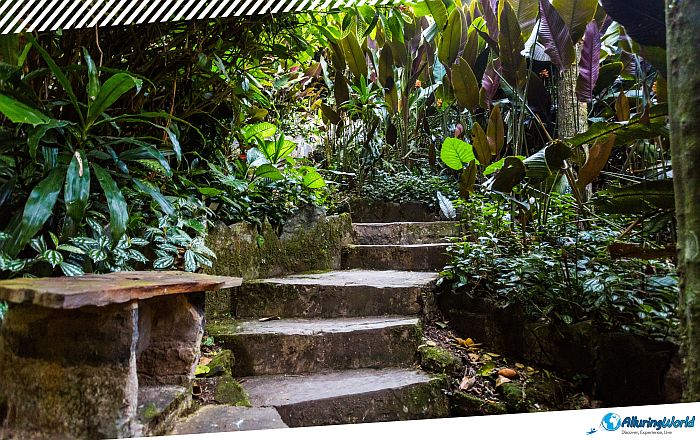
Throughout the years and decades, nature has slowly and partially claimed the site. Tropical vines, mosses, wild orchids, and underground roots embrace the worn concrete facades, so instead of working against the architecture, this organic incorporation enhances the impression of buildings that sprouted out of the jungle itself. Architecturally, Las Pozas occupies a unique space in modern art history. Surrealism as a movement largely manifested through literature, painting, sculpture, and film. Architectural examples of pure surrealism are exceptionally rare, making Las Pozas one of the few places on Earth where one can physically step inside a surrealist painting.
ADVERTISEMENT
The design is an architectural fusion that can be summarized as:
- Gothic Architecture: This has arched pointed vaults and towering verticals, something like the Gothic cathedrals of Europe.
- Baroque Ornamentation: This is delicate floral moldings and decorative flourishes that give quite the charm to the structures.
- Modernist Abstraction: This is, in fact, concrete geometric abstraction, which is set against nature’s gentle curves.
Beyond the intriguing aesthetics, Las Pozas served as a private sanctuary where James hosted prominent thinkers and artists. Surrealist painter Leonora Carrington visited frequently, leaving her own artistic imprint on the surrounding region and finding lifelong creative inspiration in the cloud forests of Xilitla. The preservation of reinforced concrete constructions in a humid and wet subtropical climate requires efforts, and it can never stop. Moisture, bio-growth, structural sinking, and jungle invasion represent a continuous threat to the stability of the old facilities in the Las Pozas.
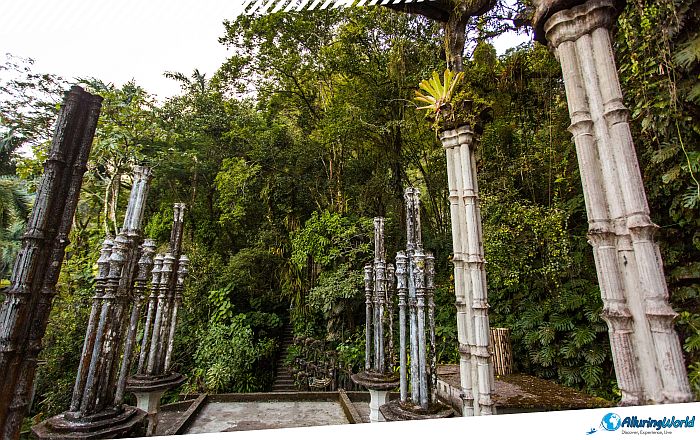
The Pedro y Elena Hernández Foundation bought the property through collaborations with the government and international heritage foundations in 2007 to preserve the property permanently. They are nowadays conserving the property with the aid of restoration professionals who are maintaining the structural integrity of the concrete, controlling root invasion, and maintaining visitor walkways, among others.
If you are planning a trip to Las Pozas, then you will be required to do some preparation, as Xilitla is located in a mountainous region of San Luis Potosí, so careful planning is needed to be able to get there and enjoy Las Pozas. If you are driving from San Luis Potosí City, then this would take about 4 to 5 hours via Highway 70. You will experience the scenic Sierra Gorda mountain range and see a different side of Mexico that you might not have seen before. On the other hand, if you are driving from Ciudad Valles, then you will be about 2 hours away from Las Pozas.
Ciudad Valles serves as the primary hub for exploring the wider Huasteca Potosina Region, so if you have some other spots in the area, then you can consider being based in Ciudad Valles. Be aware that regular public buses and tour operators run between Ciudad Valles and Xilitla on a daily basis, so it is easier for you to get to Las Pozas. Finally, if you are driving from Querétaro, then the drive will take about 4 to 5 hours driving north through the Sierra Gorda Biosphere Reserve.
The climate in Xilitla is warm and humid year-round, so depending on the conditions you’d like to encounter, you can plan your trip to the Edward James Surrealist Garden. The dry season runs between November and April, and this season will offer you cooler temperatures, pleasant hiking conditions, and clear trails. The rainy season is not always recommended, as it runs from May to October, although it is perhaps most picturesque because you will encounter lush foliage, dramatically higher water levels in the natural pools spread throughout the place, but paths can be slippery, so caution is advised.
If you have already made your plans to visit Las Pozas, then please have the following on your mind:
- Advance Booking Required: To protect the site from over-tourism, tickets must be purchased online in advance through the official foundation portal. Specific timed slots are organized accordingly for you to enter.
- Guided Tours: Visiting the structural center of the garden is done using professional guides from the region, who give information regarding the history, safety procedures, and art of the garden.
- Footwear: It is important to wear walking shoes or hiking boots due to slippery stone paths, concrete stairs, and wood bridges, which become slippery because of the presence of humidity and algae.
- Local Accommodations: It is recommended to stay at Posada El Castillo, which was originally the home of Edward James and Plutarco Gastélum in downtown Xilitla and is now used as a hotel and museum.
In summary, Las Pozas serves as a symbol of imagination and pure creativity. Not hindered by the restrictions of commercial interest, residential demands, or even architectural regulations, Edward James has established an enduring legacy that merges human creativity with nature and serves as an inspiration to others to be bold and build their own Las Pozas. While exploring the Huasteca area in Mexico, a trip to the garden is not a promise of crossing out one more tourist site on your to-visit list, but rather gives you an experience of the most enchanting cultural asset in the world.