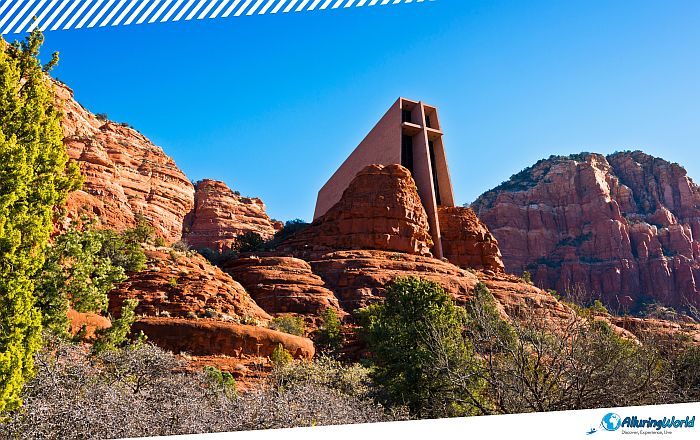
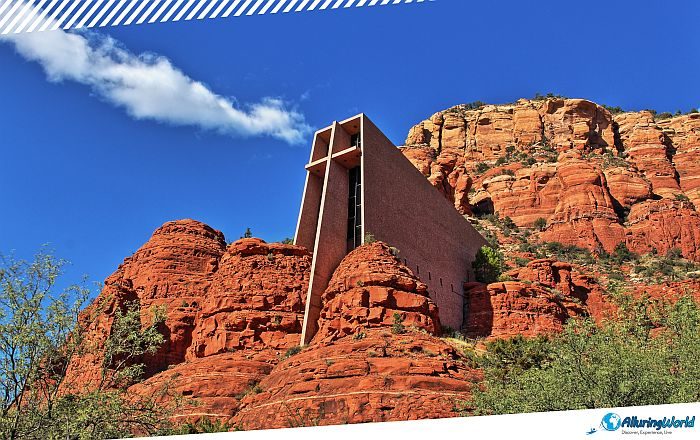
The Chapel of the Holy Cross is a Roman Catholic chapel that was built in the red rock buttes of the city of Sedona, in the central part of the State of Arizona, within the southwestern part of the United States of America. As the religious building was created by the local sculptor Marguerite Brunswig Staude, who was a student of the notable American architect Frank Lloyd Wright, she actually got the inspiration in 1932 from the then newly built Empire State Building.
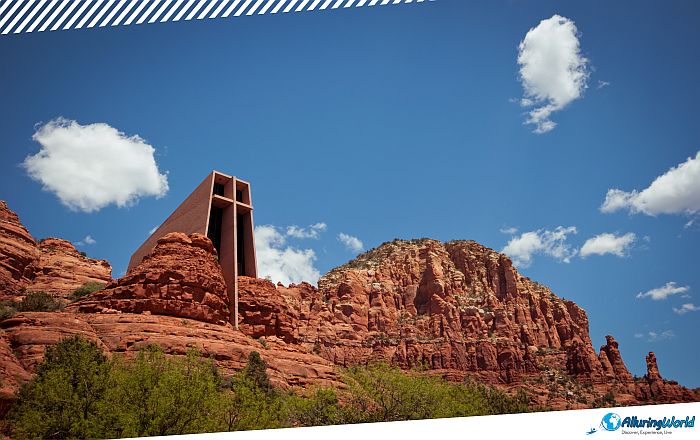
As she was seeing the surroundings from a certain angle, she noticed that a cross could be seen in the distance of the red rocks, and as she was looking for a great place where she could build this architectural masterpiece, she certainly discovered the amazing place. There was one attempt to build it in Budapest, Hungary, but due to the Second World War, the plan was canceled, and it has never seen the light of day.
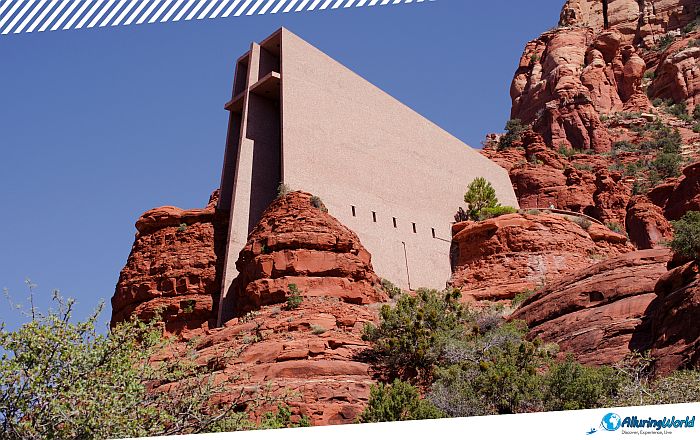
After a while, Richard Hein was chosen as a project architect, and the design was executed by architect August K. Strotz, both from the firm of Anshen & Allen. As the Chapel is built on Coconino National Forest land, the late Senator Barry Goldwater assisted with obtaining the permit for the construction, so that the construction would finally begin in 1954.
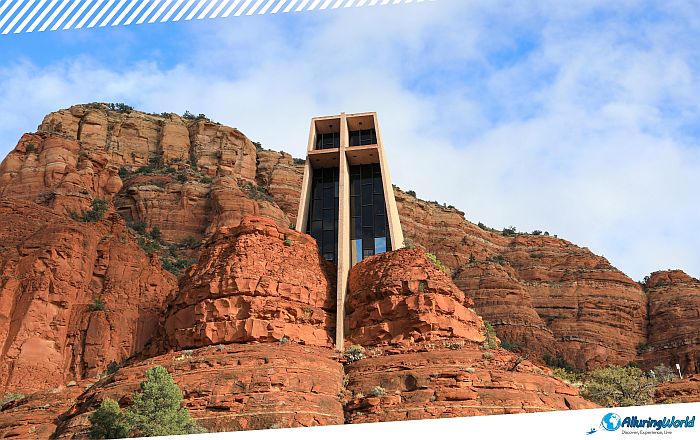
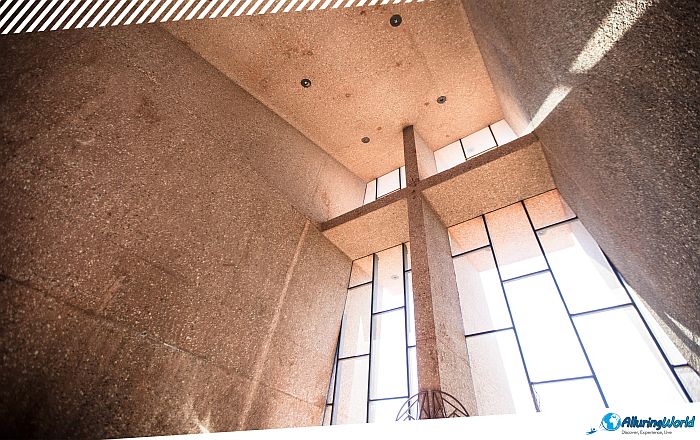
As it took 18 months to be completed, one of the remarkable and greatest attributes of the building is the striking giant cross that supports the structure of the glass, together with the rest of the building, over a butte. Located on the southern side of Twin Buttes, the chapel is accessible just off of the main road to Sedona (Highway 179) on Chapel Road, and as there are no regular services in the church, it is, in fact, meant to be a place of reflection and meditation.
ADVERTISEMENT
The interior of Sedona’s Chapel of the Holy Cross is very simple, as it does not feature something very elaborate, but instead it is filled with nothing more than a few pews and an altar. The intention here was so that the attention would not be taken away from the spiritual inflection, but rather would be focused on the physical block glass windows, and the large cross that emphasizes the space.
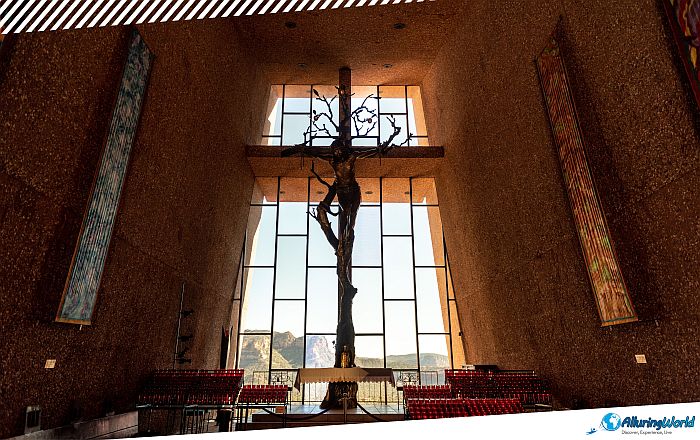
On the periphery, benches hug the angular walls, whereas in the center, two rows of pews (seven on each side) provide the necessary place to pray and rest. The proof of the magnificence of the Chapel was proven immediately, one year after its completion, when the American Institute of Architects gave the Chapel its Award of Honor.
Nowadays, visitors are flocking towards this alluring architectural beauty to find peace and tranquility, and the architects, of course, to find inspiration to create even more interesting, if not similar, masterpieces. Throughout the years, the church has been praised for its unique architecture and even more beautiful setting, as the backdrop of the rocks behind the church creates an amazing landscape that does not exist in other places in the world.