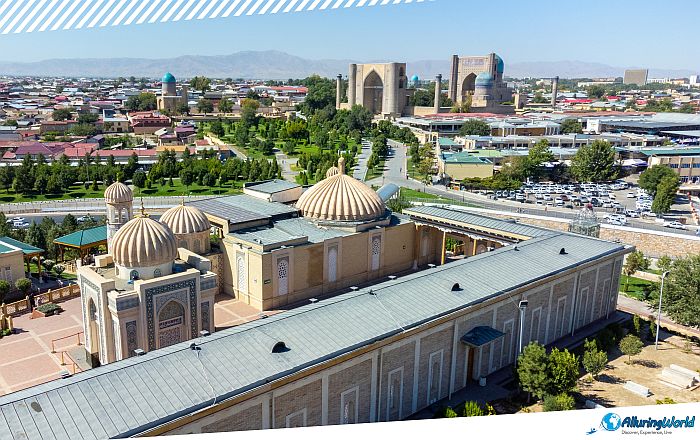
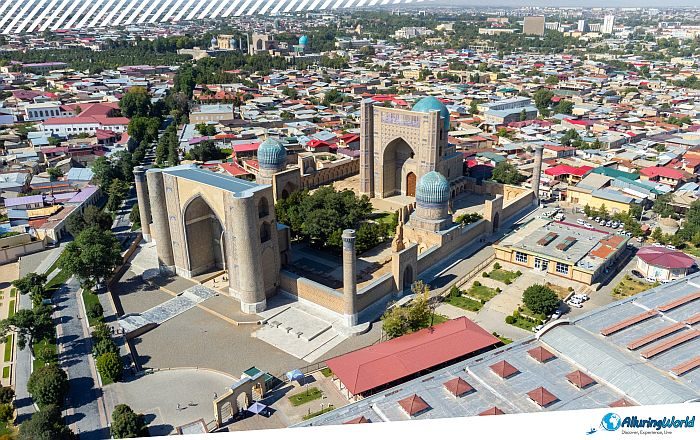
Bibi-Khanym Mosque presents one of the most important historical monuments located in one of the oldest inhabited cities in Central Asia, Samarkand, within the southeastern part of the Republic of Uzbekistan. As the city has been inhabited for 2,500 years, and the mosque is a crown jewel of the Silk Road, there is a legend associated with the mosque today, and you cannot visit the mosque without knowing the story behind its name.
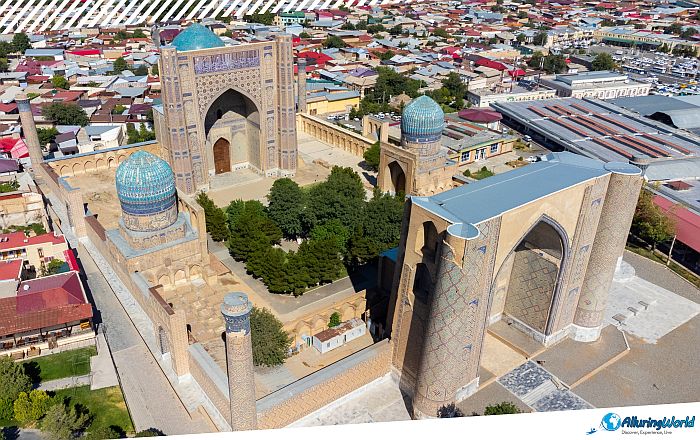
According to the legend, Bibi-Khanym, Timur’s beloved wife, wanted to give her husband a present in the form of an impressive monument when he returned from his victorious expedition to India. She gave the job to the empire’s best architect, but due to the impressive beauty of Bibi-Khanym, he became obsessed with the queen’s beauty and stalled the construction. He demanded a kiss from the queen before finishing the magnificent entrance, and in order to help him, she accepted the offer. When she kissed him, it is said that her kiss was so passionate that she got a red spot on her cheek.
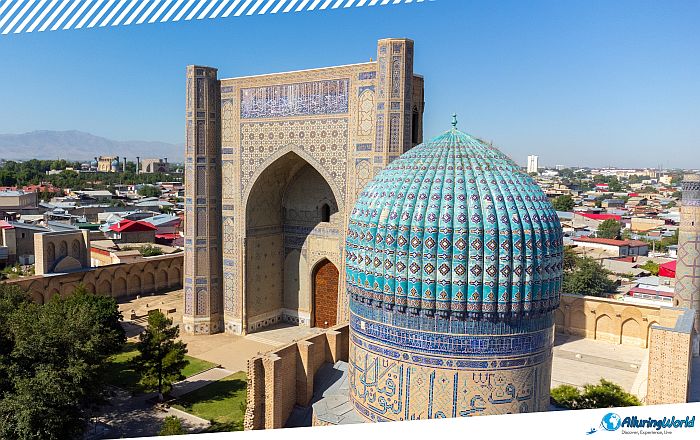
On seeing the magnificent building, Timur was delighted, but when he noticed the spot, he was furious with the architect. While the legend has been told throughout generations of people from Central Asia, there are different versions, with different endings; some say the architect was executed, while others say that he had grown wings and flown away from the scene.
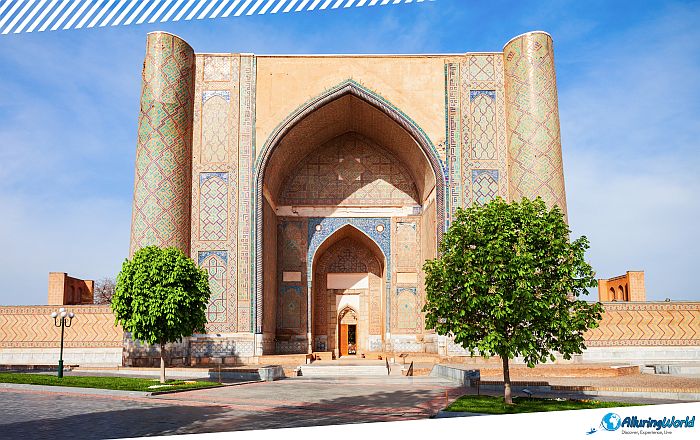
However, the real history of this magnificent building is more about imperial dominance than anything else. The construction of this mosque started in 1399 after Timur took control of Delhi. His idea was to build something that would test the boundaries of 14th-century engineering. Thus, hundreds of engineers, masons, and other artisans from the conquered territories were taken to Samarkand, along with 95 elephants needed for carrying large blocks of marble and stone from India. Built by the end of 1404, this mosque represented an architectural masterpiece of Azeri architecture. This mosque contained a massive 40 m (131 ft) high main dome, and a soaring entry portal (pishtaq) designed to make the viewer feel insignificant in the face of God and the Sultan.
ADVERTISEMENT
However, despite its impressive appearance, this mosque was doomed by its own dimensions. Its huge domes were a challenge for the masonry technologies of that time, and rocks started falling off the arches even before the death of Timur. This magnificent construction was subjected to the adverse effects of the Central Asian environment, like the climate and high-velocity winds, for many years. Nevertheless, the worst tragedy occurred in 1897 when an earthquake turned this beautiful architectural ensemble into ruins. Decades later, visitors to this place could see pictures of the “beautiful disaster” that had occurred there.
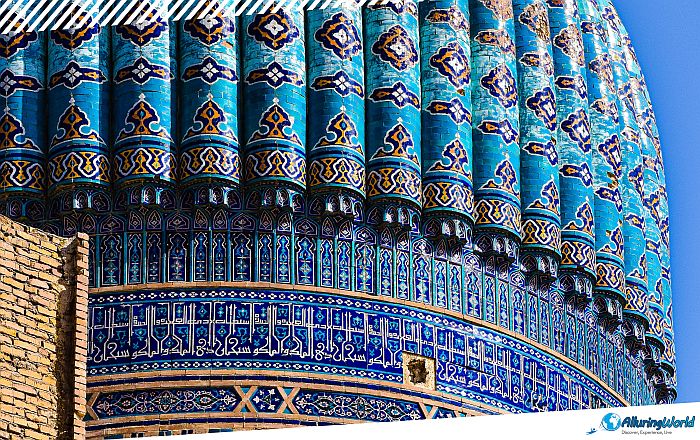
Recovery efforts started from basic reinforcement work and archaeology during the Soviet period, and continued throughout the years. Nevertheless, the major changes took place during the late 20th century when the independent Uzbek state initiated a large-scale reconstruction campaign to revive the mosque. Experts reconstructed the three principal domed structures and the imposing portal of the mosque. Currently, the complex is one of the popular tourist destinations, including:
- The Grand Mosque: The massive central structure, though its original dome famously collapsed in the past due to structural weight and earthquakes, has been significantly restored to its former height.
- The Small Mosques: Two flanking structures with stunning ribbed domes.
- The Giant Marble Quran Stand: Located in the center of the courtyard, it is a popular spot for pilgrims and travelers.
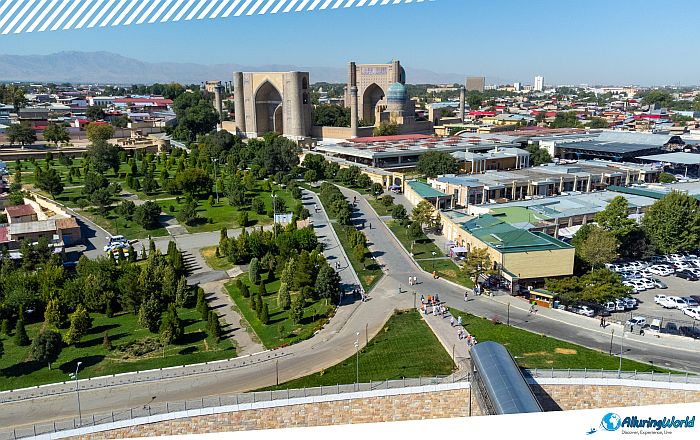
The Bibi-Khanym Mosque remains one of the most popular and photographed spots in Uzbekistan. Its restoration has allowed the world to see the sheer scale of Timurid architecture once again. Whether you are drawn by the tragic legend of the queen and the architect or the mathematical precision of the blue-tiled domes, the mosque is an essential stop for anyone exploring the ancient Silk Road.