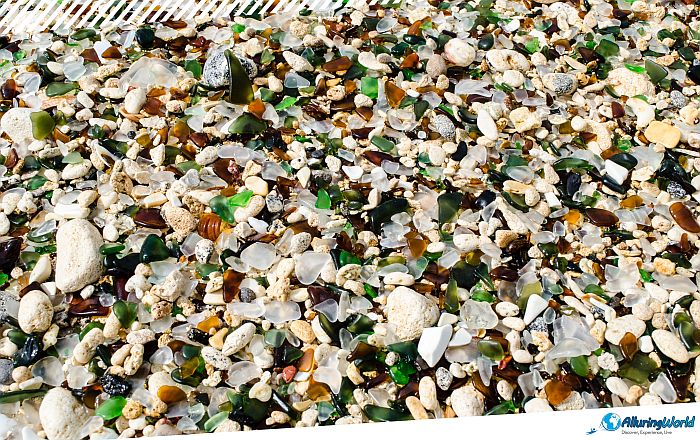
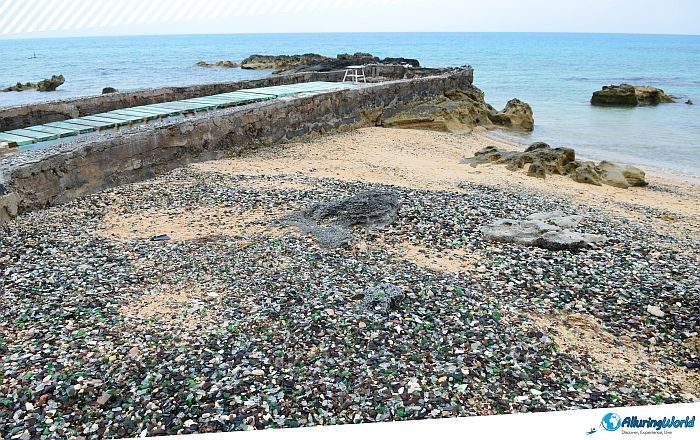
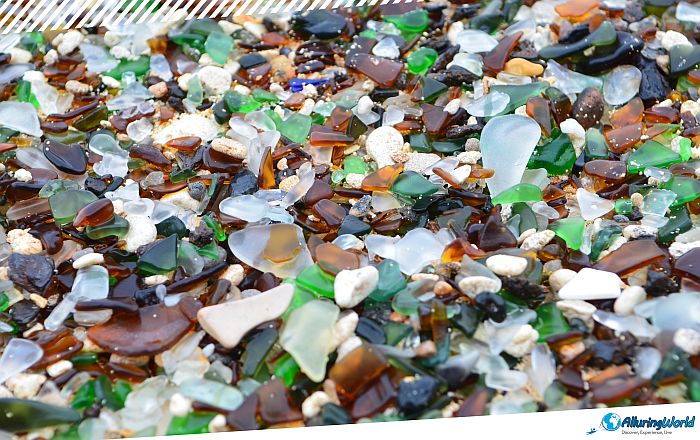
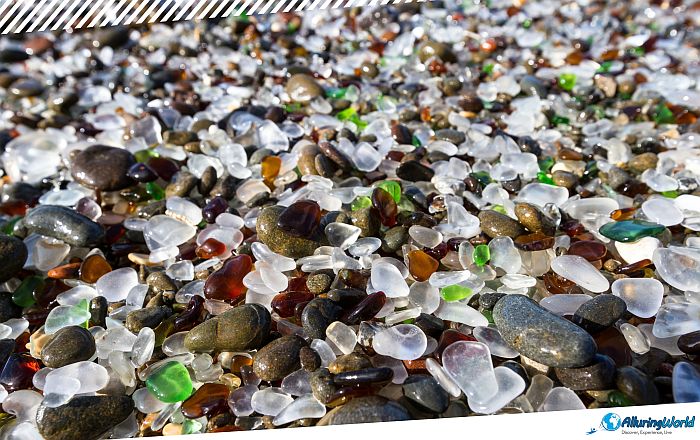
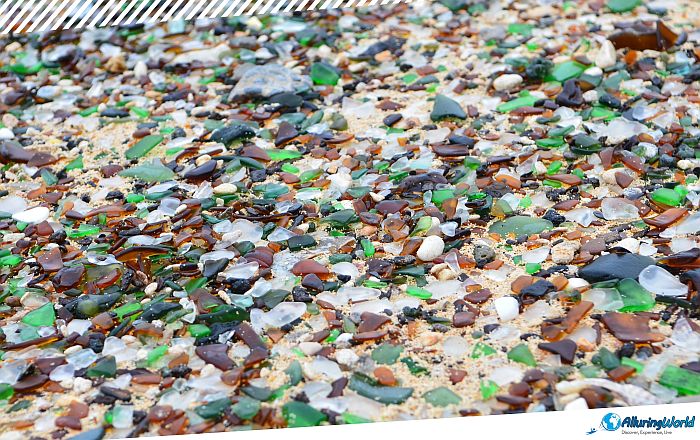
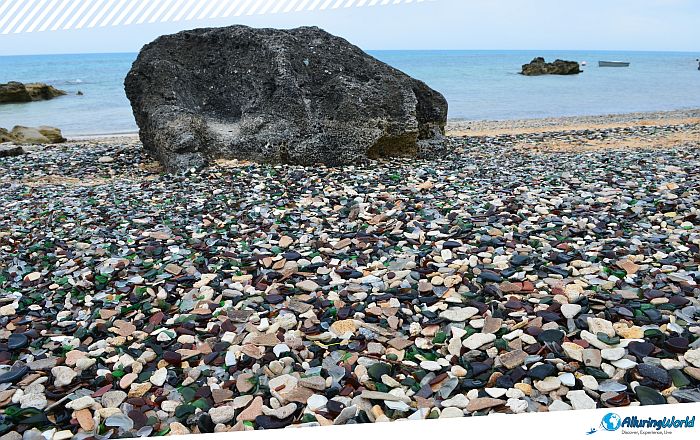
The Sea Glass Beach is a unique and quite interesting beach located in the northern part of Sandys Parish, situated on Ireland Island South, within the western part of the British Overseas Territory in the North Atlantic Ocean, the Bermuda Islands. Being close to the historic Royal Naval Dockyard, this small shoreline is strikingly different from the rest of Bermuda’s iconic pink-sand beaches. Instead of fine coral sand, Sea Glass Beach is covered with smooth, frosted fragments of ocean-tumbled glass that sparkle along the water’s edge. Shades of green, amber, brown, white, and soft blue dot the rocky coast, their once-sharp edges softened by decades of exposure to Atlantic seawater, sand, and stone.
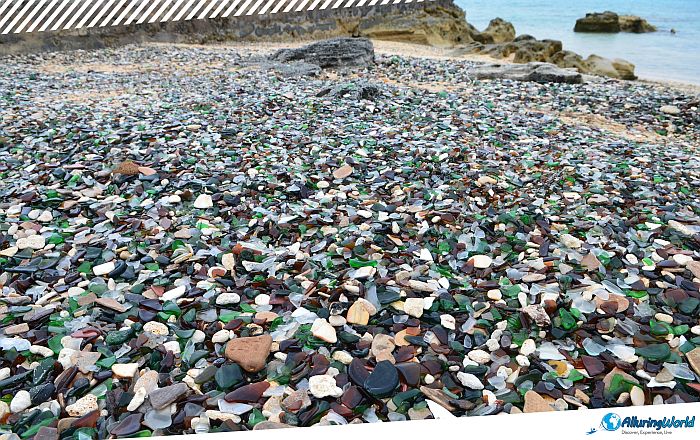
Known as Sea Glass Beach by the Royal Naval Dockyard, it is sometimes referred to locally and in some travel literature as Glass Beach or Bottle Beach. Found at Ireland Island South, Sandys Parish, it presents tourists with a unique combination of natural phenomena and maritime history. Sea Glass Beach is not a geological formation of natural glass, but in reality, each glass piece you see on this beach came from man-made products such as bottles and household glassware that got into the water and have been changed through time.
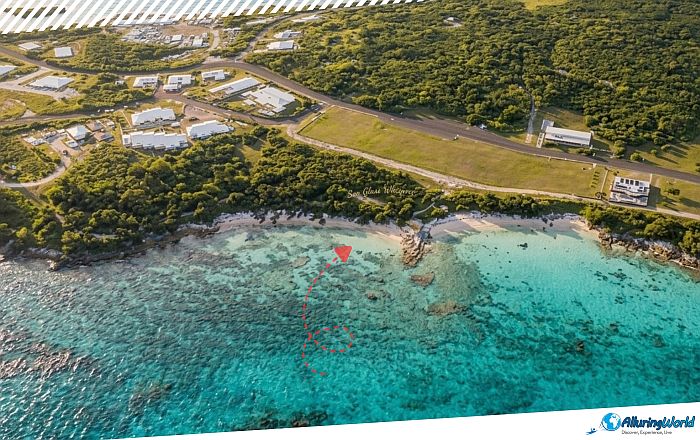
In due course, the waves kept the glass pieces in contact with the sand, pebbles, and underwater rocks, thus shaping them and giving them a smoother look. Through this natural process of polishing and rubbing, the sharp edges of the pieces are smoothed, and they acquire a unique frosted look. For this to be done and for you to enjoy it, it took decades to transform this precious place. When you understand how the process was done, you can appreciate Sea Glass Beach more. The shoreline serves as a historical record of human activity and early waste practices in Bermuda long before modern municipal recycling and garbage management existed.
The history of sea glass in Bermuda goes hand-in-hand with the maritime heritage of the island. Bermuda was settled in the early 17th century following the fabled wreck of the Sea Venture in 1609. Due to the islands’ position in the North Atlantic, Bermuda became an important point in transatlantic shipping. Before the modern municipal organization and waste management system were developed, ocean dumping was the standard way to dispose of the waste. The first organized municipal garbage collection was done in 1926, so the households and commercial facilities on the Bermudan islands were casting them into the sea or burying them along coastal banks.
A significant portion of the glass concentrated around Ireland Island South comes from the proximity to the Royal Naval Dockyard. Established by Britain starting in 1809 following the American War of Independence, the Dockyard served as a major strategic naval base for nearly two centuries. Thousands of British naval personnel, civilian workers, and convicts transported to construct the stone fortifications lived and worked on Ireland Island. Throughout the centuries, there were discarded containers from military quarters, ships that visited the islands, and even nearby settlements that disposed of their trash into the ocean. Overall, rather than originating from a single dumping event, the sea glass at Sea Glass Beach represents an accumulation of 19th- and 20th-century bottle glass naturally gathered by coastal currents.
ADVERTISEMENT
If you are a beachcomber or a photography enthusiast, then this place would be a haven for you since the variety of glass found along the shore will offer you an insight into historical bottle manufacturing:
- Green and Amber/Brown: These are the most abundant colors found on the beach, originating from standard mid-century beer, soda, and wine bottles.
- Clear and Frosted White: Common fragments that originally came from milk bottles, food jars, and basic kitchenware.
- Aqua and Cobalt Blue: Rare and highly prized finds, typically originating from antique medicine bottles, poison bottles, or luxury cosmetics imported in the late nineteenth century.
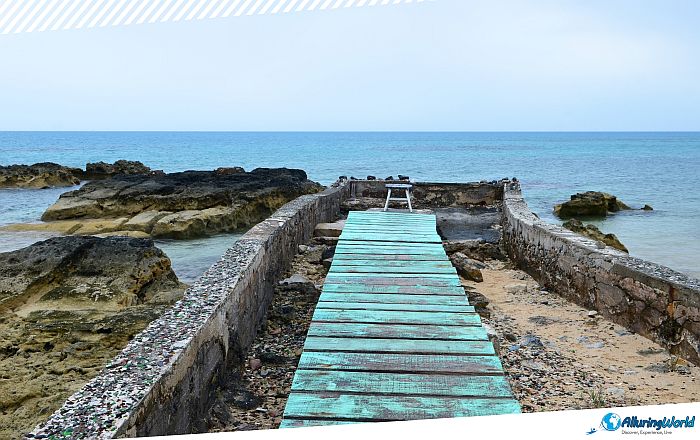
The physical condition of each piece tells its own timeline, so the heavily frosted pieces with completely rounded, oval shapes have spent many decades rolling in the surf. On the other hand, clearer pieces with slightly sharper edges entered the sea much more recently and did not have time to get their edges smoother. If you want to visit Sea Glass Beach today, it is located just outside the Royal Naval Dockyard gates on Ireland Island South, thus making it an easy addition to a West End itinerary. You can get there with several options:
- From Cruise Terminals (King’s Wharf & Heritage Wharf): Approximately a 20-minute walk from the cruise ship docks, the beach is easily accessible, although an alternative is to come by public bus or taxi, which should take about 5 minutes.
- By Bus or Ferry: Regular public buses connect Sandys Parish to Hamilton. If arriving at the Dockyard by public ferry from Hamilton, the beach is a short walk or taxi ride from the ferry stop.
Because Bermuda’s terrain consists of rolling hills and narrow coastal pathways, you should be mindful of the immediate terrain and accessibility of the site:
- Footwear: You should wear sturdy, closed-toe shoes or water shoes rather than thin flip-flops. Accessing the water requires descending rocky, uneven stone steps and navigating loose coastal rocks.
- Accessibility: Due to the natural rocky steps and uneven terrain, the shoreline is not wheelchair accessible.
- Timing: While accessible 24 hours a day, visits should be strictly planned during daylight hours. The beach is unlit, and full sunlight is necessary to see the colors reflecting through the water.
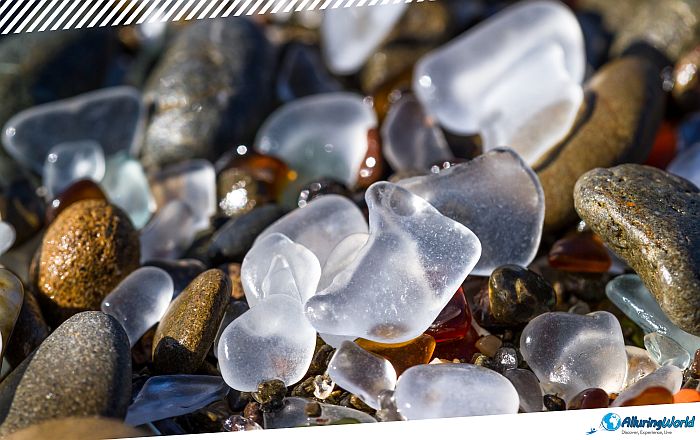
When you visit Sea Glass Beach, one thought might come to mind: Can I take sea glass from the beach with me home? The short answer is: No. You must not take the sea glass with you, and this is strictly prohibited. Both the Royal Naval Dockyard authority and the official Bermuda Tourism Authority maintain explicit guidelines requiring visitors to leave all glass on the shoreline. Because sea glass is a finite resource that is not actively replenished, and it takes too long to become smooth, removing fragments rapidly depletes the shoreline. In the past, tourists did gather big batches of sea glass, so the beach was significantly stripped in certain sections, therefore prompting stricter local protection efforts. That is why you are encouraged to admire, handle, and photograph the colorful glass, but every piece must be returned to the beach before leaving.
Nevertheless, even though this is a small place, you can always combine it with the neighboring West End attractions, which makes for a complete day trip:
- National Museum of Bermuda: Housed within the massive stone keep fort at the Dockyard, this museum covers island history, shipwreck artifacts, and Bermuda’s naval legacy.
- Historic Dockyard Complex: Explore restored 19th-century naval storehouses, victualling yards, and workshops that today house artisan craft shops, glassblowing studios, and local restaurants.
- Theo’s Cove: Located nearby, this small cove offers a more conventional spot for coastal relaxation and ocean views compared to the rocky terrain at Sea Glass Beach.
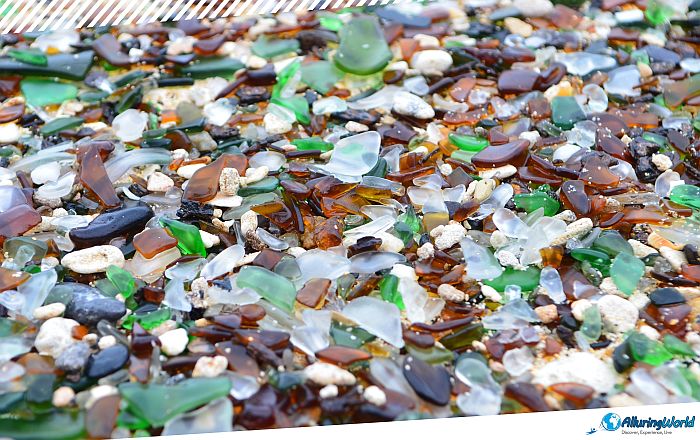
In summary, Sea Glass Beach is a beach that presents a unique attraction different from the regular places on the Bermuda Islands. A beach formed from waste material left behind by households and the navy has come to life as a result of years of ocean power. Since visitors collect nothing but photos and leave all the perfect pieces as they lie, this amazing historic landmark will continue to be protected for future generations of beachcombers to admire the process of smoothing the glass and making it a wonderful place. If you are a fan of history who would like to learn more about the Royal Naval Dockyard, or a curious individual willing to uncover one of the island’s mysteries, then Sea Glass Beach is the place to go.