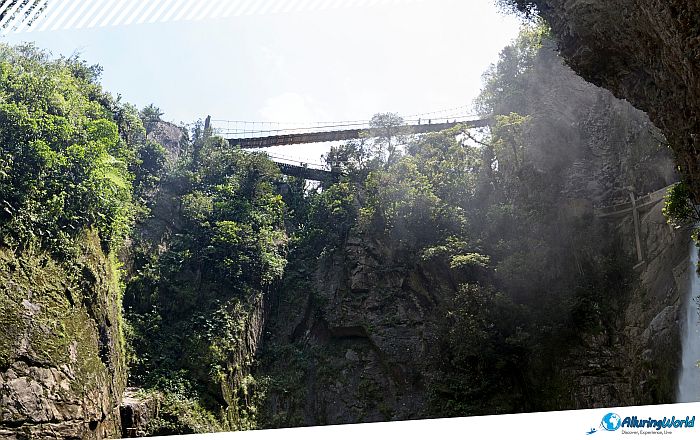
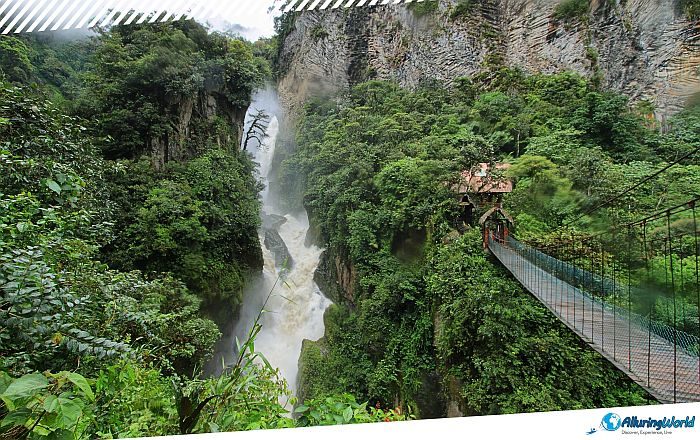
Pailón del Diablo, known in English as the “Devil’s Cauldron,” is a unique and very impressive waterfall located near the town of Río Verde in the Tungurahua Province, within the central part of the Republic of Ecuador. As Pailón del Diablo is based deep within the high-elevation cloud forests of the Ecuadorian Andes, nature unleashes a display of pure, kinetic energy through this majestic natural feature. Pailón del Diablo is arguably the most impressive waterfall in South America, captivating travelers with its terrifying volume, roaring mist, and dramatic rock carvings. Situated in a place with a brief drive east from the popular adventure gateway of Baños de Agua Santa, this massive cascade sits along the celebrated Ruta de las Cascadas, or as the English translation would be “Waterfall Route.” The churning water is fed by the powerful Río Verde, which surges through narrow granite chasms just before emptying into the vast Pastaza River, an essential tributary of the Amazon River basin.
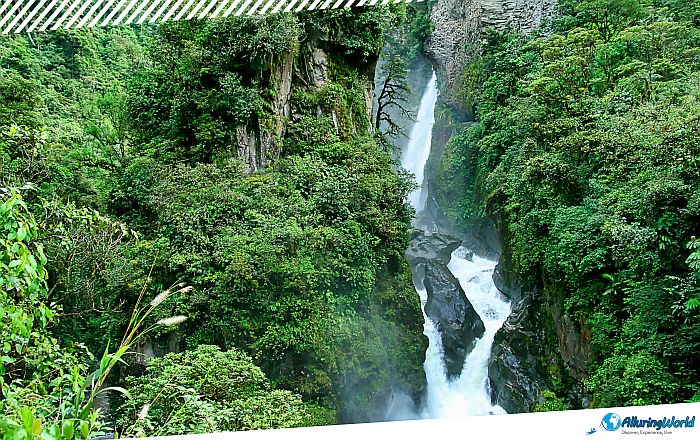
If you are a nature lover who wishes to explore the different types of ecosystems in Ecuador, then a visit to Pailón del Diablo is crucial to your Ecuadorian experience. It not only provides you with a view to behold but also a physical challenge where hiking trails are made in rock cliffs, walking bridges are suspended high above roaring waterfalls, and cold mists fill the air with each step that is taken. Knowing how to explore such an incredible natural landmark is part of an experience worth having and bringing home.
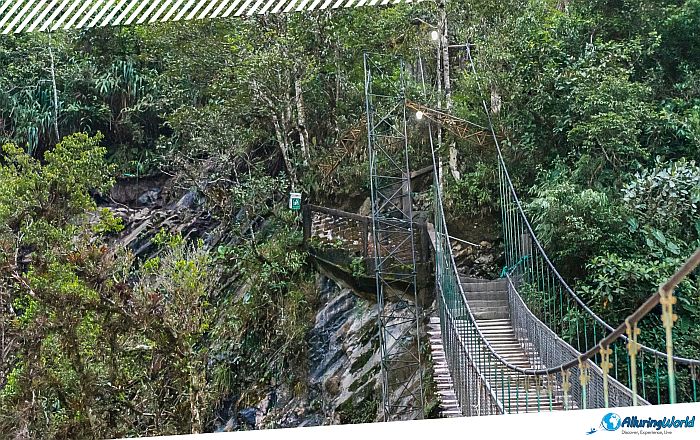
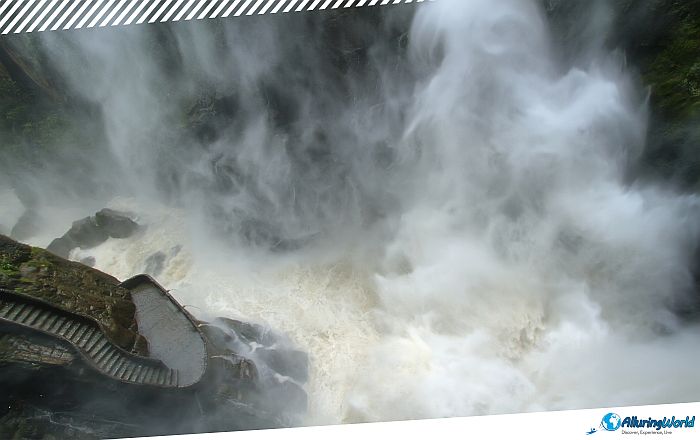
Pailon del Diablo falls some 80 meters (260 feet) into a narrow, dark canyon, producing a constant rumble that echoes from the rocks all around it. It takes incredible power for this to happen; millions of liters of water force their way through a narrow rocky opening and gain tremendous speed, forming a spinning mass of white foam and water vapor. This amazing power produces its own micro-climate, covering all nearby plants and surfaces with a wet, moss-covered patina.
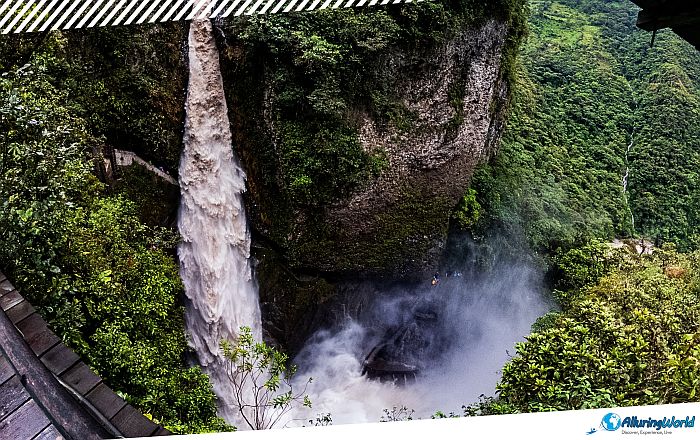
While visitors come to the waterfall seeking thrills and pictures, on the other hand, the canyon has a very colorful history that is steeped in native traditions and cosmologies of the Andean culture. Prior to colonization by the Spanish, the native leadership and mystics had identified the spirituality of the place. It was thought that the confluence of streams coming from the mountainous regions and the huge amount of energy created by the flowing water would serve as a strong link to the spirit world, making it conducive to spiritual cleansing and renewal practices.
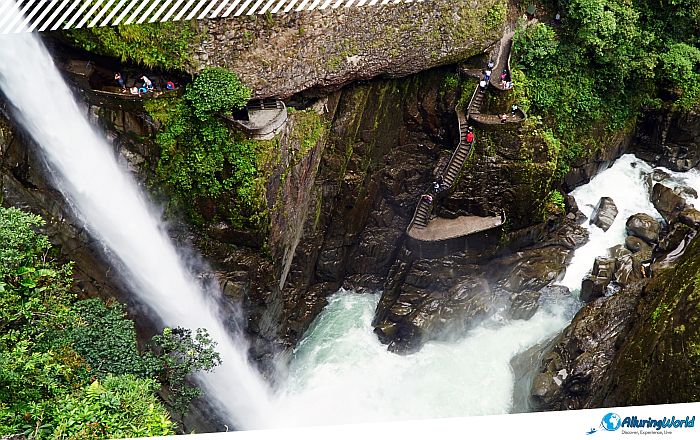
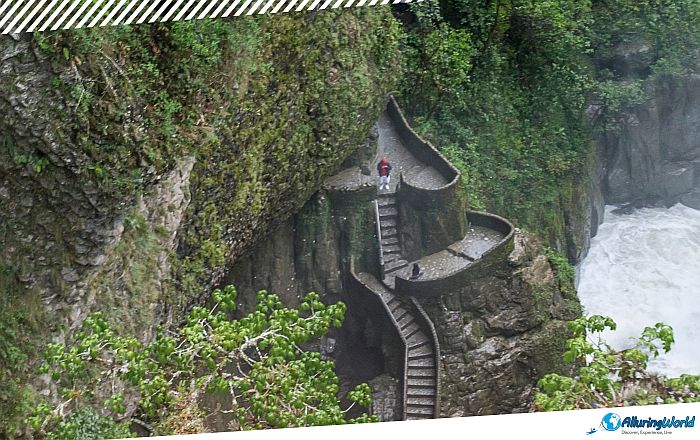
The modern incarnation of Pailón del Diablo dates back to the late 20th century. Visionaries and engineers from the area realized that with proper construction, tourists could be taken to see the waterfall without ruining the fragile environment. Starting in the 1990s, people have been building stone staircases in the rocks on the mountains, tunnels within the rocks, and suspension bridges over them by carefully chiseling away the rocks. This amazing engineering achievement provides tourists with an opportunity to go down deep into the canyon and meet the waterfall at close range.
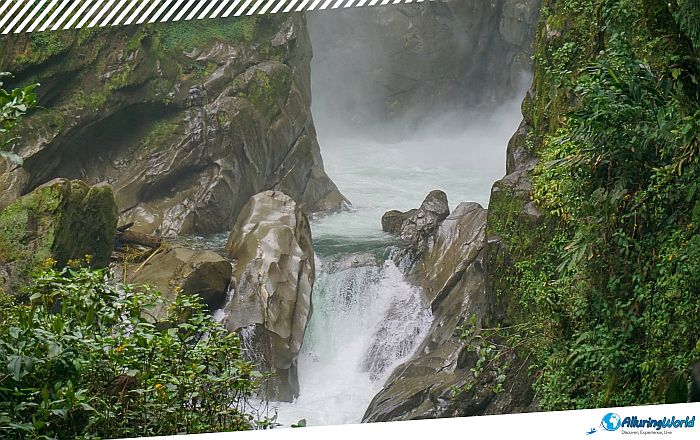
The evocative name Pailón del Diablo, which translates literally to “Devil’s Cauldron,” is a title inspired by two striking geological features visible inside the gorge:
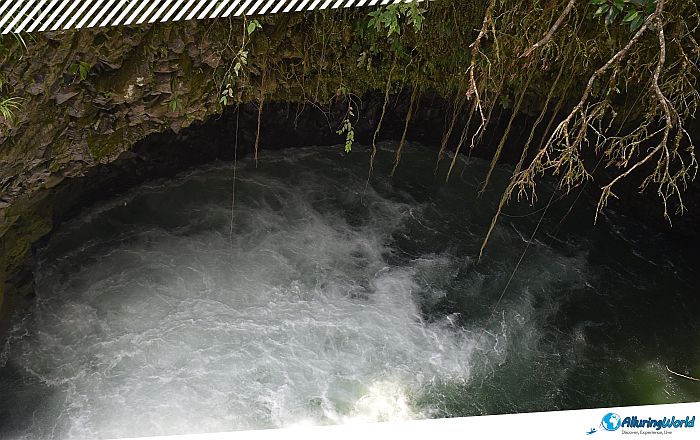
- The Boiling Basin: At the base of the main drop, the cascading water hits a circular pool that is 20 meters (65 feet) deep with such violent force that it resembles a massive iron cauldron bubbling over an open fire.
- The Devil’s Face: Located on the steep rock face near the waterfall, there is an erosion-created subtle formation that locals identify as the severe facial profile or skull of the devil, which is looking down into the white water all the time.
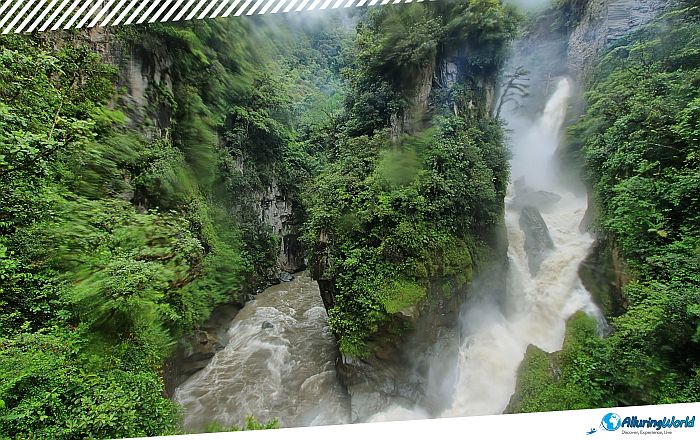
Local folklore has created a mythical dimension to the canyon through stories that are embedded in the local culture. In accordance with regional myths, the frightening rock face is the eternal guardian of the wild nature of the river of the mountains. Local mythologies contrast this imagery by associating other locations on the Ruta de las Cascadas with protecting biblical characters like Archangel Michael, who watches over the energy of the devil held captive below the waterfall. One of the key factors that first-time visitors to Pailón del Diablo overlook is the fact that there are two separate private entrances to the waterfall, which lies about 1,500 meters (4921 feet) above sea level. Each of the entrances comes at a price, with daytime entry of about $2 to $3 USD, while night tours or special access fees go up to $5, but offer a unique view and feel of the waterfall.
ADVERTISEMENT
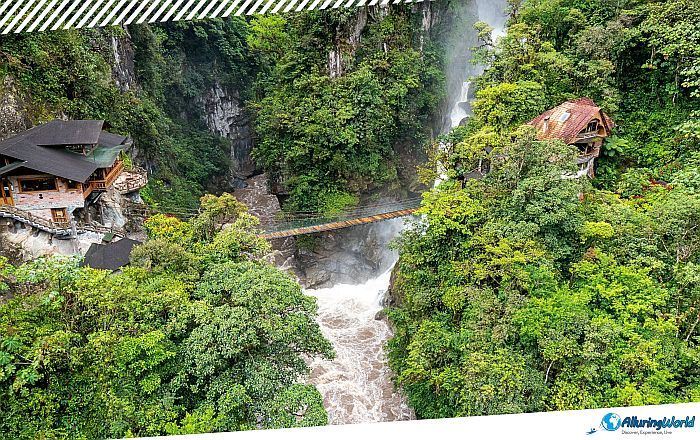
The New Entrance lies nearer to the main highway bridge in Río Verde, and it is for those who would like to have breathtaking views and enjoy a more relaxed physical activity. The good trail descends slowly through the verdant cloud forest canopy before taking visitors across long suspension bridges over the canyon. Visitors are allowed to step onto the bridge for a breathtaking aerial view of the whole 80 meters (262 feet) of the fall from above. The route is suitable for anyone not ready to take the rigorous trails.
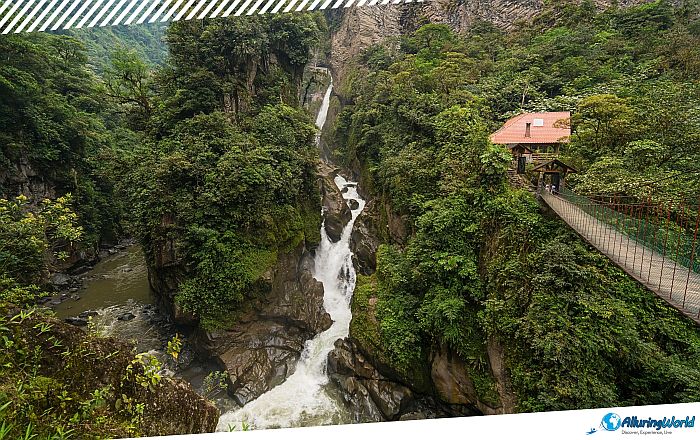
Those who want to have an adrenaline-filled experience will definitely like the Original Entrance, as it will take you right to the core of the canyon. The historical path takes you down the very edge of the flowing river through steep, wet stone steps. The highlight of this path is the Grieta al Cielo, in English known as the Crack to Heaven, and Boca del Diablo, or in English, the Mouth of the Devil. The way to reach the lookout point is through a narrow, carved stone passage that requires you to bend down and crawl, which is more difficult and not for every traveler. Once you come out at the other end, you will be standing directly behind the massive wall of water falling from the top.
The key factors that contribute to a fruitful visit to Pailón del Diablo include proper preparation, timing, and knowledge of the surroundings. Due to the slippery nature of the stone steps and rocky platforms, covered with spray and algae at all times, the right type of footwear is imperative and crucial for your safety. You should bring a breathable, high-quality rain jacket or poncho instead of an umbrella, because you can squeeze through the canyon with a poncho, but it would be hard to use an umbrella in the confined spaces. Moreover, you must protect your camera and smartphone, and if you bring your travel documents (such as a passport), keep them in a specialized dry bag placed in a backpack.
To be able to take in the calm magic of the cloud forest in solitude, you should try to get there during morning hours ranging between 8:30 and 10:00 on weekdays. This is because by late morning to midday, busloads of tourists who travel from Baños and Quito cause heavy congestion through the narrow passages on the trails, so you will get almost stuck with the big crowds and won’t enjoy it as much as you would during the morning hours when it is more relaxed. Alternatively, you can choose to visit in the evening as well because both entrances are open for night visits. During this period, the waterfall and the granite walls of the canyon are illuminated with floodlights in different colors, which gives you a different perspective of this powerful waterfall.
Getting to the waterfall from Baños de Agua Santa’s town center is not difficult at all, and overall it is considered inexpensive, thus allowing any traveler to take this trip. If you are in the town, then you have the following options:
- By Bicycle: Getting a mountain bike at Baños and traveling on the descending Ruta de las Cascadas to Río Verde is the favorite way to go for an adventure. This route is 17 km (11 mi) long and allows travelers to pass by several waterfalls, cable cars, and green valleys along the river. In Río Verde, travelers will be able to safely leave their bikes in special parking places and enjoy Pailón del Diablo.
- By Local Bus: There are regular buses that travel from Baños to Puyo through the route passing by Río Verde. It normally takes about 30 minutes to get to Río Verde, but it takes about 1 hour 20 minutes to do the full route and get to Puyo. Fares for destinations along this route are very cheap and cost around $1.
- By Chiva or Taxi: Open-air colorful trucks known as chivas run organized group tours along the waterfall route, and they stop at key attractions that include Pailón del Diablo as well. Private taxis can also be hired for a fixed round-trip rate, but make sure that you negotiate the price beforehand.
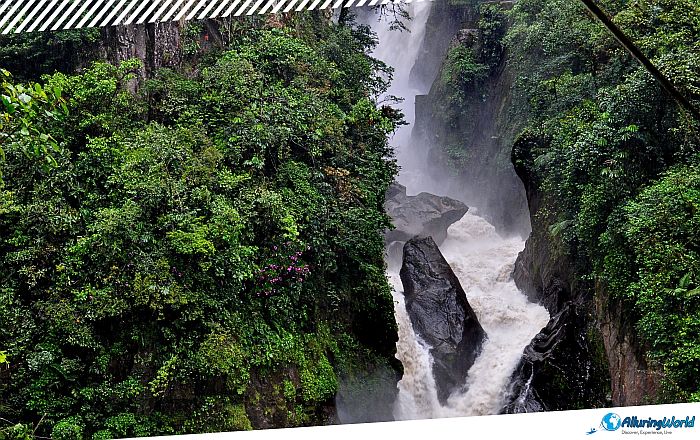
In addition to the rush from the waterfall, the Río Verde canyon offers a haven of biological diversity. Located at the meeting point between the Andes Mountains and the Amazonian lowlands, the high levels of moisture and constant temperatures help sustain an active ecosystem. During your exploration of the trails, it is worth spending some time noticing the thick vegetation that covers the rocks along the way. The rainforest has a lot of exotic epiphytes that include orchids, tree ferns, and bromeliads, which collect water in their central rosettes. Birdwatching enthusiasts have been known to see birds like the bright-colored Andean Cock-of-the-rock (Rupicola peruvianus), toucanets, torrent ducks swimming in the fast-flowing streams, and numerous varieties of hummingbirds flitting through the flowers along the vines. There is no easy way to simplify the fauna at Pailón del Diablo, as it is quite diverse. Still, overall this ecological corridor must be protected at all costs.
All in all, Pailón del Diablo is undoubtedly an amazing piece of nature that will remind you of both its incredible power and man-made engineering. If you are looking at the falls through fog from a suspension bridge or moving through stone tunnels to have a closer look at the waterfall’s energy, you will definitely have a unique experience that you will cherish for the rest of your life, and you will definitely recommend everyone to come to this South American gem.