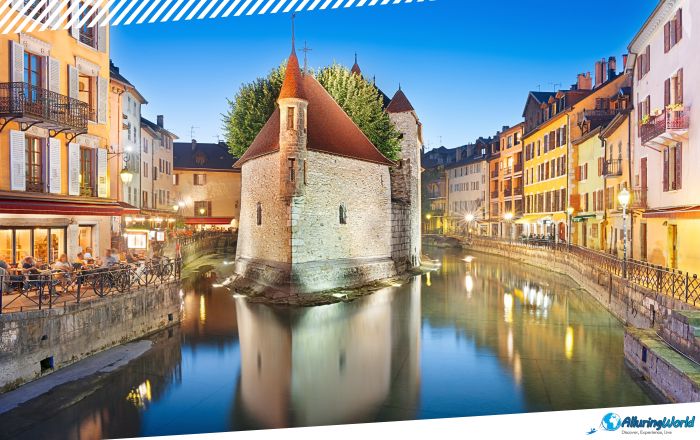
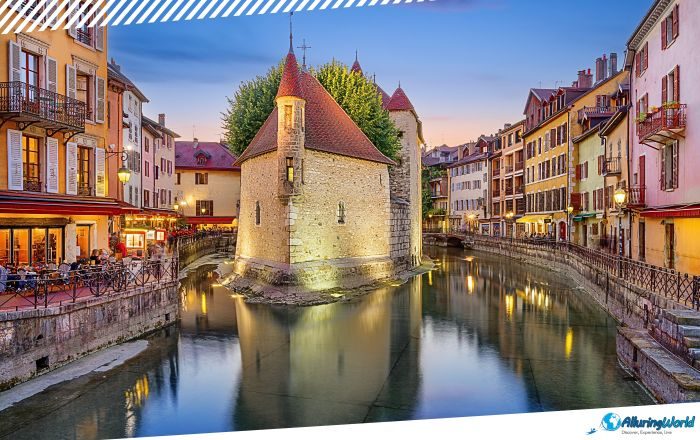
Palais de l’Isle, better known in English as the Palace of the Isle, is an old fortified house that sits on a small triangular islet by the Canal du Thious, in Annecy, which is the largest city of the Haute-Savoie department in the Auvergne-Rhône-Alpes region, within the French Republic.
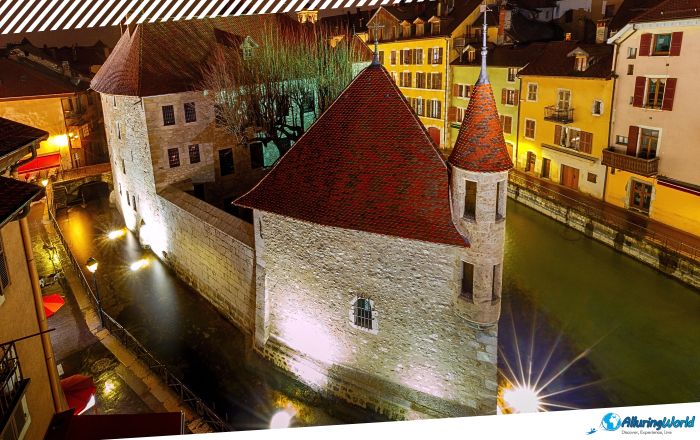
The original construction of the house dates back to the 12th century, and this fortified house was classified as a historic monument of great importance in 1900. Often referred to as a “gallery house”, at one point in its history, it was turned into a prison, courthouse, and administrative center.
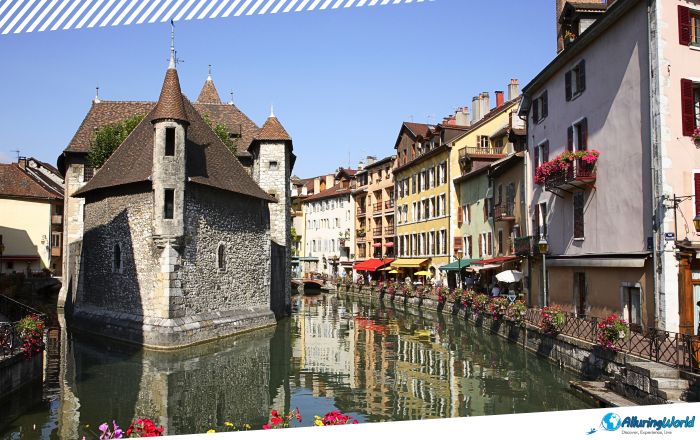
The whole structure follows the curves of the islet, and it has a somewhat triangular shape that encompasses the edges of the islet that touch Le Thiou Channel. At the beginning, the palace was used as a prison, which was in 1325, when the feudal lord of Annecy paid Jean de Menthoux, the master of the island, to feed two prisoners. Thirty years later, Count Amadeus II of Geneva was granted the right to establish a coin minting workshop in the small castle.
ADVERTISEMENT
Nevertheless, when Annecy and the Genevois province were attached to the Duchy of Savoy following the demise of the Genevois dynasty, the castle was given to the Monthoux family as a fief, so that the Dukes of Savoy subsequently bought it. It is at the end of the 16th century, when the house was transformed into a courthouse and a prison; however, it also housed the Presidential Council of the Genevois province and the Court of Auditors.
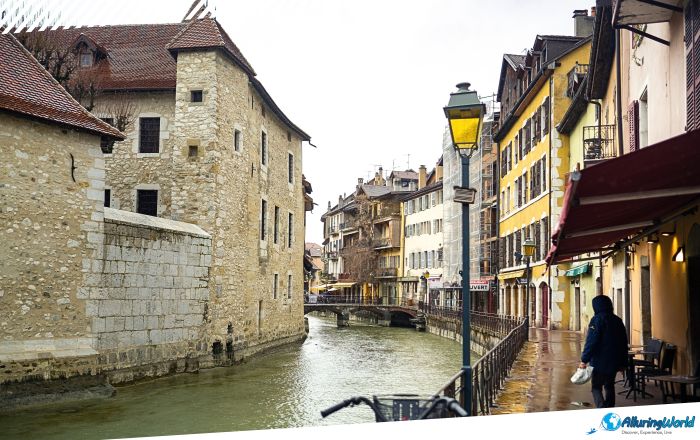
Even when the French Revolution happened, the structure was used as a prison, and it remained as such until 1900, when it officially became a Historical Monument of the French Republic. Ever since then, Palais de l’Isle has been seen as an important monument of great significance to the region and country overall.
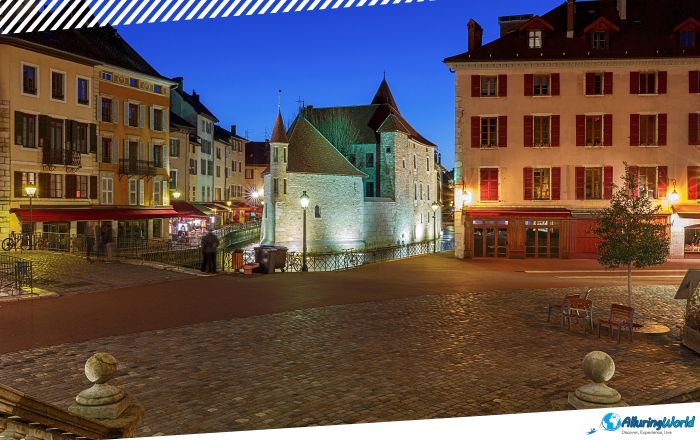
With the restorations, nowadays, this amazing architectural masterpiece is open to the public, where every visitor would be able to see the impressive entrance courtyard, the Banches which is the part where business was conducted, the Coin Mint Wing, the Tower Lodge, the dungeons, the inner courtyard, and the chapel.
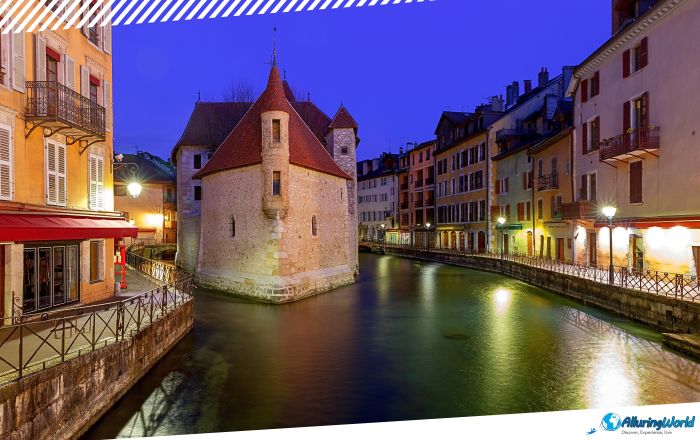
The museum exhibits parts of the urban history, heritage, and environment of Annecy, making it one of the most attractive points in the city. It is a true historical treasure kept in great condition by the French Government.