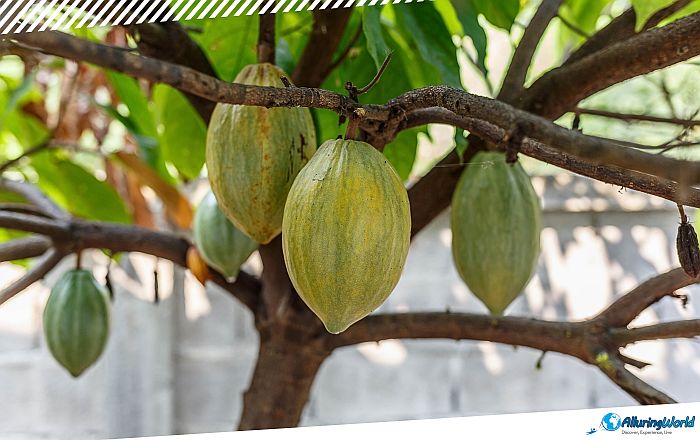
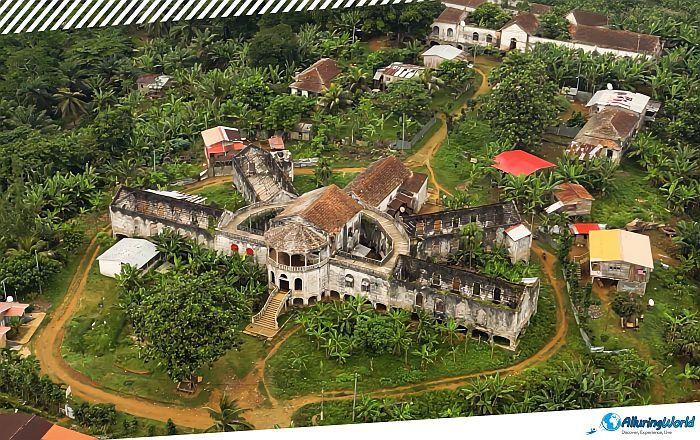
Roça Água-Izé is a historic, large-scale Portuguese colonial cocoa plantation, as well as a former agricultural complex that is hidden in the lush landscapes of the eastern part of the island of São Tomé, which is the main island of the Democratic Republic of São Tomé and Príncipe. Roça Água-Izé is one of the places where the island’s history can be read directly from its buildings, roads, railway remains, and agricultural land, as the entire place with its structures showcases the colonial history of the island. The word “roça” generally refers to a plantation estate, but in São Tomé and Príncipe the concept became much larger than an ordinary farm. A major roça could function almost like a self-contained settlement, with agricultural land, processing facilities, warehouses, workers’ quarters, hospitals, administrative buildings, workshops, and transportation infrastructure.
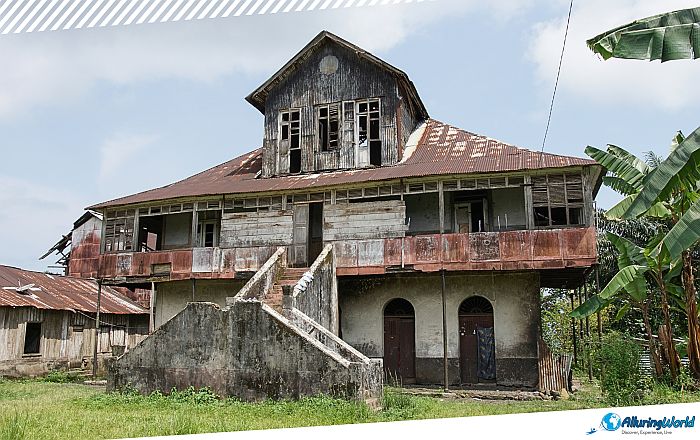
Água-Izé became one of the most important examples of this system, as it was founded in 1854 by João Maria de Sousa Almeida, the man who became known as the first Baron of Água-Izé. The estate at that time developed from an agricultural estate into a huge coffee and cocoa-producing complex, and it increased its agricultural production over time. The plantation was originally known as Fazenda da Praia Rei because of its location beside Baía da Praia Rei, while the name Água-Izé became associated with the river that crosses the estate and flows toward the bay. Today, if you visit this historic place, you will notice a mixture of inhabited areas, agricultural land, historic buildings, and deteriorating structures. It is this combination that makes the place unique because this is not a restored museum that represents life in colonial times, but rather a living landscape where relics of the plantation system exist alongside modern-day São Tomé.
The story of Água-Izé begins in the middle of the 19th century, when São Tomé was entering a new agricultural era. The island had previously experienced a major sugar economy, but coffee had become increasingly important by the 19th century, and cocoa would eventually transform the colony into one of the world’s great cocoa-producing regions. João Maria de Sousa Almeida, born in Príncipe in 1816, acquired Água-Izé and Castelo do Sul estates and made Água-Izé his principal plantation from 1854. He was a major plantation owner of African origin and later received the title of Baron of Água-Izé. His background is an important part of the story because Água-Izé was not simply created by an anonymous Portuguese colonial administration; it was strongly associated with a particular planter whose commercial ambitions helped establish the estate as a major agricultural enterprise.
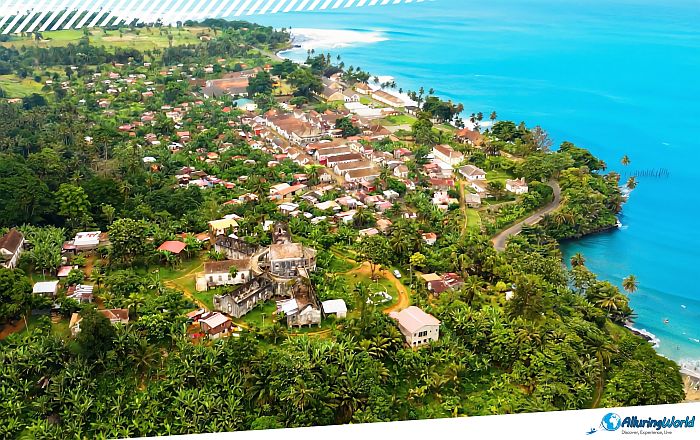
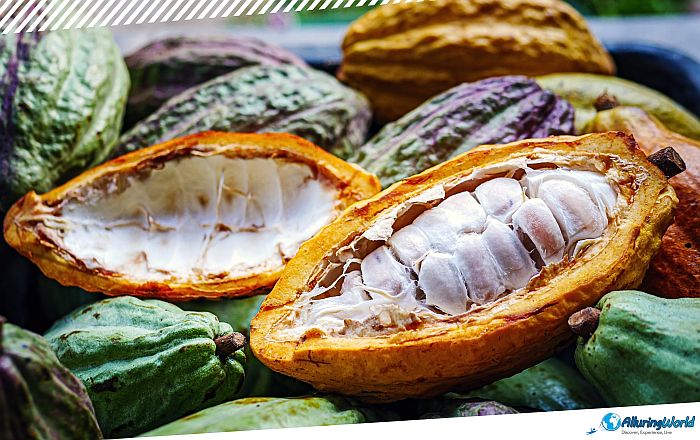
By 1861, there were already more than one million coffee plants and around 250 employees working at the plantation; nonetheless, the historical evidence shows that the average annual production of coffee was around 75 tonnes, and that the production in the future was likely to be even higher. The estate therefore was already technologically and economically significant before cocoa became the dominant crop. Água-Izé occupies a particularly important place in the history of cocoa in the country, because according to São Tomé’s official tourism authority, the plantation was founded in 1854 and became the first plantation to cultivate cocoa on São Tomé Island after cocoa had been introduced to Príncipe. The introduction of cocoa was enormously consequential, but with the tropical climate of São Tomé, this proved exceptionally suitable for the crop, and during the second half of the 19th century cocoa cultivation expanded rapidly across the islands, with Água-Izé being at the center of this transformation.
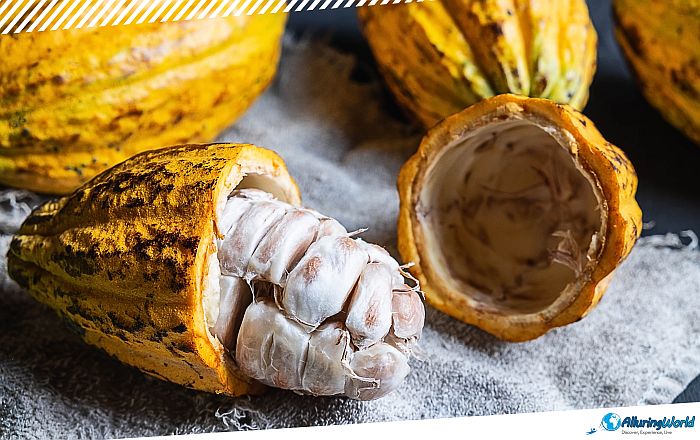
Coffee initially played an extremely important role at the estate, but cocoa increasingly became the dominant commercial crop as international demand grew. The plantation consequently required new processing equipment, drying facilities, transport systems, and additional infrastructure capable of handling a much larger agricultural operation. This transition is one of the reasons Água-Izé matters beyond São Tomé itself. Its history is connected to the development of the global cocoa economy and to the transformation of a small tropical island into a major exporter of a commodity consumed around the world.
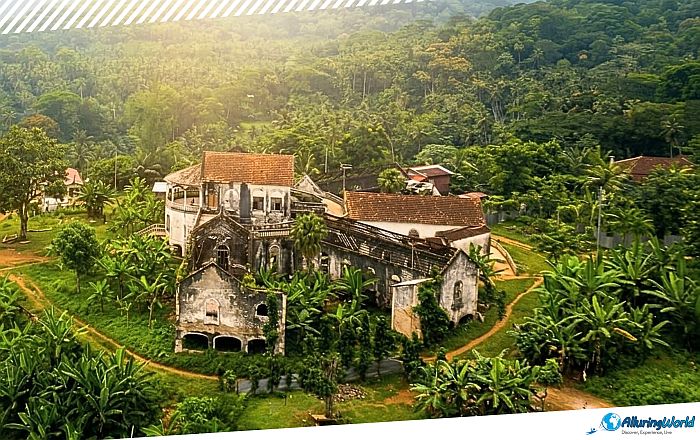
When you visit Água-Izé, you should not focus exclusively on its picturesque ruins or architectural character. The plantation also represents one of the most difficult chapters of São Tomé and Príncipe’s history. João Maria de Sousa Almeida himself had previously participated in the trafficking of enslaved people from Angola to Brazil, and historical research shows that the labor system used at Água-Izé was coercive and violent. When Almeida expanded operations in the 1850s, the estate still operated within a society in which slavery existed. Historical records document resistance by workers and severe punishment, but in January 1856, approximately 50 workers who had rebelled against conditions at the plantation were imprisoned and deported to Príncipe. Another colonial record from 1860 describes a worker at Água-Izé being flogged 550 times and nevertheless being forced to continue working for Almeida.
ADVERTISEMENT
The end of slavery in the Portuguese territories started in a gradual process, with São Tomé and Príncipe having it fully abolished in 1875. The end of slavery, however, did not mean that labor in the plantations was suddenly free and voluntary because the Portuguese plantations continued to depend on the use of contracted laborers called serviçais. They were mainly drawn from places like Angola and other territories that were controlled by Portugal, but it is important to mention that this history is essential when interpreting the long rows of workers’ accommodation and the impressive infrastructure of Água-Izé. Overall, the plantation’s size and technological sophistication were made possible by a labor system that subjected thousands of people to the demands of colonial agricultural production.
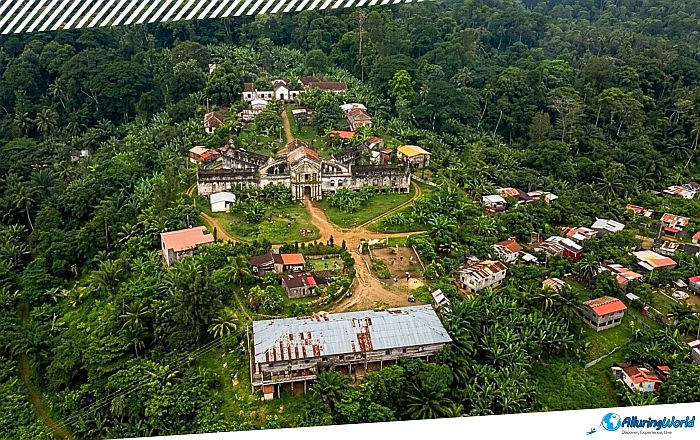
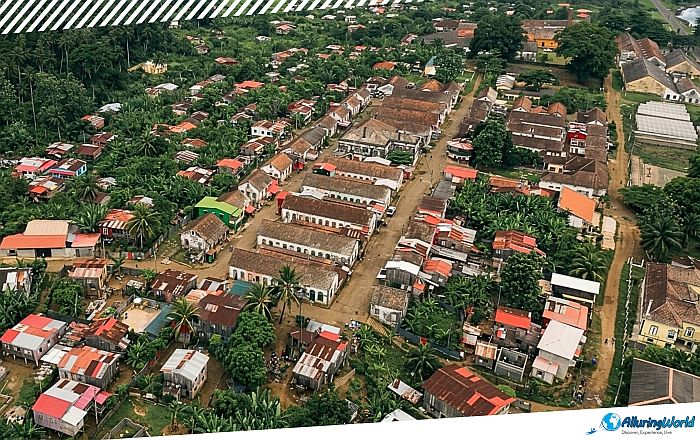
During the late 19th and early 20th centuries, Água-Izé expanded enormously, and its organization increasingly resembled a small town rather than an isolated farm. The estate was laid out on a gentle slope descending toward the sea, with terraces and stepped areas accommodating buildings at different elevations. Its streets, residential quarters, and open spaces followed a planned grid, giving rise to the description “roça-cidade,” or plantation-city. The complex did not have a conventional enclosed entrance separating it from the surrounding community, but instead, the national road passes directly through the settlement. The lower portions contained administrative and industrial facilities, including workshops, carpentry and metalworking areas, warehouses, and other production-related buildings. The extensive rows of workers’ accommodation, traditionally called sanzalas, occupied the slopes, while the hospitals were positioned on higher ground. This spatial arrangement will tell you something important about how the plantation functioned, as it was effectively a complete agricultural settlement in which production, administration, accommodation, healthcare, and transportation were integrated into one large system.
One of the most impressive aspects of Água-Izé was its transportation network. The plantation developed an extensive railway system used to move agricultural products and materials between different parts of the estate and toward the coast. Academic research on the plantation describes railway lines extending for more than 35 kilometers (22 miles), connecting Água-Izé with its various dependencies and following the terrain around the Rio Abade area. The railway was part of the wider modernization of the plantation system, thus allowing crops to be transported far more efficiently than would have been possible using people and animals alone. The official São Tomé tourism authority also specifically highlights Água-Izé’s extensive railway network and its own dock for cocoa exports as evidence of its technological and commercial importance. When you’re walking through the site today, surviving railway traces therefore deserve particular attention. They are easy to overlook because vegetation has reclaimed many parts of the former system, but these remains help explain how an apparently remote plantation could participate in an international export economy.
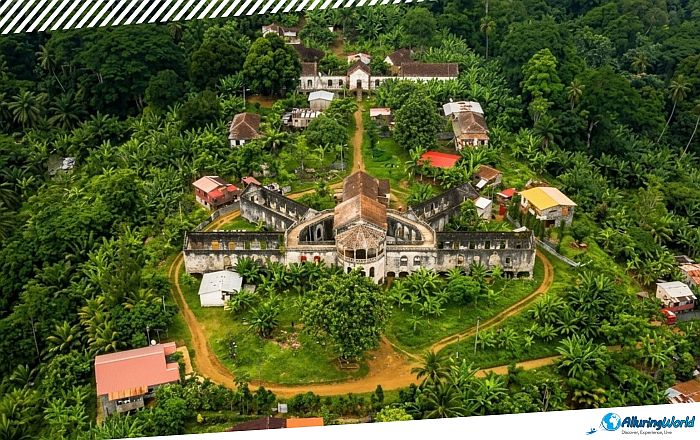
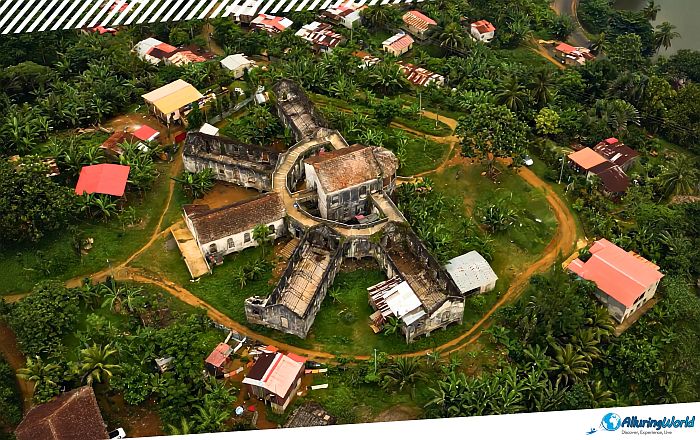
Among the most recognizable historic structures at Água-Izé are its two hospital buildings. The older hospital was constructed in 1914, but it soon proved too small for the large population of the plantation. A second hospital was therefore built in 1928, following essentially the same architectural typology. The two buildings stand one behind the other on the highest terrace of the complex and are among the most significant surviving structures at Água-Izé. Their design is particularly interesting because the hospitals were organized around a central section with several radiating wings, allowing different sections of the building to be monitored from the central area. This arrangement was influenced by hospital models used in Europe and was adapted to the plantation environment.
When you visit Água-Izé, the hospitals can be among the most visually striking parts of the complex to you because their scale makes clear that Água-Izé was once home to a very large workforce and population; however, the hospitals should also be interpreted carefully. Their existence demonstrates that plantation owners invested in medical infrastructure, but this should not obscure the coercive conditions under which much of the plantation workforce lived and worked. Healthcare formed part of the plantation system itself, which depended upon maintaining a large labor force capable of sustaining intensive agricultural production. By the early 20th century, Água-Izé had become enormous, and research on the plantation indicates that the estate extended along approximately 12 kilometers (7.5 miles) of coastline and historically covered around 80 square kilometers (31 square miles), although only part of that territory was actively cultivated or occupied by buildings. One study estimates approximately 4,800 hectares (11,861 acres) in active use at the time, including about 3,000 hectares (7,413 acres) devoted to cultivation and approximately 1,800 hectares (4,448 acres) associated with built areas and other uses.
By 1908, there were about 2,500 workers on the plantation, which was a testament to the tremendous number of people involved in its activities. Besides cocoa and coffee, the plantation also dealt with the production of palm oil and copra. The plantation also became the headquarters of the Companhia da Ilha do Príncipe, further reinforcing its importance within the commercial organization of São Tomé and Príncipe. The company took possession of Água-Izé in 1898 after an earlier period of financial difficulties and banking control. The history of Água-Izé was not an uninterrupted story of prosperity. In 1884, the plantation entered a major financial crisis and became heavily indebted to the Banco Nacional Ultramarino. In 1895, management passed to the bank, before control returned to the shareholders of the Companhia da Ilha do Príncipe in 1898. Later, the plantation became associated with the Companhia União Fabril, or CUF, one of Portugal’s major industrial and commercial groups. These changes demonstrate how the plantation economy increasingly became connected to large financial and corporate interests. Água-Izé was not merely an agricultural property; it was part of a wider commercial system involving investment, banking, international trade, and colonial administration.
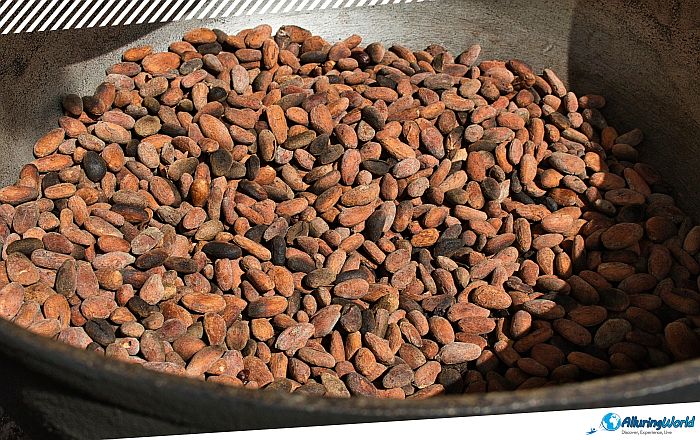
A decisive turning point came in 1975, when São Tomé and Príncipe became independent from Portugal. The then-new government started nationalizing the country’s major plantations and transformed them into state agricultural enterprises, thus making Água-Izé a state property as well. The objective was to end Portuguese colonial control over land and production and reorganize agriculture under the new independent state. However, the transition was extremely difficult, and with the departure of many experienced plantation managers and workers, together with the restructuring of the agricultural system, it contributed to declining production. Attempts were made to restore the productivity of Água-Izé and other plantations, but the enormous colonial plantation model proved difficult to reproduce under the new political and economic circumstances. The decline of production eventually left many of the enormous plantation buildings without their original purpose. Vegetation began reclaiming industrial structures, workers’ quarters and other parts of the estate.
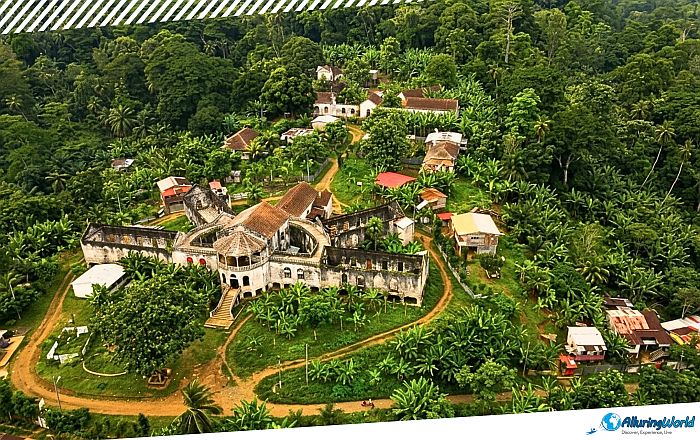
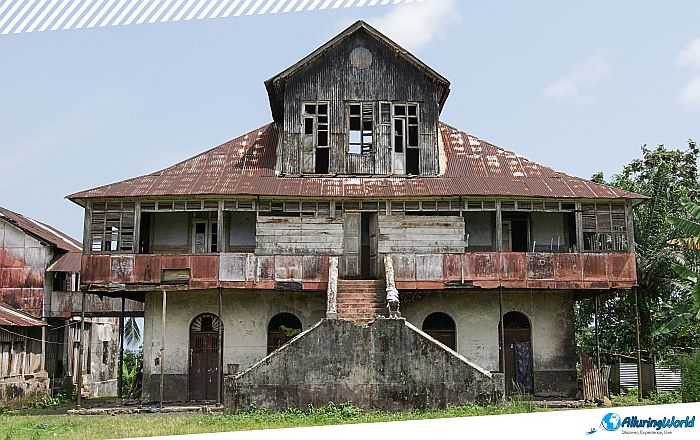
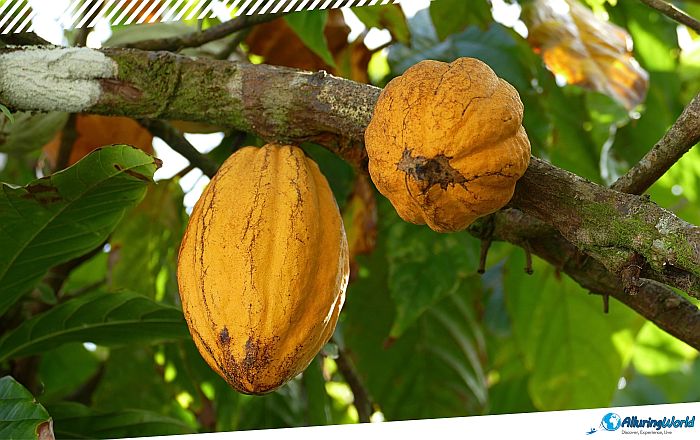
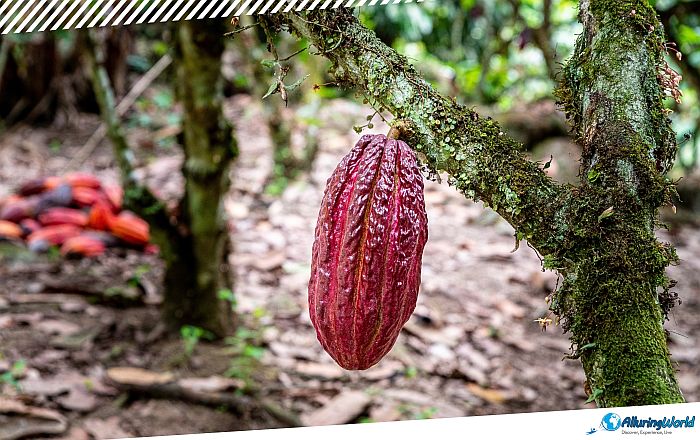
Nowadays, Água-Izé is neither simply a ruin nor a fully restored heritage attraction as some might think. In reality, it remains a landscape where people live, work and farm, while substantial historic structures survive in varying conditions. The official Revive Roças program describes the estate as one of São Tomé and Príncipe’s largest and most important agricultural complexes in the country. It emphasizes the “roça-cidade” layout, its terraces, grid-like streets, residential quarters, and the two hospital buildings. The main house is severely deteriorated, while the older and newer hospitals remain prominent features of the complex. Overall, the cocoa cultivation has also survived, and if you visit this place today, you can observe cocoa harvesting, with harvests taking place twice a year, in April and October. This continued agricultural activity is an important part of the visitor experience, although the plantation should not be approached solely as an archaeological ruin because its agricultural identity has never completely disappeared.
ADVERTISEMENT
If you want to visit Roça Água-Izé today, it is located in the Cantagalo District on the eastern side of São Tomé Island, beside Baía da Praia Rei. It is directly accessible from the national road connecting São Tomé with the south of the island, making it considerably easier to reach than some other remote plantation estates. The historic complex lies approximately 13 kilometers (8 miles) from São Tomé city. If you visit it for the first time, the best approach is to allow enough time to walk rather than simply stopping for a photograph from the road, or giving yourself less time. The complex is spread across several terraces, and its character becomes clearer as you move between the lower industrial and administrative areas, the rows of former workers’ accommodation and the higher hospital buildings.
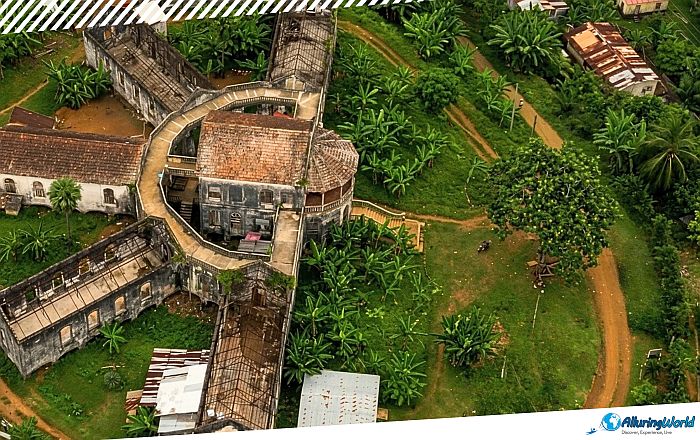
The two hospitals deserve particular attention because their architecture and scale provide some of the clearest evidence of the plantation’s former importance. The remains of the railway are also worth looking for, as are the old industrial structures, workshops and warehouses. Across the road toward the coast, the remains of the historic cocoa shipping pier help explain how the plantation was connected to the international export trade. For this reason, people should act appropriately because the village of Água-Izé still exists, unlike other museums. The buildings have decayed and become dangerous, while the interiors are not accessible. It would be better to watch them from a safe spot and ask permission to enter only those rooms where someone lives or works. If you get a guide familiar with the area, it will definitely make your visit much more interesting since there is much information that cannot be understood from the architecture alone. The site is also listed locally as a tourist attraction and open-air museum, but visitor facilities and interpretation are not comparable to a fully restored European heritage museum. This is part of its character: the visitor is encountering an evolving historical landscape rather than a reconstructed attraction.
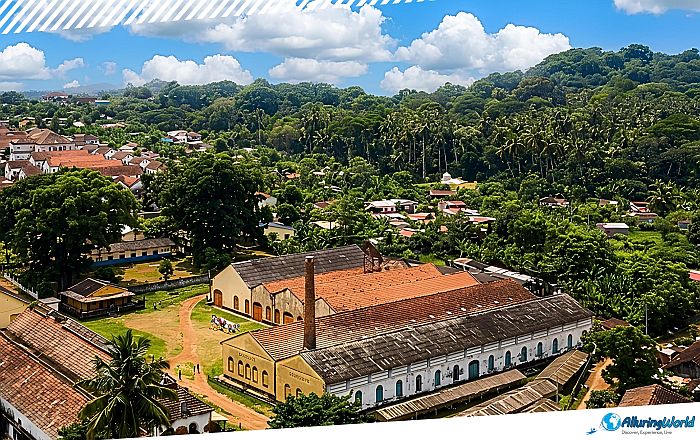
The importance of Água-Izé extends well beyond its surviving buildings. It represents the transformation of São Tomé from an agricultural colony into one of the world’s major cocoa-producing territories, the introduction of industrial technology into tropical plantation agriculture, and the enormous social consequences of that economic transformation. Its history also makes visitors realize the cost to humanity associated with the plantation economy. The wealth generated through coffee and cocoa plantations was inextricably linked to the system of slavery, forced migrations, and labor contracts based on racial discrimination. The 2026 UNESCO World Heritage designation is especially important as it acknowledges the roças as evidence of a wider system of “forced migration and labor.” While this is a historic place, at the same time, Água-Izé is part of contemporary São Tomé. People continue to inhabit parts of the former plantation, agriculture continues around the settlement, and conservation initiatives are increasingly interested in finding ways to preserve the buildings while keeping the roças connected to local communities.
In 2026, Água-Izé became part of the UNESCO World Heritage property “The Roças of São Tomé and Príncipe: Colonial Agricultural System and Forced Migration.” The serial property includes six plantation complexes: Monte Café, Água Izé, Diogo Vaz, São João, Sundy and Belo Monte, and UNESCO identifies the group as an exceptionally important representation of the planned colonial plantation system that combined agricultural production with industrial, residential and social infrastructure. The inscription gives Água-Izé a new international context rather than seeing the estate as simply a collection of decaying Portuguese colonial buildings for someone to visit. You can understand the place as part of a much larger historical system that shaped the economic, demographic and cultural development of both São Tomé and Príncipe, and for a destination such as Água-Izé, this distinction matters. Its value does not depend upon having every building restored. The surviving structures, agricultural landscape, railway traces, hospitals, workers’ quarters, and relationship with the coast together form the historical evidence.
In conclusion, Roça Água-Izé ranks as one of the most fascinating heritage sites in São Tomé and Príncipe, giving a clear picture of how agriculture was revolutionized in the country. Visiting the site allows you to have a close look at what was formerly referred to as the “plantation city” of the nineteenth century. But the real strength of touring Água-Izé comes from seeing past the structures to realize the human toll that went into the production of the cocoa boom. Classified by UNESCO as a World Heritage Site, this thriving town, which not only produces cocoa but also has historical ruins, is a crucial meeting point with history and memory.