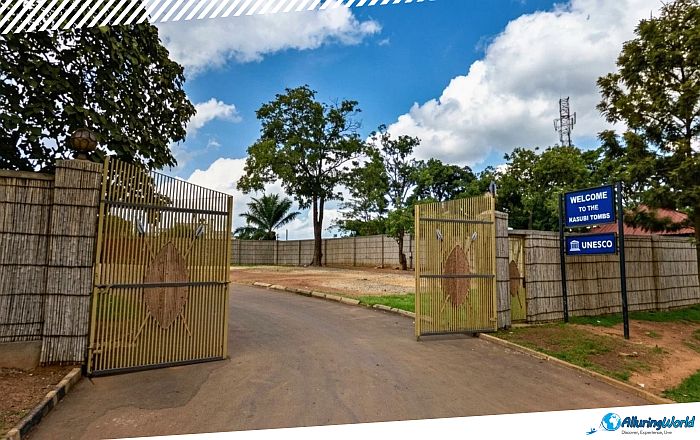
The Kasubi Tombs are sacred burial grounds for four kings of the Buganda Kingdom, a Bantu constitutionally recognized traditional kingdom, located on Kasubi Hill about 5 kilometers (3 miles) from the center of Kampala, the capital city of the Republic of Uganda. As these important grounds are situated on elevated ground above the capital’s urban sprawl, the Kasubi Tombs today represent an immense legacy, and they also serve as a testament to the rich African culture and architectural achievements of kings and their royal heritage.
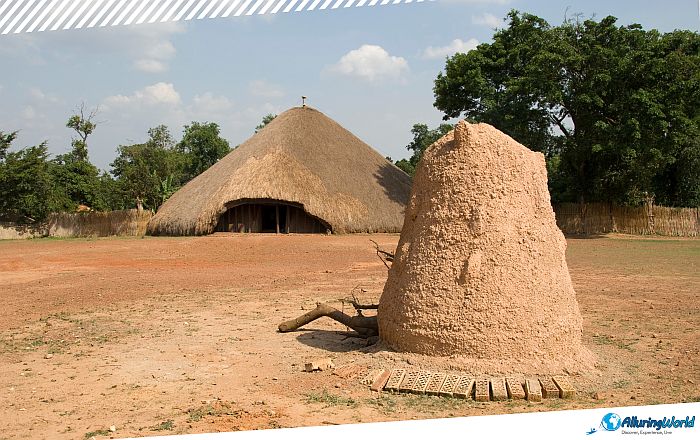
Spanning almost 30 hectares (74 acres), the Kasubi site represents a final resting place of four former kings, known as Kabakas, of the ancient Buganda Kingdom. Instead of being constructed with stone or mortar, these monuments were built from natural materials, thus creating one of the most unique examples of thatched roof architecture in the entire world. Being a UNESCO World Heritage Site since 2001, the Kasubi Tombs are an important monument to Ugandan history, and also a living center of ancient Buganda traditions that are practiced up until today in contemporary Uganda.
To be able to fully understand the true importance of Kasubi Hill, you should start by learning about the historical weight of the Kingdom of Buganda. Founded centuries ago, Buganda eventually became one of the largest and most advanced kingdoms in the eastern part of Africa, way before any European explorers stepped onto its soil. This kingdom today is located in central Uganda, and it is on the rich lands near Lake Victoria.
Despite the fact that Uganda has become an independent republic, the Buganda Kingdom still holds an important position culturally, and it is constitutionally protected in the country. The present king is the spiritual and cultural center of millions of Baganda, so within this cultural framework, the dead are not separated from the living but continue to influence and guard the prosperity of the nation. This idea is reflected in the Kasubi Tombs, which serve as a connection between historic statecraft and active spirituality.
The ground on which the tombs sit was originally chosen for royal power rather than repose. In 1882, Kabaka Mutesa I selected Kasubi Hill as the site for building his grand royal palace, succeeding his old palace in Rubaga. The tradition dictated that once the king passed away, he would be buried in his own palace; therefore, after the death of Mutesa I in 1884, Mutesa I was laid to rest in his palace. Breaking with an older tradition where a king’s jawbone was preserved separately while his body was interred elsewhere, Mutesa I requested to be buried intact inside his palace complex.
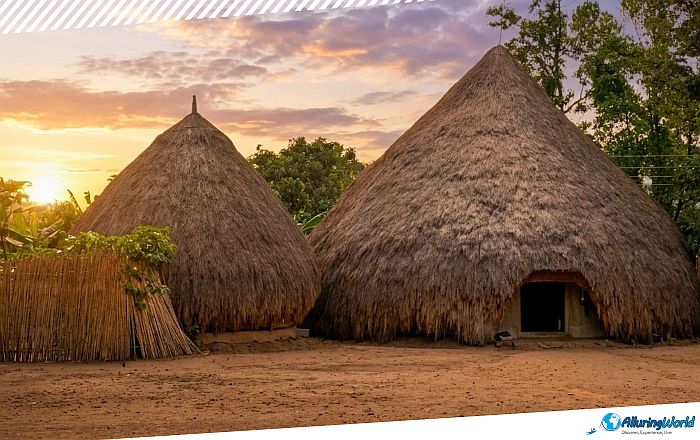
The subsequent rulers followed in the footsteps of Mutesa I, turning the erstwhile residential palace into a royal tomb complex. Four important Buganda kings lie buried in the main mausoleum today:
- Kabaka Mutesa I (1856–1884): He was the visionary monarch who first established the palace on Kasubi Hill and initiated contact with early European explorers and religious missionaries.
- Kabaka Mwanga II (1884–1897): He was the monarch who followed and ruled during a period of intense colonial pressure and religious conflict, dying in exile before his remains were returned home.
- Kabaka Daudi Chwa II (1897–1939): He was the next ruler who guided Buganda through significant administrative and social shifts during the British protectorate era.
- Kabaka Edward Mutesa II (1939–1969): He was the first President of independent Uganda, who died in exile in London before being returned to his ancestral soil in 1971.
ADVERTISEMENT
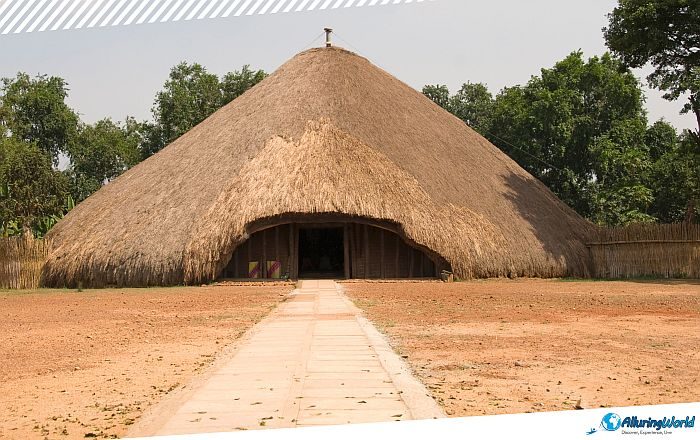
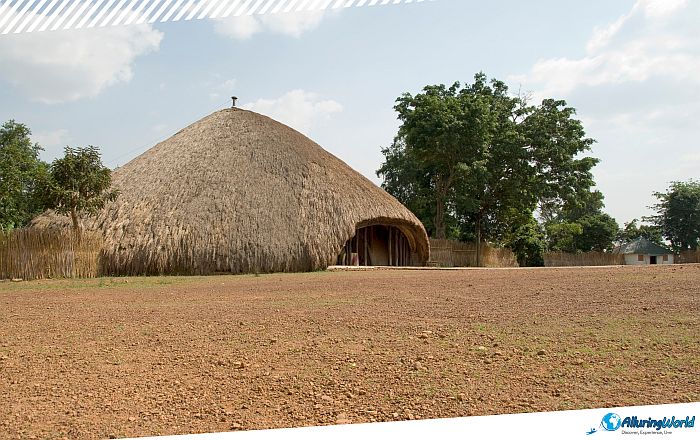
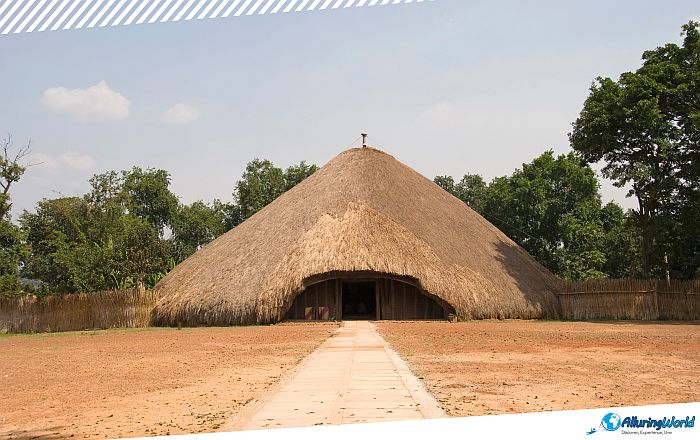
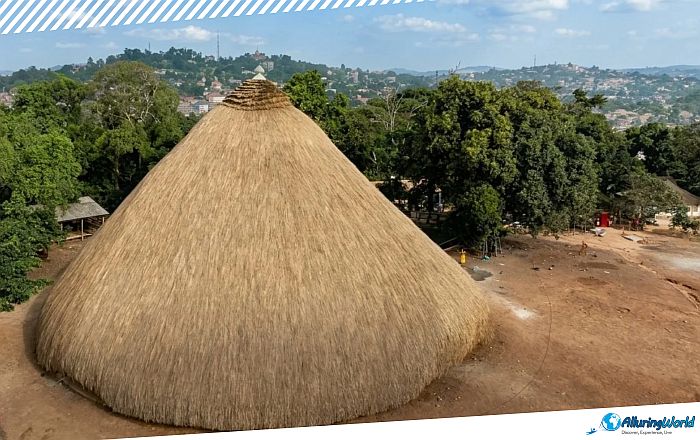
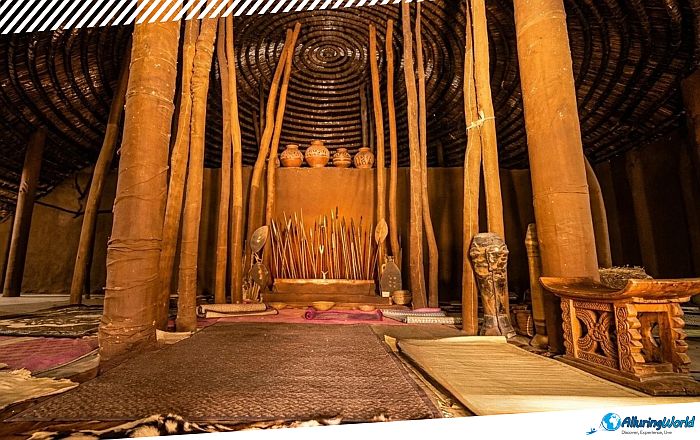
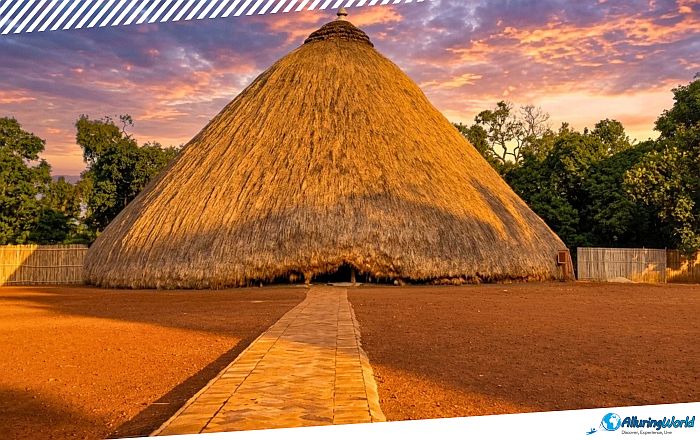
The main attraction at Kasubi is the building called Muzibu Azaala Mpanga, which in fact is a large thatched dome-shaped building situated on the hilltop, and one of the most photographed structures on the hill. It has a diameter of about 31 meters (102 feet) and a height of 7.5 meters (25 feet), thus being one of the biggest grass-thatched buildings in Africa. Construction of the whole complex was done using organic materials sourced straight from nature, such as native trees, bamboo shoots, reed poles, grass thatch, palm fronds, and traditional bark cloth. The construction method is purely based on the use of traditional carpentry and weaving methods of specific Buganda clans, but overall, there are no nails or any other industrial binding materials that have been used in the main structure, since thousands of reed poles are tied together using palm fiber cords to hold up the huge roof.
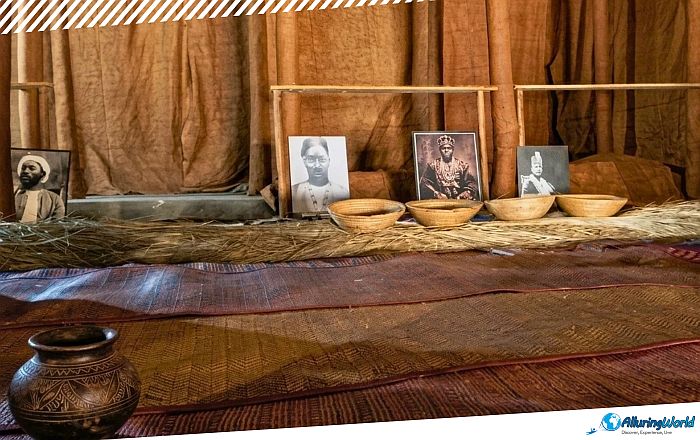
Within Muzibu Azaala Mpanga, decorative screens made of reeds serve as separators between the reception rooms and the Olugyo, which is the inner sanctum containing the royal burials. There are fifty-two rings inside this building that hold up the roof structure, each ring representing one of the fifty-two clans of Buganda. The bark cloth, derived from the native mutuba tree (Ficus natalensis), is beaten using wooden hammers to form rust-colored sheets of fabric.
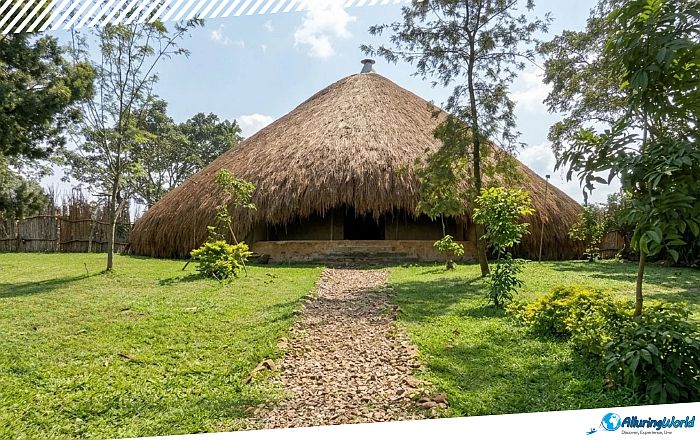
Even though the site remained untouched for more than a century, its resilience was to be tested to the limit when fire engulfed Kasubi Hill. As a matter of fact, tragedy ensued on 16 March 2010 when a fire broke out in the main building. The thatched roof of Muzibu Azaala Mpanga was consumed by flames in a matter of hours and caused great sorrow for the people of Uganda and heritage conservationists around the world. While many of the royal items were destroyed, the subterranean tomb chambers housing the Kabakas’ remains remained safe under the debris.
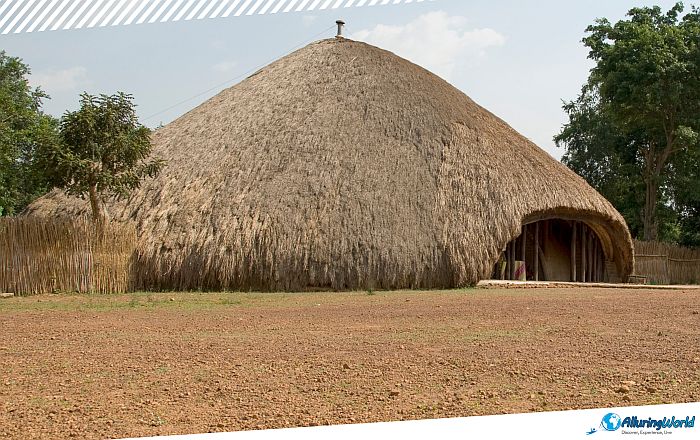
Following the fire, a restoration program was undertaken by the Buganda Kingdom, the Ugandan government, and UNESCO, in which the rebuilding was done in a well-planned manner. The restoration was done without the use of any modern material but only through the use of authentic methods, in the same way as the original structure was constructed. The master craftsmen from the clans were called upon to restore the mausoleum, one pole at a time and one thatch at a time. This process of restoration turned out to be very important because it ensured that the old architectural techniques were passed down to the next generation.
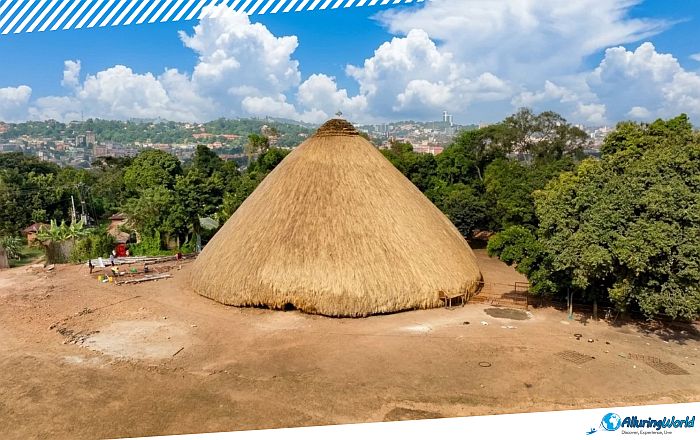
Since the Kasubi Tombs are located approximately 5 kilometers (3 miles) northwest of Kampala’s central business district, they make an exceptional half-day excursion that you should consider taking while you’re visiting this country in Africa. Because Kasubi is an active place of worship and royal tradition, you are expected to maintain respectful behavior at all times:
- Remove footwear before stepping onto the bark cloth mats inside the main building entrance.
- Dress modestly out of respect for local customs, keeping shoulders and knees covered.
- Always ask your official site guide for permission before taking photos, especially near sacred ceremonial grounds.
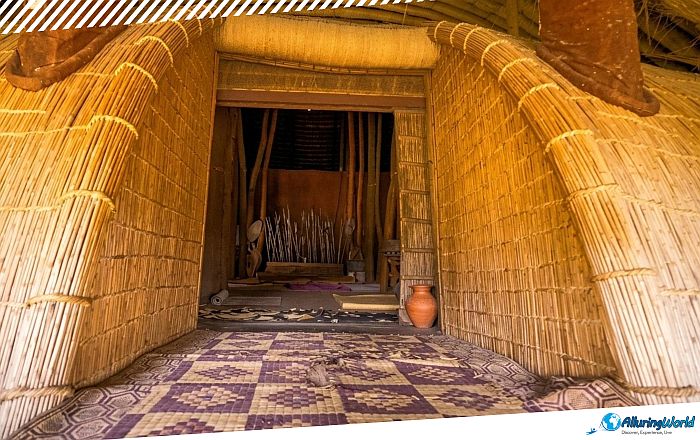
The guided tour is conducted by local cultural guides who provide information about the history of the monarchy of Buganda and its architectural significance, and visitors are introduced to royal custodians living on the site. Since Kampala enjoys a warm tropical climate year-round, the temperatures are usually between 20°C and 28°C (68°F and 82°F). You should plan your visit accordingly, and it is recommended that you do it during the dry season, which is typically the most comfortable if you want to walk across the open hilltop. The details you should be aware of are:
- Dry Seasons: These run between the months of December to February, and June to August.
- Operating Hours: The site is generally open daily from 08:30 to 17:00.
When you arrive around 09:00 in the morning, you are able to explore the grounds in cooler temperatures before the midday warmth, thus offering a quiet, immersive window into the living heritage of Buganda, an experience that you will never forget and will cherish from your Ugandan adventure.
To conclude, the Kasubi Tombs are not just another monument that is recorded in the history books, but they are actually the very essence of Buganda culture that stands strong despite the silent passage of time and destruction caused by the earlier fire. The Kasubi Hill, with its serene breezes and tranquil ambiance, is a place where you get to see the perfect amalgamation of ancient craftsmanship, royal legacy, and lively spirituality thriving together harmoniously amidst the hustle and bustle of the Ugandan capital city. Despite the noise of Kampala fading away into the background, it is actually the profound silence of this thatched structure that echoes in the mind of the visitor.