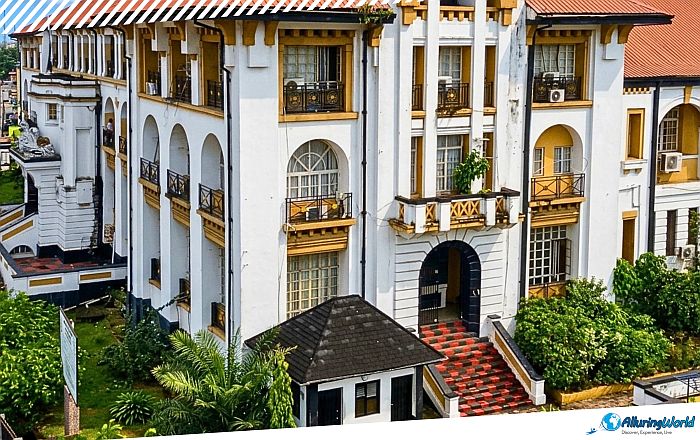
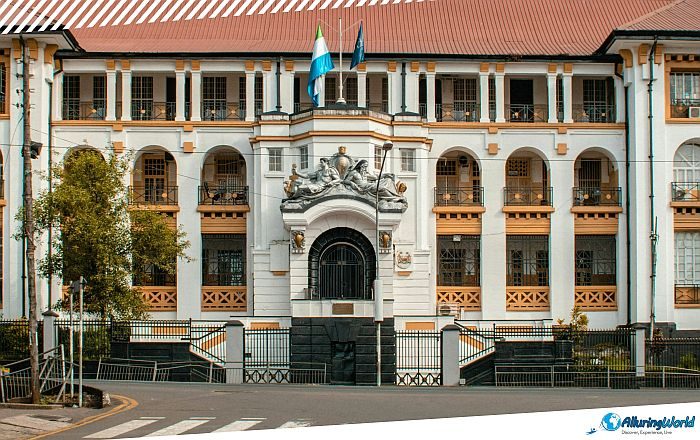
The Supreme Court Building, commonly referred to as the Law Court Building, is a historic building serving as the official seat that houses the Supreme Court of Sierra Leone, the highest court in the country, located in the central business district of downtown Freetown, the capital of the Republic of Sierra Leone. Standing along Lamina Sankoh Street, the Supreme Court Building is an imposing testament to the West African nation’s legal journey, political evolution, and architectural heritage. Situated near the historic site of the famous Cotton Tree in Freetown’s central civic square, this historic edifice serves as both the physical seat of the highest judicial authority in the land and an enduring symbol of constitutional democracy. Although tourists are attracted to Sierra Leone because of its beautiful beaches of the Freetown Peninsula, its dense forests in the interior, and its exciting creole culture, the capital city of Sierra Leone still has its own interesting story to tell through the Supreme Court. It is here that you can learn about the resilience of the institution, colonial architecture, and social and political changes in West Africa.
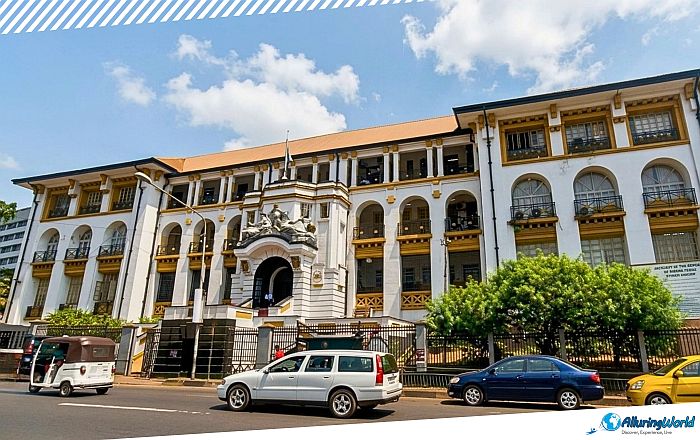
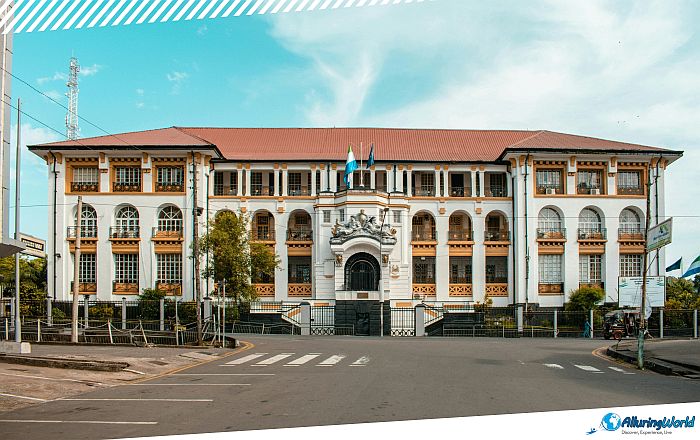
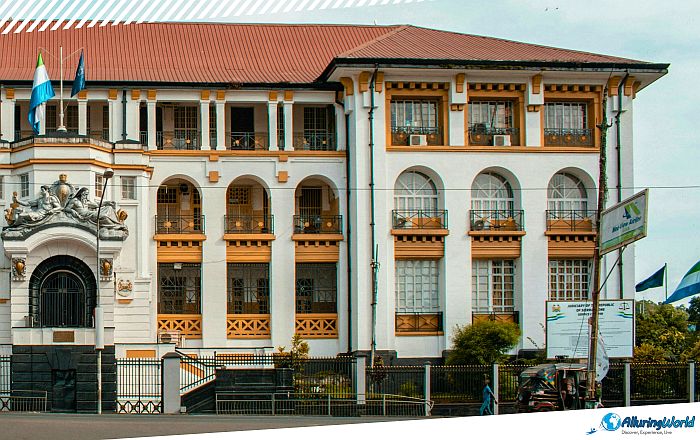
The architecture of the Supreme Court Building represents one of the best architectural structures built in the early 20th century during the period when Britain colonized West Africa. Built during the period of British colonial administration in what was formerly known as the Sierra Leone Colony, the building was meant to signify the permanence and seriousness of the law. Constructed mostly out of local stone and masonry, the façade boasts an impressive classical elevation that is defined by its clean symmetry, ashlar stonework, and large sash windows meant to allow as much sunlight and fresh air into the building as possible given the tropical climate of Freetown. The main entrance of the building is made up of a beautiful portico upheld by classical columns, thus giving it a unique and interesting style when compared to other structures in the capital.
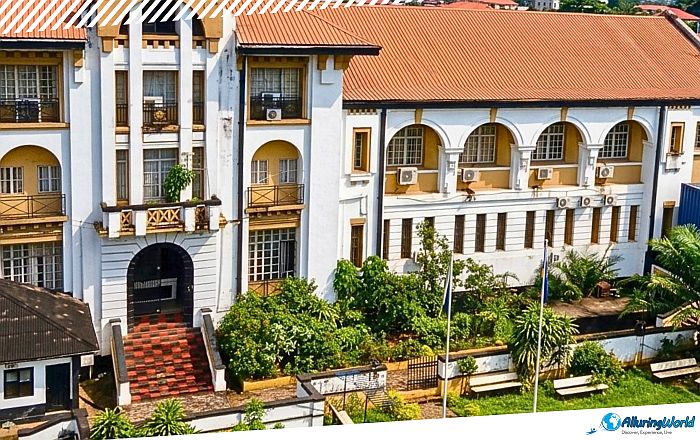
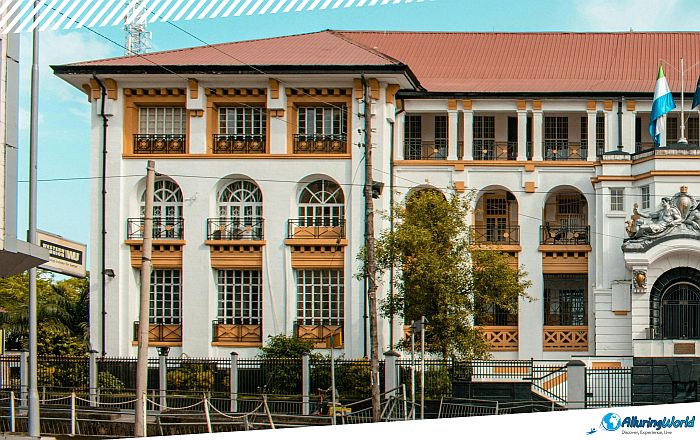
The Supreme Court Building stands as one of West Africa’s most distinguished examples of Edwardian Baroque institutional architecture. The building was commissioned during the British colonial period, and its foundation stone was laid in 1910 by Prince Arthur, Duke of Connaught. This was a historic milestone that is still recorded on an engraved commemorative plaque, which is visible near the entrance of the Supreme Court Building. Built from cream-colored local stone and heavy masonry, the symmetrical exterior features rhythmic open-arched verandas, deep-set sash windows, and heavy cornices designed specifically to provide shade and optimize cross-ventilation in Freetown’s tropical heat. Massive dark timber entrance doors set past perimeter iron gates create a striking contrast with the pale stonework. Inside, wide stone corridors and grand staircases muffle street noise and lead into soaring court chambers outfitted with rich dark-wood paneling, elevated judicial benches, and traditional gallery seating.
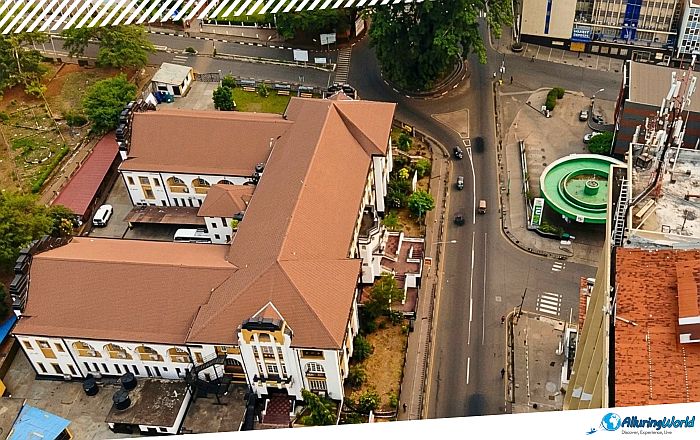
Within the building, the courtrooms keep their sense of history intact, but feature high ceilings, dark wood paneling, a raised judge’s bench, and classic gallery seating, which provide an air of reverent silence. Through the years, careful preservation has been conducted with the intention of preserving the structure and historical nature of the building while incorporating necessary security measures. The key architectural highlights that should be mentioned are:
- Neoclassical Exterior: A commanding stone façade featuring symmetrical porticoes, ashlar masonry, and elevated grand entrance steps.
- Period Interior Detail: High-ceilinged main chambers outfitted with original polished West African timber benches and a judicial dais.
- Civic Placement: Positioned prominently within Freetown’s historic administrative precinct to anchor the city’s civic core.
The full significance behind the Supreme Court Building can be comprehended when you take into account the particular history of Freetown itself. The city was founded in 1792 as a place of asylum for formerly enslaved people, comprising such groups as Black Loyalists from the American Revolutionary War, Jamaican Maroons, and people who were saved from illegal slaving ships by the West Africa Squadron of the Royal Navy. These varied people formed the Krio (Creole) people, who placed an extraordinarily high value on education, legal training, and jurisprudence. Because of this, Freetown gained a reputation as an intellectual center in West Africa during the 19th and early 20th centuries. For example, Fourah Bay College, which was established in 1827, was the first Western-style university in Sub-Saharan Africa, and trained successive generations of lawyers, magistrates, and barristers who practiced law in all of British West Africa, from Gambia to Nigeria.
ADVERTISEMENT
Sierra Leone gained independence on 27 April 1961, but remained a Commonwealth realm until it officially became a republic on 19 April 1971, something that was inevitable on the continent of Africa. The legal system contained within the Supreme Court Building transformed into a dual one, consisting of an official legal system based on common law and constitutional law together with customary law. The Supreme Court emerged as the custodian of this legal system, thus guaranteeing the protection of the constitutional rights of all citizens of the newly formed republic.
In its capacity as the court of last resort and supreme judicial body under the 1991 Constitution of Sierra Leone, the Supreme Court is endowed with remarkable judicial power. The tribunal consists of the Chief Justice and other Supreme Court Justices who are responsible for the exercise of three main jurisdictions:
- First, the court has exclusive constitutional jurisdiction because it is the only interpreter of the Constitution and has the authority to declare any act of Parliament or executive decision unconstitutional if it infringes on basic human rights.
- Secondly, the court has appellate jurisdiction, which means that it hears the last appeal from the Court of Appeal and the High Court of Justice in matters of civil, criminal, and administrative law.
- Lastly, the court has original and supervisory jurisdiction over Sierra Leone.
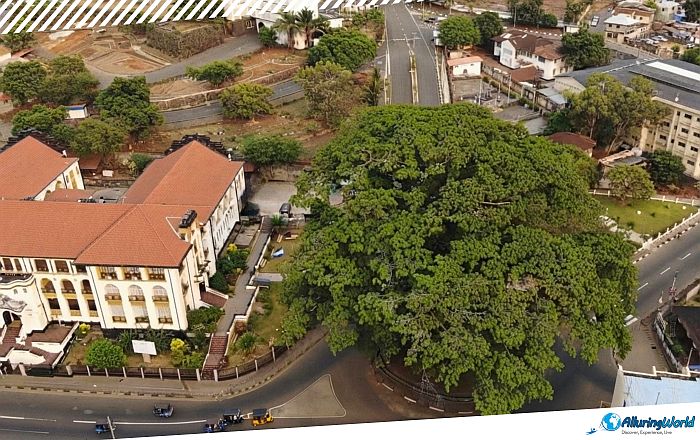
During times of political transition, economic difficulty, and rebuilding of the nation, especially after the civil war from 1991 to 2002, the Supreme Court has been an important pillar in ensuring institutional accountability, protecting human rights, and maintaining the peaceful resolution of political conflicts. As you journey to Freetown, you will find that visiting the legal district is an exciting cultural experience in Freetown’s city center. The Law Court Building can be found within walking distance of some of Sierra Leone’s key historical landmarks. Directly across the street lies the historic site of the famous Cotton Tree, the revered location where formerly enslaved people met in 1792 to sing hymns of thanksgiving upon arrival. A short distance from here, on Siaka Stevens Street, is the National Museum of Sierra Leone, located in the historic former cotton tree railway station.
This museum features interesting exhibitions on tribal artifacts, colonial-era history, and masquerade costumes. If you are among the lucky people who visit Sierra Leone and can see this architectural masterpiece in person, then consider the essential visitor and etiquette tips:
- Exterior Photography: Photography of active government buildings and judicial courts is strictly regulated in Sierra Leone. Always ask for permission from security personnel before taking photos of the façade, and especially you must avoid photographing security checkpoints.
- Attire & Conduct: If attending a public legal session or entering the administrative grounds, you must always dress formally and respectfully in business attire or conservative clothing. Even though it is quite warm in Freetown, this is a public administration building, so respectable dressing is mandatory. Inside courtrooms, maintain silence and observe standard court decorum.
- Best Time to Explore: The optimal period to explore downtown Freetown on foot is during the dry season, between November and April, when clear weather makes walking tours comfortable.
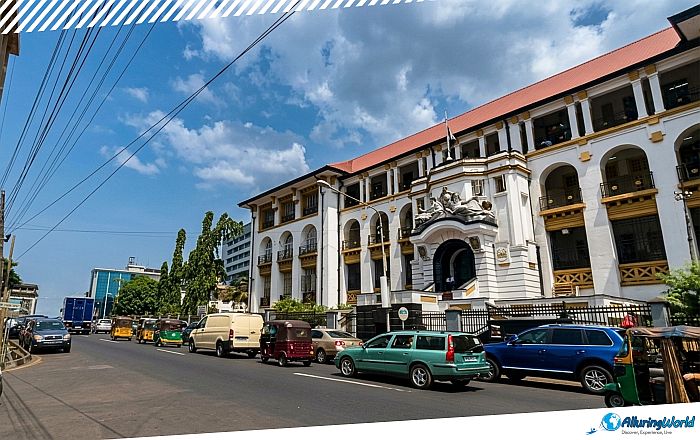
In summary, whenever you are visiting the Supreme Court Building, you are presented with an amazing opportunity to have a glimpse at the soul of a country that has been constantly reinventing itself through resilience and belief in the rule of law. Around the court building, there are vendors selling fresh tropical fruits and roasted groundnuts; historic Krio board-houses with carved wooden fretwork balconies occupy the streets around it, while lawyers dressed in traditional robes walk determinedly between chambers. The Supreme Court Building is the place where the colonial past of West Africa, its postcolonial history, and contemporary life meet, thus giving you the opportunity to see something from the former British colonial rule, while the building still serves its purpose as the seat of the highest court in the country. Overall, touring the legal quarter of Freetown is sure to make your West African trip more than just sightseeing.