

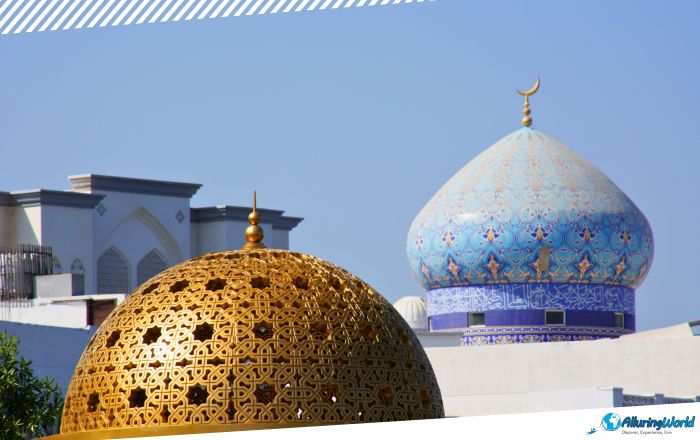
The Al-Rasool Al-Adham Mosque, referred to as Al-Lawatiya Mosque as well, is a very prominent mosque that is considered one of the big landmarks, situated on the bustling Mutrah Corniche in the city of Muscat, the capital of the Sultanate of Oman. As the mosque is considered to be one of the most significant and well-known areas in Muscat, it can sometimes be referred to as the Mutrah Shia Mosque due to its location, and it stands out from its surroundings due to its intricate and colorful blue tilework and detailed craftsmanship.
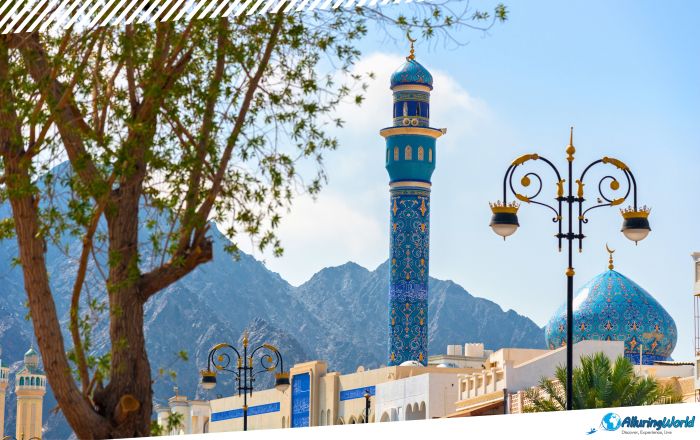
Since it serves as a significant religious and cultural site, the mosque is blending traditional Omani architectural elements with detailed and modern Islamic design, and the unique structure and distinctive blue mosaics have made it a recognizable feature of the Mutrah Corniche, reflecting Oman’s commitment to preserving its Islamic heritage while creating a space that is both a place of worship and a cultural landmark.
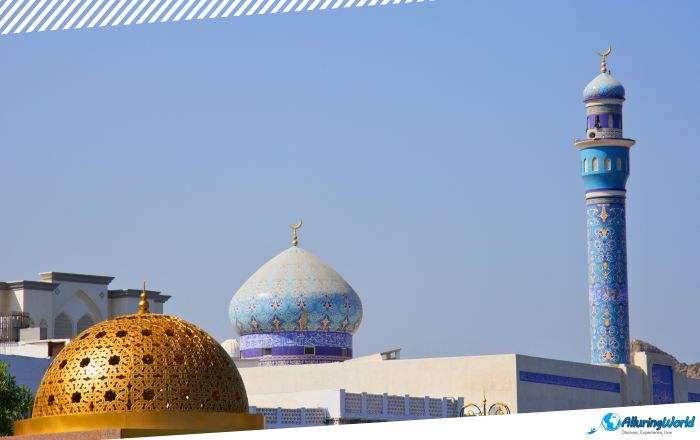
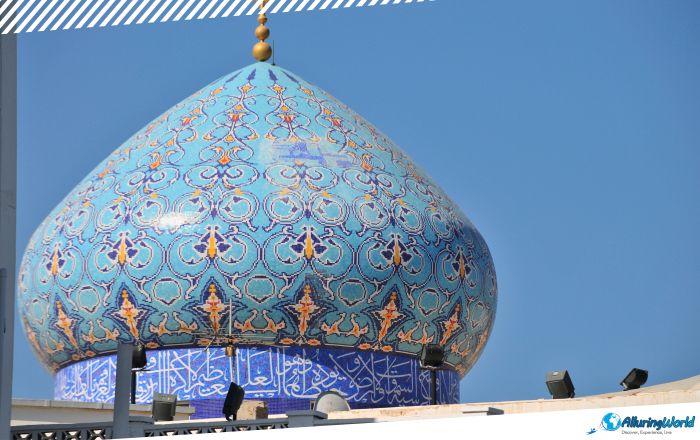
The mosque’s architecture is a testament to the blend of spirituality and artistry, and the design features a large central dome and slender minarets that are beautifully adorned with intricate blue mosaics and tiles. These mosaics are very colorful but also decorative, and they display verses from the Quran and complex geometric patterns, which are central to Islamic art. This striking use of color and detail sets the Al-Rasool Al-Adham Mosque apart from other mosques in the region and makes it a focal point of the Mutrah harbor.
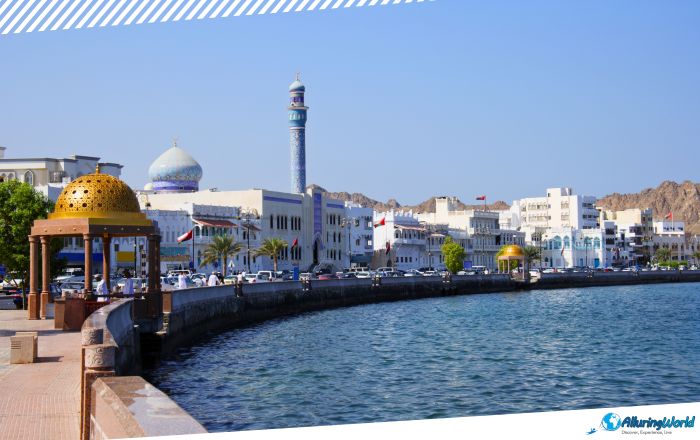
Even though the exact construction date is not definitively documented, where some sources mention that there has been a structure in its location in the 15th century, the mosque is still considered to be one of the older religious structures in the area and has been a central place of worship for the local community for centuries.
ADVERTISEMENT
The interior of the mosque is equally impressive as the exterior, with a main prayer hall that is a masterpiece of Islamic art. The hall is an ample, peaceful space with a beautifully ornate mihrab, which is the niche that indicates the direction of Mecca. The walls are richly decorated with intricate calligraphy and arabesque motifs, reinforcing the spiritual experience for worshippers. The use of fine materials, such as imported marble for the flooring and carved wood accents, adds to the overall elegance that the mosque presents.

There are hand-crafted chandeliers that illuminate the space, and they create an atmosphere that is both grand and tranquil. The hall is capable of accommodating a large number of worshippers, especially during Friday prayers and Islamic festivals.
As a cultural landmark, the Al-Rasool Al-Adham Mosque is easily accessible and a popular destination for both locals and tourists. It is located directly within the city of Muscat, in one of the most visited and popular sites of the city. Visitors, excluding non-Muslims, are welcome to visit during designated hours outside of prayer times, and witness the grandeur inside as it is on the outside. It is a crucially important to dress modestly, with women required to cover their heads and shoulders and men expected to wear long trousers, since this is a sign of respect for this sacred space.

In conclusion, the mosque’s importance today lies in its role as both a religious and cultural institution. For the local community, it is a central place of prayer, education, and social gatherings, fostering unity and spiritual reflection. For visitors, it offers a meaningful glimpse into the richness of Islamic architecture and Omani traditions, helping to build appreciation and respect for the country’s cultural identity.
It also contributes to the growing appeal of cultural tourism in Oman, as travelers seek more authentic experiences. The serene environment and architectural beauty of the Al-Lawatiya Mosque make it a highlight for those exploring Muscat and its surroundings. Its design and function embody the beautiful blend of centuries-old practices with the needs of the present day, serving as a powerful symbol of faith and heritage.