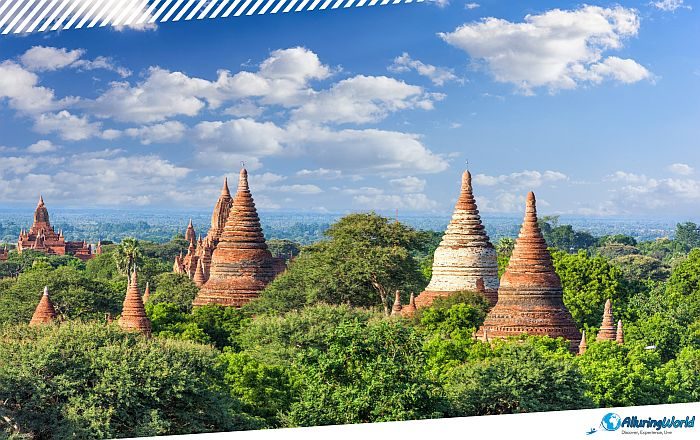
Bagan, sometimes referred to as Old Bagan, is an ancient medieval city that served as the capital city of the Pagan Kingdom, located nowadays in the western part of the central plains of the Mandalay Region, within the central part of the Republic of the Union of Myanmar. As this amazing site stretches across a vast, sun-baked plain along the eastern bank of the Irrawaddy River, it is considered to be one of the most remarkable archaeological landscapes in human history.
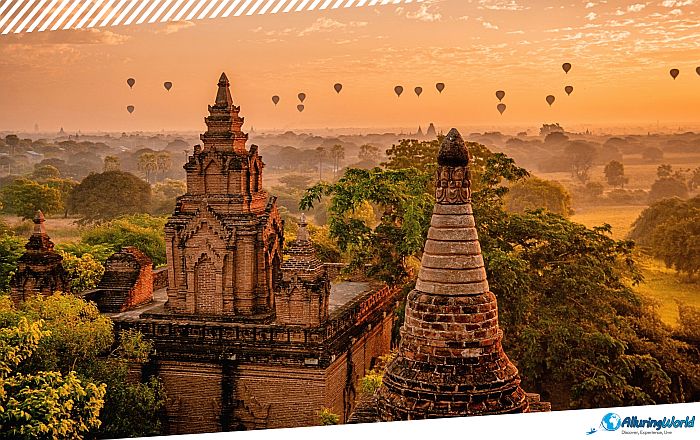
As the powerful Pagan Kingdom was the first unified Burmese state, lasting from 849 to 1297 CE in present-day Myanmar (Burma), this sacred plain in central Myanmar contains the world’s highest concentration of Buddhist temples, pagodas, stupas, and monasteries. Rising dramatically above agricultural fields and palm groves, thousands of reddish-brick spires create a silhouette unlike anything else in Asia. Recognized as a UNESCO World Heritage Site in 2019, Bagan is not merely an open-air museum; it remains a living testament to spiritual devotion, medieval engineering, and the enduring soul of Burmese culture.
The Bagan Archaeological Zone occupies about 104 sq km (40 sq mi) in the dry zone of the Mandalay Region. The city is located about 290 kilometers (180 miles) southwest of Mandalay and 700 kilometers (435 miles) north of Yangon, the largest city and economic hub of this Southeast Asian nation, and it has an altitude of 120 meters (394 feet). The region is divided into three main hubs, each serving a distinct purpose for travelers:
- Nyaung-U: The bustling commercial center, which is today located in the northeast, and is home to the main transport hubs, vibrant local markets, and traditional riverside life.
- Old Bagan: The historical heart of the kingdom, positioned within the bend of the Irrawaddy River, where many of the grandest royal monuments and preserved brick walls are found.
- New Bagan: Established in the 1990s to the south of the archaeological site, offering modern accommodations, artisan lacquerware workshops, and easy access to the quieter southern plains.
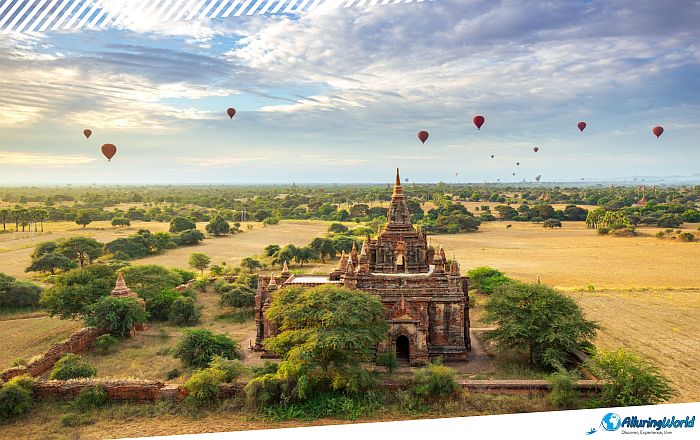
Framed by the meandering Irrawaddy River to the north and west and distant mist-shrouded hills to the east, the flat topography allows for panoramic views where ancient brick structures stretch as far as the eye can see. It is said that no matter where you are in Old Bagan, you are in the vicinity of a temple that is hundreds of years old, while the newly built surroundings will offer you an amazing vista of the never-ending temples.
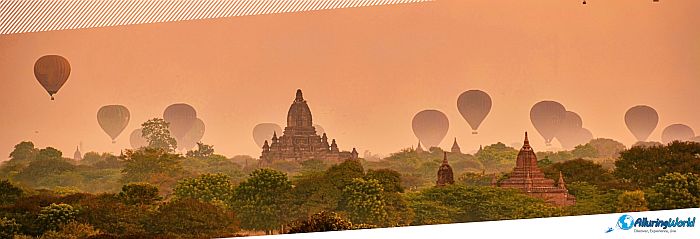
Bagan’s history starts during the medieval period, when farmers started to settle on the banks of the Irrawaddy River. The river was very important because it was an irrigation source, facilitated trade, and acted as a route linking central Myanmar to the Bay of Bengal. By the 9th century, these farming villages that were located alongside the river in the end turned out to form the Pagan Kingdom, which proved to be a great force in the region at that time.
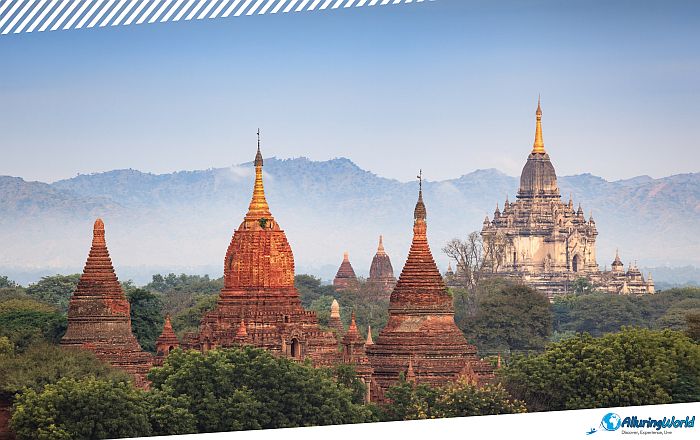
The course of the kingdom altered forever during the reign of King Anawrahta (1044 – 1077). Upon converting to Theravada Buddhism, he proclaimed the religion as the official one of the kingdom and initiated a monumental building campaign. Monks, scholars, artists, and architects flocked to the kingdom, thus making Bagan into the international center of the Theravada religion, where people heard about it and came from Sri Lanka and India and beyond. Over the next two centuries, successive monarchs and wealthy patrons continued the construction of Buddhist temples, as each competed to build ever grander religious structures in Bagan. This almost never-ending construction was viewed as an act of spiritual merit (kuso) which intended to secure a favorable rebirth and demonstrate political legitimacy. Across the plain, and between the 11th and 13th centuries, there have been more than 10,000 religious structures that have been built in Bagan.
ADVERTISEMENT
Because of internal political turmoil and constant invasions by the Mongol army of Kublai Khan, the golden period of Bagan ended in the late 13th century. Even though there was less royal support and the capital was moved from its location, Bagan was never really deserted, and there were still people who remained in this spiritual place. The local villagers and dedicated monks took care of the shrines for generations to come, which we can see as a proof even nowadays, as there are countless religious sites.
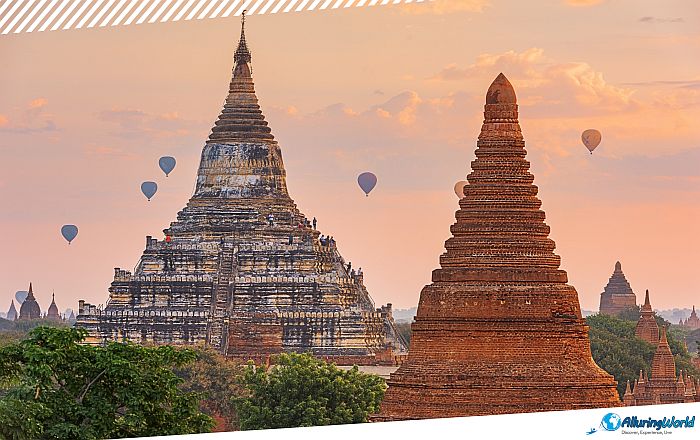
Overall, the architectural development of Bagan is a result of the fusion of many types of Indian, Sri Lankan, Mon, and Burmese styles. The early buildings were very small and had small windows that allowed the buildings to stay cool, but the temples that were built later have high vaulted roofs and complex corridors and terraces, thus making them more grandiose than the initial structures. There are more than 2,000 buildings that feature advanced brick masonry with a minimum use of mud-based mortar.
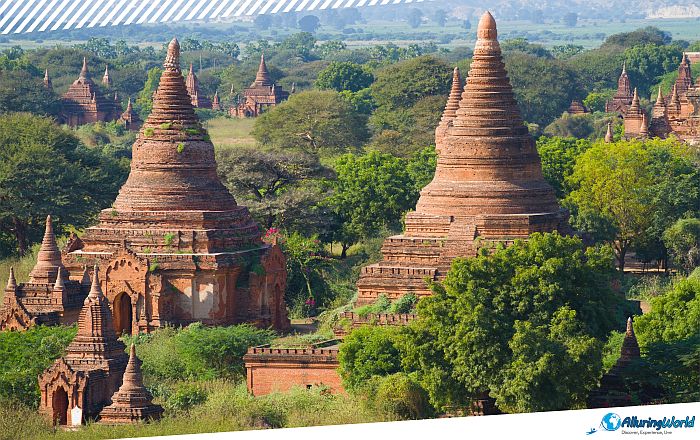
Among the many temples that should be mentioned in this very precious place, we can include:
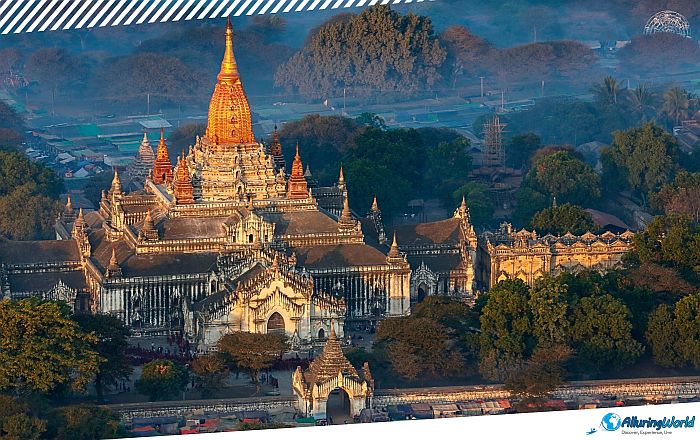
- Ananda Temple: Built around 1105 during the reign of King Kyanzittha, Ananda Temple is widely considered the masterpiece of Bagan architecture. Sometimes referred to as the “Westminster Abbey of Burma,” its cruciform layout features four soaring standing Buddha statues, each 9.5 meters (31 feet) tall, facing the four cardinal directions. The architectural design creates a natural lighting effect where light streams from hidden high windows directly onto the golden faces of the statues.
- Dhammayangyi Temple: This is the largest of all structures in Bagan, as it was commissioned in the late 12th century by King Narathu. The temple is famous for its massive footprint and exceptionally tight brickwork, which is so precise that a needle cannot pass between the bricks. Nowadays, this magnificent and very important temple carries an ominous history because its construction had to cease abruptly following the king’s assassination, leaving the inner corridors bricked up and shrouded in mystery.
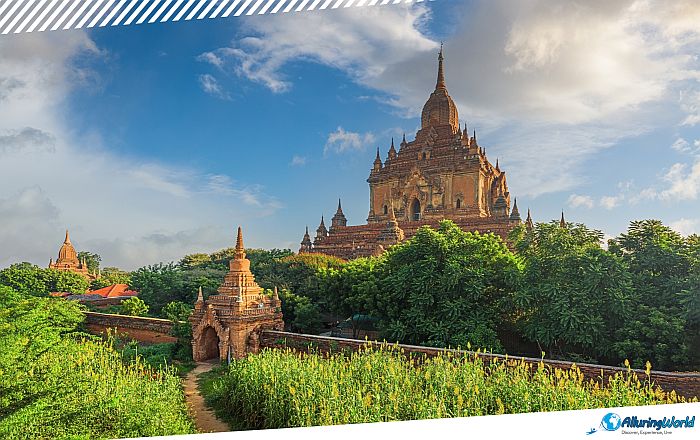
- Thatbyinnyu Temple: Rising to over 61 meters (200 feet), Thatbyinnyu is the tallest monument to be seen in Bagan. Built by King Alaungsithu in the mid-12th century, its towering white-plastered façade and multi-tiered terraces dominate the skyline, symbolizing the omniscience of the Buddha.
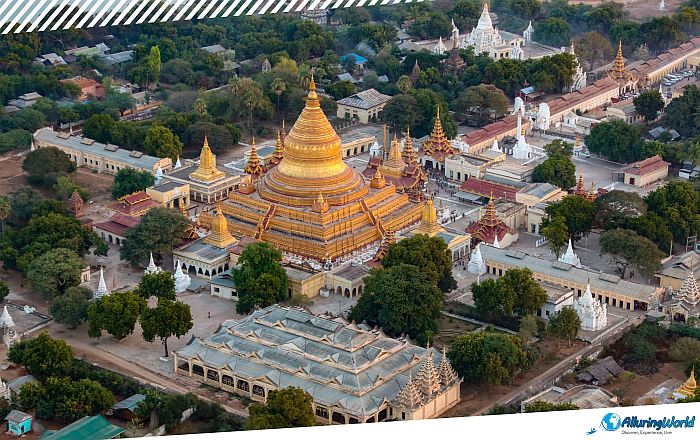
- Shwezigon Pagoda: Located near Nyaung-U, Shwezigon Pagoda served as the prototype for the Burmese pagodas that we are familiar with nowadays. Its construction was initiated by King Anawrahta and completed by King Kyanzittha, so its massive golden stupa holds sacred relics and remains a central site of local pilgrimage and festival life.
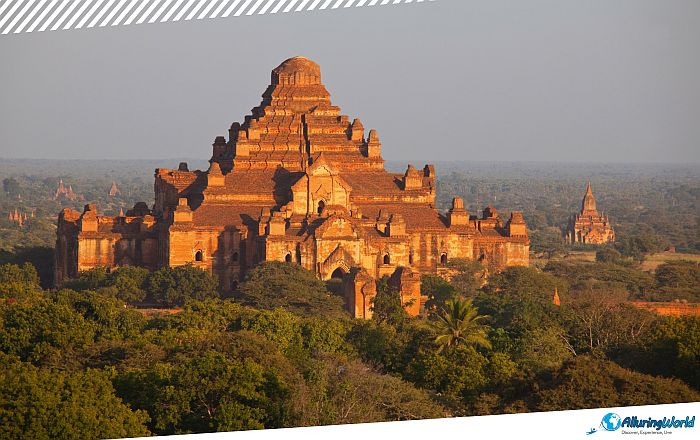
Unlike the lush, tropical rainforests of lower Myanmar, Bagan sits in a different location within the country, and it is positioned within the central dry zone of Myanmar. The area experiences distinct seasonal variations that can be summarized as:
- Cool & Dry Season (November to February): The temperatures during these months are generally between 20°C and 30°C (68°F and 86°F). This is considered to be the best period if you want to visit Bagan because weather conditions are comfortable and rainfall is minimal.
- Hot Season (March to May): The temperatures during these months rise significantly, and they often reach between 35°C and 40°C (95°F and 104°F) with dusty conditions and intense afternoon heat. This is not the best season to visit Bagan because it marks the peak of the hot season.
- Rainy Season (June to October): This season is not always the preferred one by visitors since it brings higher humidity, greener landscapes, and occasional heavy afternoon showers. With fewer crowds and lower prices when compared to the cool & dry season, this is an alternative for budget-savvy travelers who would like to visit Bagan but want to skip the famous hot air balloon ride.
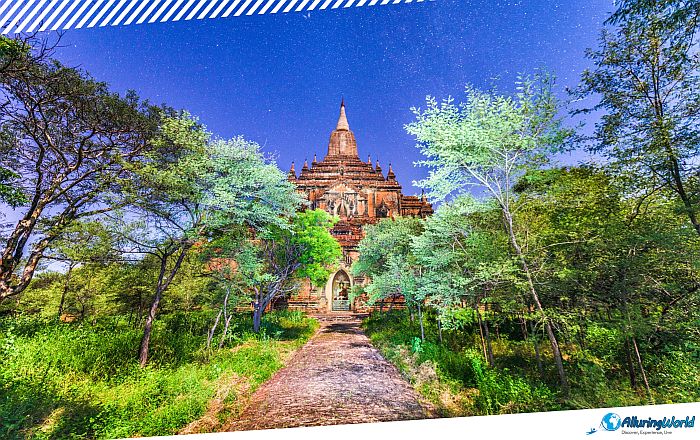
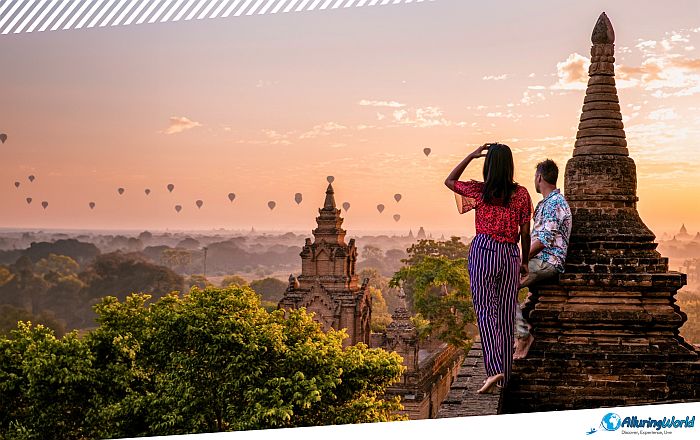
Overall, it is always recommended that you visit Bagan between November and February since the climatic conditions are conducive to touring the plains, and during this time of year, early morning mist can be seen rising on the plains, making wonderful photographic opportunities as sunlight strikes the top of the temples.
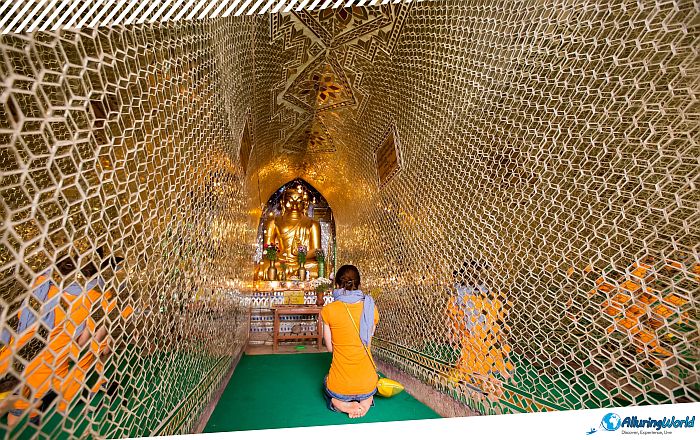
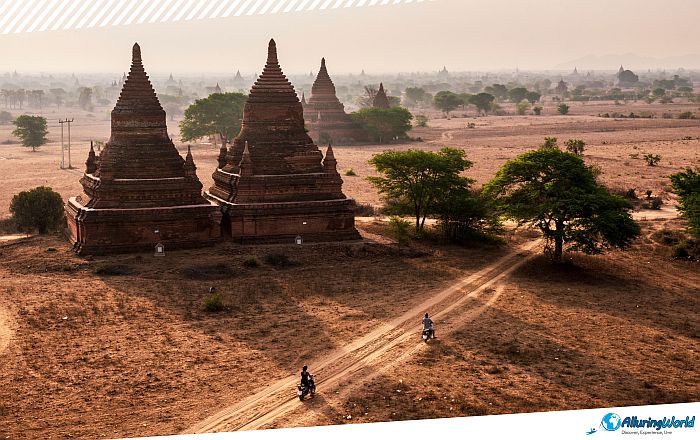
Moving around in such a large archaeological area is no easy task. One method to do this without making any unnecessary noise includes the use of silent and low-impact e-bikes that can move tourists through the narrow dirt trails connecting all the concealed monuments without creating any disturbance. Daily schedules generally follow natural rhythms to avoid the midday heat, and they can be organized as such:
- 05:30 – 08:00: Early sunrise viewing, mist photography, and cooler riding conditions.
- 11:30 – 15:30: Midday rest period, museum visits, and shaded exploration to avoid peak temperatures.
- 16:30 – 18:30: Golden hour exploration and sunset viewing across the elevated plains.
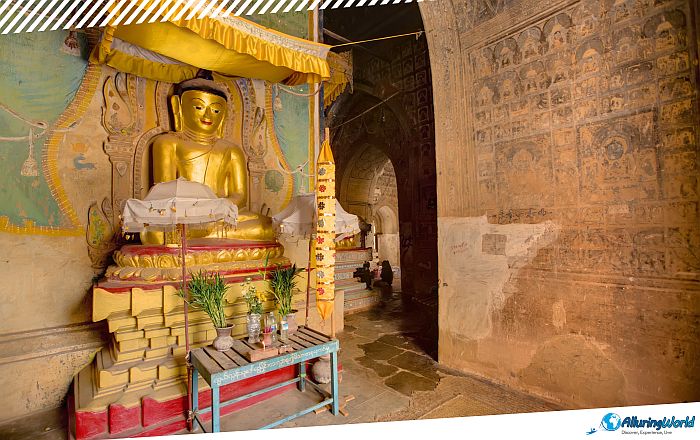
In order to maintain the structural integrity of the religious buildings and avoid any physical deterioration, climbing onto the ancient temples is strictly forbidden throughout the site. Ground-level viewing platforms, earth mounds, and viewing towers have been provided for higher vantage points over the landscape, so you should stick to these spots to make sure that Bagan will be protected for future generations to admire the once-mighty Pagan Kingdom.
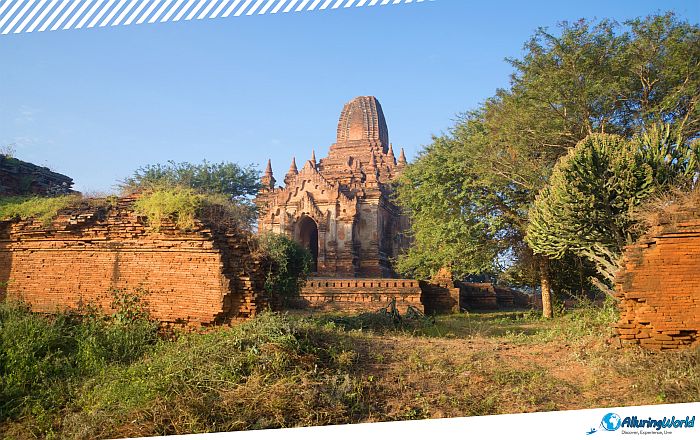
While Myanmar is hot and humid, there is still a crucial cultural etiquette you must adhere to when visiting sacred and religious places:
- Modest Attire: Knees and shoulders must be covered when entering any temple ground or pagoda precinct.
- Footwear: Shoes and socks must be removed completely before stepping onto any religious structure’s grounds.
- Respectful Photography: Avoid posing directly in front of or backing up against Buddha statues for photos.
- Bagan Archaeological Zone Pass: All foreign visitors must purchase a mandatory zone entrance ticket upon arrival at the Nyaung-U airport, highway bus terminal, or main road entry checkpoints. Keep this ticket on your person at all times, as staff frequently check it at major temples like Ananda and Dhammayangyi.
- Transport on the Plains: Foreign tourists are generally prohibited from renting gas-powered motorbikes or cars to drive themselves. Silent, low-impact electric bicycles (e-bikes) are the primary mode of independent travel, while hired tuk-tuks or private drivers with air-conditioned cars are widely available for hotter afternoons.
- Offline Navigation: Dirt paths winding between smaller, unnamed pagodas rarely feature physical signposts. Downloading offline mapping applications (such as Maps.me or Organic Maps) before arriving ensures seamless navigation across the rural plains without relying on local mobile data signal.
- Spiritual Traditions & Crafts: Respect local customs regarding Nat worship (indigenous spirit shrines found alongside Buddhist pagodas, such as at Shwezigon), and consider supporting local artisans in Myinkaba village, the historical home of traditional bamboo and horsehair lacquerware
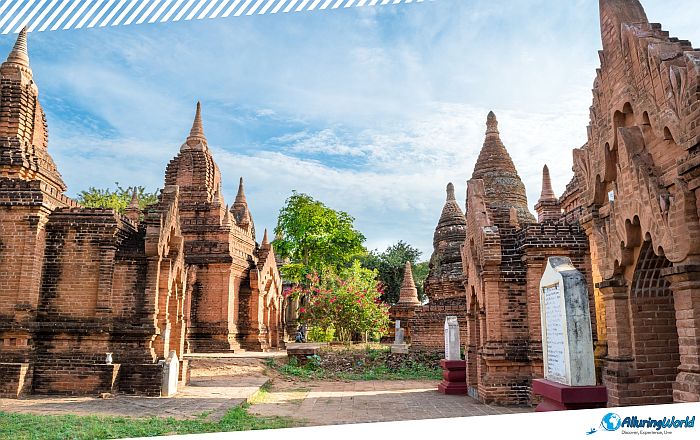
While the archaeological site is the main focus, the surrounding area offers several complementary experiences that give context to the region’s traditions and geography, so while you are in Bagan, consider visiting or doing the following:
- Mount Popa and Taung Kalat: Situated about 50 kilometers (31 miles) southeast of Bagan, this extinct volcano features the Taung Kalat Monastery, which is perched atop a dramatic volcanic plug. Reached by climbing 777 covered steps, it serves as the spiritual home of Myanmar’s 37 traditional Nats (animist spirits).
- Irrawaddy River Cruises: Taking a wooden boat onto the Irrawaddy River around 17:00 provides a distinct view of the riverside pagodas framed against the setting sun.
- Traditional Lacquerware Workshops: Local artisan workshops in New Bagan demonstrate the intricate process of crafting traditional lacquerware using bamboo, teak, horsehair, and natural tree resin.
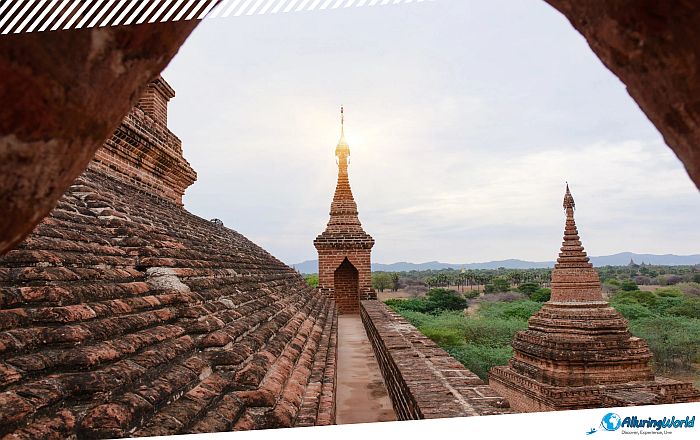
The old brick buildings in Bagan have undergone several hardships over the years, especially with the large-scale earthquakes in 1975 and 2016. There is a restoration process in Bagan that has been done in collaboration with conservation experts from around the world and UNESCO, emphasizing structural consolidation through traditional methods. Visitors like you continue to contribute to the maintenance of the balance between religion and world heritage conservation by practicing low-impact tourism, such as adhering to the designated routes and using eco-friendly transport, among others.
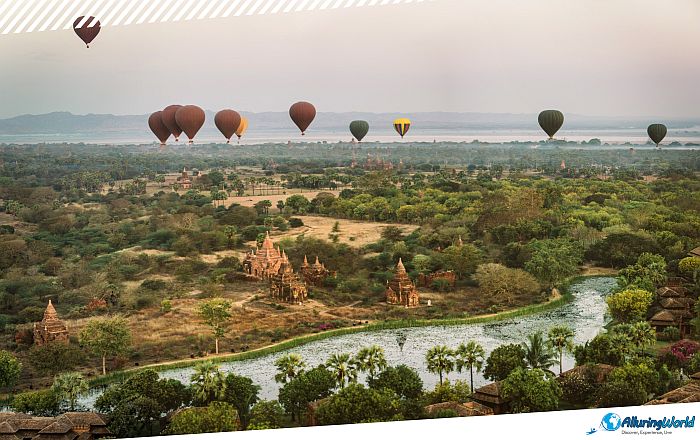
In essence, it can be summarized that Bagan is still a unique junction between history, architecture, and the living spiritual tradition. It does not matter whether you admire the emerging figures of ancient spires under the morning rays of light or wander around the brick paths kept intact through hundreds of years; one thing is certain: you will enjoy Bagan very much and will feel the spiritual presence of the city with you throughout your Myanmar journey.