
Read time ca. 4 minutes
Tokyo is one of the most sought-after destinations for travelers. In fact, it has become so saturated with tourists that there’s a movement in Japan to implement a two-tier system for visitors seeking to explore the busiest hotspots. As people go back to Tokyo multiple times and have an acceptable level of the Japanese language, the majority can unequivocally say that there’s so much more to Tokyo than cruising about the city on a hop-on, hop-off bus.
By all means, if you have not been to Tokyo before, these sites are mesmerizing; some of the temples there are older than many European countries. The sporting, music, and culinary experiences alone could be divided into individual trips, for those who have the time and resources.
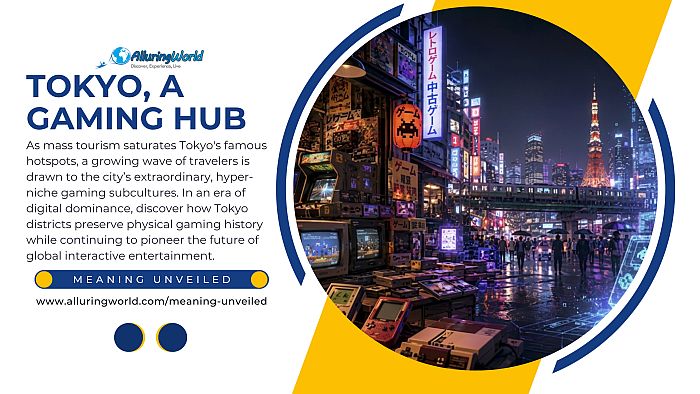
However, for many tourists, their trip to Japan focuses solely on gaming, and as more of us gravitate to digital platforms, and retro, conventional ideas are increasingly pushed into alcoves of the arenas they once dominated – can Tokyo’s gaming tourism be the anomaly, work against the tide, and continue to thrive in an era of automation?
Multi-Faceted Tourism Approach:
Over the last 30 years, tourism has gone from being a luxury to a mass market. Traveling to places like Tokyo was out of reach for so many people in the 1980s and 1990s. Now, there’s such a vast market that micro-tourism has gained traction.
That’s not to say there isn’t still enormous demand for more traditional forms of tourism, particularly across the rest of Japan; there’s the Peace Memorial in Hiroshima, and the Kiyomizu Dera Shrine in Kyoto, which bring in millions annually. However, they’re no longer the only reasons people travel to Japan, and since the start of this century, gaming has become one of the main drivers of niche tourism – particularly in Tokyo.
Adopting an approach with several elements that attract the same type of tourists, rather than a single niche, is always a better way to maximize numbers, but it is often the niches that draw people from vast distances, across oceans, to experience something truly unique.
Niche Tourism & Gaming Correlations:
The rise of niche tourism runs parallel to the rise of niche gaming. It’s the way it can be seen anyway. Casino gaming went from being an indiscriminate marketing ploy as little as 30 years ago, to a highly bespoke multi-billion-dollar marketing arm.
The internet meant that people’s tastes could be tailored and fine-tuned. It wasn’t just conventional gaming; it was betting, and conventional forms of betting like bingo; it all found a bespoke audience on the internet. Ultimately, bringing niche localized markets under the umbrella of one global market – which was like shooting fish in a barrel for many marketing companies.
Those who continue to play online bingo casino games that integrate the latest technology know how this market has adapted to these changes. Bingo has gone from packed-out halls to online irrelevance in the early years of online gambling, and now to a renaissance, with millions of people playing Bingo online every day.
Japan opts for a different model when it comes to gambling, as is evident in the sprawling Akihabara district, but by having specific pockets around the city that cater to every gaming niche, Tokyo remains a popular spot for ardent gamers from all over the globe.
ADVERTISEMENT
The Argument For Too Much Change:
Clickbait has entered a new dimension over the last decade, depending on who you follow on social media and the type of content you engage with. You can be fed content that tells you Japan is inundated with tourists, the gaming sector is on its last legs, or that an old idealist version of Tokyo has gone.
As many people have been there several times, they can say this is not the case. It is changing as many cities do. As you can see in the link below, making your summer count does not always involve a once-in-a-lifetime jaunt to Japan, but there’s definitely an argument that too much automation, technology, and a complete amnesty of human input in creative fields will cause more problems than it solves, particularly in the long run.
Keeping Hold Of A Unique Gaming USP:
Japan was at the forefront of console gaming and many gaming innovations: Nintendo, Sony, Taito, and it continues to innovate through these enormously successful titans of gaming.
It should not be spoken generally here, but as people have a strong understanding of gaming cultures across Europe, North America, and Japanese markets, Japan has a stronger grasp of true gaming innovation, at least in my view.
Recent developments within the market have highlighted this; there have been people clamoring over each other in Tokyo to get their hands on NVIDIA chips, but despite these improvements, there is nowhere in the world, at least from a gaming perspective, that can mimic the incredible, vivid, audiovisual gaming experience that Shinjuku and Akihabara offer.
By ensuring they hold onto this vibe, there will be no shortage of gamers making the pilgrimage to the world’s biggest city in their quest to find games that have a real feel to them. The alternative? A completely digital dystopia in the industry seems hellbent on thrusting at us, with no physical copies, ownership, or unique angle for gamers to actually own and enjoy.