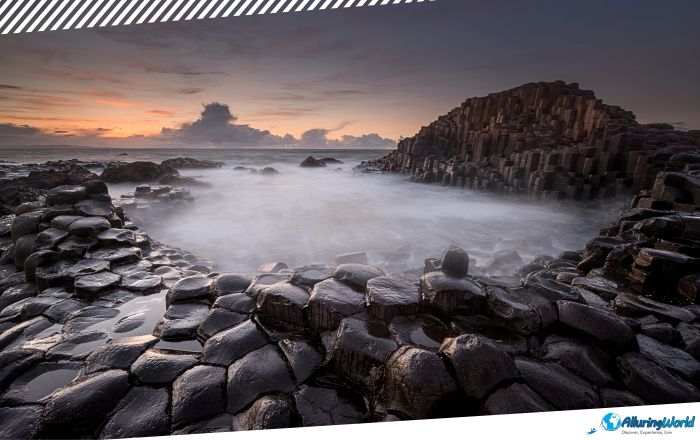
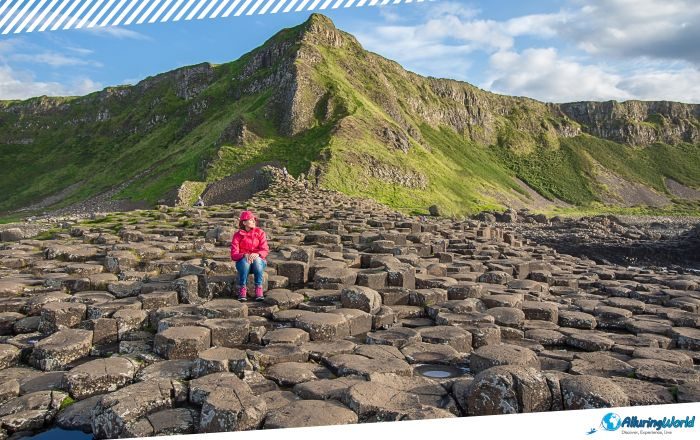
The Giant’s Causeway is an interlocking basalt column, which is the result of an ancient volcanic eruption, located on the north coast of County Antrim in Northern Ireland, specifically near the town of Bushmills, within the western part of the United Kingdom of Great Britain and Northern Ireland. There are around 40,000 massive columns that make up the Giant’s Causeway, which lie at the foot of the basalt cliffs along the sea coast on the edge of the Antrim plateau in Northern Ireland.
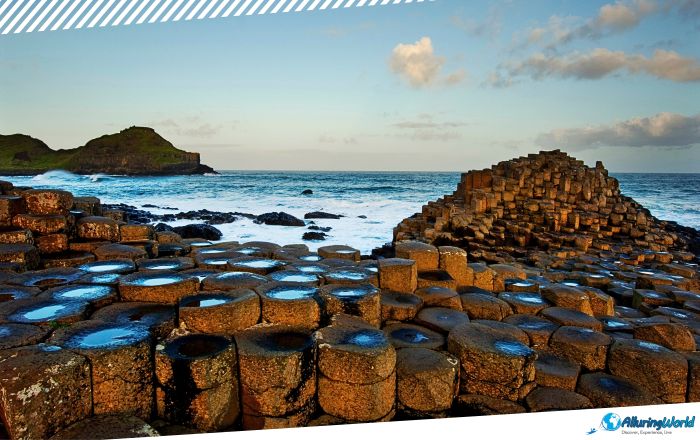
Due to the immense importance that is given to the Giant’s Causeway by scientists, there have been geological studies conducted over the last 300 years that have used this site as a primary laboratory for the development of earth sciences. Science tells us that the Causeway was formed roughly 50 to 60 million years ago during the Paleogene (Tertiary) period.
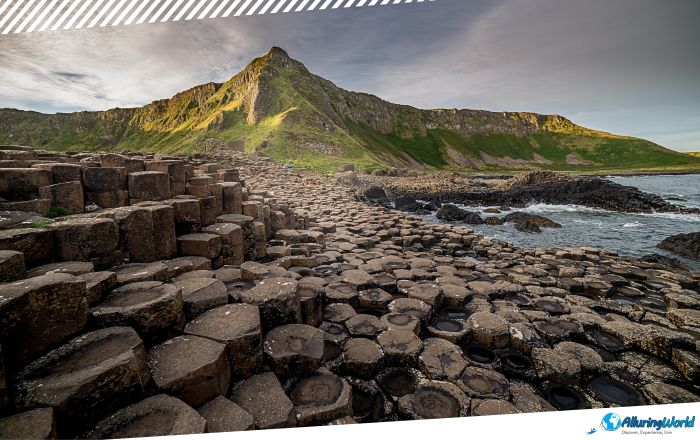
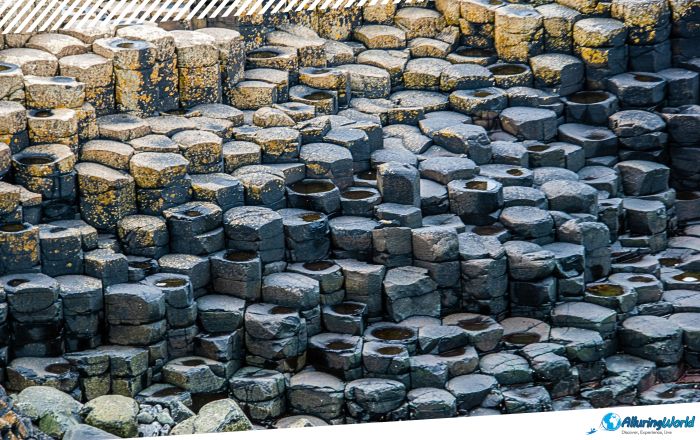
The process began with intense volcanic activity, where highly fluid molten basalt intruded through chalk beds to form a vast lava plateau. As the lava cooled rapidly, contraction took place, so the horizontal contraction fractured the rock in a similar way to how drying mud cracks, but the cooling was so even that it resulted in these near-perfect hexagonal pillars. While most columns are six-sided, you can also find those with four, five, seven, or even eight sides, which makes them very unique, and you are lucky to find one with more or fewer than six sides.
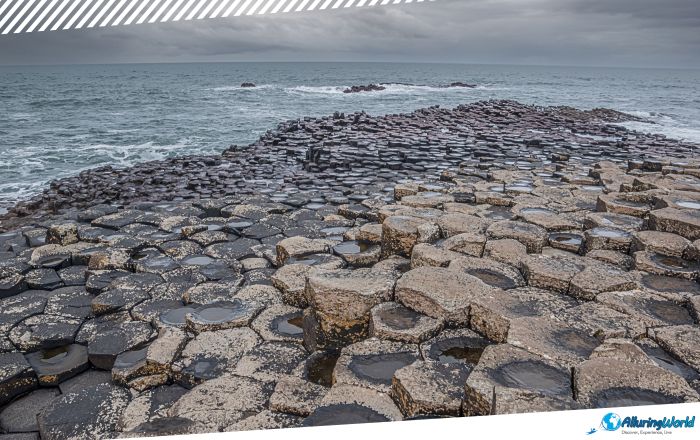
While science provides the “how,” there are some Irish folklore stories or legends that provide the “who.” Since the Giant’s Causeway is located on the island of Ireland, it is considered an Irish symbol, even though political division places it in the United Kingdom. Still, the most enduring legend tells of the Irish giant Finn MacCool, or as in Irish would be Fionn mac Cumhaill, who was challenged to a fight by the Scottish giant Benandonner.
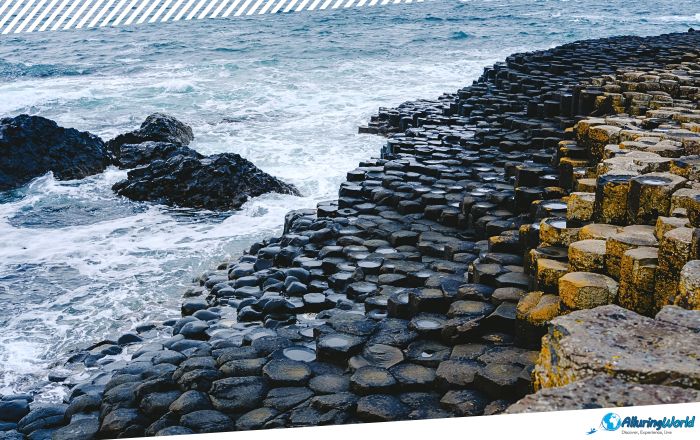
According to the myth, Finn built the causeway as a bridge across the North Channel so the two could meet. When Finn realized his opponent was much larger than expected, he disguised himself as a baby, thus being seen as an “infant” of a massive size, which made Benandonner flee back to Scotland in terror. He was thinking that if the baby was that big, the father must be truly monstrous. As he retreated, he ripped up the causeway, leaving only the fragments we see today in Ireland and the similar formations at Fingal’s Cave on the Scottish isle of Staffa.
ADVERTISEMENT
As this is only a myth that Irish people tell, in reality, over millennia, the relentless battering of the Atlantic Ocean and the weathering of the Antrim winds have sculpted the basalt into recognizable shapes that you can see today. These “curiosities” have been named by generations of locals and guides. There is a name, the Giant’s Boot, which is a large, boot-shaped rock sitting on the shore, said to have been lost by Finn as he fled, then there is the Organ, which is a stunning cliff-side formation of tall, straight columns that look remarkably like the pipes of a cathedral organ.
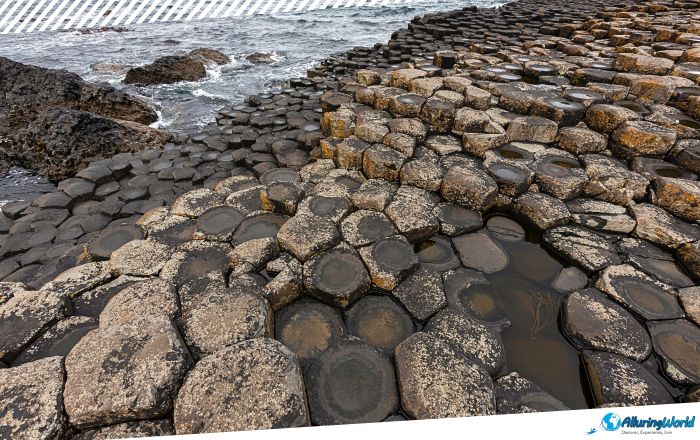
In addition to them, you can notice the Chimney Stacks, which are a few isolated columns that stand tall on the headlands, once mistaken by the Spanish Armada for the chimneys of a castle, and finally, the Shepherd’s Steps, which in fact is a steep, winding path that offers a panoramic view of the “Grand Causeway,” the largest of the three rock outcrops.
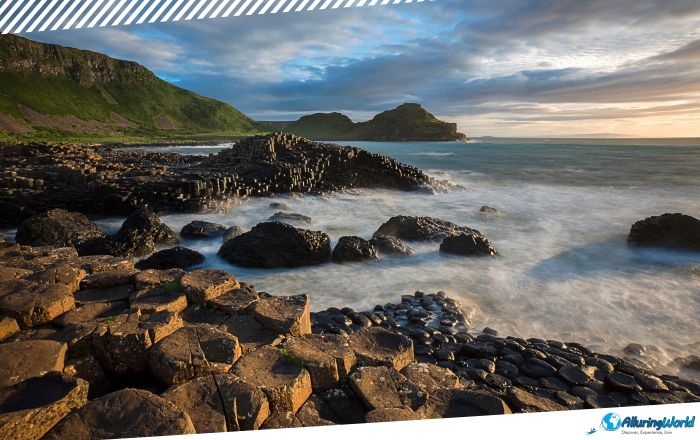
In 1986, the Giant’s Causeway was officially designated as a UNESCO World Heritage Site, further recognizing it as one of the most significant natural landmarks on Earth that should be protected for our future generations. That same year, the first official Visitor Centre was opened to manage the influx of tourists, but there was an unexpected fire that occurred in 2000, and as it took more than a decade, a new world-class Visitor Centre was opened in 2012.
This modern facility is tucked into the hillside, utilizing a sustainable design that mimics the basalt columns themselves, and today, it caters to over one million tourists annually, providing interactive exhibits on both the volcanic science and the mythical legends that make the site so unique. If you decide to visit the Giant’s Causeway today, the experience will extend beyond the stones, and you will be immersed in the history and geology of the place.
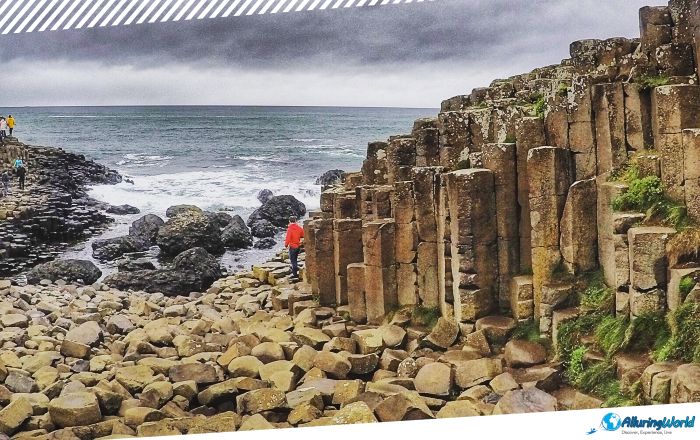
You have several options that allow you to explore the site, and with the different hiking trails, you can discover the Giant’s Causeway from two different perspectives. If you are impatient and would like to get to the stones as fast as possible, then consider taking the Blue Trail because this is a direct walk to the stones for those who want to climb the “stepping stones.” If you are more adventurous or want to experience more from the Giant’s Causeway, then you should take the Red Trail, which is a cliff-top hike that provides bird’s-eye views of the Giant’s Harp and the Giant’s Gate.
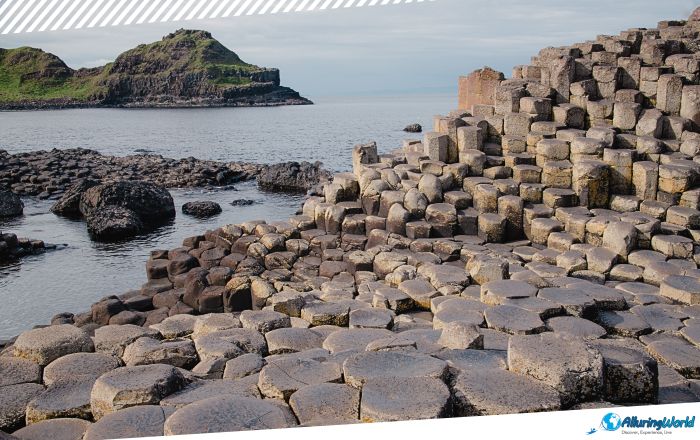
If you take each of these two trails, you are guaranteed that you will have an amazing experience, as the location is made to be friendly for everyone. In addition to this, there is also the rare flora and fauna that can be observed here. The sheltered nooks between the columns host rare plants like the Sea Fescue and Frog Orchid, while the cliffs are home to razorbills and guillemots.
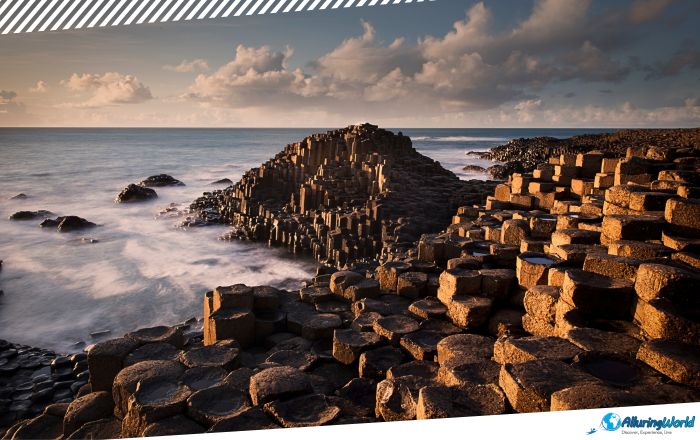
In conclusion, if you decide to walk the stones to feel the “creative turbulence” of an ancient volcanic era or to stand in the mists of Irish mythology, the Giant’s Causeway remains a powerful testament to the beauty of the natural world. This is a place that can bring fantasies to life, and with the great timing, whether that is during sunset or sunrise, you might be able to experience the Giant’s Causeway even better than others do. Overall, if you are ever in Northern Ireland, then you must not miss this majestic place, and always have it on your itinerary.