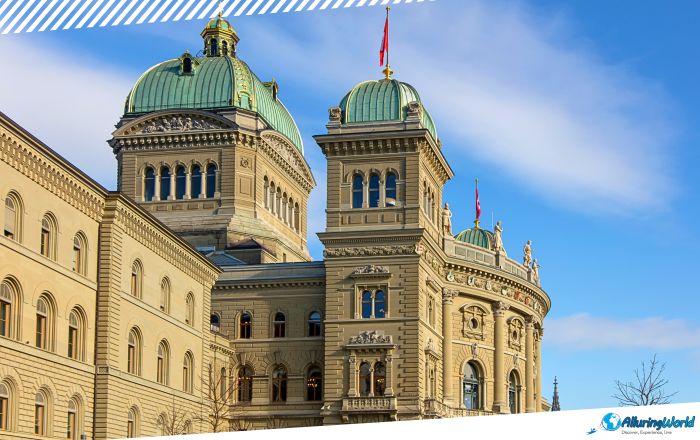
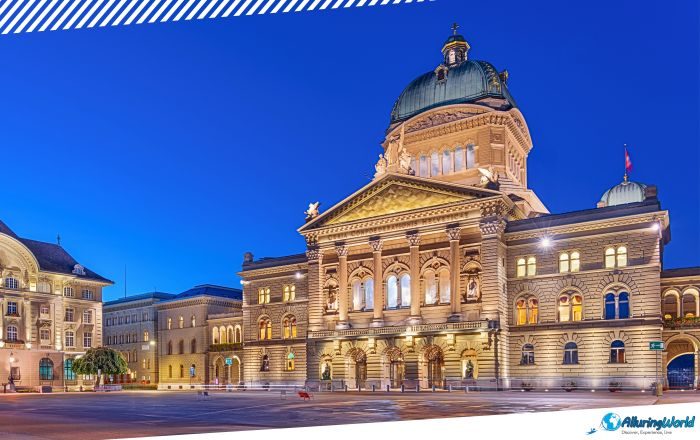
The Federal Palace of Switzerland, known locally as the Bundeshaus, is the official building that houses the Swiss Federal Assembly and the Federal Council of Switzerland, located in the capital city of the Swiss Confederation, Bern. The Federal Palace of Switzerland stands as a testament to the country’s transition from a loose collection of cantons, as it was in the past, to a modern federal state, as we know it today. The site where the Swiss Federal Palace is located was chosen specifically to overlook the Aare River because this symbolizes the government’s oversight and protection of the Swiss heartland.
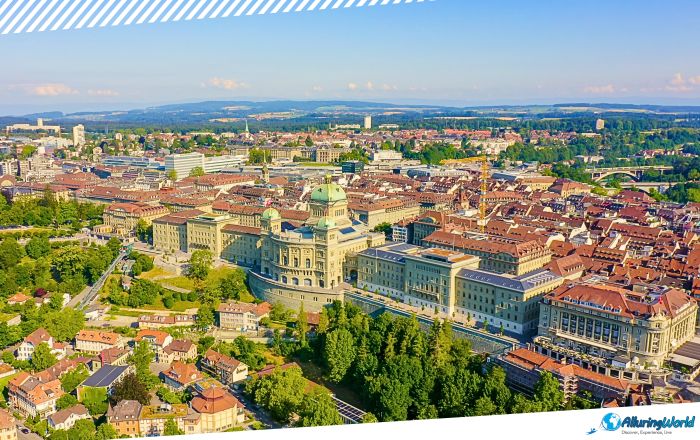
The building consists of three distinct parts in the south of the historic center of Bern, which as a whole entity was inscribed on the UNESCO World Heritage site list since 1983. The Swiss Palace features the central assembly building that is flanked by additional eastern and western wings, and these wings are not merely aesthetic. They are an important part of the palace because they serve as the functional hubs for various government departments and a comprehensive federal library. The entire complex was designed to represent the “unity in diversity” of the Swiss people, with building materials sourced from various regions across the country.
If we look at the west wing of the building, which was built between 1852 and 1857 by architect James Friedrich Studer, we can learn that it is the administrative heart of the government since it houses two government departments and the meeting rooms for the Federal Council. Conversely, the east wing, which was built between 1888 and 1892, accommodates the other two government departments. These wings were constructed in a restrained style to ensure that the central parliament building would remain the visual and symbolic focal point of the ensemble.
ADVERTISEMENT
The main feature of the Federal Palace of Switzerland is the main building, which is the central building that is most notable. This central section of the entire structure, also known as the Parliament Building, was built between 1894 and 1902 and was inaugurated on 1 April 1902. Designed by the Swiss-Austrian architect Hans Auer, the central part of the structure houses the Federal Swiss Parliament, which is divided into the National Council and the Council of States. The most striking feature of this section is the massive green dome overlooking Switzerland’s capital city, which rises 64 m (210 ft) high and is adorned with the coats of arms of the 22 cantons that existed at the time of its completion.
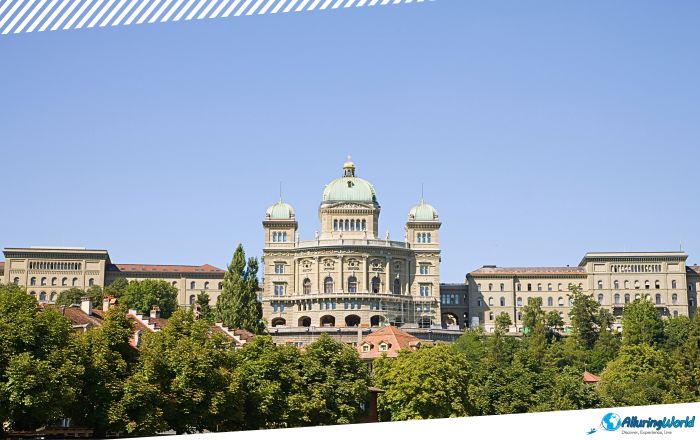
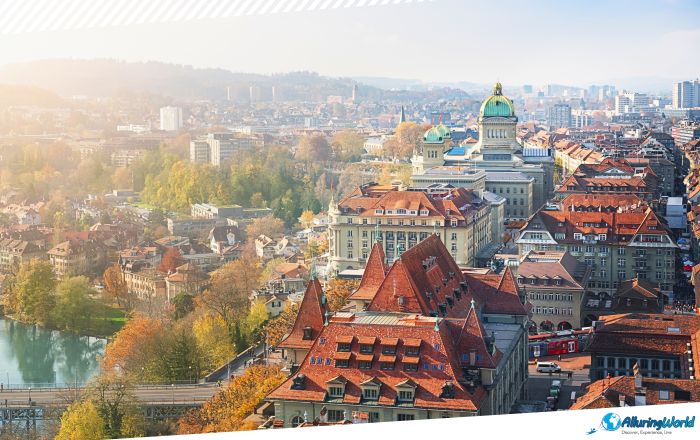
Interestingly, while this towering ensemble of buildings overlooks the Swiss capital, Bern, it also overlooks the countryside, thus offering a breathtaking view of the landscape of the Aare River together with the amazing Swiss Alps. The “Bundesplatz,” or as the English translation would be the Federal Square, in front of the palace, serves as a public gathering space, famous for its 26 water jets representing the 26 cantons.
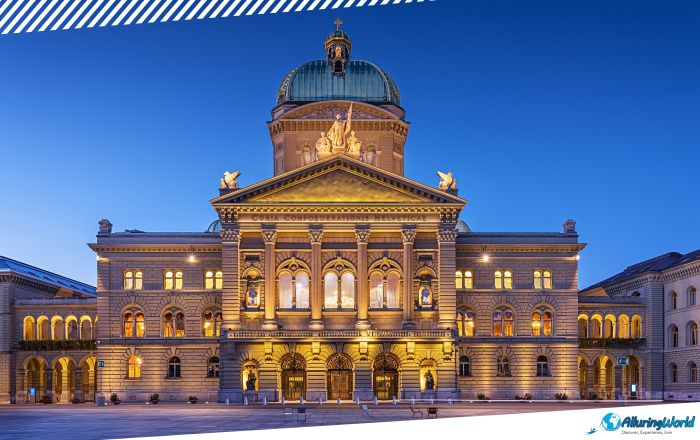
Even though it was finished at the beginning of the 20th century, the building needed a small update, and major renovations occurred between 2006 and 2008 to modernize the technology and preserve the sandstone masonry. This renovation helped to solidify its status as one of the most important buildings in the country, embodying the lasting unity of the Confederation, and protecting it for the younger generations to be able to rule their country from this historic structure.
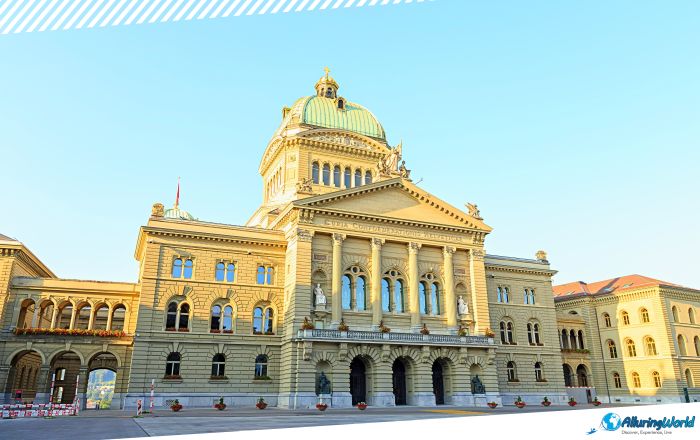
Visitors are always welcome to learn this bit of history, as the building is designed to be accessible to the citizens it serves, and tourists to get a glimpse of this unique country in Central Europe. While guided tours are highly recommended to see the ornate stained glass and the “Three Confederates” statue inside, the palace remains a living monument where the public can often watch parliamentary sessions from the galleries. All in all, this classical architectural marvel will continue to be the major symbol of the Government of the Swiss people and their commitment to direct democracy.