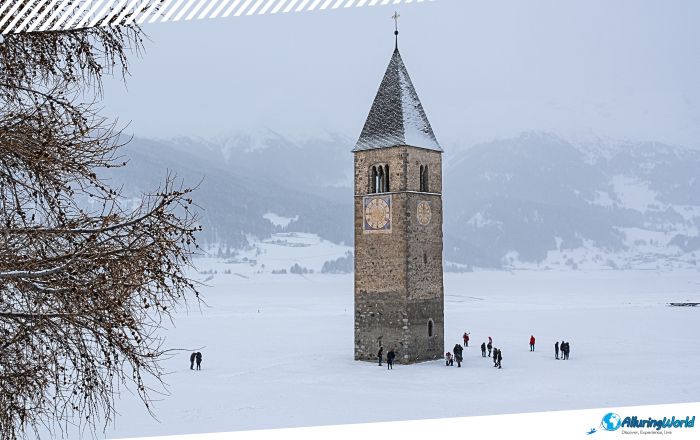
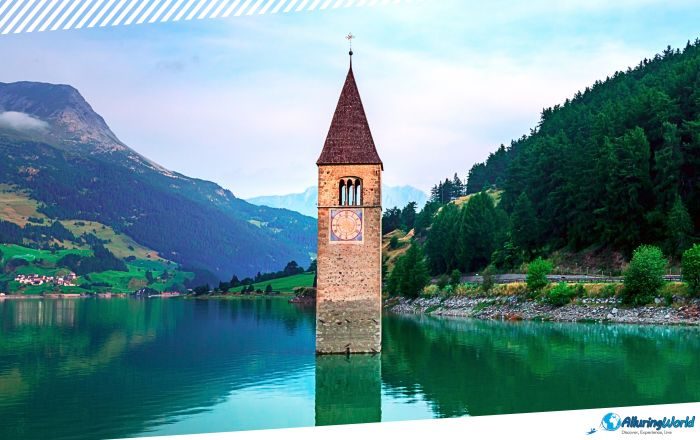
Reschensee Bell Tower is a medieval and very picturesque tower that stands in the middle of the Reschensee Lake, close to the Swiss and Austrian borders, in South Tyrol, within the northern part of the Italian Republic. The Bell Tower was part of a church dating back to the 14th century, and many villages around the area enjoyed anonymity, having a very peaceful life throughout history.
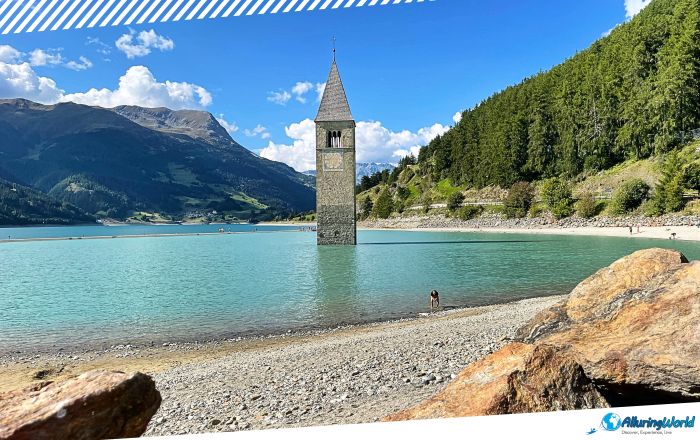
The story of the village of Graun, in which the church and the bell tower were located, was the same until the 1930s, when there were plans to build an artificial dam, so that there would be a better and increased electricity production in the region. The first plans of the construction were in 1939, when it was publicly announced that the villages of Graun and Reschen would be completely and, respectively, partially flooded.
Even though there was a resistance from the local population, the construction began in 1940, which took a decade to be completed. In the aftermath, the 22 m (72 ft) deep lake, two natural lakes, Reschensee and Mittersee, were unified into one, and in total, 163 homes were sunk below the rising waters.
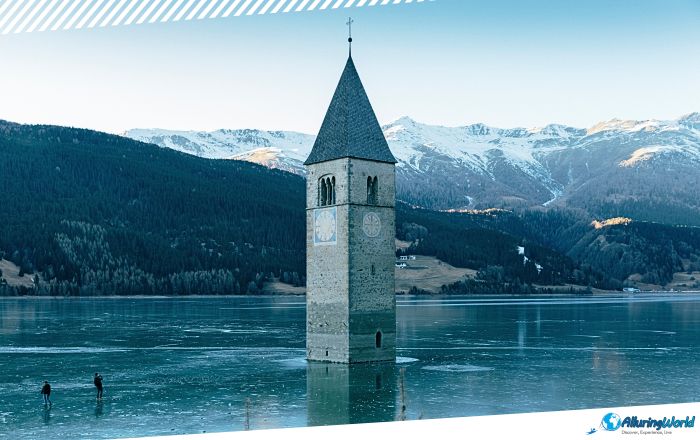
Before the water reached the villages, most of the buildings were demolished and the bells taken from the church tower; nonetheless, the bell tower was left to bear witness that once there stood a small community which enjoyed the gorgeous life of mountainous Italy.
ADVERTISEMENT
Montecatini, the company that built the dam, gave the families a small amount of money for their homes, where some of them moved away, and some chose to stay and build a new life in Upper Graun, where they still live today. As one of the most well-known landmarks of Italy, many people go to enjoy the gorgeous landscape and also take as many photos as possible from this historic place.
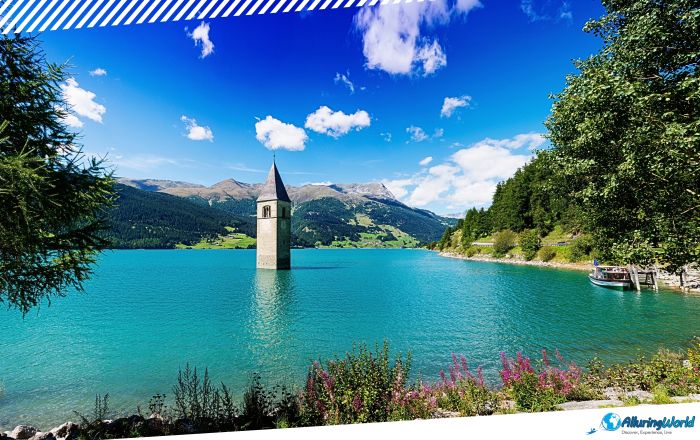
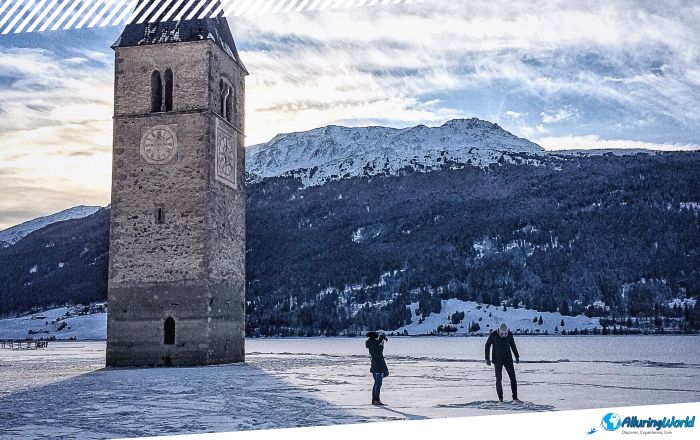
In winter too, when the lake is freezing, some of them walk on the ice to get as close as possible to the Bell Tower. There are even local legends that say that people can hear the bells from within the tower ringing on cold nights, even though they have been removed.
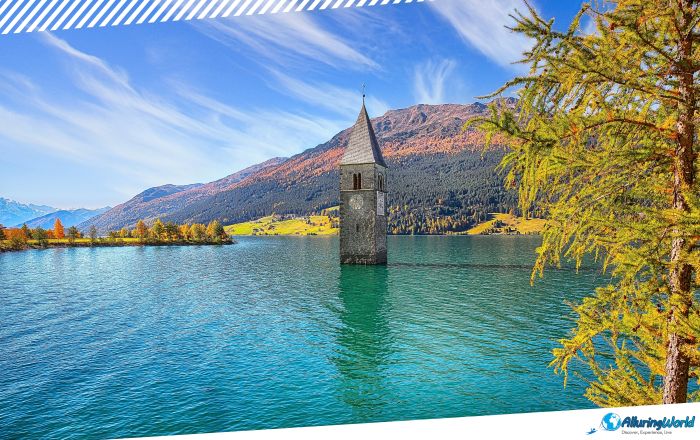
In conclusion, this very picturesque place will continue to take everyone’s breath away with every visit and will remind them of the simple life the villagers had here in the past. If you manage to come during wintertime and are lucky enough to have the lake frozen, just be courageous, go on the ice, and get as close as possible to this historic structure.