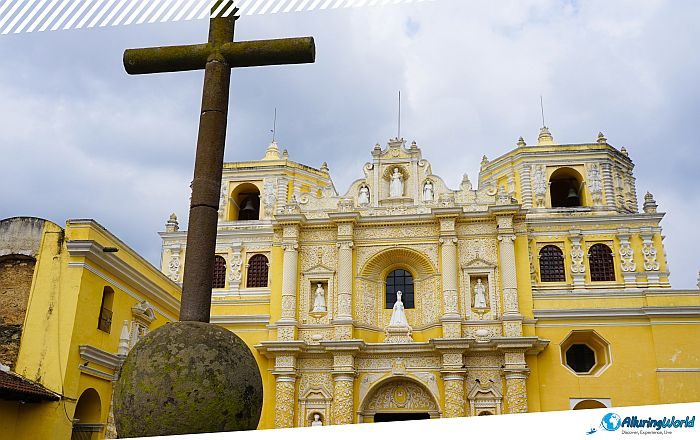
Iglesia de La Merced is one of the most important and visually striking historic churches that can be found in the city of Antigua, in the Department of Sacatepéquez, within the central-south part of the Republic of Guatemala. Celebrated for its extraordinary Baroque architecture, religious significance, and connection to the colonial history of Antigua Guatemala, this richly decorated church with a yellow façade, massive stone columns, intricate details, and centuries-old traditions, is considered to be one of the finest examples of Spanish colonial religious architecture in the Americas.
Being part of the historic city of Antigua Guatemala, a UNESCO World Heritage Site, Iglesia de La Merced has survived earthquakes, political changes, and the transformation of Guatemala’s colonial society. Its remarkable preservation and artistic importance make it one of the most visited landmarks in the country. The church was built by the Order of the Blessed Virgin Mary of Mercy, also known as the Mercedarians, and they are a Catholic religious order dedicated to helping Christians in captivity and serving local communities. Throughout its history, Iglesia de La Merced became an important spiritual center and one of the most recognizable symbols of Antigua Guatemala.
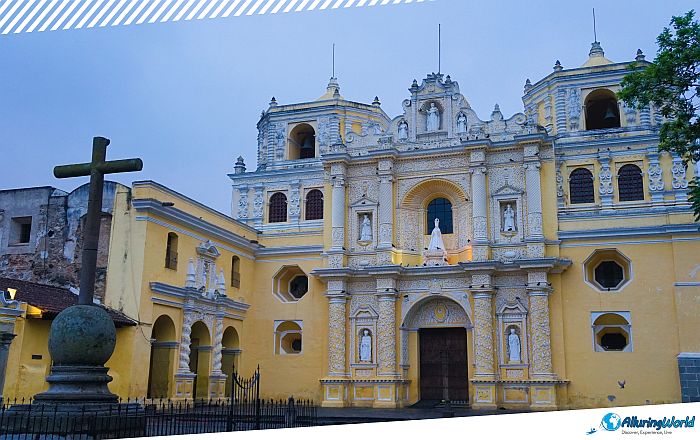
Visitors now visit the site to marvel at the architecture, take pictures of the building’s famous yellow façade, learn more about its history, and appreciate the calm inside the building. Iglesia de La Merced stands along the city’s famous Calle del Arco area, surrounded by colonial streets, historic buildings, restaurants, and other important landmarks. The church is approximately 40 km (25 mi) southwest of the capital, Guatemala City, some 1 km (0.6 mi) from Antigua Guatemala’s Central Park, and about 38 km (24 mi) from La Aurora International Airport, which serves the capital.
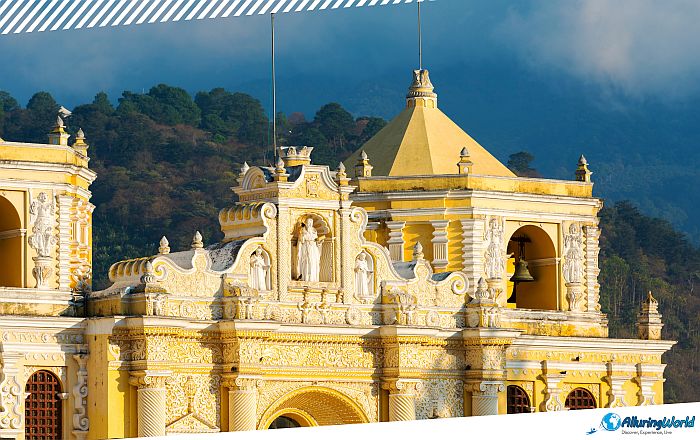
Its central location makes it one of the easiest colonial landmarks to be visited while exploring the historic city; however, the church’s position within the historic city allows visitors to combine a visit with nearby attractions such as the Santa Catalina Arch, Antigua Cathedral, Plaza Mayor, and other colonial churches. The history of Iglesia de La Merced begins during the Spanish colonial period when the Mercedarian Order established itself in Guatemala. The first church dedicated to Our Lady of Mercy was built in Antigua Guatemala during the 16th century, but as the city is surrounded by volcanoes, the entire area is prone to earthquakes, so with the combination of the people’s changing needs, it led to several reconstructions over time.
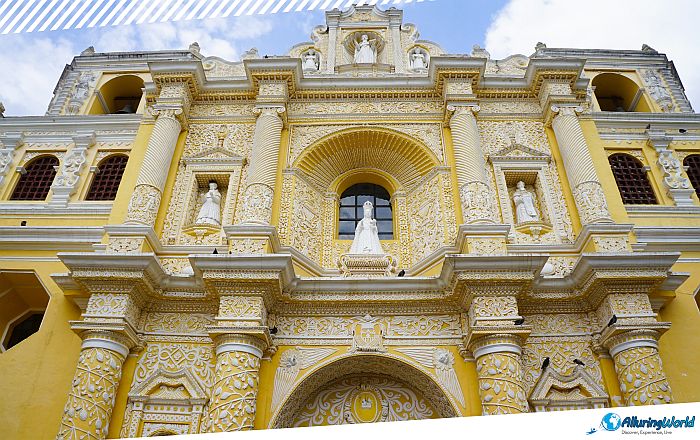
The present church was constructed during the 18th century, with work beginning around 1749 under the direction of architect Juan de Dios Estrada. The church was completed in 1767, shortly before the devastating Santa Marta earthquakes of 1773 that destroyed much of Antigua Guatemala. Despite suffering damage during these earthquakes, Iglesia de La Merced remained standing and became one of the best-preserved examples of colonial architecture in the city. Following the destruction of Antigua Guatemala, the capital was moved to the newly established Guatemala City, thus ceasing the city to be Guatemala’s capital after 230 years. Many religious institutions declined or were abandoned, but La Merced continued as an important spiritual and cultural landmark.
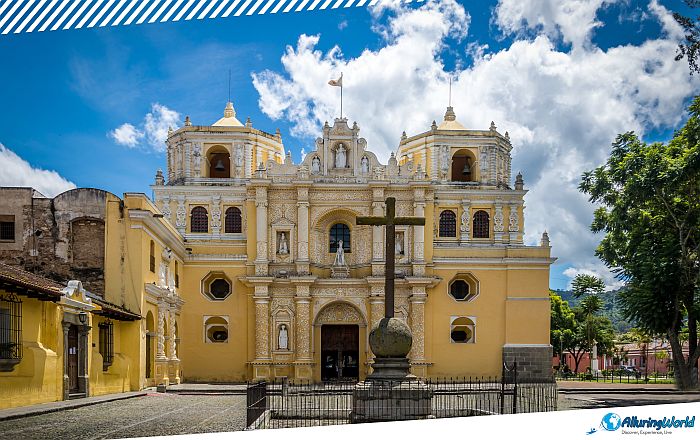
The Order of the Blessed Virgin Mary of Mercy was one of the religious orders that were significant in the colonial history of Guatemala. The Mercedarians came from Spain, where they had been founded in the 13th century, and came to the Americas as part of Spanish expansionist efforts. While the order had a mission involving religious service, education, and helping the community, they built several churches, convents, and other religious buildings within Guatemala that served to enhance the colonial community. The building of the Iglesia de La Merced showed how influential the Mercedarians were architecturally and spiritually.
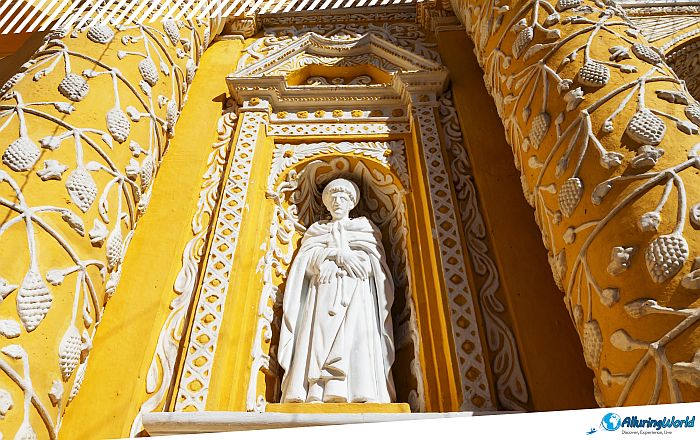
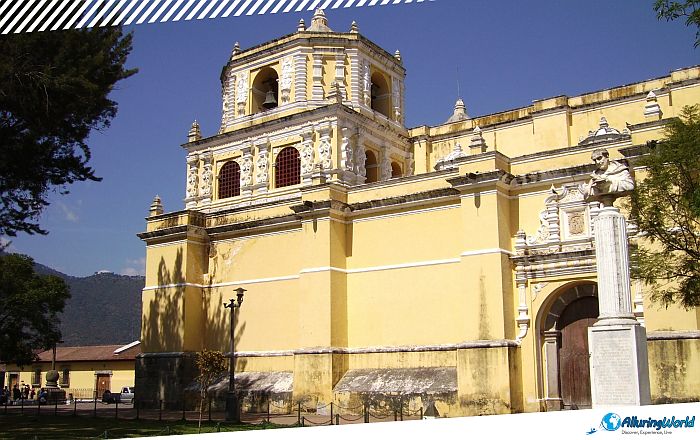
Nevertheless, Iglesia de La Merced in Antigua Guatemala is considered one of the finest examples of Guatemalan Baroque architecture. Unlike many European Baroque buildings that emphasize vertical height and elaborate ornamentation, the church was designed with strong horizontal proportions and massive structural elements to withstand earthquakes. This structure is a combination of aesthetics and engineering, which gives an amazing product that cannot be seen in other places. Its strong walls, low design, and sturdy structure are an example of how Spanish colonial architecture is adapted for the earthquake-prone conditions in Guatemala. The church represents a unique style sometimes referred to as “earthquake Baroque,” a regional architectural approach developed to create more durable structures.
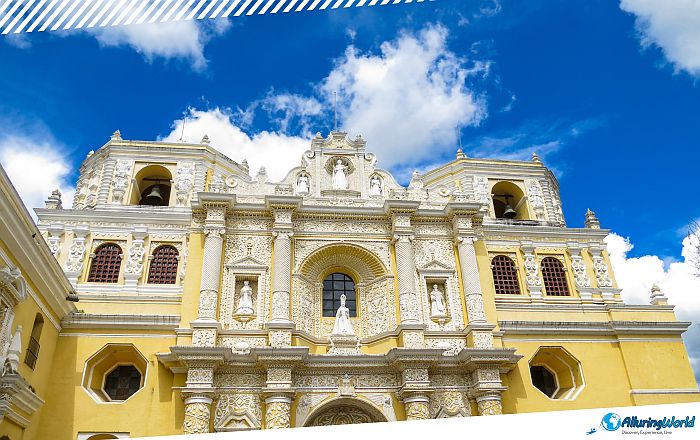
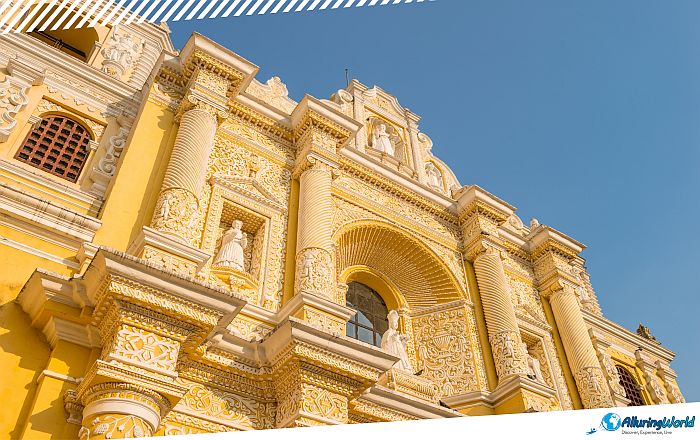
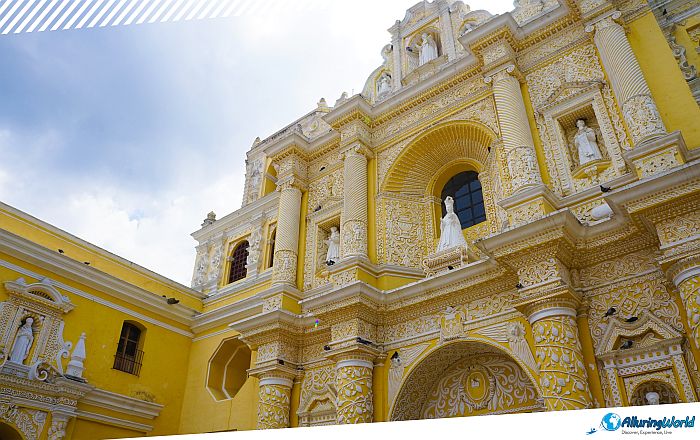
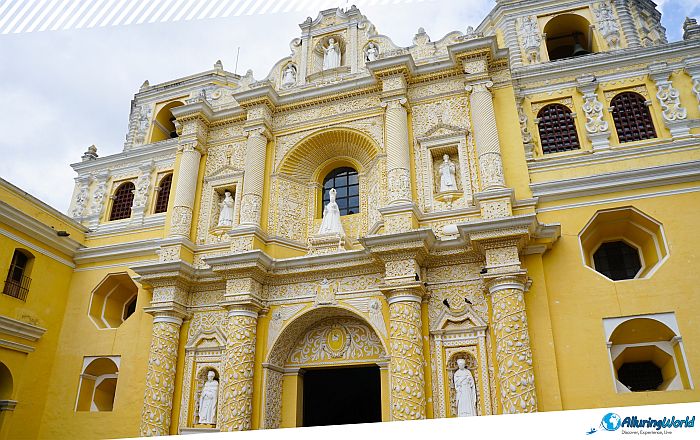
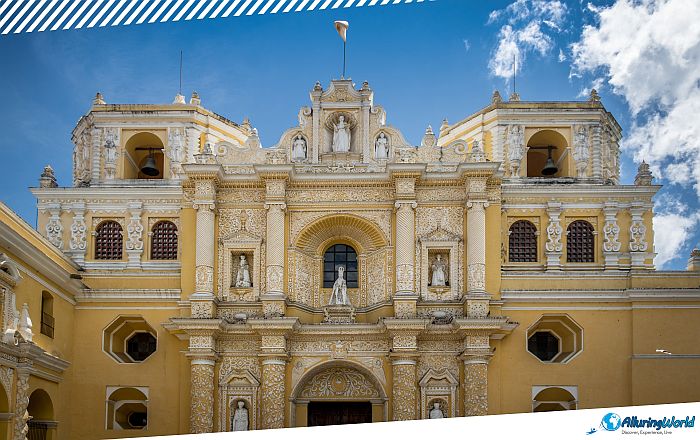
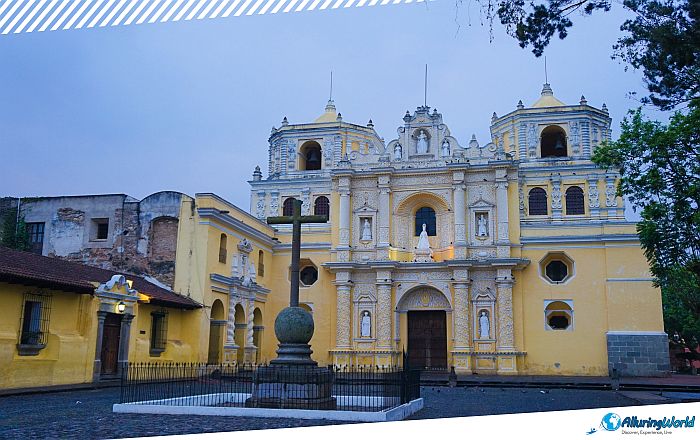
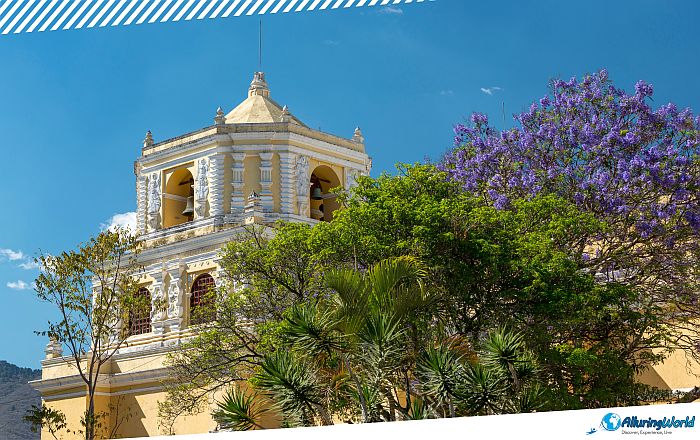
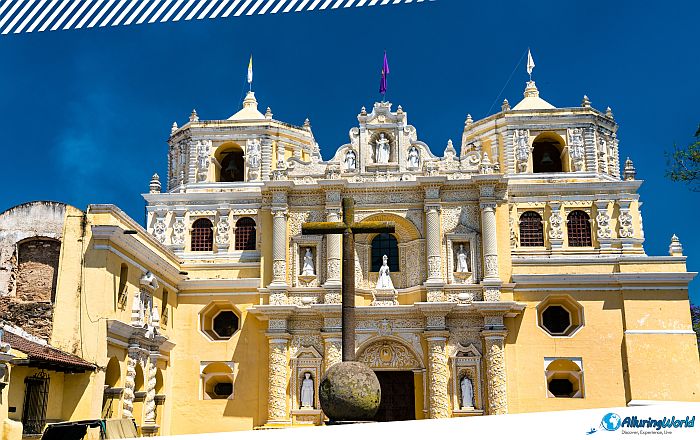
One of the most recognizable features of the church is the very unique façade. Painted in a distinctive yellow color, the façade is decorated with intricate white details, sculptural elements, and religious symbols, thus giving a unique design and easy-to-recognize religious building. The design includes images connected with Catholic devotion, particularly representations of the Virgin Mary and saints associated with the Mercedarian tradition. There are large decorative columns and carefully carved details that create a dramatic appearance while maintaining a sense of balance. The façade’s combination of color, symmetry, and craftsmanship makes it one of the most photographed architectural features in Antigua Guatemala.
ADVERTISEMENT
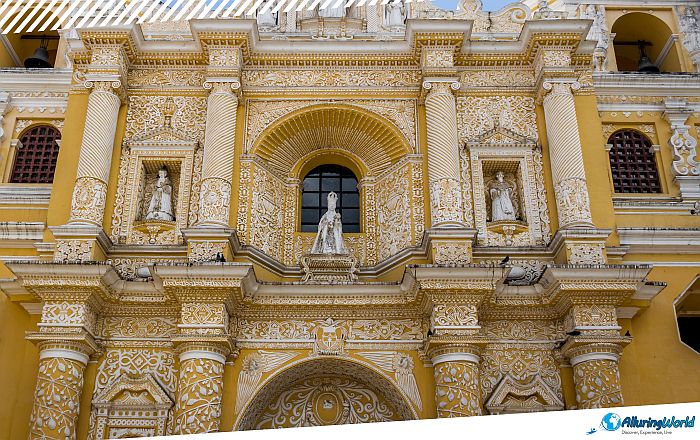
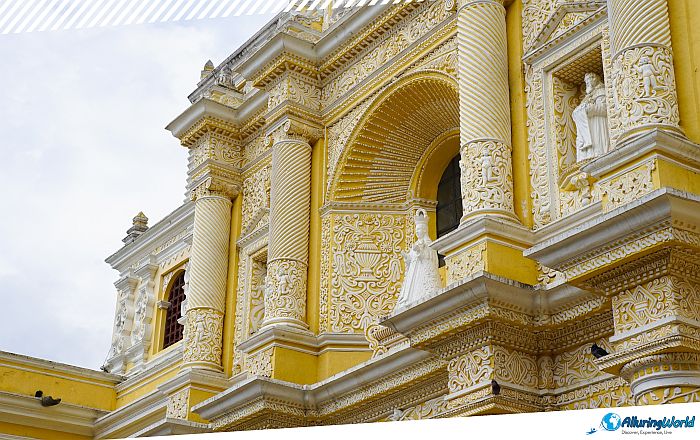
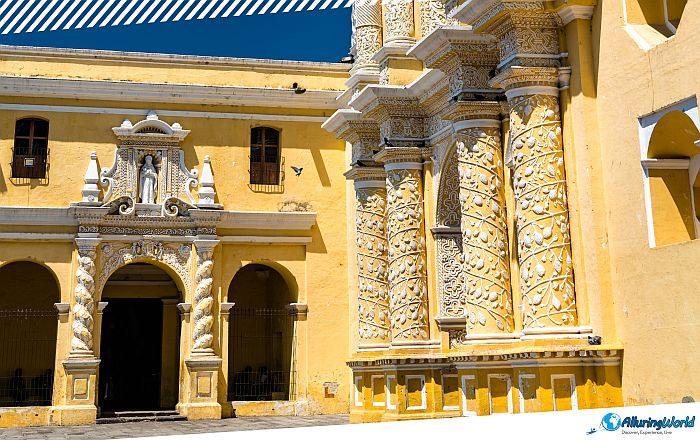
The façade is an exquisite mosaic of “ultrabarocco” or stucco-work, where the vivid yellow walls serve as a canvas for a dense, intricate web of white-molded reliefs. These elaborate decorations feature floral motifs, fruit carvings, and geometric patterns that draw the eye toward the central niches. Within these niches stand statues of important figures, including the Virgin of Mercy and various saints and bishops of the Mercedarian Order, all sculpted with expressive detail. Above the main entrance, a striking mosaic adds a vibrant splash of color, often depicting the Mercedarian shield or religious symbols that highlight the order’s history. These elements, combined with the undulating lines of the relief work, create a rhythmic, almost lace-like texture that distinguishes this structure from the more austere colonial buildings of the region.
The interior of Iglesia de La Merced, on the other hand, reflects the religious practices and artistic excellence of colonial Guatemala. Visitors will notice the religious altars, statues, paintings, and decorations, which show the significance of Catholic devotion in colonial times. Furthermore, the interior decoration is simpler than the decoration outside the church, thus providing an environment for worship that is tranquil and serene. The art inside the church is a result of centuries of hard work by artists, and even though earthquakes and history have destroyed some of the original designs, what remains clearly shows the artistic value of the church.
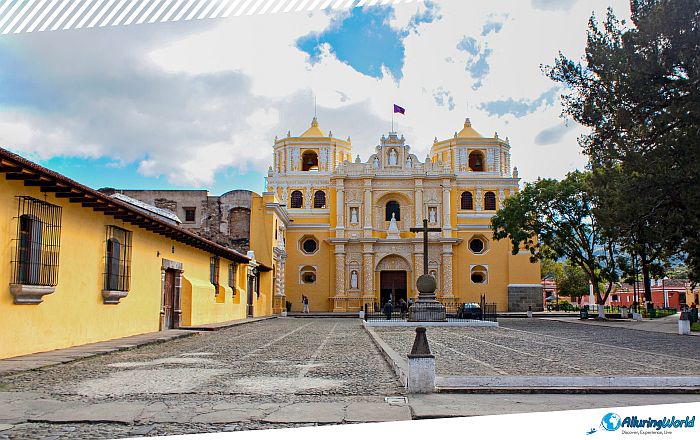
Behind Iglesia de La Merced stand the remnants of the old convent complex belonging to the Mercedarian Order. This convent was a significant religious structure having residential quarters, open areas, and administrative sections. Much like most other buildings in Antigua Guatemala, the convent was badly damaged due to the earthquakes that occurred in 1773; however, today the ruins serve as a window to see the significance of religious complexes in the colonial era. The surviving structures reveal the impressive construction techniques used during the colonial period, and when you are exploring the convent area, you can understand how the church was not an isolated building but part of a larger religious community.
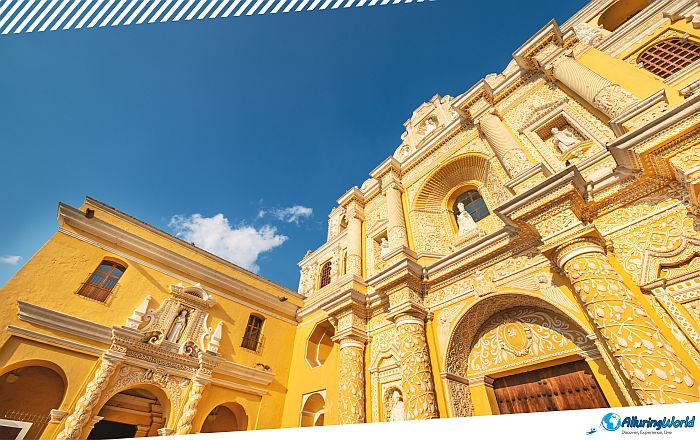
One of the most important architectural contributions of Iglesia de La Merced is its representation of earthquake-resistant Baroque design. Guatemala has experienced numerous powerful earthquakes throughout history, forcing architects to adapt traditional European styles and ensure their future work would survive even the strongest earthquakes. The church’s low height, thick walls, wide supports, and strong construction methods were designed to reduce earthquake damage. This approach became characteristic of many colonial buildings throughout Guatemala. Iglesia de La Merced demonstrates how local conditions influenced architectural innovation during the colonial period.
Even though this religious building is quite old, Iglesia de La Merced continues to serve as an important Catholic church even today for the people living in Antigua Guatemala. The church remains associated with devotion to Our Lady of Mercy, a figure deeply connected with the Mercedarian tradition, so religious celebrations, ceremonies, and community events continue to take place throughout the year. The church is especially significant during Holy Week, when Antigua Guatemala becomes one of the world’s most famous destinations for religious processions. During these celebrations, the streets surrounding La Merced become filled with traditional decorations, music, and thousands of visitors.
It can be said with certainty that the Holy Week in Antigua Guatemala is one of the most important religious and cultural events in Latin America. Iglesia de La Merced plays a central role in these celebrations since it participates in processions featuring religious images carried through the historic streets. The event combines Catholic traditions with Guatemalan artistic expressions, including elaborate carpets made from colored sawdust, flowers, and natural materials. During this period, the church becomes one of the most visited religious landmarks in the city. The atmosphere around La Merced demonstrates the continuing connection between colonial traditions and modern Guatemalan culture.
In all respects, its magnificent architecture, rich history, and cultural traditions make it a must-visit place when one is visiting the city. Iglesia de La Merced is an embodiment of the culture of Guatemala, where native customs, Spanish colonial legacy, and Catholic tradition exist side by side. For any photographer, historian, or architecture lover, the church is the place that can offer a lot, and its presence in the historical area of Antigua makes it a very important part of the history of the city.
Antigua Guatemala became a UNESCO World Heritage Site in 1979 due to the unique preservation of colonial architecture in the city. One of the key monuments of Antigua Guatemala that has received this distinction is, in fact, Iglesia de La Merced. The UNESCO World Heritage designation points to the need for the preservation of churches, convents, squares, and streets of Antigua Guatemala, so this church plays a great role in establishing Antigua Guatemala as one of the best-preserved Spanish colonial towns in the Americas.
It is recommended to visit Iglesia de La Merced when there is dry weather in Guatemala, from November until April. In this period, tourists may freely walk around the streets of Antigua Guatemala as well as other places because the temperature is relatively warm at 12°C to 26°C (54°F to 79°F). Holy Week, usually in March or April, is a particularly special time to visit because of the religious celebrations and processions, and this is when the church becomes the liveliest it ever is. However, during this period, visitors should expect large crowds, so early morning visits provide the best opportunity to appreciate the church’s architecture in a quieter atmosphere.
If you decide to visit this majestic structure, you should dress respectfully because Iglesia de La Merced remains an active place of worship. Since you will be walking a lot throughout the city, comfortable walking shoes are recommended because Antigua Guatemala is best explored on foot. Photography is usually possible, but visitors should be respectful during religious services and should refrain from taking photos inside. If there are no processions, you can still take photos, but from the outside, there are no limitations. Taking a guided walk is an excellent way of getting to know all the historical facts of the church’s architecture, traditions, and role during the colonial era in Guatemala, and thus, if you wish to, you can arrange for a guided visit of the church and the city. There is much to see in the surrounding areas, including various cafes and museums.
The survival of the Iglesia de La Merced is very important for preserving the colonial legacy of Guatemala so that future generations may have the opportunity to see this wonderful structure. There are many difficulties facing this church, such as earthquakes, weather, the effects of tourism, and the aging of the materials used to construct the strfaçade. Restoration experts keep working on preserving the façade, structure, and art of the church. The survival of this church involves a great deal of balancing tourists’ access and the church’s history.
In summary, Iglesia de La Merced is one of Guatemala’s finest examples of architecture and one of the most picturesque churches built during the colonial era in Central America. This church’s impressive yellow façade, earthquake-proof Baroque structure, religious significance, and link to the façadey of Antigua Guatemala make it an unforgettable site for you to visit. Apart from being known for its Maya ruins and natural attractions, Guatemala can boast of one more important aspect of its heritage, which is the culture of the colonial era. When you walk along the historical streets of Antigua Guatemala, the church is a wonderful way back into centuries of faith, skill, and perseverance, and generally speaking, the Iglesia de La Merced is an eternal testament to the great architectural achievements of Guatemala.