
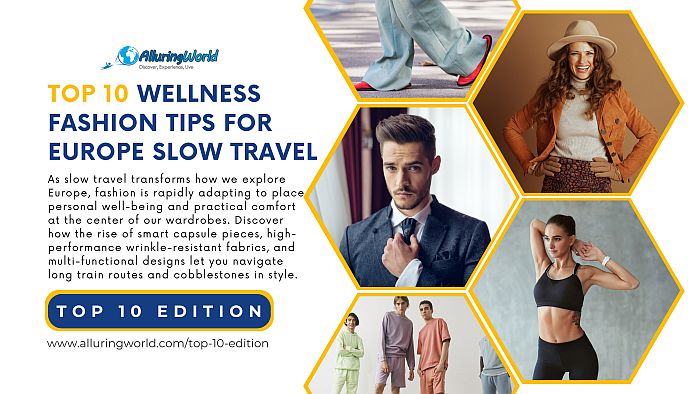
Slow travel around Europe has encouraged many travelers to rethink what they pack for their trips. When the journey itself is a vital part of the experience, the needs of that journey influence everything from what and where you eat to your wardrobe choices. As travel habits continue to shift toward flexibility, deeper experiences, and comfort, fashion is adapting alongside them. Travelers spending days on trains, ferries, walking tours, and longer stays increasingly look for clothing that supports comfort and practicality without sacrificing personal style. This growing overlap between wellness, fashion, and functionality has reshaped the way people dress for rail journeys, ferry crossings, city exploration, and multi-stop European itineraries alike.
1. The Rise of Wellness-Inspired Travel Fashion
The most notable example where this shift has been clearly observed is the rise in demand for on-the-go activewear and stylish basics that have been designed to combine comfort, functionality, and fashionable looks, exemplified by crossover brands such as NikeSKIMS.
The concept of slow travel clothing is not defined merely by aesthetics anymore. Rather, travelers are looking for clothes made from airy materials, with adjustable cuts and styles that will work equally well both at train stations and during active exploration, sightseeing, dinner, and even on quiet rest days. This change in fashion trend has brought about a certain merging of activewear and loungewear with classic attire.
2. Comfort Has Become a Travel Essential
Whether you are flying to Paris, taking a sleeper train across central Europe, or spending several weeks moving between different cities, things like long rail journeys, changing climates, and extended itineraries have made comfort one of the most important considerations when packing for a trip. As a result, relaxed silhouettes, soft fabrics, and adaptable layering pieces have become staples of modern travel style.
Clothing that comes in matching sets, bulky hoodies, leggings, and light jackets is particularly trendy since they provide both freedom of movement and a sleek silhouette. Instead of taking different clothes for each leg of their journey, individuals tend to opt for clothes that look good without much effort. The focus on comfort also demonstrates an overall trend towards adopting a more practical way of life.
3. Fashion That Supports Wellbeing
Slow, mindful travel can involve long days on foot, frequent movement between accommodations, and extended periods away from home, which is why clothing that supports comfort and confidence has become increasingly important. Fashion is now being viewed not only as a form of self-expression but also as something that can positively impact overall well-being during travel experiences.
In many ways, brands are moving towards designing clothes in an inclusive manner that allows travelers to remain comfortable on longer trips through Europe. The focus here is on ensuring that the traveler remains confident, and this has a lot of correlation with current discussions about body positivity. For travelers, this means selecting clothing that is not just photogenic but also very comfortable.
4. Sustainable Packing and Mindful Travel
Sustainability is yet another way that fashion ties into health and well-being. Many travelers, aware of their tendencies to over-consume, have begun downsizing their wardrobe choices and opting for quality over quantity.
The value of clothes that can be reused, mixed, and layered is great when moving from one European city to another without much luggage space. The use of neutral clothing items, coordinating outfits, and clothing pieces that can be worn in different seasons makes for more effective packing methods and decreases needless expenditures. On the other hand, there is an increasing awareness regarding sustainable fabric production and durable clothes as well.
5. The Influence of Social Media and Travel Culture
Social media has played a major role in shaping modern travel fashion. Capsule wardrobes, European rail travel content, and “travel day” styling videos have become increasingly popular online, influencing how people approach comfort-led fashion while traveling.
Travel outfits from celebrities and other influencers are becoming increasingly fashionable and, at the same time, practical, which promotes the belief that comfort does not have to come at the expense of fashion. Travelers, in turn, have been encouraged to adopt such clothing as part of their daily wardrobe.
ADVERTISEMENT
6. Layering for Unpredictable European Climates
Moving between different European regions, such as catching a ferry from sunny Mediterranean coasts to breezy alpine train routes, requires a wardrobe that can adapt instantly to changing temperatures. Wellness-focused fashion places a heavy emphasis on smart layering, allowing slow travelers to maintain physical comfort without needing constant outfit changes.
Easily layered and packable items like lightweight cardigans, gilets, and windbreakers play an important role in today’s capsule wardrobe for travelers. The ability to stack garments one upon another allows travelers to be more adaptive when exposed to varying microclimates on trains, decks, or while walking at night. This approach to dressing ensures that unpredictable weather never disrupts the physical well-being or flow of a journey, keeping the traveler focused on the experience rather than the temperature.
7. Fabric Innovation and Technical Performance
Wellness and fashion have come together to revolutionize fabric science. The travelers who travel by long-distance sleeper trains or regional buses in Europe have been opting for intelligent fabrics rather than cumbersome fabrics because of their health benefits.
High-performance materials like moisture-wicking merino wool, thermoregulating bamboo fibers, and anti-odor tech fabrics are now preferred choices for long-distance travel journeys. Such textiles will allow for breathability of the skin, prevent discomfort due to prolonged wearing, and need much fewer washings; perfect for slow traveling. Purchasing high-quality materials results in having clothes that last longer, which contributes to the overall comfort of the trip.
8. Versatile Footwear and Foot Health
Slow travel inherently involves a lot of movement, from navigating cobblestone streets in Rome to rushing through sprawling transit hubs like London St Pancras or Paris Gare du Nord. Because foot health is foundational to physical well-being on the road, wellness fashion has completely revolutionized travel footwear.
The travel boots of yesterday, along with the dainty shoes that were fashionable back then, are gradually being phased out by sneakers, sandals, and loafer designs that not only go well with daytime wear but are equally suitable with dinner attire. This trend reflects the belief that a vacation should not end early because of blistered feet or tired joints. It makes sense to have footwear that does not exhaust you during your tour around the city.
9. Wrinkle-Resistance and Low-Maintenance Care
Living out of a backpack or a small carry-on for weeks at a time while exploring Europe means clothing is inevitably subjected to tight packing. A key element of wellness-focused travel fashion is minimizing the stress of garment maintenance, allowing travelers to spend less time ironing and more time immersing themselves in the local culture.
Tencel, modal, and top-grade knits are among the types of wrinkle-resistant fabrics that are now incredibly popular. Such no-fuss clothing items look great even after being taken directly out of your packing cubes, allowing you to seamlessly go from ferry travel to visiting local cafes without any additional effort. Avoiding laundry or clothing care tasks gives an impression of relaxation and mindfulness in the packing process.
10. Multi-Functional Designs and Hidden Utility
With fashion evolving to meet the needs of today’s conscientious traveler, there has been some very clever design innovation within the world of garment design. Well-being-oriented clothing includes elements of clever design that will ensure a state of calmness and comfort while on multi-stop trips throughout Europe.
Clothing items with zip pockets that can hold passports, adjustable waistlines to fit through lengthy periods of sitting, and versatile items such as convertible pants and detachable hooded tops are in high demand.
This concealed function helps lighten the load of carrying cumbersome backpacks, thus saving the traveler from unnecessary physical stress on their body. The integration of security and flexibility within the fabric of clothing ensures that fashion plays an enabling role in traveling through Europe.
To sum it all up, the increasingly strong link between wellbeing, fashion, and comfort has brought about a revolution in the slow travel practices of many Europeans. Modern tourists need clothes that are comfortable to wear, practical, yet fashionable too.
With more and more people choosing slow travel and extended travel, the fashion industry has to adjust accordingly to meet the demand. The future of travel fashion lies in multi-use sportswear, elevated essentials, and even travel wear itself.
In short, slow travel throughout Europe allows for a practical attitude towards clothes that will be comfortable and easy to move about in during the entire trip, and not just when you reach your destination.