
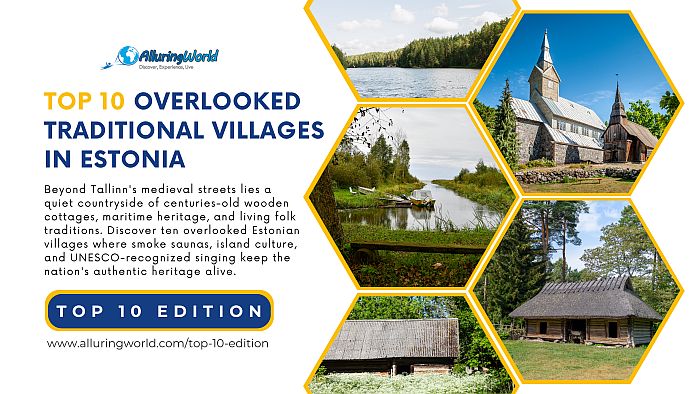
Estonia is often recognized for its medieval capital Tallinn, a technologically savvy society, pristine forests, and stunning coastlines along the Baltic Sea. Tourists from all over the world come to visit Estonia for the Old Towns, medieval castles, bogs, and the serene ambiance found in the northern part of Europe. Yet, behind the well-known places in Estonia, another side exists: one that consists of villages, fishing communities, forest hamlets, and rural settings that are keeping traditions alive. Estonian villages have been built up over centuries depending on agriculture, fishing, forestry, and crafts. The geography of the nation, with its many lakes, forests, islands along the coast, and wetlands, has determined the formation of villages, which were in close connection with their environment.
In Estonian traditional villages, you can find wooden cottages, smoking baths, old barns, windmills, churches, and seaside cottages. Most importantly, in many villages, there is a tradition of preserving folklore, handcrafts, traditional food, and other ancient customs that connect modern inhabitants with past generations. Though the medieval streets of Tallinn and the Estonian national parks are frequented by numerous tourists, there is more to know about the nation’s identity in its little villages. This is because such places have a unique lifestyle where people feel closer to nature and their families. From remote islands in the Baltic Sea to peaceful countryside communities surrounded by forests, these ten often-overlooked villages provide an authentic glimpse into traditional Estonia.
1. Koguva, Muhu Island
Located on Muhu Island in western Estonia, Koguva is one of the country’s best-preserved traditional villages. The village is famous for its historic stone fences, wooden farmhouses, thatched roofs, and peaceful rural atmosphere. Many buildings date back centuries and reflect the traditional architecture of Estonia’s islands. Life in Koguva was traditionally shaped by agriculture, fishing, and handicrafts. Local islanders created their self-sustained settlements where agriculture, cattle breeding, and marine occupations were strongly interrelated, and made them self sustaining. The village is especially distinguished by its limestone architecture and traditional rural architecture.
Local customs, handicrafts, and folklore still play a big part in making Muhu’s cultural identity. The traditional dress, embroidery, and local cuisine are all still valued, and it provides a unique chance to visit a different part of Estonia that retains the rural past while staying linked to contemporary culture.
- Highlight: Explore well-preserved 19th-century wooden farmsteads, ancient limestone walls, and traditional heritage from the island.
- Best For: History enthusiasts, traditional architecture lovers, and folk culture exploration.
2. Käsmu, Lahemaa
Käsmu is one of the historical fishing villages situated in the Lahemaa National Park, located on the northern coast of Estonia. The village was called “The Captain’s Village” as many people of this village served as seafarers and captains during the nineteenth and twentieth centuries. You can find traditional wooden houses, old boat sheds, and coastal paths that reflect the village’s maritime past. Throughout generations, the sea has influenced every aspect of life here, whether that be fishing, boatbuilding, or simple everyday tasks.
Today, the maritime culture of Käsmu is kept alive through museums, cultural events, and local events related to the sea. The forests around the village, the rock formations along the coast, and the historic architecture combine to form a distinctive ambiance, which blends nature and history.
- Highlight: Visiting the maritime museum housed in a former border guard station and walking scenic coastal nature trails.
- Best For: Maritime history buffs, coastal walks, and peaceful sea views.
3. Varnja, Peipsi Lake
Varnja is an unusual settlement situated on the shores of Lake Peipsi in eastern Estonia, distinguished by its fishing heritage and Old Believer community. It evolved in a region where one of the biggest lakes of Estonia existed, and fishing and farming were essential for life. You can find traditional wooden houses, garden beds of various colors, and little boats that tell about the life of those people who lived in harmony with the lake. The Old Believers, a religious group of people who appeared here many years ago, kept their culture alive.
Locally produced food such as fish-based meals and onion production still plays an essential role in the local culture. The village of Varnja is an example of cultural diversity in Estonia, revealing contributions made by various ethnic groups towards the formation of Estonian rural culture.
- Highlight: Experiencing Old Believer heritage, traditional Lake Peipsi fishing culture, and famed local onion farms.
- Best For: Cultural heritage travelers, unique religious history, and regional culinary traditions.
4. Ruhnu Village, Ruhnu Island
The Ruhnu Village is situated on Ruhnu Island in the Gulf of Riga and is one of Estonia’s most isolated traditional villages. There is a very interesting history associated with the island since it was inhabited by Swedes speaking the Swedish language who had lived here for centuries before World War II. Old wooden buildings and the wooden church are a reminder today of the unique history of the island, since isolation has always been the characteristic of Ruhnu’s life.
The island’s traditions include crafts, local foods, and customs that have been influenced by Estonian and Scandinavian heritage, so the village will offer you the chance to experience a slower, more remote way of life where traditions have been protected by geography.
- Highlight: Visiting St. Madeleine’s Church, Estonia’s oldest surviving wooden building dating back to 1644.
- Best For: Off-the-beaten-path travelers, Scandinavian-Estonian history, and island tranquility.
5. Alatskivi, Tartu County
Situated close to Lake Peipsi, Alatskivi is an enchanting village famous for its historical landscape, forests, and rural setting. The development of the region has been based on agriculture, logging, and crafts, with settlements making use of the lands in the vicinity for centuries. While the village is well known for Alatskivi Castle, the rural areas surrounding it present a more peaceful side of Estonian villages.
Surrounded by forests and lakes that influence outdoor activities, this is a perfect place to experience the food traditions and community life. It will give you a glimpse into everyday Estonia that exists beyond major cities and tourist attractions.
- Highlight: Exploring the neo-Gothic Alatskivi Castle and nearby scenic hiking trails around Lake Alatskivi.
- Best For: Countryside atmosphere, manor history, and relaxing nature walks.
ADVERTISEMENT
6. Puise, Matsalu
Puise is located close to Matsalu National Park on Estonia’s west coast and surrounded by wetlands and meadows rich in flora and fauna, particularly in birdlife. Puise village emerged from fishing, agricultural activity, and traditional land management, and for many years, people used the method of grazing to maintain the coastal meadows in order to combine agricultural activities and wildlife at the same time.
As the region is linked with the country’s fishing heritage, the locals rely heavily on the Baltic Sea. Puise offers a peaceful experience of rural Estonia, where conservation, tradition, and daily life remain closely connected, and it would be an immersive experience for you.
- Highlight: Birdwatching from coastal observation towers over coastal meadows and the Matsalu Bay wetland ecosystem.
- Best For: Nature enthusiasts, birdwatchers, and quiet coastal landscapes.
7. Obinitsa, Setomaa
Obinitsa is a village in the southeastern region of Estonia near the border with Russia. The Seto people living here have their own unique culture that includes their own language, clothing, songs, music, and food. The village is known for retaining the Seto leelo singing tradition, a form of polyphonic singing which is regarded by UNESCO as being part of the intangible cultural heritage of mankind.
While Setomaa is filled with forests, fields, and small villages, Obinitsa will give you the rare opportunity to experience one of Estonia’s most unique cultural regions.
- Highlight: Listening to the UNESCO-recognized Seto leelo folk singing and exploring local Seto handicraft museums.
- Best For: Cultural immersion, folk music enthusiasts, and unique regional traditions.
8. Sääre, Hiiumaa Island
Sääre is located on Hiiumaa Island, Estonia’s second-largest island, and is indicative of the tranquil nature of life on islands. The island of Hiiumaa has been shaped by fishing, shipbuilding, agriculture, and forestry activities, so locals here have shaped their lives around wooden dwellings, coastline scenery, and narrow roads, which are an indication of the lifestyle affected by the surrounding waters.
Sääre is great if you want to see handicrafts, fishing practices, and regional foods, as they are important expressions of Hiiumaa’s identity. Overall, Sääre will offer you a chance to experience Estonia’s island culture away from larger tourist centers.
- Highlight: Walking along the scenic Sääre tirp gravel spit stretching far into the Baltic Sea.
- Best For: Island exploration, coastal landscapes, and secluded natural beauty.
9. Taevaskoja, Põlva County
Taevaskoja is a small village in the southeast part of Estonia. This village has forested areas, rivers, and high sandstone cliffs encircling it; thus, the village is well known for the beauty of nature and culture of Estonia’s south. Previously, the locals depended on farming, forestry, and craftsmanship related to their environment, but recently, Taevaskoja has caught up with modern times.
The traditions from Southern Estonia are known for the strong connection with nature, local dialects, and seasonal customs, and this village will provide you with an opportunity to explore a quieter Estonia where landscapes and cultural traditions remain closely connected.
- Highlight: Hiking along the Ahja River past the iconic Suur and Väike Taevaskoja sandstone outcrops.
- Best For: River hikes, natural folklore, and dense forest landscapes.
10. Leesi, Lahemaa
The village of Leesi is known for its environment and culture, which have been preserved from the old days of northern Estonia, and lies in the Lahemaa National Park, close to Käsmu. This village was founded on fishing and maritime culture, with the locals always depending on the Baltic Sea. There are houses made of wood and stone fences, which depict the architecture of the northern villages of Estonia.
The park protects the forests, wetlands, and coastal areas, thus shaping village life for centuries, but overall, Leesi will offer you a peaceful experience of Estonia’s maritime heritage and the enduring relationship between communities and nature.
- Highlight: Discovering traditional wooden coastal cottages and historic village life within Lahemaa National Park.
- Best For: National park visitors, traditional village aesthetics, and northern coastal scenery.
Planning Your Journey to Rural Estonia
Visiting Estonia’s traditional villages is an exciting alternative to Europe’s busy cities, where visitors can directly encounter living history, nature, and hospitality, something that cannot be experienced in other parts of Europe or the world. To have a great travel experience in these historical areas, it is recommended to consider some practical tips that would help you explore these places much better:
- Getting Around: Though main regional centers such as Tartu, Pärnu, and Kuressaare have public transportation links, it is suggested to rent a car if you intend to visit rural mainland villages like Obinitsa or island locations like Koguva (Muhu) and the remote island of Ruhnu, which can be reached by ferry.
- Best Time to Visit: The best time for rural walking, swamp walking, open-air museum presentations, and mid-summer folk festivals such as Jaanipäev is late spring to early autumn (May through September).
- Local Culinary Must-Try: Try the essential staple, rye bread (leib), smoked fish from Lake Peipsi or coastal fishing communities, and specialty cheeses, such as the Seto sõir, which is a pressed caraway cheese.
Overall, you will notice that Estonian villages are an underestimated aspect of the country, which is much more than its capital, Tallinn. The villages are home to cultural traditions formed through generations thanks to fishing, farming, island experience, crafts, and the specific culture of each village. The villages of Koguva, Käsmu, Obinitsa, and Ruhnu offer very diverse stories about the culture of the country.
Such places are proof that the cultural traditions of Estonia can be seen in everything, from wooden homes, folk songs, traditional dishes, folk crafts, and coastal areas, to communities that preserve the ties with their past. If you wish to experience something unique and unexplored about the Baltics, visiting hidden places in Estonia would be your ideal choice.