
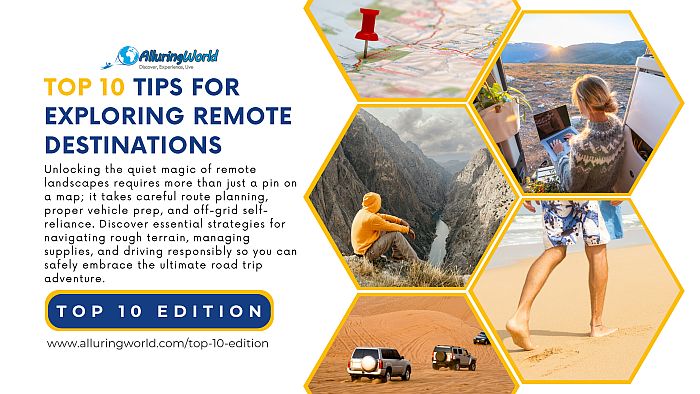
Sometimes the best travel experiences come about when there are fewer people around. Just imagine the red rock desert at sunset, alone; the pass in the mountains where you can stop and have everything to yourself; or the coastal road that takes you into the small town with a great coffee shop and lots of charm. It’s when you are not in the main places that parks feel more wild, and miles seem to be worth it.
Nevertheless, getting to these places requires some careful planning compared to the usual weekend road trip. This includes extended stretches of distance between refueling stations, spotty mobile phone reception, and bumpy roads that could occur out of nowhere. That’s why you need a realistic plan, proper supplies, and a vehicle built to handle whatever terrain lies ahead. Most often, all terrain tires for your vehicle are considered to be the right solution, especially for drivers who occasionally leave the pavement.
1. Choose the Right Remote Destination:
What comes first to mind when you think about planning your trip is the destination itself. A remote destination is far more than just a random pin on a map. You should learn more about your destination by studying its reputation, inhabitants, and daily routine. Travel blogs, park websites, and local visitor centers can help you a lot.
Having selected a location for your trip, consider how feasible the driving will actually be. Switchbacks and gravel roads may make your journey take twice as long as Google Maps says, and therefore what appears to be a four-hour drive on paper may take up much of your day. Don’t forget to consider which routes are accessible at any time of the year. Closures due to the season, snow cover, floods, and mudslides may all come into play. It also helps to know what you’ll find once you arrive. Some remote areas have a nice diner and a motel, while others have nothing for hundreds of miles. Find out where the last fuel stop is, where you can eat and sleep, and how much mobile coverage to expect.
Consider the rules of that place because many of the most beautiful remote places are protected lands, and they may require permits or reservations, for example, Havasu Falls. Last, you should match your trip to the calendar. Desert landscapes shine in the cooler months, mountain roads are the friendliest in summer, and wildflower country peaks in spring. Choose the right season and the whole journey falls into place.
2. Plan Your Route, but Leave Room for Discovery:
Firstly, you must map out your route, then select an alternative or two in the event that there’s any disruption on the road you initially planned. Note down all the places where you will find gas and stop for an overnight rest, and be realistic about how long you can drive in one day. Download an offline map and share your plan with someone back home just in case things go south and someone needs to notify the authorities.
After you have taken care of the basics, you can unwind. Flexibility is the hallmark of remote traveling, and hence it is best if you allow yourself some additional time to explore picturesque viewpoints and take impromptu turns on roads slower than anticipated.
3. Prepare Your Vehicle for the Journey:
Take your car in for a full inspection a week or two before heading out. Fluid levels, brakes, lights, and battery should all be checked, and make sure that your spare tire is ready for use. Tires will need more care because of the roughness of the roads away from civilization. All terrain tires have better traction and stronger sidewalls than normal tires, which will give you peace of mind if you go off the road.
Ensure that you have water, food, and gasoline provisions in addition to packing an emergency kit that contains a first aid box, flashlight, portable charger, and blankets. It is important to consider that basic tools for towing, like a tow strap, traction boards, and a shovel, will also get you out of trouble.
4. Pack for Remote Travel:
A general guideline is always to be prepared for being further away from amenities than you have anticipated. Always carry more water than what you may require, along with an adequate amount of food and snacks. Pack clothes that will help you cope with heat as well as cold, since temperatures fluctuate greatly from day to night.
To navigate, always have offline maps and a paper map in case of an emergency. Complete your packing by adding in first aid items, any prescribed medication, chargers, and a power bank because you never know when you will need them. Lastly, always remember to take trash bags and reusable containers so that you keep all places clean.
5. Drive Responsibly in Remote Areas:
Gravel roads, slippery roads, and sharp turns demand that you drive at a slower speed. You should maintain a steady speed according to the road and weather conditions you are experiencing, so stay on established paths and do not go off-roading unless it is necessary. Be mindful that that might be somebody’s property, and you should be courteous.
Keep an eye out for any wildlife, especially at dawn and dusk, when the animals tend to be more active. If you start feeling tired, you must pull over and stop for a while; tiredness is a greater hazard in these lonely conditions, and you should not risk it. Don’t forget, too, that in such lonely spots it could take several hours for any help to come your way. Driving carefully protects both your passengers and the delicate landscapes you are passing through.
ADVERTISEMENT
6. Make the Journey Part of the Destination:
Some of the best experiences will happen to you long before you even get to the designated place. You can stop at a certain spot, but no matter whether it is a popular site like the Delicate Arch or an overlook you have noticed while driving through, take a moment to enjoy the sight. Look for sites that are less known and could be of cultural or natural significance to you.
Make sure you savor the moment by taking photos, but please do it responsibly by staying on marked paths and giving the space the wildlife needs. Overall, the most important thing is to resist the urge to rush and run through the whole trip because the point of going remote is to slow down, embrace slow travel, and let the journey unfold at its own natural pace.
7. What to Do When Things Don’t Go to Plan:
The best planned journeys always have their share of hiccups. It could be an unpredictable weather change, closure of the road, breakdown of your car, or even a delay in your schedule. You might even find yourself without connectivity when you need it, so in such a case, take some time to reflect on the situation and think for a moment about what your next step should be.
Take the alternate route and inform someone at home about any changes that take place. In case the situation is not within your capabilities or it starts feeling unsafe, turn back. No scenic overlook or ruined itinerary is worth putting your safety at risk.
8. Master Off-Grid Communication and Emergency Safety:
Apart from using maps on your phone, traveling in remote regions requires means of contacting someone in case cellular networks are not available. Satellite messengers or personal locator beacons (PLBs) such as the Garmin inReach will come in handy for sending messages and distress calls in any part of the world. With knowledge of wilderness first aid and clear check-in procedures with a person at home, in case there is any mechanical problem or medical problem, the search and rescue teams know the exact place to find you. If an emergency occurs, an accurate location signal allows search and rescue teams to reach you as quickly as possible.
9. Practice True Leave No Trace and Environmental Stewardship:
Remote environments like the cryptobiotic soils of the desert, through to the tundra of alpine regions, can take years to recover from even minor disturbances by humans. Taking responsibility for the environment goes far beyond basic trash pickup by only traveling along designated trails, managing waste responsibly when there is no facility, and adhering to local fire bans. Embracing Leave No Trace as a core set of outdoor ethics means actively minimizing your impact, protecting fragile ecosystems, and ensuring future travelers experience these wild spaces untouched.
10. Manage Power and Utilities Off the Grid:
After several days of traveling away from urban centers, keeping essential electronics, coolers, and gear powered requires careful planning. Portable power sources like power stations, folding solar panels, or dual-battery setups will ensure that all the navigation gadgets, camera batteries, and flashlights remain charged without depleting your car’s battery, so consider bringing something that would allow you to replenish the batteries of your devices, and your car won’t suffer for it.
To conclude, one of the most unforgettable trips a person could make is to a remote destination that is far away from the big crowds. Being properly prepared will help you devote much more attention to the process of enjoyment rather than stressing out about it. What really mattered was not getting to an unreachable place; it was about experiencing the landscapes and the culture. Thus, get ready and explore your own remote destination!