
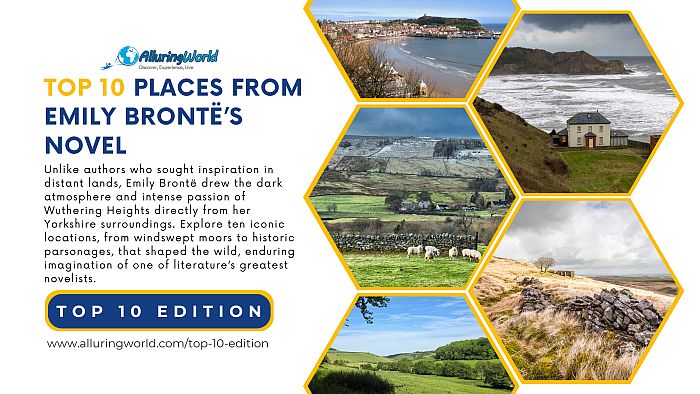
One of the most passionate and strong novelists to have ever walked on Earth is Emily Brontë. Through her novel, which was full of unmatched emotions, complicated characters, and dark atmospheres, Emily Brontë has secured a permanent position in English literature. In all, she has written one masterpiece novel called Wuthering Heights, along with some poetry. While most writers found their muse in far-flung parts of the world, Emily’s world was created by the harsh terrain, remote villages, and weather of her own environment. Emily Brontë was a silent observer of nature who walked a lot in the hills, watched the changes in the seasons, and heard the wild winds on the moors. Her close relationship with the Yorkshire countryside enabled her to portray the essence of freedom, loneliness, and eternal love in her writings.
Whereas many writers created imaginary worlds while sitting in bustling cities, Emily had actually lived within the very landscapes that she immortalized. She experienced the moors on foot, through harsh winters, howling gales, and rare summer sunshine; she lived in a historic stone parsonage, observed close-knit rural communities, and witnessed the profound forces of nature. Following in Emily Brontë’s footsteps is an enchanting experience that takes you across windswept Yorkshire hills, ancient farmhouses, quiet village streets, and historic churches, all of which inspired her to create one of the greatest novels ever written, Wuthering Heights. For literature enthusiasts and curious travelers like you, these ten locations will give you a unique opportunity to discover the landscapes that shaped the imagination of a brilliant literary genius, and possibly inspire you to visit them yourself.
1. Haworth, West Yorkshire: The Heart of Emily Brontë’s World
- Featured Novel: Wuthering Heights (1847)
- Key Landmark: The Brontë Parsonage Museum & St Michael and All Angels’ Church
Haworth is located on the edge of the Pennine hills in West Yorkshire, and it served as the home and creative center of Emily Brontë’s life. This place is full of steep cobblestone streets, dramatic hill views, and a brooding atmosphere, which inspired the dark and passionate tone of her writing. Emily moved to Haworth as a young child in 1820 when her father, Patrick Brontë, became the perpetual curate of the village, and she spent the rest of her short life exploring the surrounding countryside. She learned about the harsh realities of isolation, endurance, and human resilience through the rugged environment of this moorland region.
There are a number of settings featured in Wuthering Heights that draw from the local Yorkshire geography, including remote farms, expansive moorland, and tight-knit rural communities. You can walk through the historic village streets and visit places linked directly with Emily’s daily life, such as the parsonage and the surrounding hills. Haworth, overall, represents the foundation of Brontë’s storytelling world, where observation of nature, social isolation, and intense emotional currents became central themes in her work.
2. The Yorkshire Moors: The Landscape Behind Wuthering Heights
- Featured Novel: Wuthering Heights (1847)
- Key Landmark: Brontë Way & Brontë Waterfall
One of the most revered natural places by Emily Brontë is the endless stretch of Yorkshire moors that lay behind her house. She felt most in tune with nature in this place, and it was here that she found immense inspiration to pen down her thoughts. The beautiful heather hills and the wild sky were her personal refuge where she would walk around for hours, free from domestic worries.
This peaceful and wild setting, with its surrounding hills, streams, and vast horizon, is just like the elemental setting depicted in her novel. The moors have always been associated with the world that she has created, which is one where nature reflects the wild spirits of people like Heathcliff and Catherine Earnshaw. In today’s world, the moors provide you with the chance to tread the same path and experience the sudden gusts of wind on the mountains, as well as understand Emily’s spiritual connection with nature.
3. Top Withens, West Yorkshire: The Legendary Inspiration for Wuthering Heights
- Featured Novel: Wuthering Heights (1847)
- Key Landmark: Top Withens Ruin & Pennine Way
It is hard to find another place that evokes the images of Wuthering Heights like that of Top Withens, an abandoned farmhouse located in the bleak open moors. Emily Brontë has created an estate that immediately evokes images of this wind-battered, solitary building. Its remoteness, open to the weather elements, epitomizes the isolation and starkness of the novel.
Being situated on top of the valley, Top Withens was the ideal choice as an image to represent the Earnshaw household. The old stone building with its eerie look and the scenic background helped to create a mysterious aura around the novel. The place still preserves its wild nature and the strong connection with the well-known novel. Visiting Top Withens will let you feel the power of the natural environment as it was experienced by Emily during her solitary walks.
4. The Brontë Parsonage Museum, Haworth: Emily’s Creative Home
- Featured Novel: Wuthering Heights (1847)
- Key Landmark: The Parsonage Study & Brontë Society Collections
It is not just the exterior environment, but the inner sanctum of creative inspiration and familial cooperation that has been encapsulated in the Haworth Parsonage. While other writers sought inspiration through far-flung travel, Emily Brontë had her peaceful domestic haven where she gave birth to Wuthering Heights in 1847. It was a safe place full of books where the sisters would write and discuss their ideas.
Emily was intrigued by the concept of building elaborate generational narratives while studying the subtle nuances of domestic life through the lens of her Yorkshire home. When she mentioned the house, in a way, this object acted as a silent witness to genius by providing the perfect backdrop for literary contemplation. Today, you can relive the preserved rooms and historic objects that were inspired by the original period and get a glimpse of the domestic life that nurtured Brontë’s imagination to create a great novel.
5. Ponden Hall, West Yorkshire: A Possible Model for Thrushcross Grange
- Featured Novel: Wuthering Heights (1847)
- Key Landmark: Ponden Hall Historic Farmhouse & Library Window
The love for local architecture and historic Yorkshire estates had a great impact on Emily Brontë’s writing career, especially in crafting the contrast between Wuthering Heights and Thrushcross Grange. Her visits and local knowledge of historic buildings inspired the refined setting where the Linton family lived. Where other travel writers look to distant lands, Emily Brontë found grandeur in the historic stone houses scattered across the Yorkshire valleys.
The mullioned windows, enclosed gardens, and elegant stonework were the ideal setting for a story exploring social class, refinement, and contrasting human behaviors. The building has a great depiction of historical Yorkshire architecture, reflecting the wealth and sheltered lifestyle of the gentry. Tourists visiting the same regions as Emily visited will be able to view the historic halls that informed her understanding of elite rural life.
ADVERTISEMENT
6. Gimmerton and Stanbury Valley: The Rural Communities Behind Brontë’s Fiction
- Featured Novel: Wuthering Heights (1847)
- Key Landmark: Stanbury Village & Watersheddles Moor
The small rural communities surrounding Haworth, including the inspiration for the fictional village of Gimmerton, gained importance to Emily Brontë owing to her close observation of local village life. While walking through the valleys, Brontë got acquainted with the habits, local folklore, and tight-knit social structures of rural folk. Stanbury Valley serves as the geographic backdrop mirroring the fictional parish settings in her work.
The stone cottages, dry-stone walls, and elements of traditional community life completely match the social background of her novel. This is precisely why the local valleys form the link between Emily’s daily observations and her fictional society.
7. Thornton, West Yorkshire: The Brontë Family’s Early Beginnings
- Featured Novel: Wuthering Heights (1847)
- Key Landmark: The Brontë Birthplace Site & Bell Chapel Ruins
Thornton had become a significant place in terms of learning about the origins of Emily Brontë before the family relocated to Haworth. She was born in this village of Yorkshire in 1818 and spent the early years of her life surrounded by the people among whom her father worked as a curate.
Her early life experiences allowed her to appreciate the close-knit nature of northern parishes. Apart from her later isolation in Haworth, Thornton represents the very beginning of the family’s literary journey; a lesser-known part of Brontë’s life that marks the start of her connection to the Yorkshire region.
8. The Pennine Hills: The Wild Terrain That Shaped Her Imagination
- Featured Novel: Wuthering Heights (1847)
- Key Landmark: Withgill and Ponden Kirk
The fictional and factual landscapes that Emily discovered during her life were the physical backdrop to her artistic world. This can be observed in the wild depiction of nature in her novel and poetry. Even though the weather conditions are quite unpredictable, the rolling hills in West Yorkshire were a constant source of inspiration for her.
The raw and untamed nature of the uplands was the perfect mirror for the emotional storms within her characters. People who visit the Pennine hills will have the opportunity to see the sweeping landscapes through which Emily viewed the world: open skies, heather, rugged rocky outcrops, and deep, silent valleys.
9. Scarborough, North Yorkshire: A Coastal Escape from the Moors
- Featured Novel: Wuthering Heights (1847)
- Key Landmark: Grand Hotel & South Cliff
Another place beyond the immediate moors that is linked to the Brontë family is Scarborough, situated along the North Yorkshire coastline. The town offered a marked contrast to the scenery in the interior with its panoramic views of the sea.
Brontë was familiar with the coast, and the town represents a different facet of Yorkshire geography with its sweeping cliffs and ocean air. The contrast between the enclosed inland valleys and the vast open sea symbolizes the diverse experiences available in her home county. The coast gives visitors an idea about why varied landscapes mattered to the Brontë family.
10. St Michael and All Angels’ Church, Haworth: The Final Chapter
- Featured Novel: Wuthering Heights (1847)
- Key Landmark: The Brontë Family Vault & Memorial Chapel
The St Michael and All Angels’ Church has been an important part of the life experiences of Emily Brontë and is the last resting place of Emily, having a somber and sacred aura about it. Emily spent her entire life associated with the parish church where her father preached.
She was well acquainted with the community through her family’s involvement in the church, thereby forming her worldview based on spiritual reflection and human nature observation. These are the places where Brontë was connected for the entirety of her life because of her family responsibilities and connections. For the traveler seeking to honor the memory of Emily, a visit to the church in Haworth is akin to paying tribute to the end of her illustrious life.
In summary, the path taken by Emily Brontë offers a very intriguing illustration of the connection between local attachment and creativity. Every place that she visited was not just a mere point on the map but rather provided her with atmosphere, personality, and emotions. From the peaceful rooms of the parsonage to the historic stone walls of Yorkshire and up to the wild moors, every place has its own uniqueness.
Her skillful conversion of actual regional experiences into an eternal masterpiece was what made her one of the greatest writers of all time. Visiting these places enables tourists to learn how landscapes, weather, and personal solitude contributed to the story that continues to captivate the minds of millions of people around the globe. For all those who are fond of literature and travel, an Emily Brontë experience is not only a journey to well-known places; it is a journey to view the world from a visionary writer’s perspective.