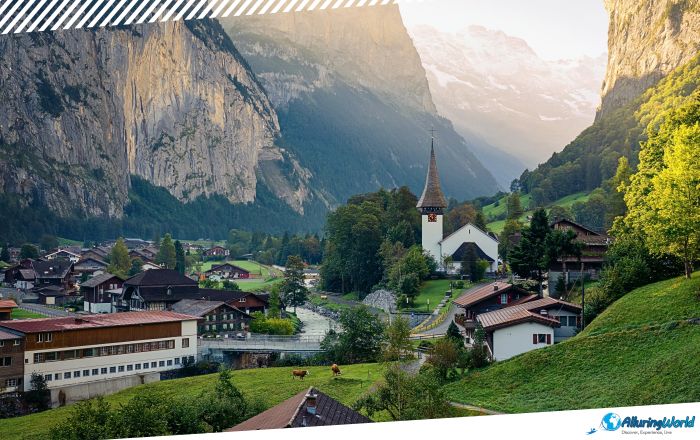
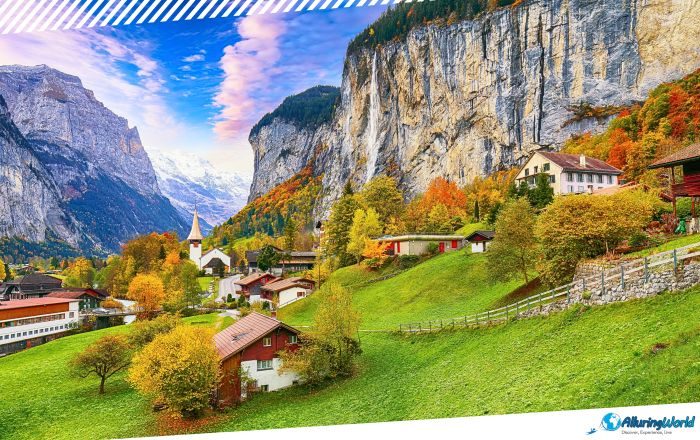
Lauterbrunnen is a small but very interesting village, municipality, and valley that is located in a trough valley, which is filled with impressive landscape, settled in the southern part of the Canton of Bern within the central-northwestern part of the Swiss Confederation. Lauterbrunnen feels less like a modern municipality and more like a scene from a high-fantasy novel because it is enveloped by the towering peaks of the Swiss Alps. Additionally, this small settlement serves as the gateway to the Jungfrau region, offering a landscape so sheer and profound that it has inspired poets and filmmakers for generations.
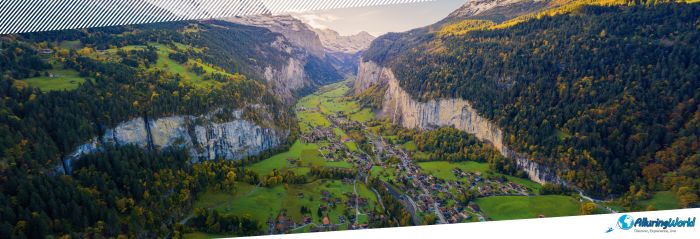
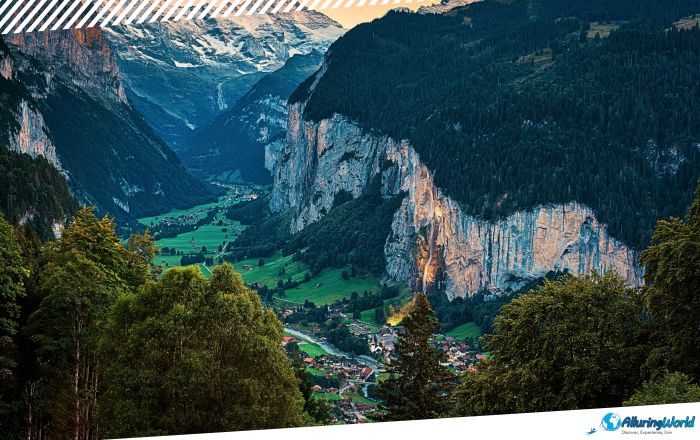
The geography of Lauterbrunnen is its most defining characteristic when you see it from above. Known descriptively as the Valley of 72 Waterfalls, the village sits at the base of a classic U-shaped glacial valley which extends for approximately 8 km (5 mi) before terminating at the Lauterbrunnen Wall, a colossal limestone precipice that forms part of the Bernese Alps.
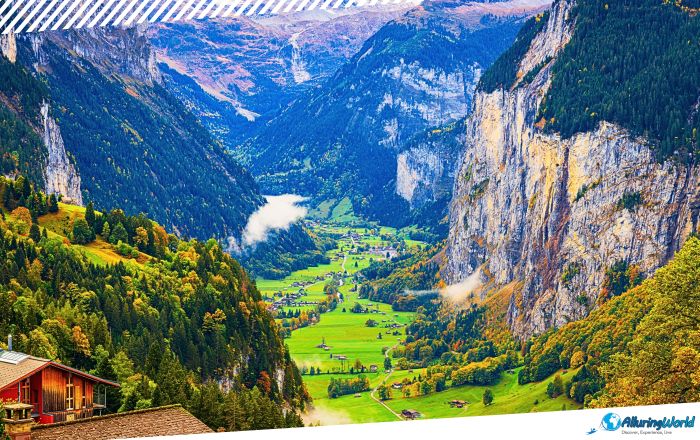
The high vertical walls that surround the Lauterbrunnen Valley create a microclimate and an acoustic environment unlike any other that can be found in Switzerland. The constant, rhythmic hum of falling water provides a natural soundtrack to daily life, consequently echoing off the rock faces that rise nearly 1,000 m (3,281 ft) above the valley floor.
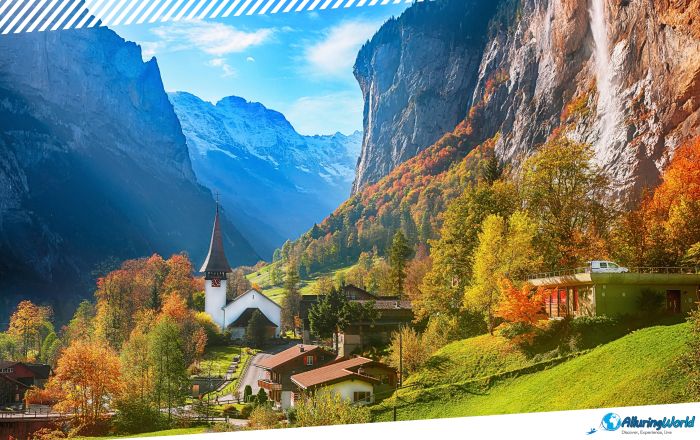
While the natural beauty is timeless and very captivating for everyone who visits this amazing place in person, the village itself boasts a long-standing history dating back to at least 1240. Historically, human presence in the valley goes back much further than the 13th century. There are archaeological discoveries that include a Roman coin found in the nearby Blumental, thus suggesting that these sheer rock walls have provided sanctuary and transit routes for nearly two millennia. As the area was ruled by different empires throughout history, each empire has left some footprint in the area, although the result is still seen as untouched nature.
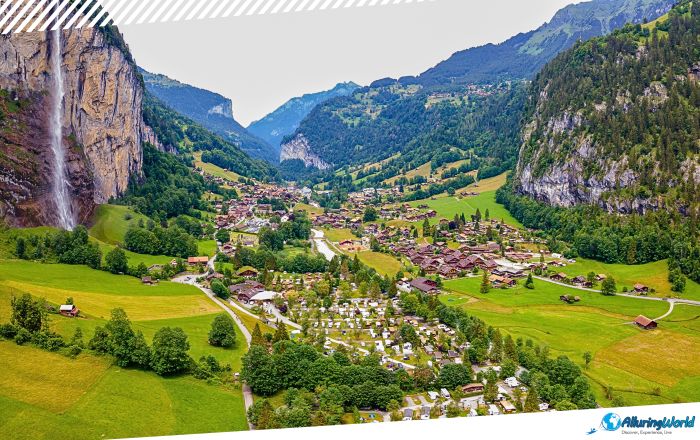
The untouched detail can be seen from the centuries that passed because the valley remained a secluded agricultural community, but it wasn’t until the 18th and 19th centuries, when Alpine tourism began to flourish. This is the period when the world started discovering the amazing landscape that Switzerland has, so the rest of the world also discovered the “Staubbach” and the hidden wonders of the Bernese Oberland.
ADVERTISEMENT
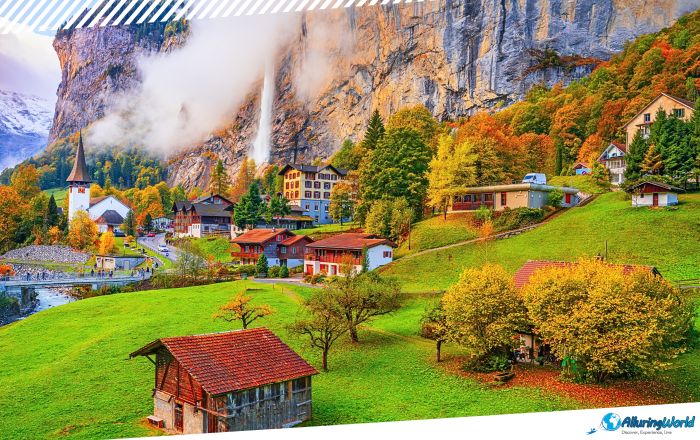
Of all the cascades and waterfalls that cover the cliffs, the Staubbach Waterfall is, according to some people, the most beautiful, undisputed crown jewel. Plunging from a height of 297 meters (974 ft), it is one of the highest free-falling waterfalls in Europe. Because the drop is so significant, the water often dissolves into a fine spray or “dust,” or as in German would be translated to Staub, before it hits the ground, especially when caught by the valley winds. This is where the waterfall’s name actually comes from, too. This ethereal effect was so moving that it inspired Johann Wolfgang von Goethe to write his famous poem, “Spirit Song over the Waters.” It is often the first landmark visitors see, because it appears as a silver thread set against the dark grey limestone.
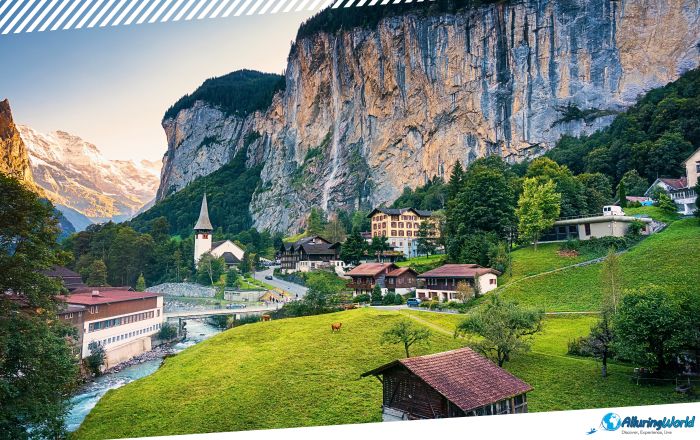
The village itself is a masterclass in traditional Swiss aesthetics, because its architecture is a traditional Swiss architecture. Clusters of wooden chalets with flower-filled window boxes line the narrow streets, positioned perfectly to frame the surrounding peaks. Still, the most prominent landmark is considered to be the Lauterbrunnen village church. While its architecture is purposefully simple and understated to match the humble mountain lifestyle, its elegant wooden spire rises defiantly against the backdrop of the waterfalls. The church’s bells, ringing through the mist of the falls, create an atmosphere of profound tranquility and give a sense of being in a different world to first-time comers.
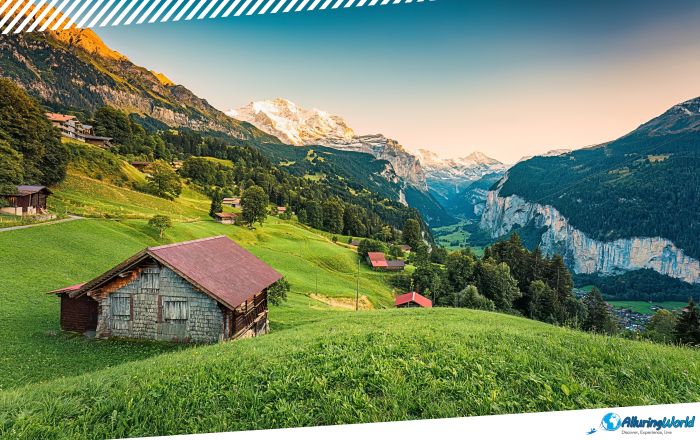
If you consider the village to be the highlight of your Lauterbrunnen visit, then you are in for more surprises. The true surprise lies in the landscape that transforms into a playground for explorers, and Lauterbrunnen is the starting point for some of the most spectacular hiking trails in the world, including routes to the car-free villages of Mürren and Wengen. The Trümmelbach Falls are located just down the valley, and these are ten glacial waterfalls inside the mountain, made accessible by a tunnel lift.
In addition to this, the Jungfraujoch, the famous “Top of Europe” railway, is easily accessible from the valley floor, and it is something you should consider doing. Overall, the most adventurous thing you can do is base jumping. Due to the verticality of the cliffs, the valley has also become a world-renowned, and somewhat controversial, destination for extreme wingsuit flyers and base jumpers.
All in all, despite its popularity with global travelers, Lauterbrunnen has managed to retain its soul. It remains a place where you can be truly stunned by stupendous vistas at every turn, so if you are watching the sunset hit the Eiger, Mönch, and Jungfrau peaks or walking through the mist of a high waterfall dropping to the valley floor, then you will be left with an indelible mark on your spirit and adventurous soul.