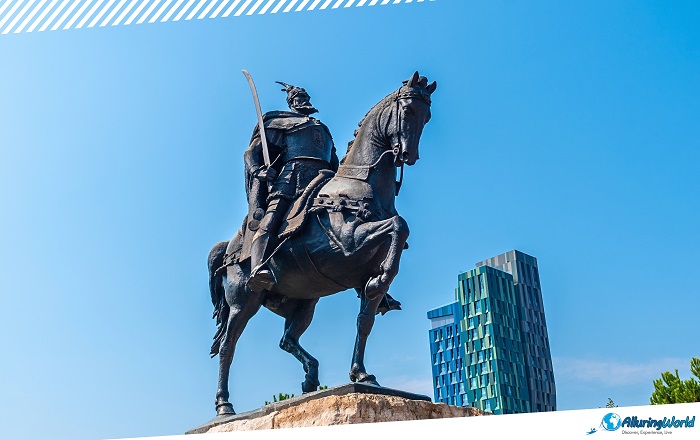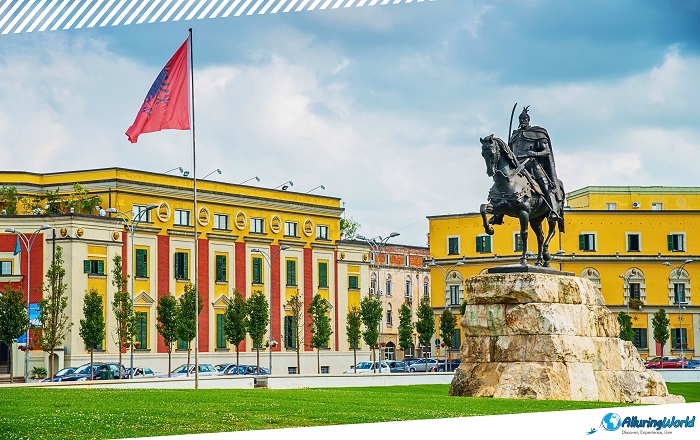
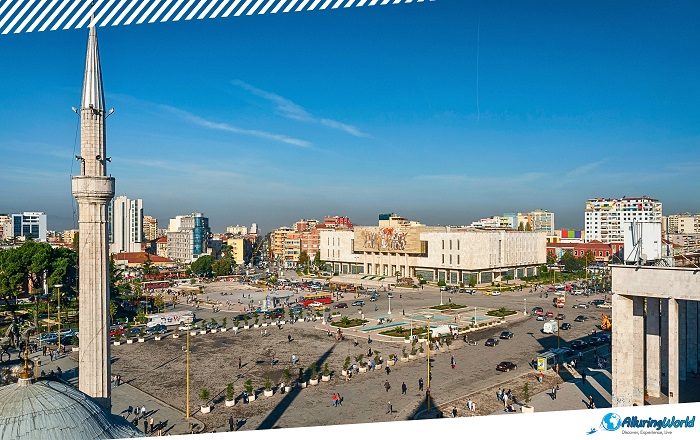
Skanderbeg Square, locally referred to as Sheshi Skënderbej, is the main and important square that is located in the center of the city of Tirana, the capital of the Republic of Albania. The square was named in 1968 after their national hero, Gjergj Kastrioti Skënderbeu, and throughout the decades, this expansive plaza has undergone a fascinating evolution, as it showcases the complex political history of Albania.
During the monarchy period, the area featured a traditional urban layout with a central roundabout and fountain. However, the communist era of Enver Hoxha, who ruled from 1944 until his death in 1985, brought radical changes. These changes were mainly with the demolition of several historical structures that were present there in order to make way for a more grand and socialist-like architecture.
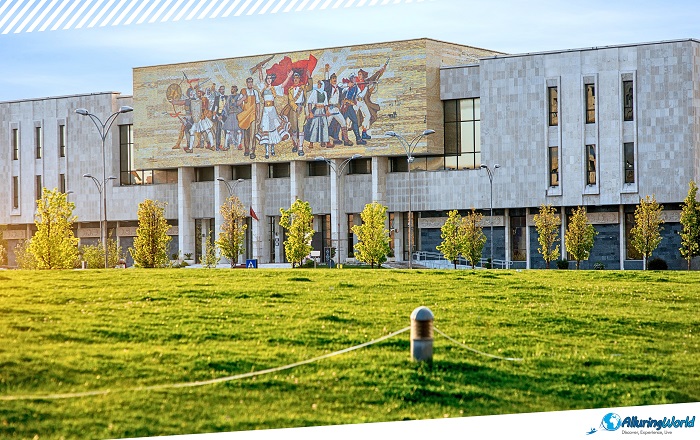
The site where the Palace of Culture stands today was once the bustling Old Bazaar. This was the former commercial hub of the city, and a place where people would do commerce and gather. Similarly, the prestigious Tirana International Hotel occupies today the ground where an Orthodox Cathedral once stood, while the current National History Museum sits on the site of the former Municipal building.
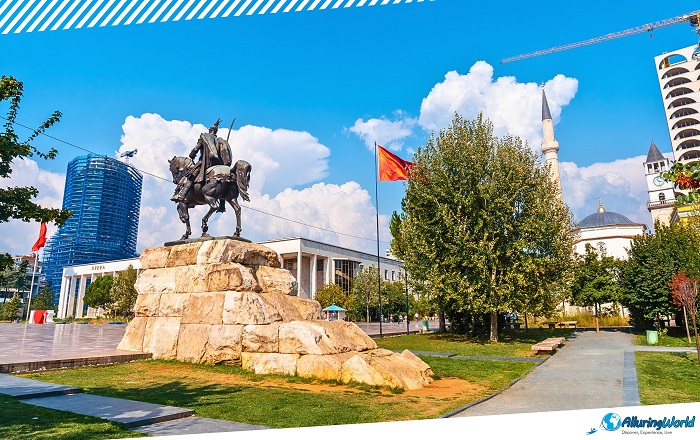
Still, what was once a socialist square, with interesting iconography that was shown at the time when communism was ruling the country, has shifted with time, as the years passed. There was a statue of Joseph Stalin that once dominated the space, but as the country shifted to a more open, democratic society, it was eventually removed and replaced by the iconic bronze monument of Skanderbeg on horseback. Later on, there was a statue of the leader Enver Hoxha, which was erected between the National History Museum and the Bank of Albania, only to be famously toppled by protestors during the fall of communism in 1991.
ADVERTISEMENT
Nevertheless, modern-day Skanderbeg Square is the result of an ambitious urban redesign that was expected to be done with the new millennium. A significant 2010 renovation initially aimed to create a pedestrian-only zone with a sustainable fountain system using harvested rainwater. Since this was the intended plan, the municipal leadership changed in 2011, and it briefly reintroduced vehicle traffic via a narrower road segment.
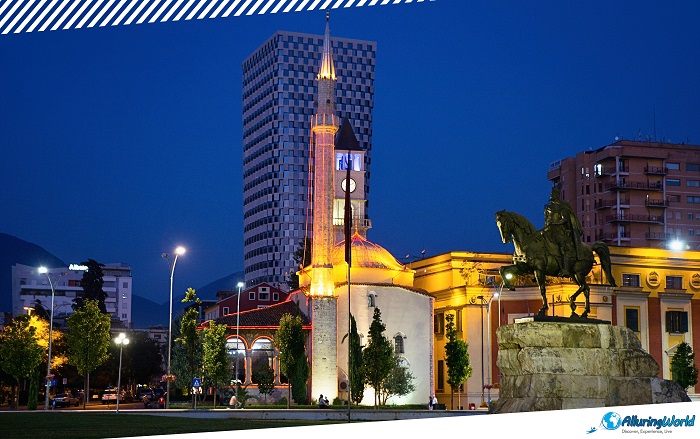
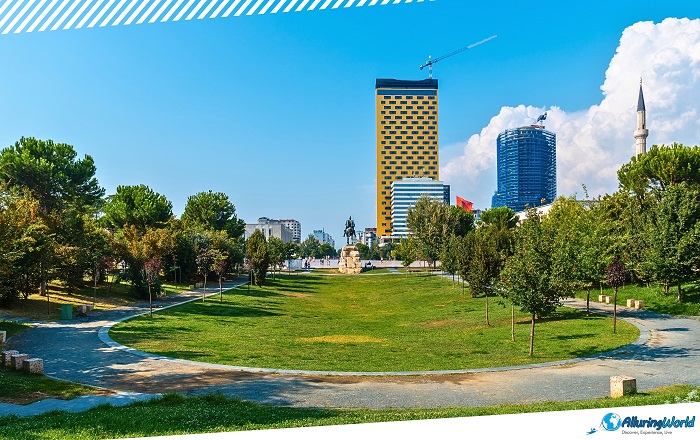
Still, considering the importance of Skanderberg Square, it was eventually transitioned back into a massive, award-winning pedestrian space. Today, the plaza features a unique stone pavement sourced from different lands, expanded green spaces, and a diverse array of native trees, making it a premier destination for tourism and public gatherings.
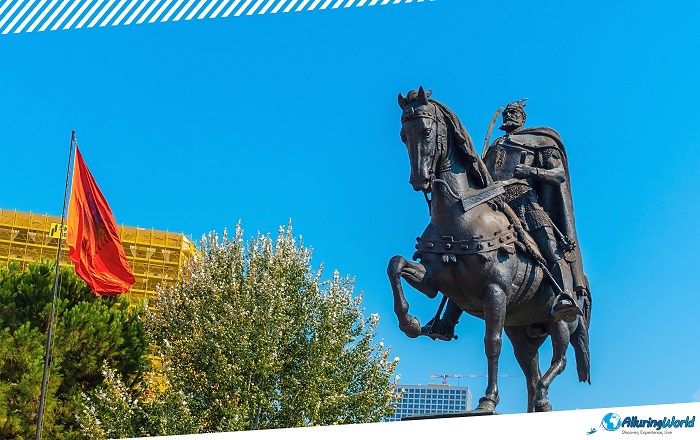
In conclusion, Skanderbeg Square today stands as more than just a geographical center. This is a living monument to the resilience and transformation of the Albanian people. By seamlessly blending historical monuments with sustainable modern design, the plaza managed to reclaim its role as a communal sanctuary where heritage meets progress. If you are visiting Tirana to admire the intricate stone mosaics of the Skanderberg Square or to enjoy the shade of its native greenery, the square will remain the definitive gateway to understanding the soul of Tirana.