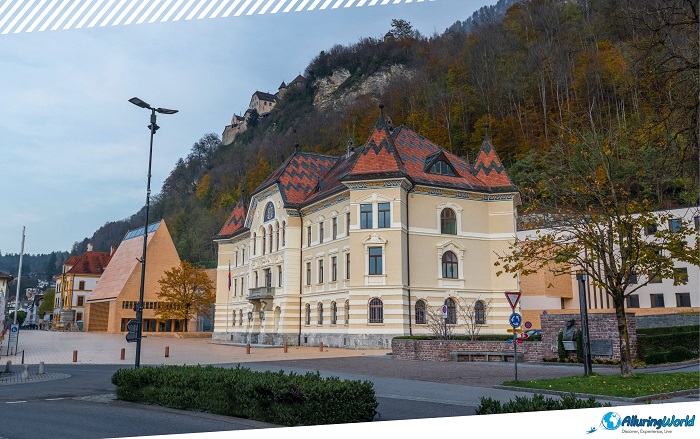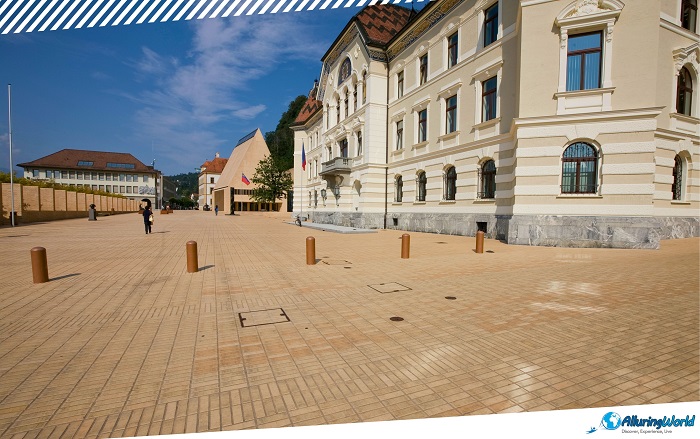

The Landtag of Liechtenstein is the official building of the parliament of Liechtenstein that is situated in the central part of the capital city of Vaduz, within the western part of the Principality of Liechtenstein. As this is quite a significant landmark in the tiny Alpine principality, the modern and striking building serves as the seat of the country’s parliament and embodies both the architectural innovation and political importance of Liechtenstein. As the building was completed in 2008, it stands as a symbol of the principality’s commitment to contemporary design and democratic governance.
The construction of the Landtag building was initiated to accommodate the growing needs of Liechtenstein’s parliamentary functions and to create a modern space that reflects the principles of transparency and accessibility. Prior to the building’s construction, the parliamentary sessions were held in the older Regierungsgebäude, which lacked the necessary facilities and did not adequately represent the democratic values of the principality.
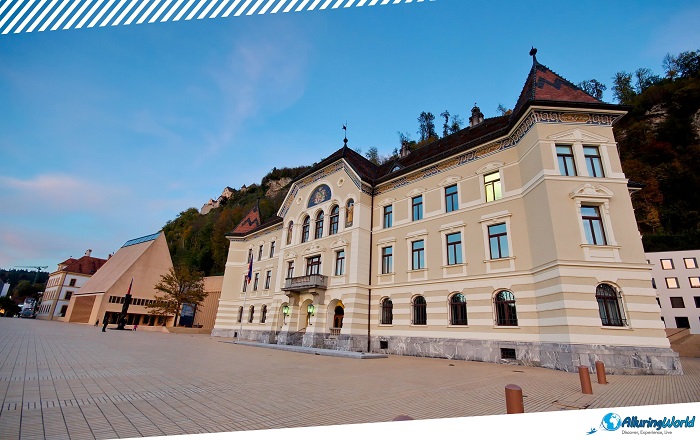
The architectural design of the Landtag building was conceptualized by the internationally renowned Swiss architect Hansjörg Göritz. The design philosophy was centered around creating a structure that would be both functional and aesthetically pleasing, incorporating elements that would resonate with Liechtenstein’s identity while addressing the requirements of a modern parliamentary system. Göritz’s design was selected through an international architectural competition, reflecting the principality’s commitment to excellence in design and construction.
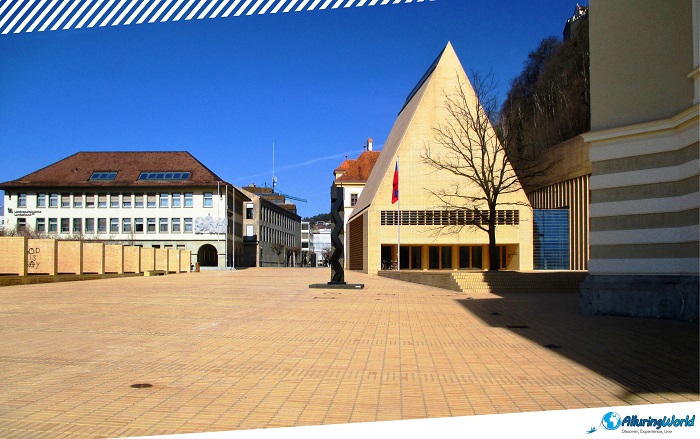
The building’s construction was carried out by a team of skilled contractors and builders, with the project overseen by the Liechtenstein Government and various local authorities, and the construction process involved meticulous planning and coordination to ensure that the building met the highest standards of architectural and engineering excellence.
ADVERTISEMENT
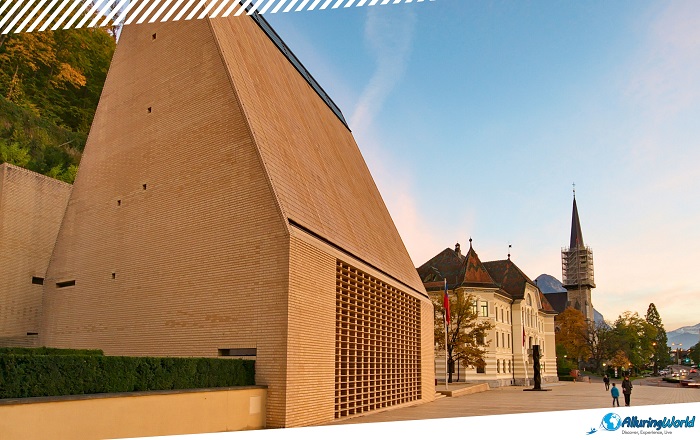
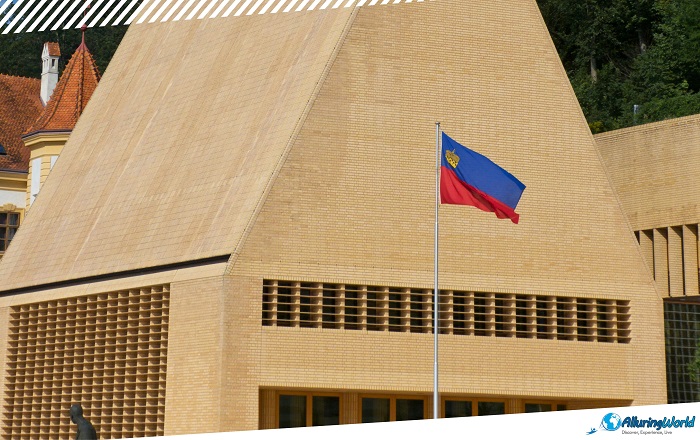
The Landtag building is characterized by its innovative use of materials and distinctive design features, as the exterior of the building is clad in a combination of glass and natural stone, creating a harmonious balance between modernity and tradition. The glass facade allows natural light to flood the interior spaces, enhancing transparency and openness. The stone elements, sourced locally, provide a sense of stability and continuity with Liechtenstein’s natural environment.
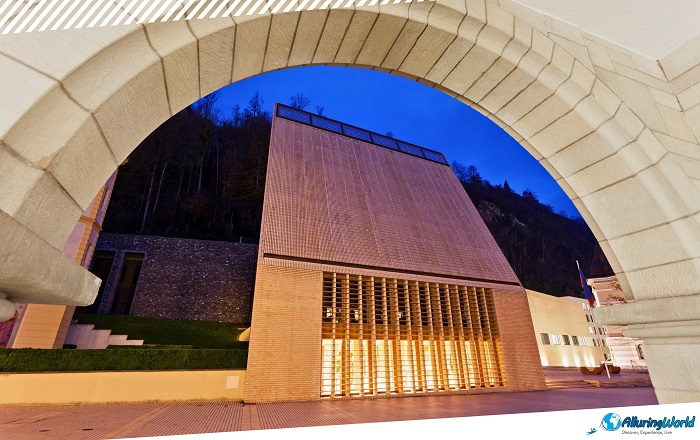
One of the most striking features of the exterior is the building’s unique geometric façade, which includes a series of angular, overlapping panels, and this design not only adds a dynamic visual element to the building but also serves functional purposes, such as improving energy efficiency and providing shading to reduce glare. The interplay of glass and stone creates a visually compelling structure that reflects the principles of modern architecture while integrating seamlessly with the surrounding landscape.
The interior of the Landtag building is equally impressive as its exterior counterpart, featuring a layout that prioritizes functionality, accessibility, and comfort. The central chamber, where parliamentary sessions are held, is designed to accommodate members of the Landtag and provide a space that fosters effective debate and decision-making. The chamber’s design includes a tiered seating arrangement, allowing for clear sightlines and efficient communication among members.
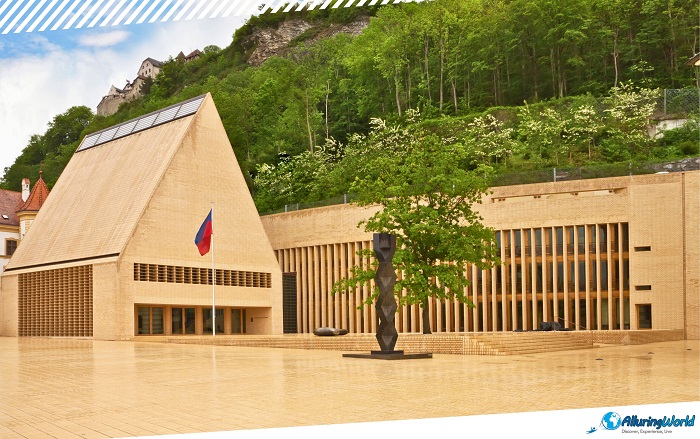
In addition to these details, the building also includes various supporting spaces, such as committee rooms, administrative offices, and public areas. The design of these spaces emphasizes flexibility and adaptability, allowing for various functions and configurations as needed, and the use of natural materials, such as wood and stone, within the interior spaces creates a warm and inviting atmosphere, while modern finishes and fixtures ensure that the building meets the highest standards of functionality and comfort.
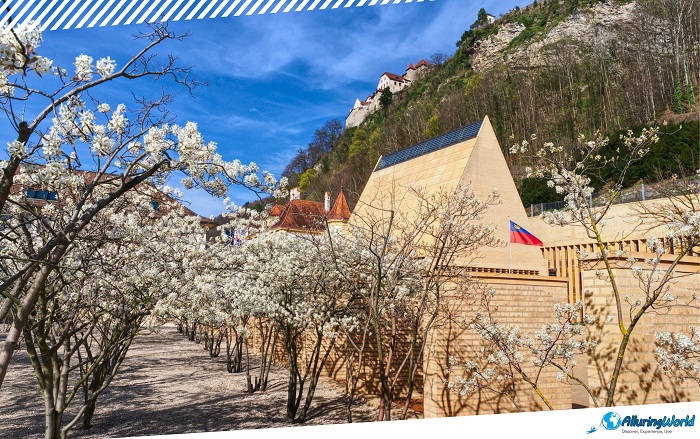
Furthermore, the Landtag building is not only a functional space but also an important cultural and civic landmark. It reflects Liechtenstein’s values of transparency, accessibility, and democratic governance, and the design of the building was influenced by the principles of openness and public engagement, with features that allow for interaction between the public and their representatives. For instance, the building includes spaces that are open to visitors, providing opportunities for the public to observe parliamentary sessions and engage with the political process.
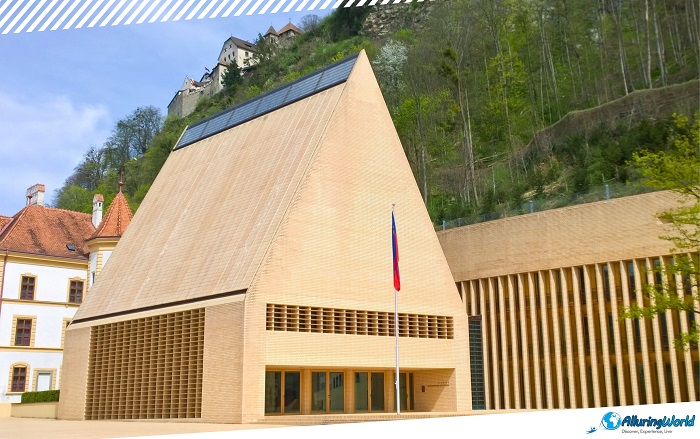
Visitors to the Landtag building can take guided tours to learn about the building’s architecture, history, and the workings of Liechtenstein’s parliamentary system. These tours offer insights into the design and construction of the building, as well as the role it plays in the governance of the principality, but the tours also provide an opportunity to explore the various spaces within the building, including the parliamentary chamber and committee rooms.
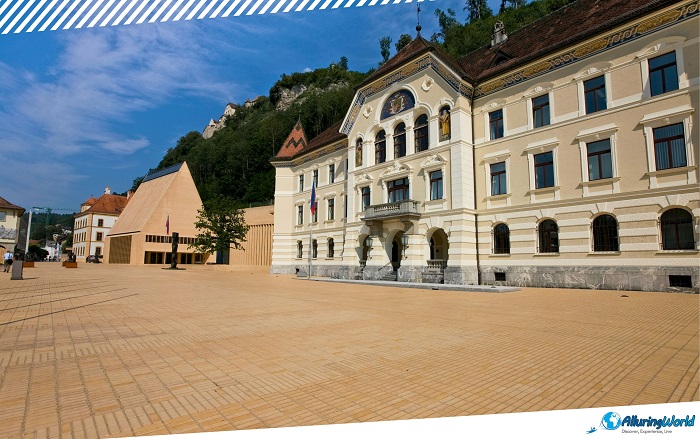
Reaching the Landtag building is straightforward, given its central location in Vaduz. The building is easily accessible by public transportation, including buses and taxis, which connect it to other parts of the city and the surrounding region, but for those traveling from outside Vaduz, there are options for accommodation and dining in the city, making it a convenient destination for visitors interested in exploring Liechtenstein’s political and architectural heritage.
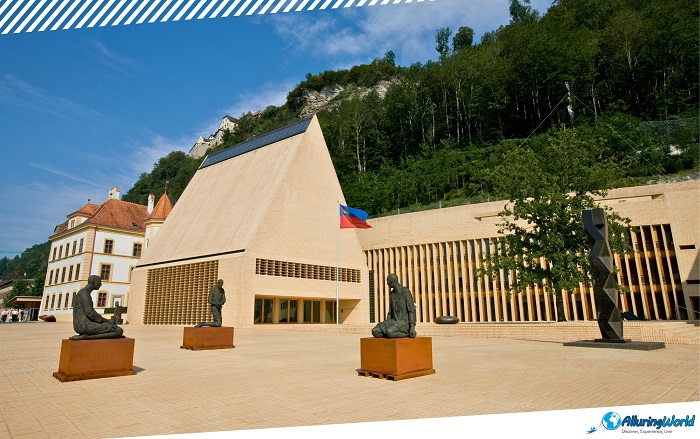
In conclusion, the Landtag of Liechtenstein is a remarkable example of modern architecture that blends functionality with aesthetic appeal. Its innovative design, use of materials, and emphasis on transparency and accessibility reflect the principles of democratic governance and cultural identity, and as both a working parliamentary space and a cultural landmark, the Landtag building stands as a testament to Liechtenstein’s commitment to excellence in design and its dedication to engaging with the public.