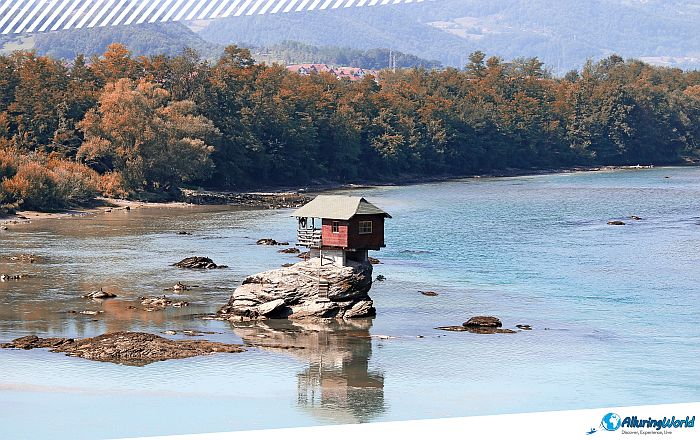
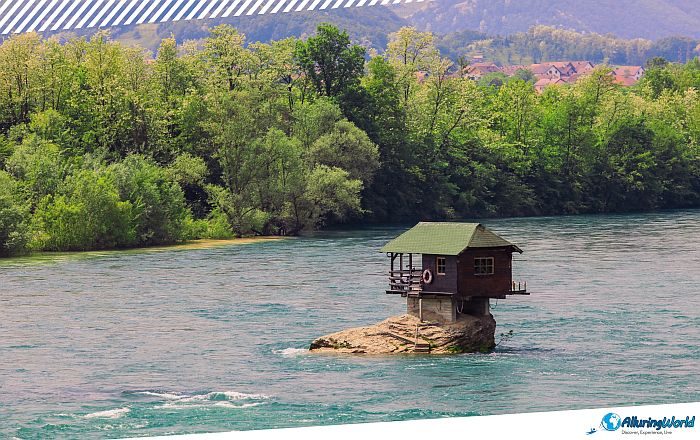
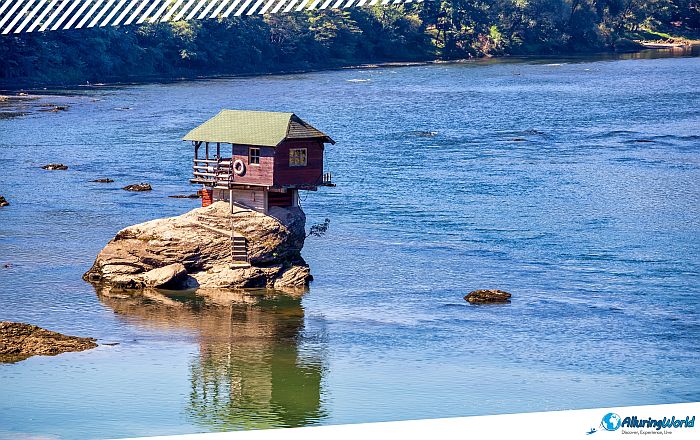
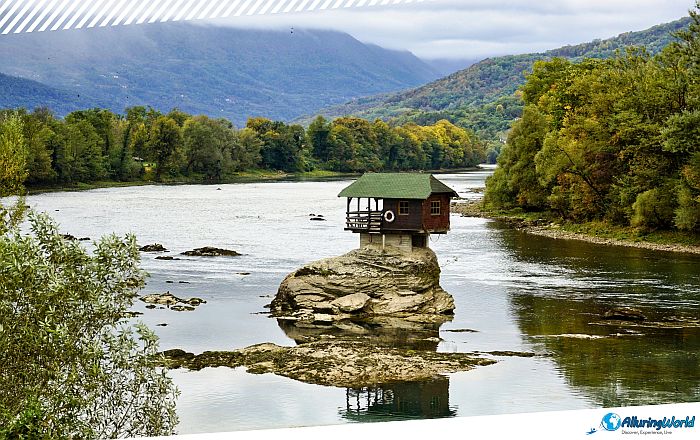
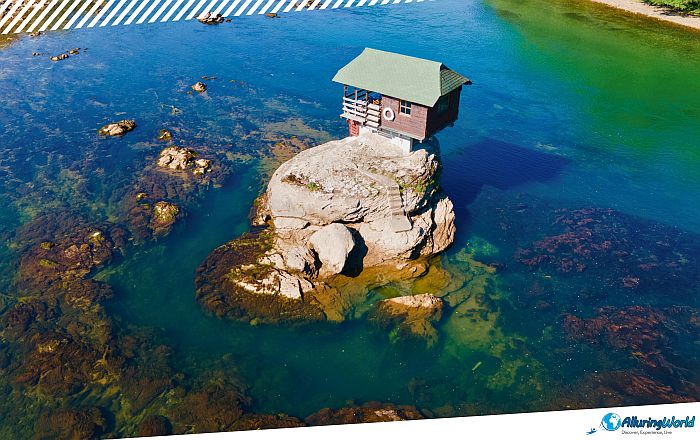
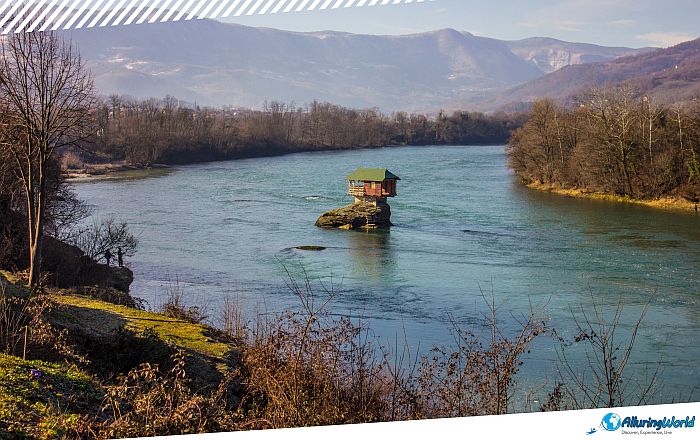
The Drina River House, locally referred to as Kućica na steni, is a unique and architecturally interesting house that is perched precariously atop an exposed limestone outcrop in the middle of a rushing turquoise current of the Drina River, located near the town of Bajina Bašta, in the Zlatibor District, within the western part of the Republic of Serbia. This tiny wooden cabin appears to defy both logic and gravity, which started as a humble sunbathing shed built by local teenagers in the late 1960s, but ever since then it has transformed into a globally recognized symbol of human ingenuity, resilience, and harmony with the natural world.
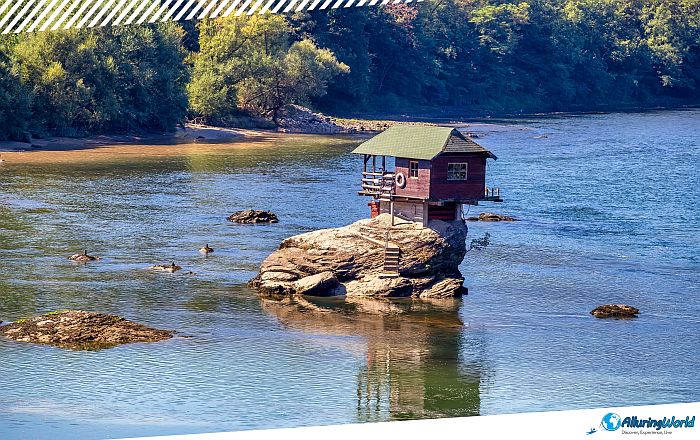
Whether you are heading for an adventure along the Balkan countries, enjoying the scenery in the thick pine forest of nearby Tara National Park, or seeking unusual places for photography, visiting the Drina River House will be an unforgettable experience for you that introduces you to the geography and culture of Serbia. Considering that the house is located on the natural border between Serbia and Bosnia and Herzegovina, the Drina River, you should be aware of certain details, and if you’d like to see this masterpiece, here are some additional tips for you to consider.
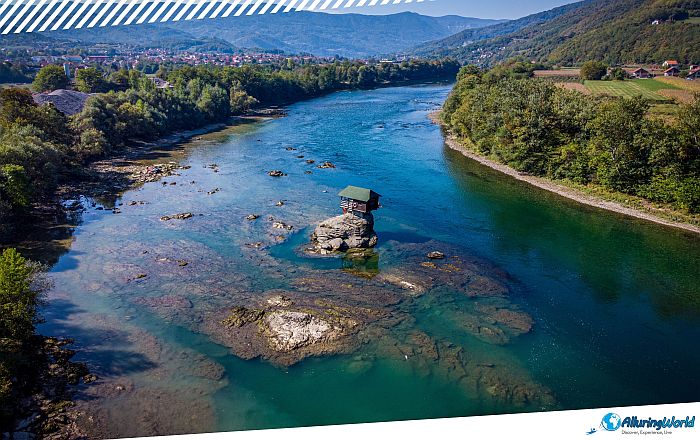
The origin story of the Drina River House dates back to the summer of 1968 when a group of local teenagers led by Milija Mandić (nicknamed “Gljiva” or Mushroom) spent their summer days swimming and diving off the rock formation in the river. During that time, the border did not exist, as it was part of the country of Yugoslavia. Still, as the teenagers were growing tired of lying on the sharp, rough stone between swims, they decided to construct a rough wooden platform where they could rest more comfortably under the sun and enjoy the cold Drina waters.
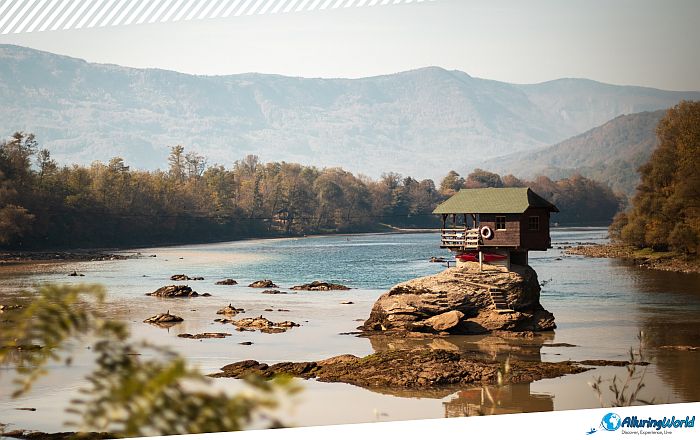
As autumn approached and the water grew cold, the boys realized they wanted a more permanent structure where they could store gear and seek shelter from unexpected rainstorms. The logistics of building on a riverbound rock were challenging, but the determination was bigger than these challenges. Every piece of lumber, beam, and roofing material had to be rowed out across powerful currents using simple wooden boats and kayaks. Larger planks were floated downstream from nearby sawmills, pulled from the icy water as they drifted past the rock, and manually dragged into position.
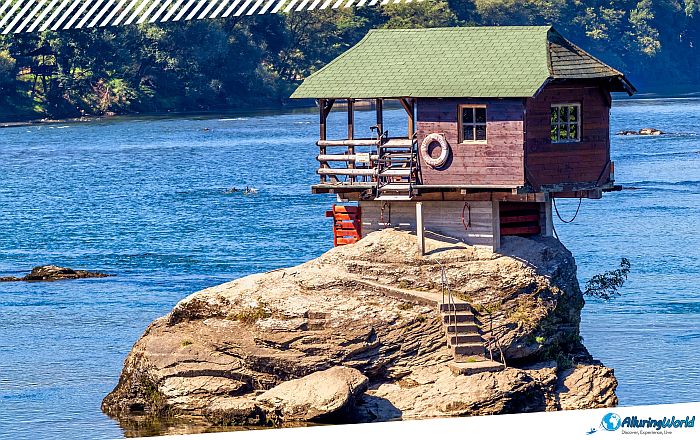
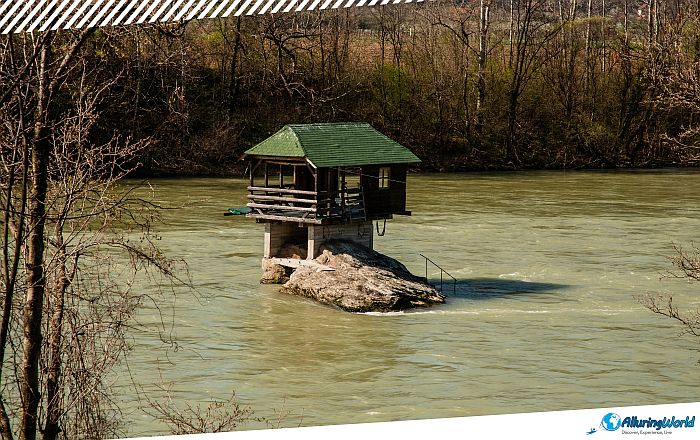
By 1969, the first official cabin was completed; however, building in the middle of a major river canyon comes with inevitable consequences. The Drina is notorious for dramatic seasonal surges caused by heavy mountain rains and melting Alpine snowpack, so the water level can vary from season to season, and at one point of the year the water level is so high that it almost covers the entire rock. This is how, over the past five decades, high water levels and violent floods have swept the house away or heavily damaged it multiple times, but as people were undeterred, they continued to rebuild it. Over many decades, local builders and enthusiasts have reconstructed the cabin seven times, making minor changes in architecture in order to deflect the debris carried by the water and resist the force of the current.
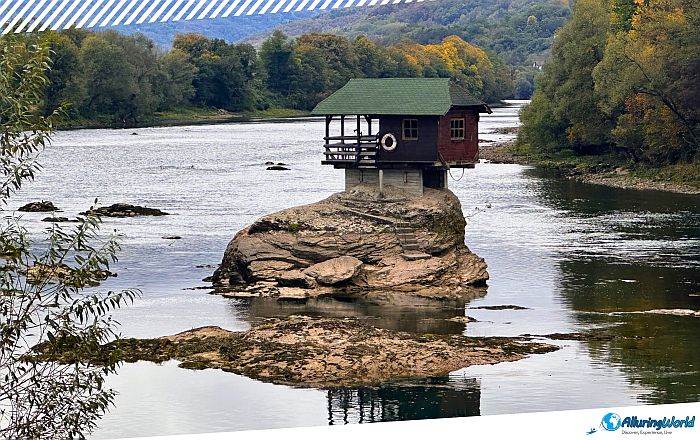
The house remained a much-loved local landmark for years until August of 2012, when Irene Becker, a Hungarian photographer, took an amazing picture of the little cabin against the backdrop of an ominous sky. The photograph won her a chance of having her photo selected as the “National Geographic Photo of the Day.” The picture soon went viral on the internet, and the world got to know this small piece of western Serbia.
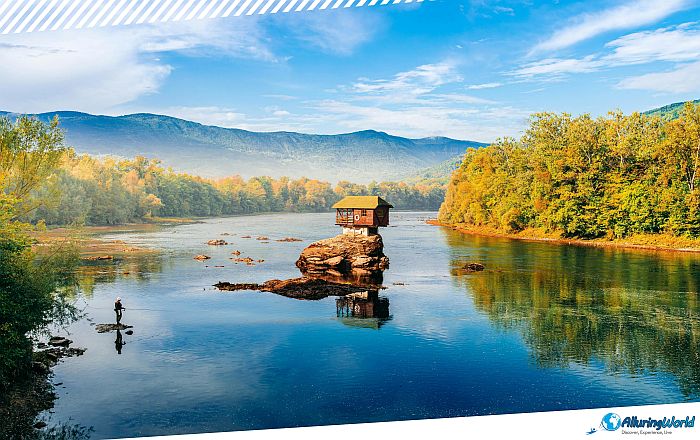
Not long after, magazines such as Lonely Planet made the site one of the best “off the beaten path” sites to visit in Southeastern Europe, and gave it the much-needed boost to be even more popular. People from all over the world started making it part of their Balkans tour plan to see the impossible building for themselves. However, even though it has such a big internet presence, the house is still surprisingly commercial-free.
ADVERTISEMENT
The house is located along Route 170, situated on the eastern bank of the Drina River directly outside the town center of Bajina Bašta. The river itself serves as a natural geographic border between Serbia and Bosnia and Herzegovina, meaning when you look across the water from the Serbian riverbank, you are looking directly at Bosnian soil, so this gives the place a little bit of extra charm. If you plan to drive or go by bus to this place, then have this in mind:
- From Belgrade: The driving distance from Serbia’s capital is approximately 170 kilometers (105 miles). Depending on traffic and route choice, whether you are going via Valjevo over the scenic Debelo Brdo pass or through Zlatibor, the drive takes between 3 and 3.5 hours. If you are able to rent a car, then please go for it, as this will give you more flexibility to explore more from Serbia’s winding mountain roads.
- By Bus: Regular daily long-distance buses operate from the main Belgrade Bus Station (BAS) to Bajina Bašta. From the Bajina Bašta town terminal, the house is a short 2 kilometers (1.2 miles) walk or a quick taxi ride away, but make sure you ask the price beforehand to avoid being overcharged once you arrive there.
- From Zlatibor or Užice: If you are staying in the popular resort town of Zlatibor, the house is roughly a 1-hour drive north (60 km – 37 mi) via Route 28, making it an easy day-trip combination.
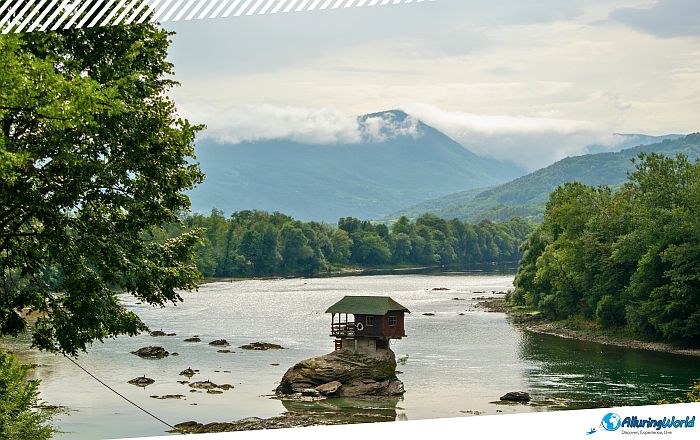
Visiting the Drina River House is remarkably straightforward and requires no admission tickets or formal reservations that you’d need to book. The house is clearly visible directly from the roadside and the adjoining riverbank, but there is a dedicated lookout point from where you can see it clearly and take even better photos.
If you’re set on visiting the small river house, be aware of these details:
- Best Season: Warmth, lush green foliage along the banks of the river, and good lighting are experienced between May and October. The late spring sees a more vigorous and dynamic river owing to the runoff from the mountains, while the emerald green and clear water characterize the late summer months as well, revealing the detailed structure of the rock formation.
- Best Time of Day: Photographers who get inspiration from the house must shoot during early mornings or late afternoons during the golden hours. Shooting during midday is difficult because of the glaring sun overhead and the resulting shadows on the wooden wall, so your photos might not turn out the best they could be.
- Viewing Spots: The most common view is from the roadside clearing right next to the local restaurant along the riverbank. For a elevated perspective, walk slightly along the raised road path to capture the house set against the backdrop of the forested Bosnian hillsides.
While Serbian people are very hospitable, friendly, and tend to be helpful to tourists coming to this small place, there are a few key visitor guidelines you should be aware of:
- Respect the house as private property; do not attempt to swim across dangerous river currents or climb onto the rock structure unassisted.
- Do not litter the area when visiting.
- Exercise caution when parking along Route 170, as passing mountain traffic can move quickly around curves.
While the Drina River House takes only 30 to 60 minutes to view and photograph, it sits in one of Serbia’s richest regions for outdoor adventure and cultural heritage. You can easily build a comprehensive 1- or 2-day itinerary around Bajina Bašta, so maybe you should consider doing an itinerary that will include the following places too:
- Tara National Park: The Tara National Park is located just a little further uphill from Bajina Bašta. It is well known for its rich, green forests, deep limestone canyons, and unique plant life including the indigenous Pančić spruce (Picea omorika). In addition to this, the park boasts more than 290 km (180 mi) of marked hiking and mountain biking paths and several famous viewpoints like the Banjska Stena overlooking the turquoise depths of Perućac Lake.
- Lake Perućac and Vrelo River: Lake Perućac, 13 kilometers (8 miles) away from the house, is an artificial lake that has been formed by a hydroelectric power station on the Drina River. The lake acts as a center for kayaking and boat tours down the canyon during the summer, and also for the floating cabins on the river. Another place worth mentioning nearby is the River Vrelo, nicknamed the “Year River” due to the exact length of 365 meters (1,198 feet) from its source to the waterfall on the Drina River.
- The Drina Regatta: If you visit in mid-July, you can witness or participate in the Drina Regatta (Drinska Regata), Serbia’s largest water festival. Tens of thousands of participants hop aboard inflatable rafts, wooden boats, and custom floating crafts to navigate the 25-kilometer (16-mile) stretch from Perućac past the Drina River House down to Rogačica, accompanied by music and lively celebrations along the river banks.
When traveling through Western Serbia, embracing local hospitality and regional customs will enrich your journey. This is why it is important that you pair your trip with a stop at a riverside restaurant (kafana) to try freshly caught Drina River trout (pastrmka), grilled meats (ćevapi), fresh kajmak, and locally distilled plum or juniper brandy (šljivovica or klekovača). You still need to respect the natural spaces around the Drina River House, as well as the National Park, considering that both are important with protected habitats for brown bears, chamois, and diverse bird species. Always pack out garbage and follow leave-no-trace principles when hiking or relaxing along the riverfront.
It is safe to conclude that Drina River House offers much more than just a picturesque landscape for taking photographs. This is a symbol of local people’s resilience and a human reaction to the power of nature, as well as a living monument to the spirit of the Drina River canyon. Historical background combined with fascinating geography makes Drina River House one of the must-see places in Western Serbia.