
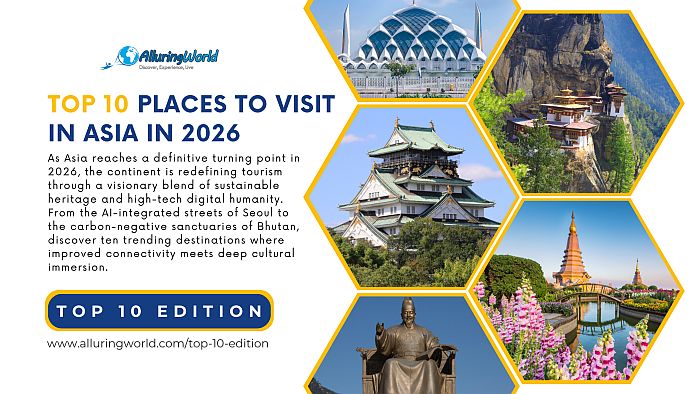
It is an exciting moment when the field of travel in Asia seems to reach its turning point in 2026. With sustainability, quality, and technological advancements becoming the main themes discussed by today’s travel industry, Asia proves itself to be a winner. From futuristic South Korea to the mysterious highlands of Vietnam, Asia stopped being just another travel destination. This continent represents today a cultural immersion and futuristic travel opportunities. In 2026, travelers seek to find not only historical sites and famous landmarks but also to discover hidden places that have become reachable because of improved transportation and policies.
Be it Japanese cuisine, Sri Lankan spirituality, or the vibrant cities of Southeast Asia, the year 2026 provides an unparalleled opportunity to discover a region that is redefining its image in the tourism industry. Below you will find the best ten places that would become the hottest trends this year, complete with explanations on why they deserve your urgent attention.
1. Osaka, Japan: The Post-Expo Cultural Powerhouse
After the remarkable success of the World Expo in 2025, Osaka has been confirmed as the liveliest urban center in Japan. By 2026, Osaka will benefit greatly from significant infrastructure developments, such as the extension of the Osaka Metro Chuo Line and the regeneration of the island of Yumeshima. Though Tokyo is still the political center of Japan, Osaka stands out as the kitchen of the world. The “Kansai spirit” of Osaka makes it easier to access than other destinations. There are now various entertainment and hotel centers available in Osaka, which was established as a consequence of the successful World Expo.
2. Kyoto, Japan: A Masterclass in Sustainable Heritage
Although Kyoto will always be the soul of the Japanese islands, 2026 represents a change for how tourists experience the city, with advanced technologies allowing the crowds to manage themselves through “slow travel” techniques so that one can once more enjoy the tranquil nature of the bamboo forests in Arashiyama or the serenity of the structures of Ginkaku-ji. Even the trip from Kyoto to Osaka itself has become an enjoyable part of the journey as luxurious rail cars and improved regional rail links allow one to move seamlessly from the traditional to the modern while enjoying the scenery.
3. Seoul, South Korea: The Renaissance of Digital Humanity
Seoul is no longer a place obsessed with “K-Pop”; it has become the leading player in “Digital Humanity” by 2026. In Seoul, artificial intelligence-based tour guides and advanced interfaces have become an integral part of the life of the city. The Seoul train station acts as the “nervous system” of such progress, not only being the transportation hub of the city but also becoming a tourist attraction with interactive art displays, fine dining areas, and super-fast immigration stations for foreign travelers. From there, one can travel to other cities via the high-speed KTX trains; however, the train station itself demonstrates the perfect combination of fast living and smart thinking.
4. Sapa, Vietnam: The Highland Haven
For the adventurous and the crowd-hating visitors, Sapa in the north of Vietnam is a gem worth exploring for tourists in Southeast Asia. Famous for its cascading terraces of rice fields and the Fansipan Mountain, the place has gained access to better road connectivity that allows tourists to experience a much more enjoyable ride to Sapa from Hanoi. With the “regenerative tourism” theme of 2026, tourists have an option to participate in the trekking activities that help boost the economy of the indigenous ethnic groups in Sapa. Overall, Vietnam is a must-visit destination for 2026.
ADVERTISEMENT
5. Sri Lanka: The Island of Resilient Beauty
One of the most important and popular tourist attractions for 2026, according to some of the leading travel authorities, Sri Lanka is a destination that provides tourists with a wide variety of activities within a relatively small geographical area. From the surfing beaches in the southern part of the island to the old archaeological sites in the Cultural Triangle, Sri Lanka is making “value-driven luxury” work for them. Now that electric trains have begun operating at the beginning of 2026, traveling through the beautiful tea country in Sri Lanka is more sustainable than ever before.
6. Palawan, Philippines: The Last Ecological Frontier
Palawan will continue to be the benchmark for all beachgoers who emphasize the ecological integrity of the area. The year 2026 will see Palawan become even more committed to sustainable tourism by restricting the number of people who visit both the Underground River and the El Nido Lagoons. This concept of “high-value, low impact” will ensure that the waters and rock formations in the area maintain their purity.
7. Bhutan: The Carbon-Negative Sanctuary
Bhutan remains ahead of the rest of the countries when it comes to conscious tourism. The main reason behind this is due to the fact that the country’s “High Value, Low Volume” philosophy ensures that every visitor adds to the development of Bhutan socially and environmentally. In 2026, the Trans Bhutan Trail will emerge as a must-visit destination for trekking enthusiasts. “Gross National Happiness” is a concept practiced by Bhutan that is quite contagious, and every person who has visited this small Himalayan nation has brought back very positive memories with them.
8. Bandung, Indonesia: The Paris of Java
Despite the prominence of Bali, Bandung is a city that has risen to fame in 2026 as the center of creativity in Indonesia. With its location in the highlands, the cooler weather, as well as the art deco style, give Bandung an edge when it comes to the proliferation of coffee shops and alternative fashion trends. As a preferred destination for young backpackers and digital nomads, this city offers a combination of volcanic landscapes like Tangkuban Perahu and modern urban vibes.
9. Okinawa, Japan: The Hawaii of the East
Okinawa is an example of a subtropical paradise away from mainland Japan. Being part of the Ryukyu Islands group, Okinawa by 2026 has emerged as a favored destination for vacationers who are looking to rejuvenate themselves or live longer. The island is part of the “Blue Zones” of the world, and this is a place where the cuisine and culture play major roles. Apart from having beautiful beaches and exceptional diving sites in the Kerama Islands, the rich culture of Okinawa, which differs from the rest of Japan, is well worth experiencing.
10. Chiang Mai, Thailand: The Rose of the North
Chiang Mai remains an innovator and a source of culture. By 2026, Chiang Mai became a center of contemporary local immersion experiences, thus allowing travelers to spend their time at boutique guesthouses while taking part in neighborhood craft-making workshops. One of the most eye-catching festivities in Asia, the Yi Peng lantern festival is definitely a must, yet, there is more to see in this city, especially when it comes to its mountainous area, ethical elephant sanctuaries, and popularity among remote workers.
To conclude, the travel notion in Asia in 2026 will be characterized by a combination of the richness of history and modern conveniences. Travelers have stopped being satisfied with viewing the sights from the sidelines; so they are becoming an active part of efforts that are aimed at preserving the landscapes in the region. The ease of transportation has made it possible for the bravest travelers to become more knowledgeable about the particularities of each destination. It is about going beyond the tourist façade and delving deep into the essence of what makes these locations so unique. If you choose one of these ten places in 2026, then you are not only setting off on an exciting journey, but you will be joining a new generation of tourists who strive to make the world better. This is why you should go for it and book your trip in one of these amazing places throughout Asia.