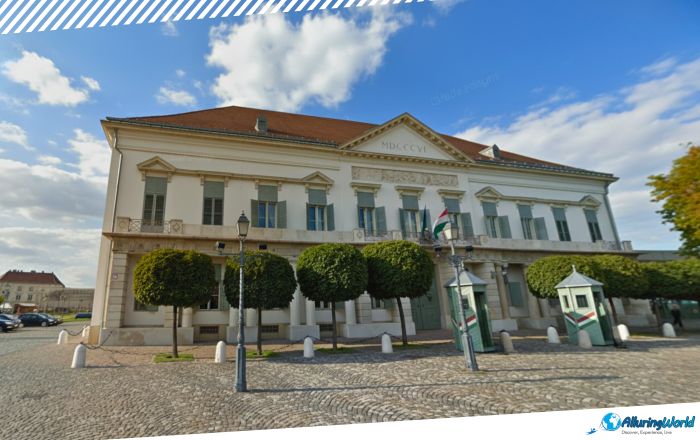
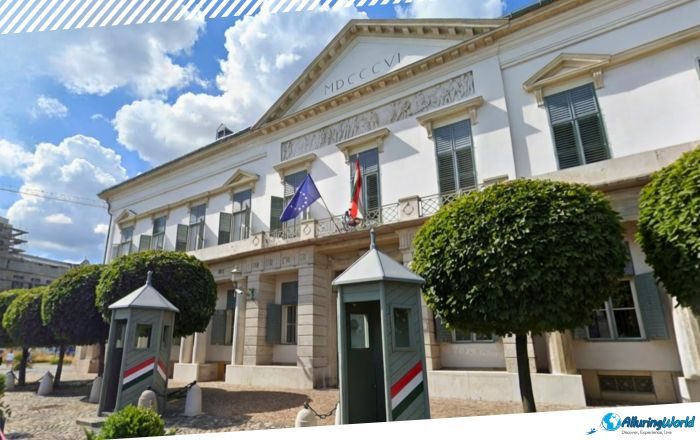
The Sándor Palace is a mansion that serves as the official seat of the President of Hungary, located in the vicinity of the historic and very imposing Buda Castle in the capital city of the country, Budapest. This historic building is of utmost importance to the Hungarians, as it has seen numerous events that happened in the city and the country itself, and today is considered one of the more important structures that should not be missed whenever in Hungary’s capital, Budapest.
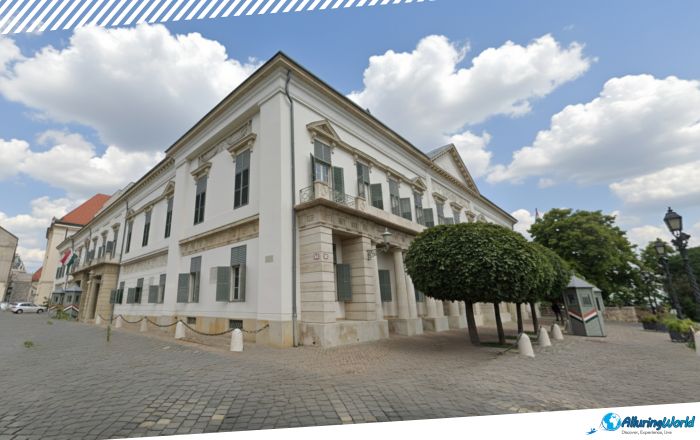
At the beginning, Sándor Palace was built between 1803 and 1806 for the aristocratic and very rich Sándor family, and it was built according to the design of one of the most important Hungarian architects, Mihály Pollack. This Austrian-born architect is celebrated mainly as a leading figure of Neoclassical architecture in Hungary, and he is responsible for the Hungarian National Museum, which was constructed between 1837 and 1847, and today serves as a key symbol of national identity.
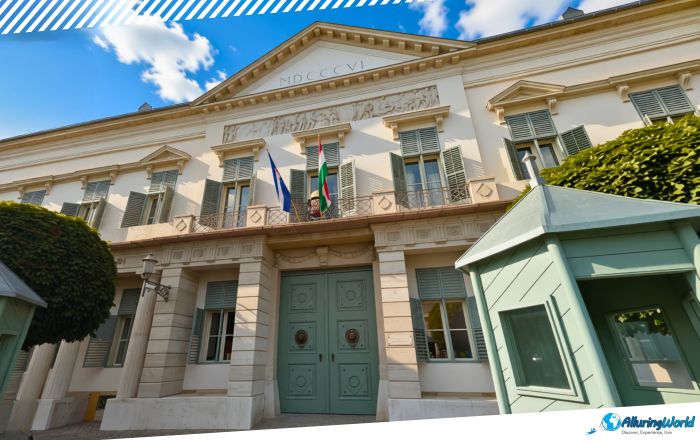
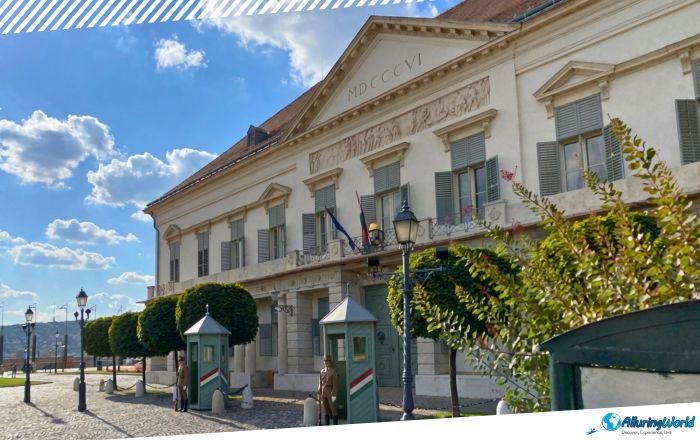
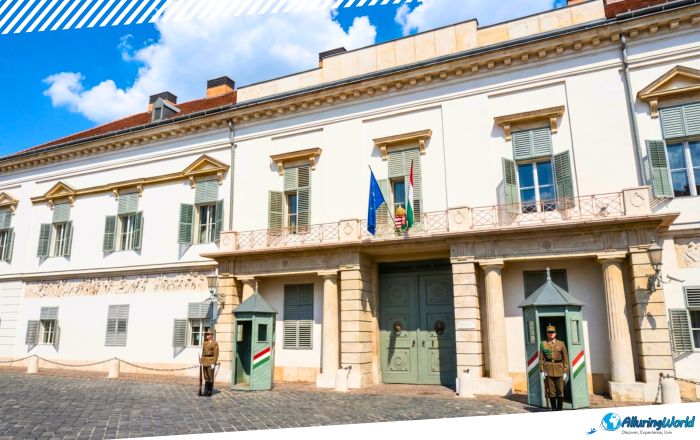
Following the neoclassical architectural style of the building, the façade of Sándor Palace is quite interesting because on the southwest side, a pair of light green doors with the inscription Köztársasági Elnöki Hivatal, meaning “President of the Republic’s Office”, can be seen. There are some formal guards standing in front of the entrance, and they are among the most photographed people in the city.
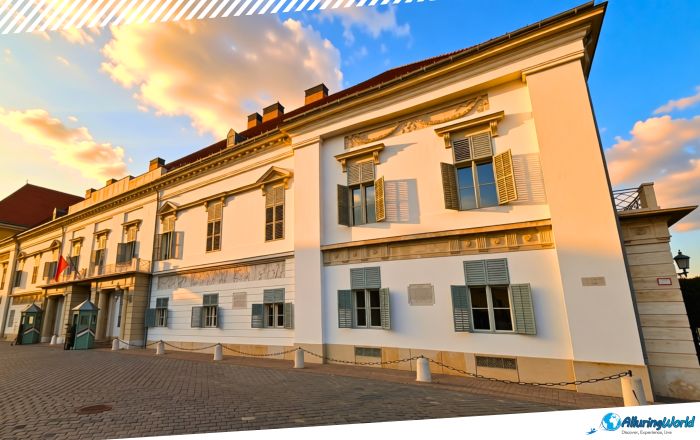
There is also on the iron balustrade above the inscription, the modern coat of arms of Hungary, which is flanked by the flags of Hungary and the European Union, as Hungary is a member-state since 1 May 2004. To the southeast part of the façade, there is a similar pair of light green doors with no inscription, while on the iron balustrade above these doors, the Hungarian and EU flags appear alongside the former Hungarian coat of arms, which depicts Hungary quartered with Dalmatia, Croatia, Slavonia, Fiume, and Transylvania.
ADVERTISEMENT
Right above the first floor, there is some imitation of Graeco-Roman architecture, which features the Roman numerals MDCCCVI, which signifies 1806, which is the year of the completion of the original palace. When the palace was completed, there were no fences, as is the case today, which allows the visitors to get close and admire the beautiful piece of architecture.
Throughout the years, the building was a place where plenty of Hungarian key political figures have been living; however, during World War II, the palace was bombed and left in ruins, and it was neglected until the fall of Communism in Hungary, when the political system changed in 1989.
Thanks to a really devoted team of restoration workers, a roof was erected over the ruins and the walls were supported, and over the years, Sándor Palace was gradually restored to its former glory, according to the original blueprints that were recovered in 1983, together with the detailed history of contemporary maps. In addition, the interior was restored to its previous look with replicas of the furniture that was once there.
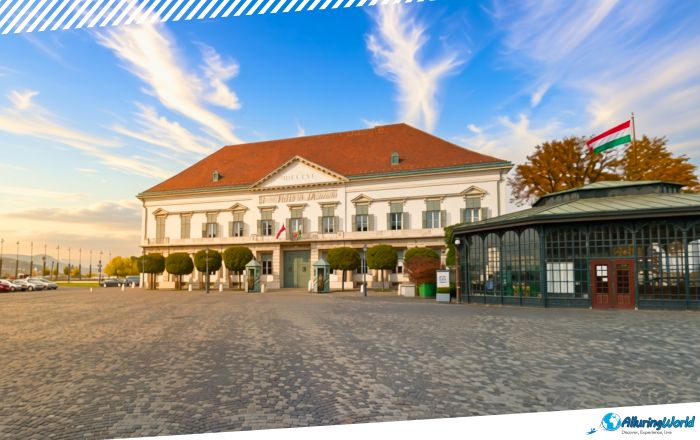
Occasionally open to the public, visitors are able to witness the lush Baroque interior, which is, according to some, more impressive than the exterior. Nevertheless, just seeing this marvel on the outside, and also the change of the guards, is something one should definitely do when visiting this historic city.