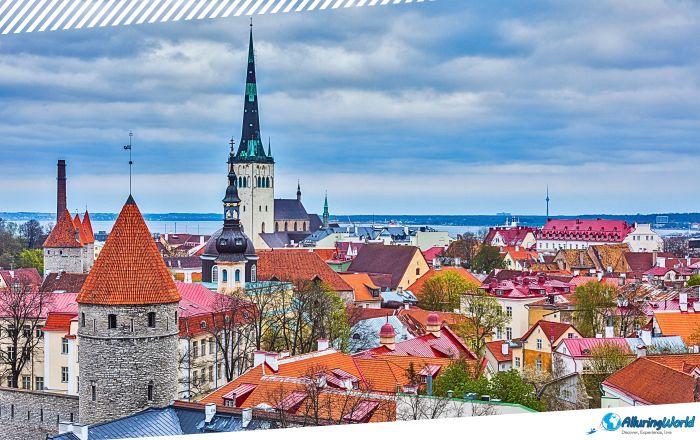
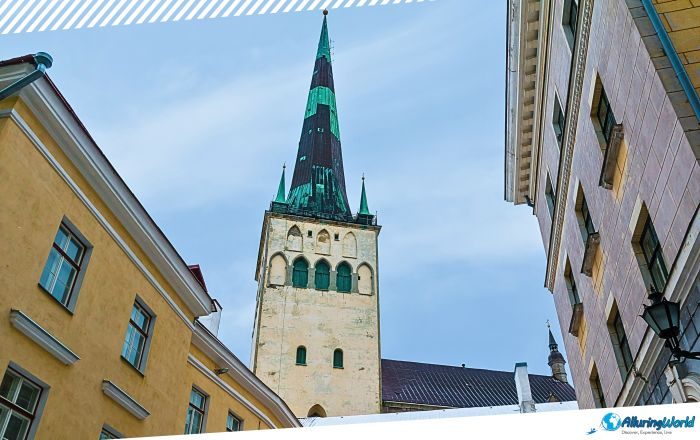
St. Olaf’s Church, or as it is sometimes written, St. Olav’s Church, is one of the oldest churches in Estonia. Located in the capital Tallinn, it is believed to have been built in the 12th century and to have been the center for old Tallinn’s Scandinavian community before Denmark conquered Tallinn in 1219.
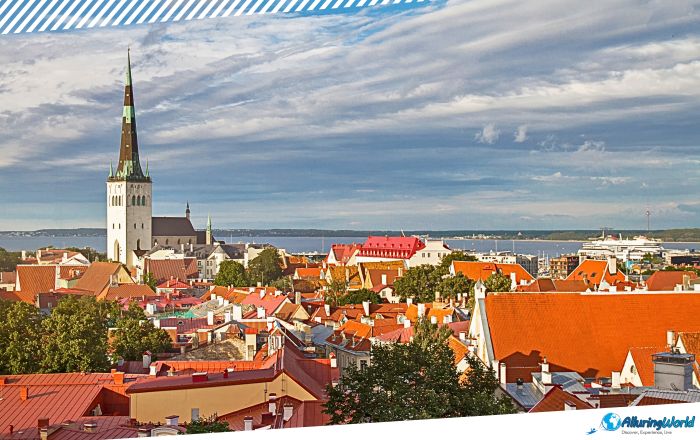
St Olaf’s Church, Tallinn’s biggest medieval structure, took its name from the sainted Norwegian king Olav II Haraldsson. An old legend claims that the church was built to attract more merchant ships to the town by a mysterious craftsman who promised to work for free if the townspeople discovered his name (Olev). Nevertheless, it became one of the main churches in the Lower Town and formed its own congregation, which at first mostly comprised Scandinavian merchants and craftsmen and a few Estonians.
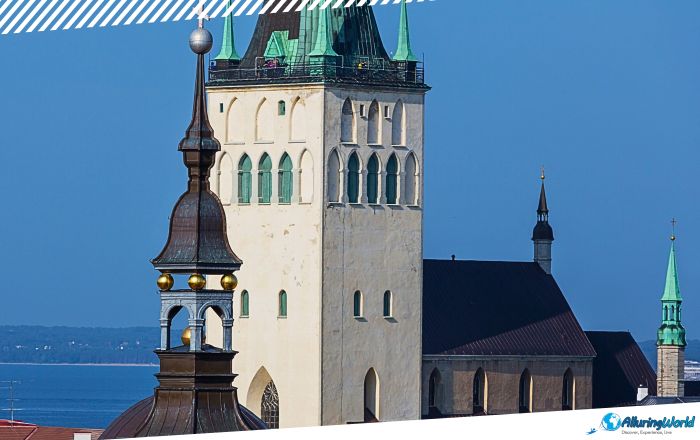
St. Olaf’s 124m spire is a Tallinn landmark, and was the tallest building in Europe between 1549 and 1625. In 1590, the total height of the church tower was 115–125 m. The tower has been hit by lightning around ten times, and the whole church has burned down three times throughout its known existence (in 1625, 1820, and 1931).
ADVERTISEMENT
According to some sources it was the tallest building in the world from 1549 to 1625, but this claim is controversial: one account of the final rebuilding states the church was formerly “ten fathoms” higher, but paintings depict a spire similar in proportions to the current one; moreover, several different fathoms were in use in Estonia at the time and it is uncertain which was meant.
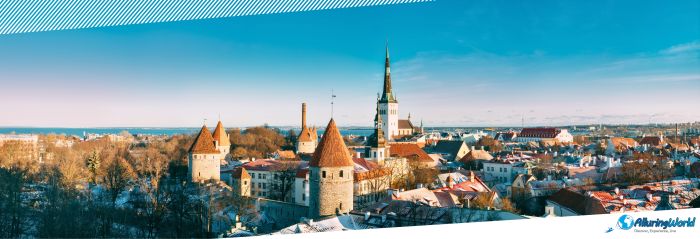
Today, the church is home to a Baptist congregation, but its list of former operators includes a far more sinister name (the KGB). During the Soviet times, the church’s spire was fitted with powerful radio and surveillance equipment, because it was the highest point in Tallinn after all.
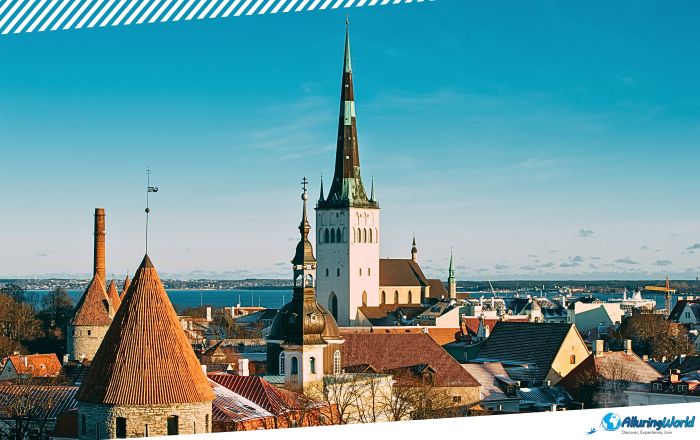
Overall, St. Olaf’s Church today in Tallinn remains as one of the most recognizable symbols of Estonia’s capital, and with its iconic and quite majestic spire, will continue to attract tourists to visit this small but very beautiful Baltic state. You can get the chance to see the long-standing history of the church and the city itself, and learn more about the events that occurred here.