
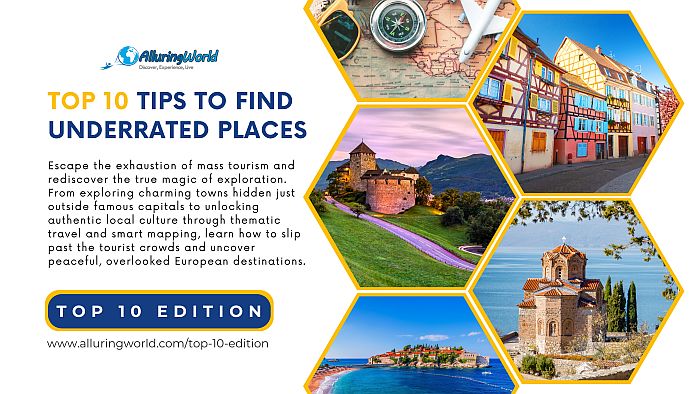
Indeed, there is a good reason why cities like Paris, Rome, and Venice feature on the must-see list of every traveler. They are beautiful, historically significant, and full of landmarks that one should definitely see in their life. However, if you have ever been standing in line for an hour in order to take a picture, dodging people taking selfies in the historical square, or eating expensive and low-quality food, then you know how annoying mass tourism can be.
Occasionally, the best experiences while traveling can happen at unexpected sites, something that you might not have planned for. You find these by catching an off-track train to a small town, entering an independently owned café that doesn’t even have an English-language menu, heading down a peaceful path to a scenic look-out point, or stopping somewhere where the locals still know each other. Such locations might not show up on every top ten list, but they can offer you something better than just a good photo opportunity; they can offer you the feeling of discovery.
The search for unique travel destinations does not mean steering clear of all well-known cities. It involves discovering ways to see past the surface of conventional tourism. It means being interested and patient enough to wonder “What else?” and wait for a destination to unfold itself. Here are ten tips that will help you discover destinations that probably no other tourists know about, or the tourist craziness has not hit them yet.
1. Start With the Famous Place, Then Look Around It
One way to find some lesser-known places would be to start off with a popular place, whether it is a city or an area. There may be many other interesting places surrounding these popular destinations, which get much less attention than they do. For instance, many people aspire to travel to Venice, yet few venture out to the islands of the Venetian Lagoon or the surrounding cities in the region of Veneto. If you visit Venice, think about visiting Chioggia, which is similar to the bigger and more popular Italian city. Another example is Dubrovnik in Croatia; however, there are some less popular places in Croatia that can provide you with a completely different experience. The famous city of Amsterdam is full of tourists, yet there are other, less crowded Dutch cities.
It is particularly suited for the European continent due to its strong connections. Traveling by train within just an hour or two will allow you to go from the bustling capital city to the serene medieval town, to the wine country, lakeside villages, or mountain towns. Rather than simply wondering, “What is the most popular tourist spot?” instead, wonder, “What is around it that tourists never see?” This tiny detail can slightly change your perception and will make all the difference in your vacation experience.
2. Follow Local Life, Not Just Tourist Lists
It is good to have tourist lists, but they tend to take everybody in the same direction. In order to discover something different, you should look for where people live their lives. For instance, you should observe morning markets, small bakeries, parks, local eateries, bookstores, festivals, train stations, walkways, and town squares. These sites might not be very impressive at first sight, but they depict the rhythm of life in the place you’re visiting.
For example, even if the central square in the city is crowded with people, there may be a small café somewhere near the residential area where people read the daily newspaper. Even if one of the beaches is crowded, there can be another small beach that is used by the locals. You may find it worthwhile to visit an internationally famous museum, but perhaps a small regional museum would better represent the culture of the place.
While traveling, try dedicating an entire morning to unplanned exploration. You should get up, but do not have any plans, and instead, you should walk in a direction that is interesting to you, while you see how the locals move. Where do the natives go to get their bread? Where do the old folks sit and gossip about life? Where do the students congregate? Where do families take a stroll in the evening?
3. Use Maps Differently
The majority of tourists use maps in search of the shortest way from one landmark to another. However, maps may become an exploration tool that will give you endless possibilities. Take the map and zoom a little bit out of the center of tourism activity. Look for green spaces, lakes, coastal tracks, villages, old roads, viewpoints, castles, monasteries, markets, or national parks. Often, the most exciting destinations remain unpublicized; they wait for someone to come and see them.
Yet another tip you could consider is searching for phrases such as “old town,” “viewpoint,” “local market,” “botanical garden,” “heritage village,” “nature trail,” “fortress,” and “regional park.” They may help discover locations that are significant but not crowded. In addition to all this, train and bus routes often show towns that are easy to reach but rarely mentioned in major travel guides. If a small town has a regular connection to a larger city, it may make a perfect day trip. Do not ignore places just because they lack thousands of reviews. A destination with fewer reviews is not automatically less important, but sometimes it simply means it has not yet become a trend.
4. Travel With a Theme
An ideal way to venture beyond tourist traps is by taking a personal theme on tour. Rather than visiting popular sites just because they are well known, select destinations that relate to your interests. If you appreciate literature, then go to places where famous writers have lived, to old libraries, bookstores, or cafés that specialize in literature. If you appreciate good food, go to areas where local products are used, or visit wineries, cheese factories, bakeries, or markets. If you appreciate architecture, plan a journey where you see castles, Art Nouveau buildings, modern houses, or ancient ruins.
A theme brings significance to your journey because it can also direct you to destinations that would probably not be discovered through regular travel planning. For instance, a traveler with a keen interest in crafts can find villages renowned for their pottery, weaving, woodworking, or jewelry. A traveler fascinated by religious architecture can come across monasteries and chapels away from the hustle and bustle of big cities. When your trip reflects your interests, it becomes more personal. You are no longer just checking off places other people told you to see. You are building a journey that belongs to you.
5. Read Beyond the First Page of Search Results
While traveling, there are specific websites where people get their information on where to go. When all people read the same stuff and choose the same places, some locations become overcrowded really quickly. The trick here is to delve deeper and discover something new. Browse local blogs, local tourist sites, town websites, travel sites, and personal accounts of people living or traveling in or around the place you plan to visit. Look for keywords such as “hidden villages in northern Italy,” “quiet towns near Prague,” “underrated places in Portugal,” and “local day trips from Vienna.”
You can also search in the native language and then translate the results. This usually gets you somewhere that the international travel blogs haven’t talked about. There may be suggestions on hikes, little museums, festivals, or restaurants that aren’t included in the usual guides. While social media can be helpful as well, use it with caution. Do not rely solely on hashtags for popular destinations; explore geotags in the vicinity of smaller towns or regions. Instead, check local photographers, bloggers who write about food, history, and tourism in the place. Such posts will usually show you those places that have not gone viral on an international level.
ADVERTISEMENT
6. Ask Better Questions
At times, the most helpful recommendations for traveling are those provided by real individuals, rather than by any online platform, and yet how you formulate your question makes all the difference. When asking a receptionist at a hotel what to visit there, you will be recommended some of the most popular sights. But when asking what place they would visit in their spare time, you might get a much better answer.
Ask the guide about the spots that tourists typically overlook. Ask the taxi drivers about the good spots for viewing during sundown. People love to talk about places they love and cherish. Certainly, be respectful. Every destination does not have to be turned into a tourist hotspot, and not all tips need to be shared on the internet. One way of traveling responsibly is by understanding how to experience destinations without making a scene. Unique travel doesn’t just mean uncovering new destinations; it means acting in a way that keeps them unique.
7. Visit Popular Destinations in a Different Way
Sometimes it is not always necessary to avoid a popular place, but what you have to do is experience that place differently. Arrive very early in the morning when tour buses haven’t yet arrived, as this will allow you to explore the areas without the big crowds. Spend some nights in that place rather than making a day trip to the area, but you should always consider walking rather than using the fastest mode of transportation.
A place such as Florence, for instance, is often difficult to explore when you take only the busiest way. Still, when you get up early, cross the river, visit small workshops, churches, and sit in the garden, you will discover a much more personal atmosphere. Timing is important as well because a seaside town in August can feel crowded and pricey, while the same town in late April or early October can be a serene and enchanting place. There is a lot that a mountain village, a historic town, or an island destination can become dependent on, depending on the time of the year.
8. Choose Accommodation That Connects You to the Place
Where you choose to stay is important because it will affect your entire trip. The advantages of staying at a larger hotel include the comfort it provides; however, it can also lock you in as an outsider in the place where you have traveled. The host might point you to a walking trail, an interesting family eatery, a community event, or even a secret beach. A slight deviation from the main tourist area could give you an insight into how the locals live their lives.
If your travel period is long enough, consider staying longer in fewer locations rather than rushing between multiple sites. It would be more appropriate to spend time in two or three cities than to visit five within seven days. You will have enough time to appreciate the little things: a bakery that closes for business in the afternoon, streets that look beautiful during sunset, a museum with an enthusiastic curator, and a bus line passing picturesque villages.
9. Be Practical Without Losing the Magic
Uncovering some gems will take more logistical preparation as the lesser-known villages will have less convenient public transport links, fewer English-speaking staff or menus, and fewer credit card acceptance points. Hence, you will be forced to figure out the bus timetables, prepare offline maps, and carry cash.
Moreover, spontaneous travel around Europe will require that you be certain that you will be allowed to enter the Schengen zone legally. If you are facing complications with your itinerary involving several countries, it might be worth consulting a Schengen visa agent in order to make sure that all your documents are perfect beforehand.
10. Respect the Places You Discover
This topic comes with its own sensitivity in that the more the place is discovered, the more it transforms. Tourism can be a source of economic activity and wealth to the locals, but it also opens up possibilities for overcrowding, inflation, and degradation of the environment.
This is the reason why responsible travel becomes necessary, so it is vital to support local businesses. Accommodate in locally owned facilities wherever possible. Observe regulations at natural sites. Don’t enter private properties for photography. Avoid turning residential zones into a kind of theme park. Familiarize yourself with local culture. Always be careful while posting your location online. A good tourist will not only benefit from the location they are visiting, but will also help build upon its culture. The right tourist will pay their dues and will also be able to understand that what one person considers to be an overlooked spot could be another’s abode.
Traveling to unknown destinations that are outside the popular tourist destinations does not mean that we should stop visiting popular destinations altogether. Rather, it means being aware and curious about where we travel, taking time, and doing it in a thoughtful manner. We can begin from the popular destinations, but move beyond them by exploring the surrounding areas.
Many destinations around the world will not make it to travel headlines, but could definitely give you unforgettable memories. It could be a village, a marketplace, a walking trail, a small museum, or just a home-stay destination that would top your list of travel destinations. The next time you plan a holiday, do not ask just one question about the popular destinations. You should also ask yourself where you could make discoveries.