
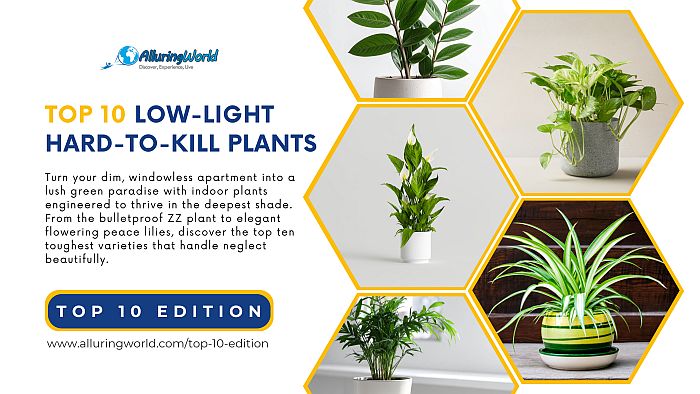
Just because you live in a small apartment that doesn’t have many windows doesn’t mean that you should give up on the idea of having a green plant paradise. Whereas sunshine may not be available in the city environment, there are many indoor plants that have developed mechanisms that allow them to survive in the shade under the forest canopy. There are even plants that bloom and will make your place feel more heavenly than ever.
The key to having an indoor garden in a place with limited light is the selection of plants with high resistance, tolerance of structure, and minimal needs when it comes to metabolism. Instead of wasting time on tricky types of plants that easily wither away due to even minor negligence, you could grow sturdy plants that will cope well with sporadic irrigation and low light conditions. Below is the list of the top 10 toughest indoor plants for you to consider bringing to your home.
1. The ZZ Plant (Zamioculcas zamiifolia)
The ZZ plant is definitely among those that have been labeled as being almost bullet-proof, particularly since it does well even in darker corners. The plant has unique glossy leaves that are so perfect that people tend to think that they are made of plastic.
- Why It Is Hard to Kill: The real superpower of this particular plant is hidden beneath the soil layer. This plant grows from large roots that resemble potatoes and are called rhizomes. The purpose of these roots is to store water, which they do in large amounts, thus ensuring hydration of the plant’s leaves even during long drought periods, or in other words, until you remember that you need to water it. Thus, you will need to water the plant only once every three or four weeks.
- Low-Light Adaptability: It copes very effectively with a lack of light. The leaves are dark green due to their high chlorophyll content; thus, the plant can thrive even in the lowest ambient light or under the usual office fluorescent lights. As the plant grows slowly, it will not try to grow towards a window awkwardly. Don’t be fooled by some titles that might state that this plant will survive without light; in the end, it still requires just a little bit of light.
2. Snake Plant (Dracaena trifasciata)
Also known as Mother-In-Law’s Tongue, the Snake Plant has upright sword-shaped foliage, which makes it an excellent design focal point. It is a very tough plant that comes from tropical West Africa and is known for surviving neglectful structural treatment. In recent years, the Snake Plant has gained a lot of popularity throughout the internet, so you will be able to see inspirational videos that will encourage you to buy one for yourself.
- Why It Is Hard to Kill: This variety possesses a tough, fibrous composition that shrugs off low humidity, dry indoor air, and extreme watering neglect. It is highly susceptible to overwatering, meaning it actually prefers to be left completely alone until the potting mix dries out entirely.
- Low-Light Adaptability: Although it will grow faster when there is a lot of light available, it can still tolerate low light levels without any harm to its structure. It will retain its shape and color even in those areas that lack light, but it is always recommended to give it a little bit of light.
3. Cast Iron Plant (Aspidistra elatior)
Earning its rugged name honestly, the Cast Iron Plant was a favorite during the Victorian era because it easily survived the dim, drafty, and smoke-filled rooms of 19th-century homes. It showcases broad, dark emerald leaves that arch gracefully from the soil.
- Why It Is Hard to Kill: It is quite evident from the name that this plant can tolerate variations in temperatures, irregular watering habits, poor humidity levels, and even negligence. The leaves of this plant are tough and do not wilt easily.
- Low-Light Adaptability: The plant is very sensitive to direct exposure to light because its dark-colored leaves are likely to get scorched. It is accustomed to dimly lit places and grows best in very shady areas.
4. Golden Pothos (Epipremnum aureum)
It is alternatively referred to as the Devil’s Ivy because of its never-ending growing nature, and has long trailing vines that are decorated with heart-shaped leaves. This is a highly flexible plant that can either crawl on top of a pole or flow gracefully from the high shelves. Either way, your place will look like a jungle as soon as it starts putting longer vines.
- Why It Is Hard to Kill: Pothos is highly resilient, adapting quickly to various soil types and moisture levels. If you forget to water it, the leaves will wilt slightly to signal their thirst, but recover beautifully within hours of receiving moisture.
- Low-Light Adaptability: While its golden variegation becomes more pronounced in brighter environments, it manages low-light rooms with ease, continuing to put out new green growth even in dim spaces.
5. Heartleaf Philodendron (Philodendron hederaceum)
Just like the Pothos, the Heartleaf Philodendron resembles an attractive plant that has dark green, shiny, heart-shaped leaves. They are similar and sometimes confused with being the same plant; nonetheless, they are slightly different. The plant is well known for its elegant beauty and quick-growing characteristics.
- Why It Is Hard to Kill: This variety handles indoor environments beautifully, bouncing back quickly from dry spells. It is highly resistant to common pests and forgives occasional lapses in maintenance.
- Low-Light Adaptability: Native to rainforests in Central and South America, it has a natural adaptation to partial shade in a canopy of trees. The plant has its rich green foliage intact, even if placed far into the interior of an apartment.
ADVERTISEMENT
6. Peace Lily (Spathiphyllum)
As far as those looking to have flowering plants that don’t require lots of sun, the Peace Lily is a definite winner, with its glossy green foliage teamed with beautiful white flowers that look like spathes. This is also a quite common plant that you’ll see in administration buildings and banks, as organizations like to green-up their work environment with this amazing plant.
- Why It Is Hard to Kill: The Peace Lily is famous for dramatic communication. When thirsty, the entire plant droops completely flat, making it impossible to misread its needs. A thorough watering revives it to its upright state within hours.
- Low-Light Adaptability: Direct sunlight at high levels will burn the leaves of this plant, so it is best to put it in a corner where the sun does not reach. The Peace Lilly does well in conditions of moderate to low lighting, and its unique feature is that it can flower with white flowers even in low lighting.
7. Chinese Evergreen (Aglaonema)
With the Chinese Evergreen, you can have attractive foliage patterns that do not involve any form of high maintenance. This plant is found in many cultivars that have white, cream, and dark green spots.
- Why It Is Hard to Kill: It tolerates dry indoor air, cold apartment hallways, and slight irrigation errors without leaf drop. Its tight growth habit keeps it tidy.
- Low-Light Adaptability: The dark green varieties grow well in low-light environments and retain their dramatic markings even when placed away from windows.
8. Spider Plant (Chlorophytum comosum)
The Spider Plant is a favorite of indoor gardeners due to its long and graceful ribbon-shaped leaves. It develops over time, cascading stems with small plantlets hanging off the edges called “spiderettes,” and with this, you can grow even more spider plants that will make your place like a green oasis.
- Why It Is Hard to Kill: This plant has thick, fleshy roots that can effectively retain water, thus enabling it to survive even during periods of drought. It is not poisonous, making it ideal for households that own inquisitive pets.
- Low-Light Adaptability: Although it grows faster in diffused light, it easily adapts to low-light environments and maintains its fountain shape in darkness.
9. Parlor Palm (Chamaedorea elegans)
If you want to introduce a tropical, tree-like feel to a small apartment, the Parlor Palm is a great choice. It features delicate, feathery fronds that clump together to create a miniature palm tree look.
- Why It Is Hard to Kill: Unlike temperamental tropical palms that demand high humidity and constant moisture, this variety is highly adaptable to average indoor conditions and handles dry soil relatively well.
- Low-Light Adaptability: True to its name, it became popular in Victorian parlors precisely because it thrives in dim, low-light spaces where other palms quickly fail.
10. Corn Plant (Dracaena fragrans)
Growing from thick, woody canes, the Corn Plant showcases long, strap-like leaves that look similar to corn stalks. It serves as an excellent statement piece for filling empty corners.
- Why It Is Hard to Kill: Its sturdy canes store moisture and nutrients efficiently, helping the plant withstand extended periods of dry soil.
- Low-Light Adaptability: It is very shade-tolerant, thus it is a good option for low-light apartments where there is a need for an impressive vertical element.
Essential Care Tips for Low-Light Apartment Success
While these plants are incredibly tough, adjusting your care routine to fit a low-light environment ensures they stay healthy over the long term.
- Reduce Watering Frequency: Plants in low-light environments process water much more slowly than those in bright spots. Always check that the top two to three centimeters of soil are dry before watering to protect the roots from rotting.
- Avoid Heavy Fertilizing: Because shade-loving varieties grow slowly, they require minimal food. Limit fertilizing to once or twice during the spring and summer, and skip it entirely during the winter.
- Keep Leaves Free of Dust: Wipe down the leaves with a damp cloth every few weeks. Removing dust buildup helps the foliage absorb as much light as possible.
To sum it all up, it is important to understand that when it comes to architectural lighting limitations in a space, there is no need for you to forego the use of indoor plants in your home. You can still have a green heaven that could feel like the great Amazon jungle in South America, and by simply choosing some sturdy indoor plant species such as the ZZ Plant, Snake Plant, and Cast Iron Plant, you can enjoy your lush interior garden without thinking too much about how to care for them.