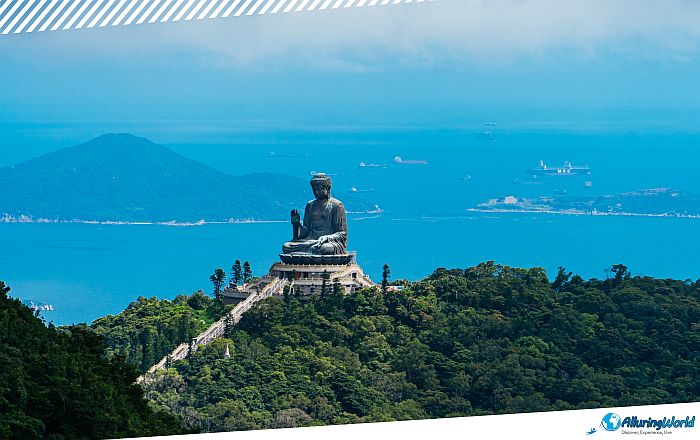
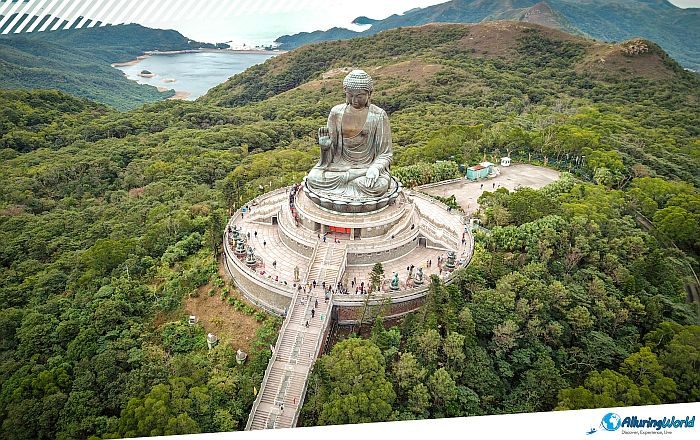
The Tian Tan Buddha, also known as the Big Buddha, is a prominent large bronze statue of Buddha Shakyamuni, or better yet Gautama Buddha, located atop the Ngong Ping Hill on the Lantau Island, which is part of the Hong Kong Special Administrative Region of the People’s Republic of China. This monumental bronze statue of Buddha Shakyamuni (Gautama Buddha) serves as a spiritual beacon, symbolizing the harmonious relationship between man and nature, people and faith.
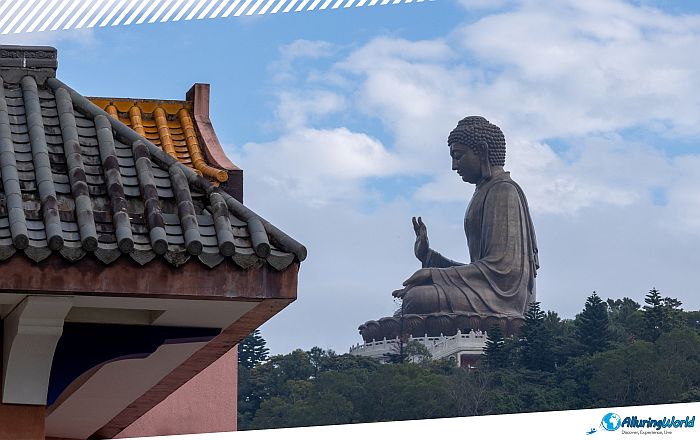
The building of this enchanting creation has been an immense task, starting as far back as 1990. The statue stands at 34 m (112 ft) high and weighs roughly 250 metric tons, making it a feat of intricate artistry. Careful assembly of 202 individual parts made of bronze was done, and all were mounted upon a sturdy metal frame, designed to withstand strong typhoons that often strike the South China Sea. Its completion took place on 29 December 1993. This particular date was wisely selected, as it marks the enlightenment day of Buddha, thus providing spiritual value for the monument from its very inception.
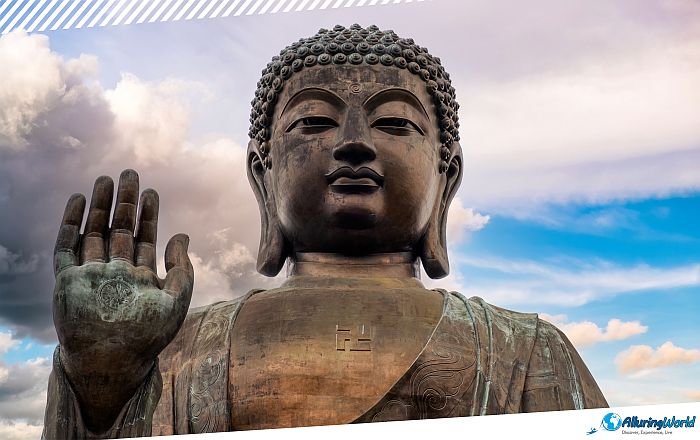
Every detail that makes up the Tian Tan Buddha is imbued with symbolic meaning. The design of the statue was based on the Altar of Heaven, also referred to as the Temple of Heaven, found in Beijing, and Tian Tan comes from this inspiration. The entire structure has some meaning behind the sections, and here are some of the intended meanings behind each facial expression:
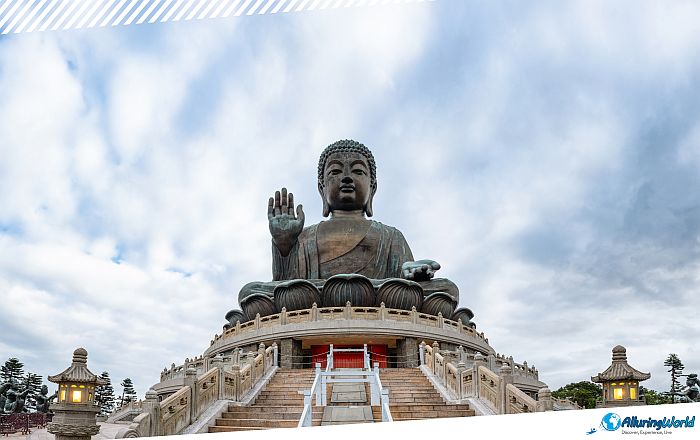
- The Right Hand: Raised in the Abhaya Mudra, representing the removal of fear and the delivery of a blessing to all.
- The Left Hand: Rests in the lap in the Varada Mudra, the gesture of giving or “fulfilling wishes.”
- The Expression of the Face: The eyes, lips, and the gentle incline of the head were crafted to convey a sense of “humbling depth,” projecting dignity and eternal serenity.
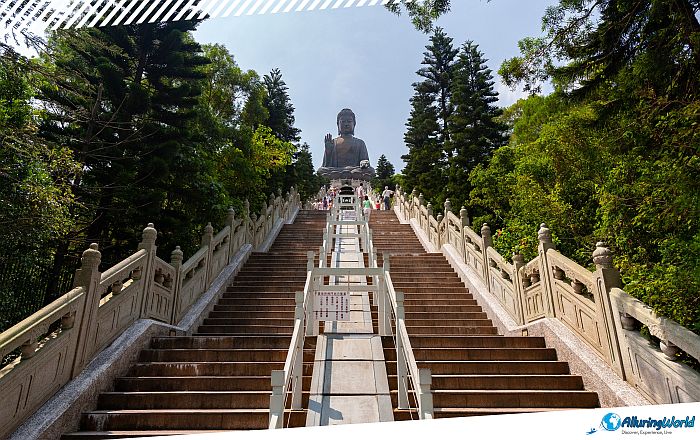
In order to reach the foot of the statue, you must first climb 268 steps of stone stairs, both literally and symbolically. Even though the ascent may be tiring, the payoff is an impressive panoramic view of the lush mountain ranges of Lantau Island and the sparkling blue sea. Interestingly, although all other important Buddha statues are oriented towards the south, the Tian Tan Buddha statue is oriented towards the north. This was done in such a way that the Buddha would be able to watch over China from his vantage point. On rare occasions when visibility is good enough, the outline of the Buddha is said to be visible even from as far as Macau.
ADVERTISEMENT
Right below the lotus base where the Buddha is seated is a three-tiered pedestal that houses three grand halls: The Hall of the Universe, The Hall of Benevolent Merit, and The Hall of Remembrance. These levels function both as a museum and a site of worship. Among the many objects that can be seen here, the most valuable is a relic of Gautama Buddha. This relic is made up of the ashes of the Buddha after cremation. One way of reaching this chamber where the relic is housed is by buying an offering for the Buddha.
The interior of the showroom will be home to a huge bell carved with images of Buddhas and inscriptions, which will operate using a computer program designed to strike it 108 times a day, or every seven minutes. The number 108 has great significance in Buddhism, signifying the number of afflictions that humans have to overcome; each time the bell rings, one burden is released from the human spirit.
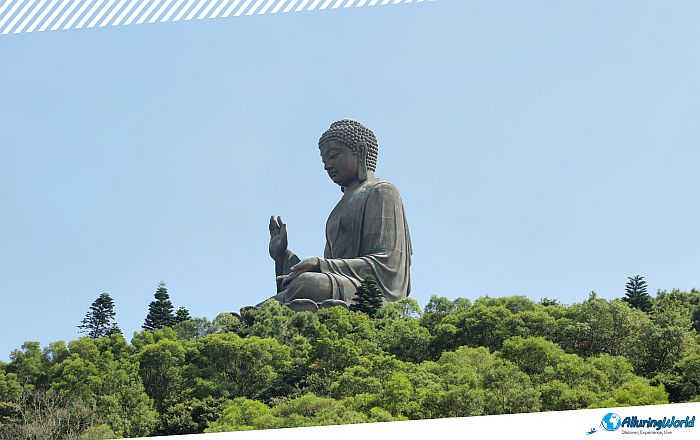
Located directly facing the Po Lin Monastery, which is considered one of the most significant Buddhist temples in Hong Kong, the Tian Tan Buddha not only serves as a tourist destination but also as a magnificent testament of faith that still attracts pilgrims from all over the world seeking “Grandeur of the South.”
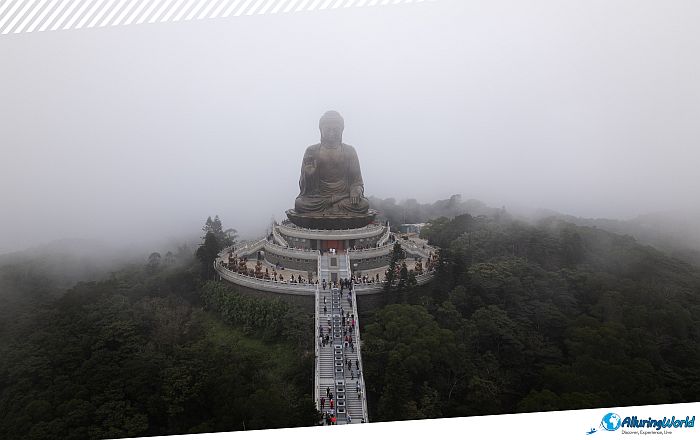
To conclude, the statue of the Tian Tan Buddha has become an amazing combination of modern technology and spiritual heritage, and it provides a rare opportunity to find some peace in the bustle of everyday life. Regardless of what attracts tourists here, the climb up 268 steps or the art of the statue composed of 202 bronze pieces, the experience itself becomes truly unforgettable for each person. Looking at the “Big Buddha,” which is staring at the northern side of the sea, every person is inspired to leave all troubles and sorrows behind.