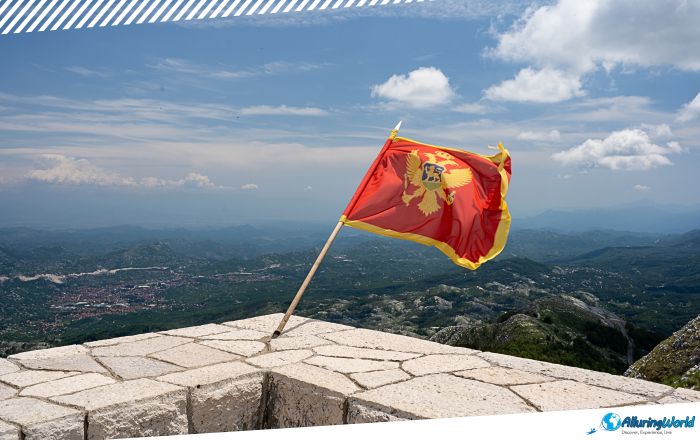
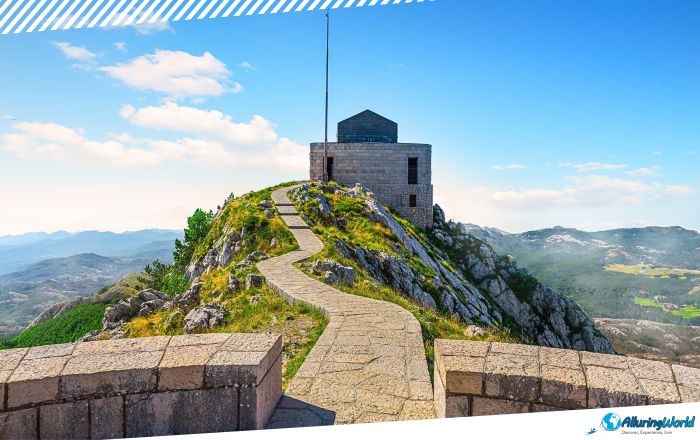
The Mausoleum of Petar Petrović Njegoš is an important mausoleum that serves as a monument at the same time, considered to be the biggest monument that can be found in the National Park Lovćen, within the southwestern part of the Balkan nation of Montenegro.
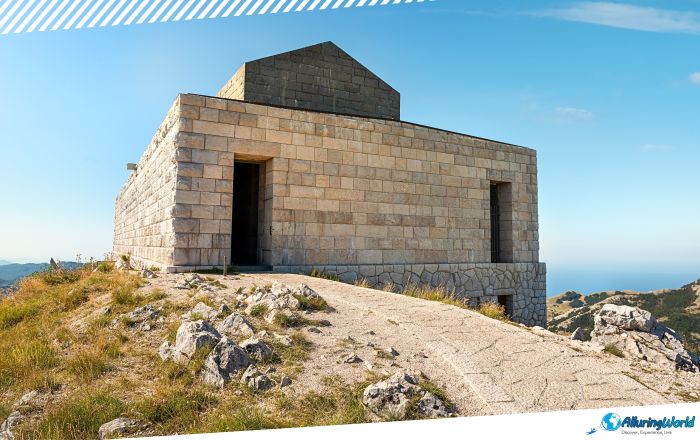
The mausoleum is located more precisely on the summit of the Jezerski peak, which is the last resting place for Petar II Petrović-Njegoš. He was a Serbian Prince-Bishop of Montenegro, locally referred to as vladika, of the Serbian Orthodox Church of Montenegro, and was creating work as a poet and philosopher. With the importance he had in Montenegro at that time, it was he himself who chose this to be his last resting place. He rightfully deserved his right to do this, because he was a ruler who transformed Montenegro from a theocracy into a secular state, and started shaping the country as we know it today.
There was a former church present on the mausoleum’s location, as this was constructed by Njegoš, and just before he died in 1851, Njegoš shared the wish that he wanted to be buried in that church. Due to the time of the events, as the Ottomans were ruling the majority of the Balkan Peninsula, he was buried in the Monastery of Cetinje due to the fear that the Ottomans would decapitate his body, but it was in 1855 that Petar Petrović Njegoš’s wish would become reality, as he was transferred to the place he wished to be buried.
ADVERTISEMENT
In August 1916, when World War I was in motion, Austrian occupation forces destroyed the Chapel where he was laid to rest, so, yet again, he was brought to the Monastery of Cetinje. In 1925, the chapel at the National Park Lovćen was rebuilt by Alexander I of Yugoslavia, also known as Aleksandar I Karađorđević, but the newly built chapel was destroyed again by the Yugoslav Communists, who defeated the Axis powers during the Second World War.
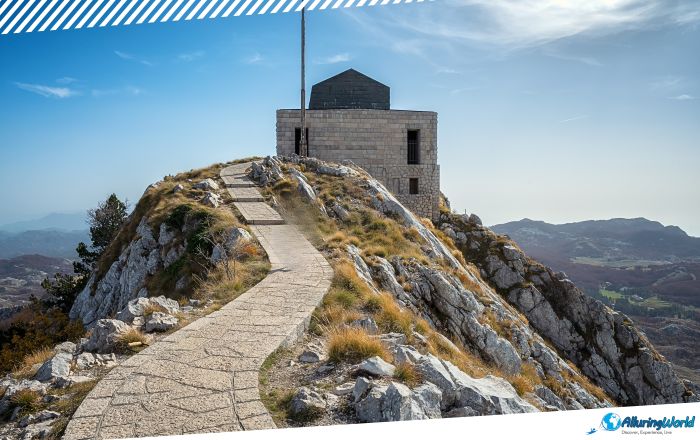
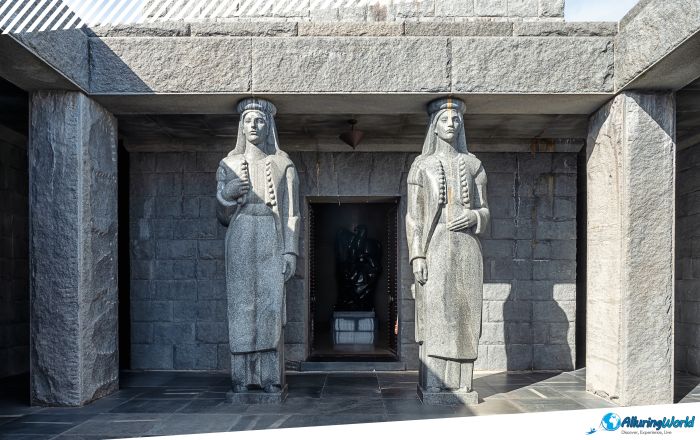
Since the Mausoleum of Petar Petrović Njegoš was destroyed, it was in 1974 when a new structure appeared as a pagan building. Nowadays, the dramatic building is reached after taking a long road that winds up the mountain, followed by a hike up 461 steps on foot. Inside the mausoleum is a large granite statue of Njegoš, a darkened room that contains his tomb, and right next to the building, there is a 360-degree stone viewing circle.
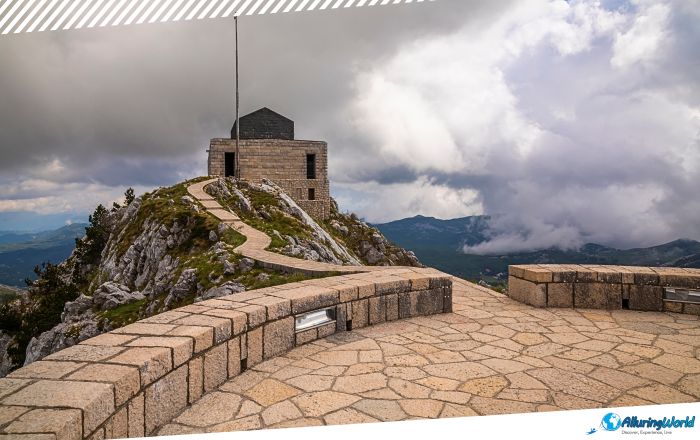
In conclusion, as the Mausoleum of Petar Petrović Njegoš has seen a lot of events throughout history, when you get the chance to stand on the peak of the mountain, you are rewarded with a mesmerizing landscape views of Montenegro, and, interestingly, you can see half of Montenegro, but if the weather is clear, you can see further to Croatia and Albania.